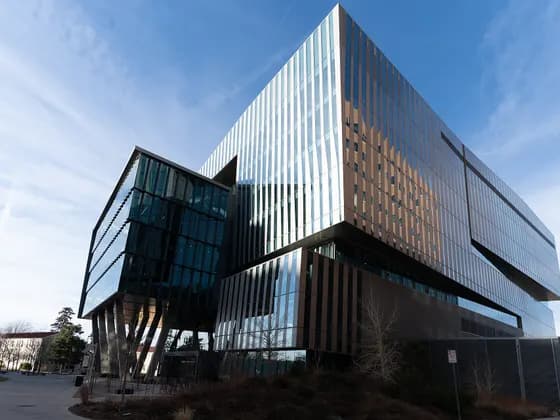
University of Colorado School of Dental Medicine (DDS)
Aurora, CO, US
Aurora, CO, US•Est. 1973
University of Colorado School of Dental Medicine (DDS) Dental School - 2027 Entry Requirements & Interview Format
The University of Colorado School of Dental Medicine (UCSDM), founded in 1973, is the only dental school in Colorado, located on the Anschutz Medical Campus in Aurora, Colorado. As a public institution with a state workforce mission, UCSDM trains dentists primarily for Colorado and the Mountain West, with a strong emphasis on rural and underserved community dentistry. The school benefits from co-location with CU's medical, pharmacy, nursing, and public health schools, enabling genuine interprofessional education. UCSDM is particularly known for its community-oriented curriculum and rural rotation programmes across Colorado.
Entry Requirements
What you need to apply to University of Colorado School of Dental Medicine (DDS).
Admission overview
Bachelor's degree and DAT required. Applications via ADEA AADSAS. Colorado residents have a strong preference as the only public dental school in the state — typically the large majority of the class is in-state. Manual dexterity documentation, dental shadowing, and community health experience expected.
Estimates from publicly available ADEA AADSAS data; verify for current cycle. DAT Academic Average median approximately 20–22 (hedged). Strong in-state preference as only public dental school in Colorado.
Specialities offered
General Dentistry, Pediatric Dentistry, Oral and Maxillofacial Surgery, Orthodontics, Community Dentistry
Interview Format
How University of Colorado School of Dental Medicine (DDS) interviews applicants.
Format
MMI and/or traditional interview at Anschutz Medical Campus, Aurora, CO
Interview window
October–February
Decision date
Rolling admissions
Post-interview chances
Approximately 35–50% post-interview (estimated, strong in-state preference).
What to expect at a University of Colorado School of Dental Medicine (DDS) interview
University of Colorado School of Dental Medicine conducts MMI and/or traditional faculty interviews at its Anschutz Medical Campus in Aurora, Colorado. As Colorado's only dental school, UCSDM interviews assess motivation for dentistry, commitment to serving Colorado communities (particularly rural and underserved regions), manual dexterity evidence, and the oral-systemic health connection. The school's Anschutz Medical Campus setting — co-located with CU's Schools of Medicine, Pharmacy, Public Health, and Nursing — means interprofessional education is a core theme. Colorado residents receive strong preference in the admissions process.
What makes University of Colorado School of Dental Medicine (DDS) different
Applications via ADEA AADSAS. As Colorado's sole dental school, UCSDM carries a public mission to train dentists for Colorado communities, particularly rural counties with significant dental access challenges. The Anschutz Medical Campus cluster — one of the largest integrated health science campuses in the Mountain West — provides outstanding interprofessional education opportunities.
Tutor insight
Colorado residents have a strong institutional advantage — be specific about your ties to the state and your awareness of Colorado's dental access challenges, especially in rural mountain and eastern plains communities. Out-of-state applicants need a compelling reason for choosing UCSDM over their home state's dental school. The interprofessional Anschutz campus setting is a genuine differentiator — demonstrate interest in collaborative health education. Rural dental rotation willingness is valued.
PrometheusQuestion Bank
405 dentistry questions inside
Interview questions matched to University of Colorado School of Dental Medicine (DDS)
Two questions our tutors flagged as a strong fit for University of Colorado School of Dental Medicine (DDS)’s interview style. Try answering them out loud, then open Prometheus for the model answers and follow-up tips.
Medium·MMI · PanelQ1
ADA Nonmaleficence: Avoiding Unnecessary Treatment
The ADA principle of nonmaleficence — 'do no harm' — applies not only to avoiding procedural injury but also to avoiding unnecessary treatment that exposes patients to risk, cost, and time without clinical benefit. Overtreatment in dentistry is a documented problem: studies using standardized clinical cases have found significant variation in treatment recommendations among dentists for borderline findings, with some practitioners consistently recommending more aggressive treatment than clinical evidence supports. A new dental school graduate, eager to build a practice, may face subtle incentives to recommend treatment that is not strictly necessary. How do you think about the nonmaleficence obligation in the context of clinical uncertainty and financial incentives?
Likely follow-up · You examine a new patient who has radiographic evidence of incipient interproximal lesions — early caries that appear limited to enamel on radiographs. Operative dentistry textbooks differ on the threshold for restorative intervention vs. watchful waiting with remineralization. How do you make the clinical decision?
3 expert tips in Prometheus
Medium·MMI · PanelQ2
Patient Advocacy: Navigating Insurance Denial for Medically Necessary Care
A patient presents with early-stage oral cancer of the tongue identified on a routine examination. You refer them urgently to an oral surgeon and oncologist. Their dental insurance company denies coverage for the biopsy, citing a policy exclusion for 'cancer-related services' that the insurer claims should be covered by the patient's medical insurance. The patient's medical insurer denies the claim, contending the initial biopsy is a dental procedure. The patient is caught between two systems with a potentially life-threatening lesion. What is your role as their dentist in this situation?
Likely follow-up · The patient asks you to write a letter of medical necessity to both insurers. What does an effective letter of medical necessity include, and how do you frame the clinical urgency?
Apply to University of Colorado School of Dental Medicine (DDS) with confidence
We've helped students get into University of Colorado School of Dental Medicine (DDS) and other US dentistry schools. Get tailored support for each stage of the application.
University of Colorado School of Dental Medicine (DDS) - Frequently asked questions
Bachelor's degree and DAT required. Applications via ADEA AADSAS. Colorado residents have a strong preference as the only public dental school in the state — typically the large majority of the class is in-state. Manual dexterity documentation, dental shadowing, and community health experience expected.
MMI and/or traditional interview at Anschutz Medical Campus, Aurora, CO. University of Colorado School of Dental Medicine conducts MMI and/or traditional faculty interviews at its Anschutz Medical Campus in Aurora, Colorado. As Colorado's only dental school, UCSDM interviews assess motivation for dentistry, commitment to serving Colorado communities (particularly rural and underserved regions), manual dexterity evidence, and the oral-systemic health connection. The school's Anschutz Medical Campus setting — co-located with CU's Schools of Medicine, Pharmacy, Public Health, and Nursing — means interprofessional education is a core theme. Colorado residents receive strong preference in the admissions process.
University of Colorado School of Dental Medicine (DDS) typically interviews in October–February.
Decisions are released Rolling admissions.
Applications via ADEA AADSAS. As Colorado's sole dental school, UCSDM carries a public mission to train dentists for Colorado communities, particularly rural counties with significant dental access challenges. The Anschutz Medical Campus cluster — one of the largest integrated health science campuses in the Mountain West — provides outstanding interprofessional education opportunities.