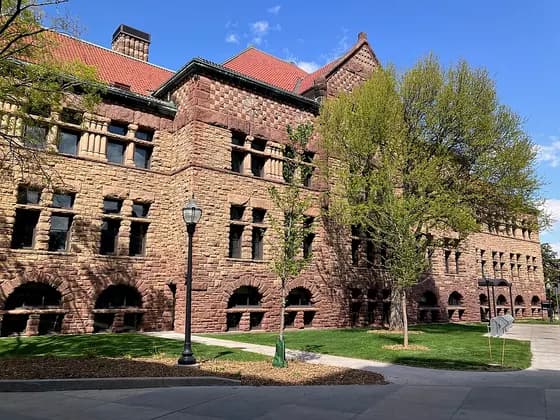
Minneapolis, MN, USEst. 1888

University of Minnesota School of Dentistry (DDS) Dental School - 2027 Entry Requirements & Interview Format

The University of Minnesota School of Dentistry, founded in 1888, is consistently ranked among the top dental schools in the United States and is the leading dental school in the Upper Midwest. Located at the University of Minnesota's Minneapolis Academic Health Center, the school is part of a major public research university with deep ties to Minnesota's diverse healthcare ecosystem. Minnesota Dentistry is known for its comprehensive clinical training, strong community partnerships, and innovative curricula.

Entry Requirements

What you need to apply to University of Minnesota School of Dentistry (DDS).

Admission overview
Bachelor's degree and DAT required. Applications via ADEA AADSAS. CASPer required. Minnesota residents benefit from strong in-state preference (public school). Dental experience, community service, and academic record expected.
GPA median
3.65 overall / 3.61 science (BCPM)
Acceptance rate
6.0%
Class size
95
In-state preference
Strong — primarily in-state
CASPer
Required
Holistic review emphasis
MN residency, community health, interprofessional care, dental experience.
Notes
GPA medians hedged. DAT Academic Average median approximately 20–22 (hedged). Strong in-state preference as primary MN dental school.
Specialities offered
Orthodontics, Periodontics, Pediatric Dentistry, Oral Biology, Community Oral Health

Interview Format

How University of Minnesota School of Dentistry (DDS) interviews applicants.

Format
Traditional one-on-one or MMI format
Interview window
October–February
Decision date
Rolling admissions
Post-interview chances
Approximately 30–40% post-interview (estimated).

What makes University of Minnesota School of Dentistry (DDS) different

Applications via ADEA AADSAS. Minnesota Dentistry's interprofessional Academic Health Center location enables genuine collaborative education across medicine, pharmacy, public health, and nursing. The school has a significant immigrant and refugee community dental health programme — reflecting Minneapolis's diverse population.

Tutor insight

Minnesota residents should prioritise U of M Dentistry as an excellent public school option. The school's community health programmes and diverse Minneapolis patient population are genuine strengths to highlight in applications. Interprofessional experience — working with nurses, pharmacists, or social workers in healthcare settings — is valued in Minnesota's collaborative curriculum culture.
Prometheus
405 dentistry questions inside

Interview questions matched to University of Minnesota School of Dentistry (DDS)

Two questions our tutors flagged as a strong fit for University of Minnesota School of Dentistry (DDS)’s interview style. Try answering them out loud, then open Prometheus for the model answers and follow-up tips.

EasyPanelQ1

Precision and Patience: Building Sculptural Skill Through Non-Dental Activities

Dental school simulation labs require students to carve teeth in wax, prepare precise cavity outlines in typodont models, and perform restorations in a confined, moisture-rich field that demands exceptional spatial reasoning and hand control. Many dental educators note that the students who adapt most readily to clinical simulation are those who have engaged deeply in precision hand crafts, instrument performance, or other fine-motor disciplines. Describe in detail the fine-motor activity you have pursued most seriously, explain the specific techniques you have developed, and articulate how you believe these skills will transfer to dental simulation and clinical practice.

Likely follow-up · In simulation lab, you are asked to carve a Class II wax pattern and the faculty evaluator's feedback is that your marginal ridges are too steep and inconsistent. Walk me through how you would use this feedback to improve your technique before the next session.

3 expert tips in Prometheus
MediumMMI · PanelQ2

ADA Nonmaleficence: Avoiding Unnecessary Treatment

The ADA principle of nonmaleficence — 'do no harm' — applies not only to avoiding procedural injury but also to avoiding unnecessary treatment that exposes patients to risk, cost, and time without clinical benefit. Overtreatment in dentistry is a documented problem: studies using standardized clinical cases have found significant variation in treatment recommendations among dentists for borderline findings, with some practitioners consistently recommending more aggressive treatment than clinical evidence supports. A new dental school graduate, eager to build a practice, may face subtle incentives to recommend treatment that is not strictly necessary. How do you think about the nonmaleficence obligation in the context of clinical uncertainty and financial incentives?

Likely follow-up · You examine a new patient who has radiographic evidence of incipient interproximal lesions — early caries that appear limited to enamel on radiographs. Operative dentistry textbooks differ on the threshold for restorative intervention vs. watchful waiting with remineralization. How do you make the clinical decision?

3 expert tips in Prometheus

Ready to practise University of Minnesota School of Dentistry (DDS)?

Book a school-specific mock interview with University of Minnesota School of Dentistry (DDS) preselected.

Book a University of Minnesota School of Dentistry (DDS) mock

University of Minnesota School of Dentistry (DDS) - Frequently asked questions

Bachelor's degree and DAT required. Applications via ADEA AADSAS. CASPer required. Minnesota residents benefit from strong in-state preference (public school). Dental experience, community service, and academic record expected.

Traditional one-on-one or MMI format

University of Minnesota School of Dentistry (DDS) typically interviews in October–February.

Decisions are released Rolling admissions.

Applications via ADEA AADSAS. Minnesota Dentistry's interprofessional Academic Health Center location enables genuine collaborative education across medicine, pharmacy, public health, and nursing. The school has a significant immigrant and refugee community dental health programme — reflecting Minneapolis's diverse population.
Reviewed by Isaac Butler-King, medical student at the University of Glasgow. Last reviewed: 6 June 2026 · NextGen MedPrep editorial team
University of Minnesota School of Dentistry (DDS) DDS | DAT, GPA & Interview Format | NGMP