
University of Minnesota School of Dentistry Interview
Format, Questions & Prep Tips
University of Minnesota School of Dentistry dentistry interviews for 2027 entry are a panel interview, held October 2026 through February 2027. Published figures: Annual DDS class size ~100; Interview format Kira virtual first round + live 2:1 interview (verify current format); Tuition (2025–26) ~USD 33,000 (in-state) / USD 60,000 (out-of-state).
- Institution
- University of Minnesota School of Dentistry
- Interview (2027 entry)
- October through February
- Decisions (2027 entry)
- Regular decisions by late March

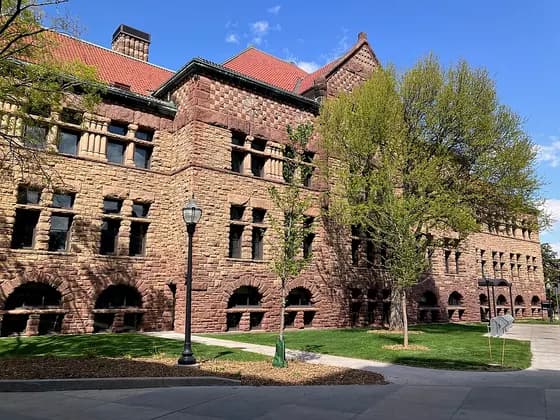

Photo: A Gude · CC BY-SA 2.0 · cropped
Photo: Bmzuckerman · CC BY 4.0 · Photo: August Schwerdfeger · CC BY 4.0 · Photo: McGhiever · CC BY-SA 4.0
How to get into University of Minnesota School of Dentistry (DDS) dentistry
Step-by-step: entry requirements, admission tests, personal statement, interview format and the key deadlines.
Open the guide →University of Minnesota School of Dentistry (DDS) entry requirements
Admission profile, interview format, decision dates and what makes University of Minnesota School of Dentistry (DDS) different.
See the profile →The University of Minnesota School of Dentistry (DDS) dentistry interview
University of Minnesota School of Dentistry runs a selective Kira Talent virtual first round, followed by a live interview (reported as two interviewers to one applicant) and an in-person visit day. The school does not describe MMI stations; verify the current format with the school before your cycle.
Minnesota Dentistry has a distinctive interprofessional education model with the Medical School, Pharmacy, Nursing, and Public Health programs. The school also has a strong dental therapy program — Minnesota is one of the few US states that trains dental therapists, and the school has been central to this workforce innovation.
Interviewers probe awareness of dental workforce innovation, including expanded-function dental auxiliaries and dental therapists, as tools for addressing dental access disparities.
University of Minnesota School of Dentistry (DDS) interview at a glance (2027 entry)
| Annual DDS class size | ~100 |
|---|---|
| Interview format | Kira virtual first round + live 2:1 interview (verify current format) |
| DAT required | Yes — via ADEA AADSAS |
| Tuition (2025–26) | ~USD 33,000 (in-state) / USD 60,000 (out-of-state) |
| Application system | ADEA AADSAS primary + Minnesota secondary |
| Interview window | October–February |
Interview format
- Selective Kira Talent virtual assessment as a first round.
- Live interview reported as two interviewers with one applicant, plus an in-person visit day.
- No station-based MMI is described — confirm the current cycle’s format with the school.
Sample interview questions
Why dentistry rather than medicine or another health profession?
Minnesota wants applicants committed to dentistry specifically. Speak to the procedural craft, the blend of art and science, the autonomy of practice, and the lasting patient relationships. Do not present dentistry as a consolation choice.
Minnesota is a national leader in dental therapy and workforce innovation. What draws you to a school so focused on expanding access?
Reference the dental therapy program, the interprofessional model with medicine, pharmacy, nursing, and public health, and the commitment to serving Somali, Hmong, East African, and Native American communities. Show genuine alignment with access-driven dentistry.
Dentistry demands fine-motor precision. How have you developed and tested your manual dexterity?
Give concrete evidence — art, an instrument, model-building, or lab and craft work — and reflect on improvement with deliberate practice. Connect it to the steadiness, hand-eye coordination, and patience chairside dentistry requires.
What concerns you most about a career in dentistry, and how would you cope?
Show informed self-awareness:
- the physical toll of clinical posture
- the emotional weight of anxious or pediatric patients
- the repetition of routine work
- the business pressures of practice
Offer concrete coping strategies rather than minimizing the challenges.
Minnesota trains dental therapists who provide preventive and basic restorative care in underserved settings. Some dentists oppose expanding their scope. How do you think about this debate?
Engage with the evidence for dental therapy improving access (Alaska Native outcomes, Minnesota studies), the economic and turf concerns of organized dentistry, and the moral priority of access to care. Show balanced reasoning rather than a reflexive stance.
A refugee patient's cultural beliefs lead them to refuse a treatment you consider clearly necessary. They have capacity. How do you proceed?
Respect autonomy and cultural beliefs while ensuring genuine understanding through a professional interpreter. Discuss cultural humility, exploring the reasons behind the refusal, and continuing to offer care. The aim is informed choice and a maintained relationship, not coercion.
A patient cannot afford the ideal plan and asks for a cheaper option you consider inferior. How do you respond?
Respect autonomy and financial reality while being honest about trade-offs. Discuss informed consent, offering a range of acceptable options, and avoiding both paternalism and substandard care. Affordability is central in the populations Minnesota serves.
Should organized dentistry's concern for professional standards outweigh the access gains from mid-level providers like dental therapists?
Weigh patient safety and quality against the access crisis in underserved communities. Discuss the supervised model dental therapists work within, the evidence on their safety and effectiveness, and the justice argument that some care reaching everyone may beat ideal care reaching few.
Minnesota has large Somali and Hmong communities. Describe an experience providing care or service in a cultural context very different from your own, and what you learned.
Go deep on one experience and reflect on cultural humility, professional interpreter use, and building trust with communities that may have experienced refugee trauma or cultural isolation. Show growth in your own understanding, not just exposure.
How would you ensure genuine informed consent with a patient who speaks little English?
Discuss using professional interpreters rather than family members, teach-back to confirm understanding, visual aids, and cultural humility. Given Minnesota's diverse patient base, real consent — not just a signature — is a routine and important skill.
What is the connection between oral health and systemic health?
Cover the periodontal-systemic links — diabetes, cardiovascular disease, adverse pregnancy outcomes — and the dentist's screening and detection role. Minnesota's interprofessional model makes whole-person, team-based care a natural theme.
How can workforce innovations like dental therapists and expanded-function auxiliaries help address access disparities?
Discuss how delegating preventive and basic restorative care extends a dentist's reach, lowers cost, and brings care to underserved and rural areas. Reference Minnesota's leadership in this model and the evidence behind it.
Why are prevention and regular recall so central to dentistry, particularly in underserved communities?
Most dental disease is preventable or best managed early, yet underserved patients often present late. Discuss prevention, sealants and fluoride, and the public-health and cost logic of catching disease before it becomes complex.
A Somali patient is hesitant to consent to a needed procedure and asks to consult family first, delaying urgent care. Respond. (Hypothetical scenario.)
Show cultural humility and patience. Respect the importance of family decision-making while explaining the urgency and risks of delay clearly, with an interpreter if needed. Find a path that honors the patient's values without compromising their health.
A fellow student questions whether dental therapists 'belong' in the profession in front of a community patient. You are present. Respond. (Hypothetical scenario.)
Protect the patient experience first, then address the comment constructively. Discuss the evidence and the access mission behind dental therapy, and model respectful professional disagreement without humiliating your peer — values central to Minnesota's culture.
If untreated decay rates were higher among one immigrant community than the city average, what factors would you investigate before drawing conclusions?
Consider language and cultural barriers to preventive education, insurance and access barriers, dietary patterns, fluoride exposure, and prior access to care. Show you would seek structural causes rather than blame the community.
Practise the University of Minnesota School of Dentistry (DDS) interview
Rehearse the real format before the day — on demand with our AI interviewers, or live with a tutor.
Sit a mock with photoreal AI interviewers — any time
A timed MMI or panel interview on video — American & international voices — with interviewers who listen, react and press with follow-ups. Rubric-scored feedback and a replay the moment you finish.






Live mocks with a tutor who’s been in the room
A full University of Minnesota School of Dentistry (DDS)-style mock with a medic or dentist tutor — honest scoring against real marking criteria, a station-by-station debrief and a written action plan.
Book a mock interviewHow to prepare for the University of Minnesota School of Dentistry (DDS) interview
Common pitfalls to avoid
University of Minnesota School of Dentistry (DDS) interview — frequently asked questions
Sources & official admissions information
Ready to nail your University of Minnesota School of Dentistry (DDS) interview?
Book a mock interview with a tutor who knows the US interview formats, orpractice unlimited stations from our interview question bank.