
Creighton University School of Dentistry Interview
Format, Questions & Prep Tips
Creighton University School of Dentistry dentistry interviews for 2027 entry are a traditional interview, held September 2026 through February 2027. Published figures: Annual DDS class size 117 (2024); Tuition (2025–26) ~USD 72,000–76,000/year (estimated; verify with school).
- Institution
- Creighton University School of Dentistry
- Interview (2027 entry)
- September through February
- Decisions (2027 entry)
- Rolling; decisions typically within 4–6 weeks of interview

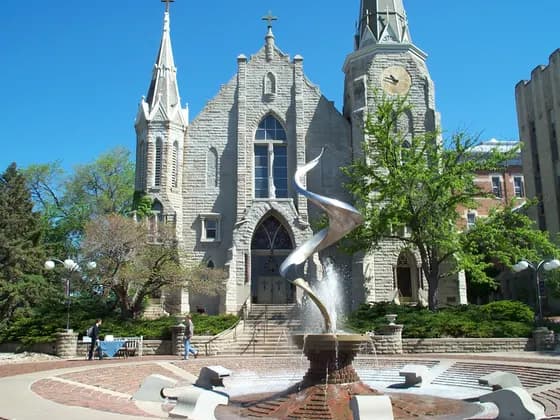
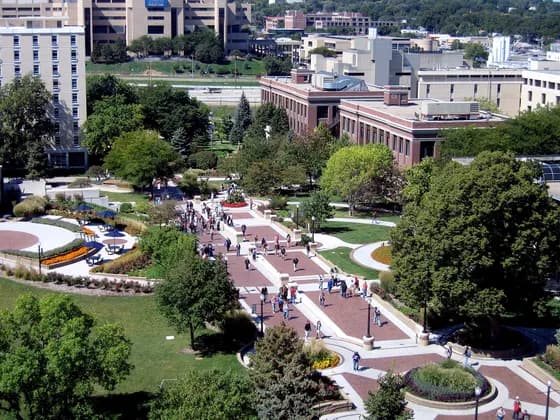

Photo: Bluejayscholar · CC BY-SA 3.0 · cropped
Photo: Troy Johnson from USA · CC BY 2.0 · Photo: Bluejayscholar · CC BY-SA 3.0 · Photo: Ryan Renner · CC BY 2.0
How to get into Creighton University School of Dentistry (DDS) dentistry
Step-by-step: entry requirements, admission tests, personal statement, interview format and the key deadlines.
Open the guide →Creighton University School of Dentistry (DDS) entry requirements
Admission profile, interview format, decision dates and what makes Creighton University School of Dentistry (DDS) different.
See the profile →The Creighton University School of Dentistry (DDS) dentistry interview
Creighton University School of Dentistry conducts traditional one-on-one faculty interviews in Omaha, Nebraska. Creighton is a Jesuit Catholic university, and its dental school carries the full weight of that identity: cura personalis (care of the whole person), service to others, and social justice are embedded throughout the curriculum and the admissions process.
You do not need to be Catholic to apply or attend — Creighton warmly welcomes students of all backgrounds. But you must understand Jesuit values well enough to articulate how they connect to your vision of dental practice. Interviewers probe service orientation, ethical reasoning, and community commitment with genuine depth.
Creighton runs community outreach dental clinics serving Omaha’s underserved populations — interviewers expect you to know this and to explain how that model of service resonates with your career goals.
Creighton University School of Dentistry (DDS) interview at a glance (2027 entry)
| Annual DDS class size | 117 (2024) |
|---|---|
| Interview format | Traditional — faculty one-on-one |
| DAT required | Yes — via ADEA AADSAS |
| Tuition (2025–26) | ~USD 72,000–76,000/year (estimated; verify with school) |
| Application system | ADEA AADSAS primary + Creighton secondary |
| Interview window | September–February |
Interview format
- Faculty one-on-one interview — 30–45 minutes.
- Jesuit values and service orientation assessed.
- Clinic and simulation lab tour.
- Informal student interactions — professionalism assessed throughout.
Sample interview questions
Creighton is a Jesuit institution with a strong service mission. How does that mission connect to your reasons for wanting to become a dentist?
Cura personalis — care for the whole person. Service to underserved communities, dental access as a social justice issue, treating the patient as a whole human being. Be genuine; Jesuit interviewers recognize hollow answers.
A patient presents with dental disease that is clearly related to a destructive habit — heavy sugary drink consumption — and refuses to change the behavior. How do you approach ongoing care?
What they are listening for:
- Non-judgmental patient education
- motivational interviewing
- patient autonomy
- long-term therapeutic relationship
Creighton values whole-person, compassionate care over paternalism.
Creighton operates free and reduced-cost dental clinics for Omaha's uninsured population. What do you think the ethical obligation of dental schools is to their surrounding communities?
Social justice framing:
- dental schools benefit from patient access
- training volume
- community goodwill — reciprocal obligation to serve
Engage with the ADA ethical principles on access to care.
Describe a situation where you demonstrated a commitment to service that went beyond what was required of you.
STAR format. Community health work, volunteer dental clinic, sustained commitment over time. Creighton values depth over breadth — long-term service to one community is stronger than short-term volunteering in many.
A colleague at your dental school is cutting corners on infection control protocols because the clinic is busy. What do you do?
Patient safety is paramount — this is not a gray-area scenario. Address with colleague, escalate to faculty supervision if not resolved. ADA ethical principles require reporting known violations of patient safety.
What does "cura personalis" mean to you in the context of dental practice?
Care for the whole person — not just the tooth, but the patient's anxiety, systemic health, social determinants, financial situation, and emotional wellbeing. The dental visit as a holistic healthcare encounter.
What was the most meaningful dental experience you have had — either as a patient or as an observer — and why did it shape your decision to pursue dentistry?
Specific and personal. Creighton's interview culture values authentic reflection over rehearsed application narratives.
You are a dentist in private practice. A patient tells you in confidence that they are experiencing domestic violence. What is your responsibility?
Mandatory reporting obligations vary by state; document carefully; provide resources; do not breach confidentiality carelessly. The dentist may be the only healthcare professional this patient sees regularly — this creates a unique disclosure opportunity.
How would you explain a complex restorative treatment plan — including risks, alternatives, and cost — to a patient with low health literacy?
What they are listening for:
- Teach-back method
- visual aids
- plain language
- written take-home summary
- involving a trusted companion if the patient wishes
Health literacy is central to patient-centered care.
Where do you see yourself practicing five years after graduating from dental school, and how does Creighton's curriculum prepare you for that path?
Authentic future vision — general practice, community health, academic dentistry, specialization. Connect it to specific Creighton curriculum features: service-learning, ethics, community outreach. Show you have done the research.
You learn that a large share of Omaha's uninsured adults rely on safety-net clinics like Creighton's for dental care. How would you reason about the school's obligation when that demand far exceeds its clinic capacity?
Frame through justice and cura personalis: prioritize by need, expand access where possible, advocate beyond the clinic walls, accept that triage is unavoidable. Tie the data to Creighton's service mission. Hedge specific figures.
A patient who has come to Creighton's reduced-cost clinic for years asks you, almost apologetically, whether they are 'taking a spot' from someone who pays. How do you respond?
What they are listening for:
- Affirm their dignity and right to care
- reframe the clinic's purpose as exactly this service
- redirect to their treatment
Whole-person, non-judgmental care — the Jesuit ethos in a concrete interaction.
How would you deliver difficult news — that a tooth the patient hoped to save must be extracted — in a way that reflects Creighton's whole-person care values?
Warn-pause-explain, acknowledge the patient's feelings, present alternatives and what comes next, check understanding. Cura personalis means attending to the emotional weight, not just the clinical fact.
You notice a classmate quietly struggling with depression and falling behind, but they have asked you to keep it private. Where do you draw the line between loyalty and getting them help?
Care for the whole person extends to peers. Encourage them toward support, respect confidentiality unless safety is at risk, know when to involve faculty/wellbeing services. Magis and compassion balanced with responsibility.
Creighton is a high-tuition private school with no in-state advantage. How have you reconciled its cost with its Jesuit service mission, especially if you intend to serve low-income communities?
Show financial literacy alongside genuine values: total cost of attendance, loan burden vs. community/FQHC salaries, NHSC and loan-repayment routes. Acknowledge the tension honestly rather than pretending it away.
Practise the Creighton University School of Dentistry (DDS) interview
Rehearse the real format before the day — on demand with our AI interviewers, or live with a tutor.
Sit a mock with photoreal AI interviewers — any time
A timed MMI or panel interview on video — American & international voices — with interviewers who listen, react and press with follow-ups. Rubric-scored feedback and a replay the moment you finish.






Live mocks with a tutor who’s been in the room
A full Creighton University School of Dentistry (DDS)-style mock with a medic or dentist tutor — honest scoring against real marking criteria, a station-by-station debrief and a written action plan.
Book a mock interviewHow to prepare for the Creighton University School of Dentistry (DDS) interview
Common pitfalls to avoid
Creighton University School of Dentistry (DDS) interview — frequently asked questions
Sources & official admissions information
Ready to nail your Creighton University School of Dentistry (DDS) interview?
Book a mock interview with a tutor who knows the US interview formats, orpractice unlimited stations from our interview question bank.