
Harvard School of Dental Medicine Interview
Format, Questions & Prep Tips
Harvard School of Dental Medicine dentistry interviews for 2027 entry are a traditional interview, held October 2026 through February 2027. Published figures: Annual DMD class size ~35; Tuition (2025–26) ~USD 72,000/year; Distinctive feature Year 1 integrated with Harvard Medical School.
- Institution
- Harvard School of Dental Medicine
- Interview (2027 entry)
- October through February
- Decisions (2027 entry)
- Regular decisions by late March; waitlist through spring


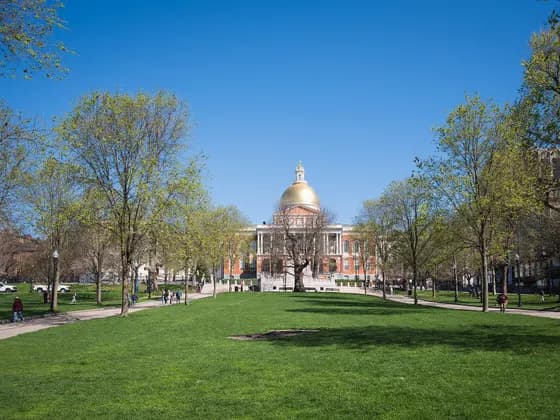
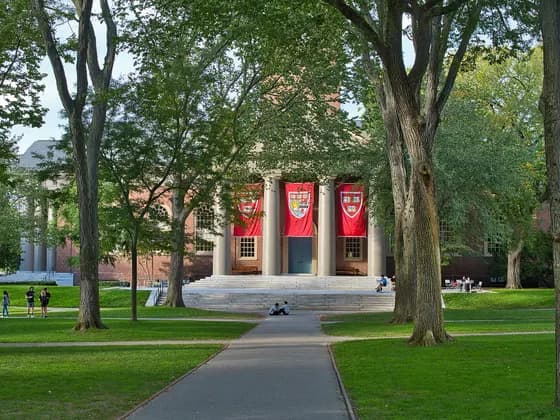
Photo: Ajay Suresh · CC BY 4.0 · cropped
Photo: SBAmin · CC BY-SA 3.0 · Photo: Christian David · CC BY-SA 4.0 · Photo: Chris Rycroft · CC BY 2.0
How to get into Harvard School of Dental Medicine (DMD) dentistry
Step-by-step: entry requirements, admission tests, personal statement, interview format and the key deadlines.
Open the guide →Harvard School of Dental Medicine (DMD) entry requirements
Admission profile, interview format, decision dates and what makes Harvard School of Dental Medicine (DMD) different.
See the profile →The Harvard School of Dental Medicine (DMD) dentistry interview
Harvard School of Dental Medicine (HSDM) uses a traditional interview format — typically one or two faculty sessions of 30–45 minutes. HSDM is the smallest and most research-intensive US dental school, admitting approximately 35 students per year. Every HSDM student is expected to pursue a scholarly research project alongside clinical training.
HSDM offers a distinctive DMD program integrated with Harvard Medical School — students take first-year medical school courses alongside HMS students and are expected to think about dentistry within a broader biomedical and systemic health context. Interviewers probe genuine integration of medicine and dentistry in the applicant's thinking.
HSDM is committed to oral health equity and global oral health. Questions about oral health disparities, the relationship between oral and systemic health, and the underrepresentation of dental care in US health insurance systems are common.
Application is through ADEA AADSAS. DAT score is required. HSDM secondaries are sent selectively.
Harvard School of Dental Medicine (DMD) interview at a glance (2027 entry)
| Annual DMD class size | ~35 |
|---|---|
| Interview format | Traditional — one to two faculty sessions |
| DAT required | Yes — via ADEA AADSAS |
| Tuition (2025–26) | ~USD 72,000/year |
| Application system | ADEA AADSAS primary + HSDM secondary |
| Distinctive feature | Year 1 integrated with Harvard Medical School |
| Interview window | October–February |
Interview format
- One or two one-on-one sessions with faculty; open-file.
- No MMI.
- HSDM's small class size means every admitted student is closely scrutinized for research potential and fit.
Sample interview questions
HSDM students take first-year courses at Harvard Medical School. How do you think about dentistry as a medical discipline, and why does that integration matter to you?
Oral-systemic health connections:
- periodontal disease and cardiovascular risk
- diabetes and periodontitis
- oral cancer and HPV
- head-and-neck anatomy
Show you see dentistry as part of medicine, not a separate trade.
Every HSDM student is expected to conduct research. What scholarly question in dentistry or oral biology would you want to pursue, and what draws you to it?
The question does not need to be finalized — but you should have genuine intellectual curiosity about an oral health or biomedical question. Reference HSDM research areas: oral oncology, salivary diagnostics, biomaterials.
Dental care is the most frequently cited unmet health need in the US. What do you think explains this, and what is the dental profession's obligation to address it?
What they are listening for:
- Dental insurance coverage (most Americans lack it)
- the fee-for-service payment model
- geographic maldistribution of dentists
- the historical separation of dental and medical care
HSDM trains dentist-leaders who are expected to think systemically.
Describe a time you helped someone understand a health concept they were resistant to or confused by. What did you learn about communication in a healthcare context?
Dentist-patient communication is notoriously challenging — dental anxiety, dental phobia, and patient non-compliance are pervasive. Show you have reflected on how to build trust in a clinical communication context.
A patient needs a crown that her insurance covers only partially, leaving her with a $1,200 copay she says she cannot afford. You know that a less optimal but covered option exists. How do you approach this conversation?
What they are listening for:
- Informed consent
- patient autonomy
- financial counseling
- treatment alternatives
- the ethics of recommending ideal vs. affordable care
The fee-for-service dental model creates this tension constantly.
A patient who has avoided the dentist for years because of severe dental anxiety has finally come in with significant decay and is visibly shaking in the chair. Talk with her before you begin.
Dental anxiety and phobia are pervasive. Use a calm, non-judgmental tone, explain each step, signal that she controls the pace and can stop at any time, and build trust before treatment. Empathy without minimizing the clinical need is the skill HSDM looks for.
A parent insists their seven-year-old does not need a recommended filling because 'they're just baby teeth.' Respond to the parent.
What they are listening for:
- Educate without condescension on the role of primary teeth in spacing
- function
- pain
- the risk to the developing dentition
Use plain language, respect the parent, and confirm understanding rather than lecturing.
You are shown US data where untreated tooth decay rates are several times higher among low-income adults than higher-income adults. What might explain this, and what would you want to know?
Read it through dental-insurance gaps (most Americans lack coverage), the fee-for-service model, geographic maldistribution of dentists, water fluoridation, and diet environment. Distinguish association from causation — HSDM trains dentist-leaders to think systemically about access.
Why dentistry rather than medicine, given that HSDM would let you train alongside medical students for a full year? What specifically draws you to the mouth as your field of care?
Make a positive case for dentistry on its own terms — the blend of manual craft and biomedical science, longitudinal relationships, and visible outcomes — while showing you genuinely value the medical integration. Avoid framing dentistry as 'medicine but narrower.'
Describe how you have developed your manual dexterity and fine-motor precision, and why those skills matter for dentistry.
Concrete examples — instruments, art, crafts, surgery, music, or lab work — and honest reflection on building precision under time pressure. Connect dexterity to patient safety and the quality of restorative work.
Describe a research or scholarly project you have done. What was the question, and what would you change with hindsight?
HSDM is the only US dental school that expects every student to conduct research. Show intellectual ownership and self-criticism, and ideally connect the project to an oral-biology or biomedical question you could pursue at Harvard.
A patient requests an expensive cosmetic procedure they do not clinically need while neglecting active decay you have flagged. How do you handle it?
Balance patient autonomy with the duty to inform and prioritize health. Explain the clinical risks, document the conversation, and respect an informed choice while ensuring she understands the consequences of leaving decay untreated.
Dental Medicaid reimburses so poorly that many private dentists decline Medicaid patients. What does this mean for low-income patients, and what is the profession's responsibility?
The dental access crisis, FQHC and dental-school clinics as safety nets, and the profession's obligation to advocate for adequate reimbursement rather than simply opting out. HSDM expects systemic thinking on oral-health equity.
Explain to a patient with no science background why their gum disease might matter for their diabetes or heart health.
Plain language on the oral-systemic connection — periodontal inflammation and its links to glycaemic control and cardiovascular risk — without jargon, and check understanding. This integration is the defining feature of an HSDM education.
Tell me about the experience that first made you certain you wanted to be a dentist, and how it shaped what kind of clinician you want to become.
A specific, reflective story — shadowing, a personal dental experience, or hands-on work — that reveals genuine motivation and a realistic understanding of the profession's daily reality, not an idealized version.
Practise the Harvard School of Dental Medicine (DMD) interview
Rehearse the real format before the day — on demand with our AI interviewers, or live with a tutor.
Sit a mock with photoreal AI interviewers — any time
A timed MMI or panel interview on video — American & international voices — with interviewers who listen, react and press with follow-ups. Rubric-scored feedback and a replay the moment you finish.






Live mocks with a tutor who’s been in the room
A full Harvard School of Dental Medicine (DMD)-style mock with a medic or dentist tutor — honest scoring against real marking criteria, a station-by-station debrief and a written action plan.
Book a mock interviewHow to prepare for the Harvard School of Dental Medicine (DMD) interview
Common pitfalls to avoid
Harvard School of Dental Medicine (DMD) interview — frequently asked questions
Sources & official admissions information
Ready to nail your Harvard School of Dental Medicine (DMD) interview?
Book a mock interview with a tutor who knows the US interview formats, orpractice unlimited stations from our interview question bank.