
ATSU Missouri School of Dentistry and Oral Health Interview
Format, Questions & Prep Tips
ATSU Missouri School of Dentistry and Oral Health dentistry interviews for 2027 entry are a traditional interview, held September 2026 through February 2027. ATSU Missouri School of Dentistry and Oral Health describes the format as: Two separate 30-minute one-on-one interviews, one with a faculty member and one with an Admissions staff member (in-person or virtual interview days). Published figures: Annual DMD class size ~55; Tuition (2025–26) ~USD 58,000–62,000/year (estimated; verify with school).
- Institution
- Missouri School of Dentistry and Oral Health at A.T. Still University
- Interview (2027 entry)
- September through February
- Decisions (2027 entry)
- Rolling; most decisions within six weeks of interview
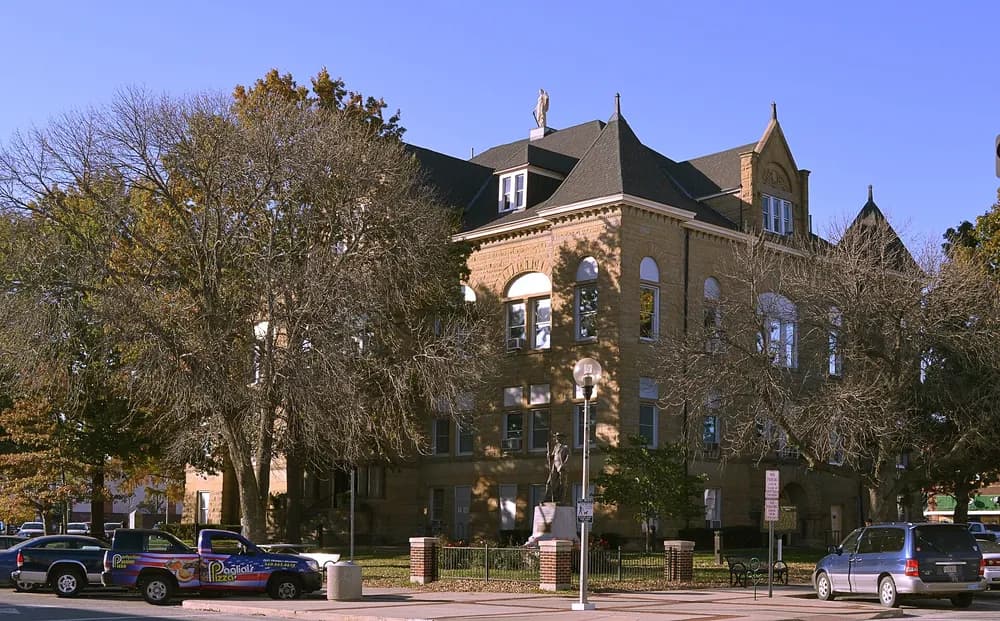
Photo: Kbh3rd · CC BY 4.0 · cropped
Photo: Andrew.Belair · CC BY-SA 3.0 · Photo: mostateparks · Public domain · Photo: Andrew.Belair · CC BY-SA 3.0
How to get into ATSU Missouri School of Dentistry and Oral Health (DMD) dentistry
Step-by-step: entry requirements, admission tests, personal statement, interview format and the key deadlines.
Open the guide →ATSU Missouri School of Dentistry and Oral Health (DMD) entry requirements
Admission profile, interview format, decision dates and what makes ATSU Missouri School of Dentistry and Oral Health (DMD) different.
See the profile →The ATSU Missouri School of Dentistry and Oral Health (DMD) dentistry interview
Missouri School of Dentistry and Oral Health (MOSDOH) at A.T. Still University uses a traditional panel interview conducted in Kirksville, Missouri. MOSDOH is one of the most mission-driven dental schools in the US — its entire curriculum is built around preparing dentists to serve rural and underserved communities across Missouri.
MOSDOH is affiliated with A.T. Still University, the founding institution of osteopathic medicine. The school’s whole-person, oral-systemic health philosophy permeates its curriculum and its interview process — expect questions about how oral health connects to systemic disease and community wellbeing.
The interview day includes informal student interaction and a clinic tour. Interviewers want to see that your commitment to underserved populations is genuine and backed by real experience — not just stated as an application strategy.
ATSU Missouri School of Dentistry and Oral Health (DMD) interview at a glance (2027 entry)
| Annual DMD class size | ~55 |
|---|---|
| Interview format | Traditional panel — faculty and administrators |
| DAT required | Yes — via ADEA AADSAS |
| Tuition (2025–26) | ~USD 58,000–62,000/year (estimated; verify with school) |
| Application system | ADEA AADSAS primary + ATSU secondary |
| Interview window | September–February |
Interview format
- Faculty and administrator panel — typically 2–3 interviewers.
- Mission and values focused; community service background expected.
- Clinic tour and student informal sessions included.
- May include a written reflection component.
Sample interview questions
MOSDOH's mission is to train dentists to serve rural and underserved communities. What in your background specifically prepares you for that commitment?
Concrete experiences — volunteer clinics, rural upbringing, community health work. Avoid generic "I want to help people" answers; be specific about what you have already done.
A patient in a rural community needs a crown but cannot afford private dental care. What options exist, and how do you navigate the conversation?
What they are listening for:
- Safety-net dental resources
- community health centers
- sliding-scale fees
- referral to FQHC
Address patient dignity and financial barriers without judgment.
How does untreated dental disease connect to systemic health outcomes? Give a specific example.
Periodontal disease and cardiovascular disease / diabetes / preterm birth; oral bacteremia and endocarditis. ATSU's whole-person health philosophy expects this connection to be natural, not rehearsed.
Missouri has significant dental shortage areas in rural regions. If you could change one policy to improve dental access in rural Missouri, what would it be and why?
What they are listening for:
- Dental therapy
- loan forgiveness tied to service obligation
- Medicaid reimbursement reform
- mobile dental units — pick one and defend it with evidence
Describe a time you worked with people from a different background and what you learned about providing care or services to diverse populations.
What they are listening for:
- Cultural competence
- communication across difference
- adapting your approach
Use a STAR structure.
What does manual dexterity mean to you in the context of clinical dentistry, and how have you developed or demonstrated it?
What they are listening for:
- Artistic hobbies
- craft
- laboratory work
- dental assisting
- simulation lab experience
Be specific — dental schools want evidence, not assertion.
MOSDOH uses a competency-based curriculum rather than traditional grading. What appeals to you about that model, and what challenges do you anticipate?
Competency-based education focuses on demonstrated skills rather than grades — fits dentistry well. Challenges: self-directed learning, time management. Show you have researched the model.
A classmate asks you to sign off on a patient record for a procedure you were not present for. What do you do?
ADA code of ethics: integrity in documentation. Decline, explain to classmate, escalate appropriately. No ambiguity on falsifying records.
Why dentistry rather than medicine, given that systemic health is a core part of MOSDOH's curriculum?
Oral-systemic health is the bridge — dentistry is not a lesser choice. Address the direct, hands-on relationship with patients in dental care, preventive focus, and the specific appeal of oral-systemic integration.
How would you handle a situation where a patient refuses recommended treatment for a dental condition that could worsen significantly without intervention?
Patient autonomy vs. beneficence. Inform, educate, document. Do not coerce. Revisit in future appointments. Address emergency care thresholds.
A Missouri county health profile shows high rates of untreated decay and emergency-department visits for dental pain. As a MOSDOH student planning a community rotation, how would you read that and what would you propose?
ED visits for dental pain signal an access and prevention failure, not a clinical curiosity. Link it to FQHC capacity, sealant and fluoride programs, and triage. Move from the statistic to a concrete, measurable community intervention.
How would you explain to a rural Missouri patient with limited health literacy why their dental infection could affect the rest of their body, without frightening or lecturing them?
What they are listening for:
- Plain language
- a simple cause-and-effect picture
- respect for the patient's intelligence
- a clear next step
ATSU's whole-person philosophy should make oral-systemic communication feel natural and reassuring, not alarming.
Your simulated patient is a farmer who has driven over an hour to your rural clinic, is in pain, and says he 'doesn't have time' for a full treatment plan — he just wants the tooth out today. How do you respond?
Meet him where he is — address the urgent pain, respect his time and constraints, and offer a realistic staged plan rather than an idealized one he cannot follow. Rural practice means tailoring care to real lives, not textbook scheduling.
MOSDOH's whole-person model is rooted in A.T. Still's osteopathic philosophy. How would that philosophy actually change the way you take a history and plan treatment for a complex patient?
What they are listening for:
- Whole-person
- patient-in-context care: ask about systemic disease
- medications
- social and economic circumstances
- coordinate with the patient's physician
Show the philosophy translating into specific clinical behavior, not just a slogan.
During a community rotation, a supervising dentist suggests not recording a patient's missed follow-ups so the clinic's numbers look better for a grant report. What do you do?
Documentation integrity is non-negotiable under the ADA code. Decline, explain why accurate records matter for patient safety and honest reporting, and escalate appropriately. No falsification, even for a sympathetic-sounding reason.
Practise the ATSU Missouri School of Dentistry and Oral Health (DMD) interview
Rehearse the real format before the day — on demand with our AI interviewers, or live with a tutor.
Sit a mock with photoreal AI interviewers — any time
A timed MMI or panel interview on video — American & international voices — with interviewers who listen, react and press with follow-ups. Rubric-scored feedback and a replay the moment you finish.



Live mocks with a tutor who’s been in the room
A full ATSU Missouri School of Dentistry and Oral Health (DMD)-style mock with a medic or dentist tutor — honest scoring against real marking criteria, a station-by-station debrief and a written action plan.
Book a mock interviewHow to prepare for the ATSU Missouri School of Dentistry and Oral Health (DMD) interview
Common pitfalls to avoid
ATSU Missouri School of Dentistry and Oral Health (DMD) interview — frequently asked questions
Sources & official admissions information
Ready to nail your ATSU Missouri School of Dentistry and Oral Health (DMD) interview?
Book a mock interview with a tutor who knows the US interview formats, orpractice unlimited stations from our interview question bank.