
Columbia College of Dental Medicine Interview
Format, Questions & Prep Tips
Columbia College of Dental Medicine dentistry interviews for 2027 entry are a traditional interview, held October 2026 through February 2027. Published figures: Annual DDS class size ~80; Tuition (2025–26) ~USD 72,000/year.
- Institution
- Columbia University College of Dental Medicine
- Interview (2027 entry)
- October through February
- Decisions (2027 entry)
- Regular decisions by late March

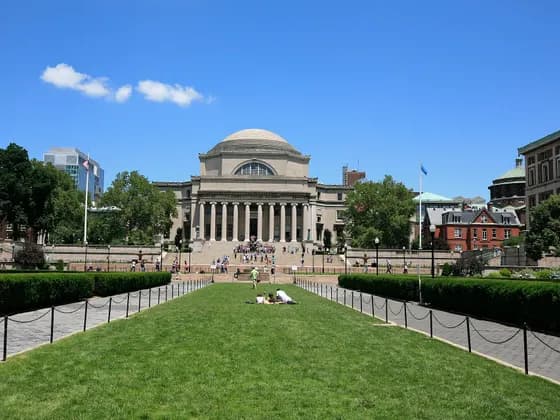
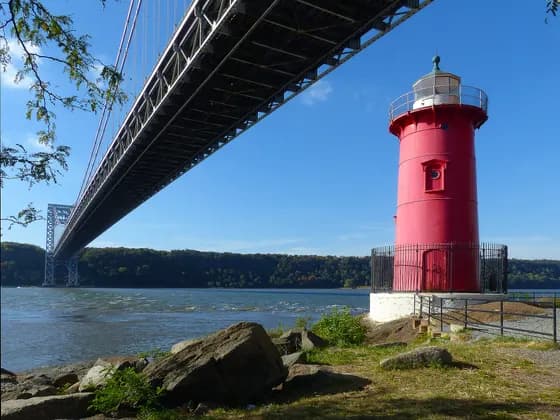

Photo: Beyond My Ken · CC BY-SA 4.0 · cropped
Photo: Alex Proimos from Sydney, Australia · CC BY 2.0 · Photo: Antoni Jalandoni · CC BY-SA 4.0 · Photo: Beyond My Ken · CC BY-SA 4.0
How to get into Columbia College of Dental Medicine (DDS) dentistry
Step-by-step: entry requirements, admission tests, personal statement, interview format and the key deadlines.
Open the guide →Columbia College of Dental Medicine (DDS) entry requirements
Admission profile, interview format, decision dates and what makes Columbia College of Dental Medicine (DDS) different.
See the profile →The Columbia College of Dental Medicine (DDS) dentistry interview
Columbia College of Dental Medicine uses a traditional interview format — typically one or two faculty sessions at the Columbia University Irving Medical Center in Washington Heights. Columbia Dental is a small, research-intensive dental school closely integrated with Columbia University Medical Center and NewYork-Presbyterian Hospital.
Columbia Dental has a strong oral health equity focus given its location in Washington Heights — a predominantly Dominican and Latinx neighborhood with high rates of dental disease and limited dental insurance coverage. Interviewers probe genuine commitment to serving this community.
CDM has significant research infrastructure and strong ties to Columbia Vagelos P&S, providing dual-degree pathways (DDS/PhD) for students interested in academic dental medicine.
Columbia College of Dental Medicine (DDS) interview at a glance (2027 entry)
| Annual DDS class size | ~80 |
|---|---|
| Interview format | Traditional — one to two faculty sessions |
| DAT required | Yes — via ADEA AADSAS |
| Tuition (2025–26) | ~USD 72,000/year |
| Application system | ADEA AADSAS primary + Columbia Dental secondary |
| Interview window | October–February |
Interview format
- One or two one-on-one sessions: faculty.
- No MMI.
Sample interview questions
Why dentistry rather than medicine, especially at a school as biomedically integrated as Columbia?
A positive case for dentistry that also embraces Columbia's medical integration: the craft and science of oral health, longitudinal relationships, and training alongside medical students at a major academic medical center.
Columbia Dental is in Washington Heights — a Latinx community with high rates of dental disease. How does that geographic context shape your vision of dental practice?
What they are listening for:
- Dental access barriers for uninsured Latinx families
- the value of bilingual dental care
- community-based oral health promotion
Show genuine, specific engagement with the neighborhood.
Columbia Dental is small and research-intensive with a DDS/PhD pathway. How does research fit into your goals?
Genuine interest in inquiry and the academic medicine model. Even if you intend to practice clinically, value evidence-based dentistry and the close ties to Columbia Vagelos P&S.
Tell us about the experience that confirmed dentistry is the right path for you.
A specific, reflective story showing realistic understanding of the profession rather than an idealized view.
How have you developed your manual dexterity and fine-motor skills, and why do they matter in dentistry?
Concrete examples — art, music, crafts, lab or surgical work — and reflection on precision under time pressure. Connect dexterity to restorative quality and patient safety.
A monolingual Spanish-speaking patient in Washington Heights is anxious and distrustful of the dental school clinic. How do you build rapport?
Professional interpreter use, cultural humility, explaining the supervised-care model, and patience. If you speak Spanish, discuss when professional interpretation is still appropriate.
Dental Medicaid reimbursement rates are so low that most private dentists do not accept Medicaid patients. What does this mean for low-income patients and for the profession?
What they are listening for:
- The dental Medicaid access crisis
- FQHC dental programs
- dental-school clinics as safety nets
- the profession's obligation to advocate for adequate reimbursement
A patient who has waited months for a clinic appointment misses it without notice, and others are waiting. How should the clinic respond, and how do you think about fairness here?
Balance individual circumstances — transport, work, childcare — against fairness to others and clinic capacity. Avoid punitive assumptions; consider structural barriers behind missed appointments.
You identify a treatment-planning disagreement between yourself and a supervising faculty member about what is best for a patient. How do you handle it?
What they are listening for:
- Respectful disagreement
- patient-centered reasoning
- managing hierarchy thoughtfully
Show you can advocate for the patient while remaining a learner.
Should dental care be integrated into general health insurance rather than treated as a separate, optional benefit?
Use the oral-systemic health link and access consequences. Reason through a genuine policy question with evidence rather than simply asserting a stance.
Columbia's DDS pairs a demanding biomedical curriculum, shared with the medical school, alongside clinical skill development. How will you manage that?
Realistic study strategy, time management, and use of support resources. Show self-knowledge about learning and building technical skill in a rigorous environment.
Is there anything in your DAT scores or AADSAS academic record you would like to explain?
Own weaknesses honestly without excuses and show upward trajectory. Self-awareness reassures interviewers more than a perfect record.
Role-play: a classmate asks you to sign off that you witnessed a procedure you did not actually see. Respond.
Decline and uphold integrity while remaining collegial. Patient safety and honest documentation are paramount in clinical training.
Role-play: an uninsured parent is overwhelmed by the cost of their child's needed dental work. Discuss options with empathy.
Compassion, plain-language explanation of sliding-scale and FQHC options, and prioritizing urgent needs. Show you can help a family navigate financial barriers without judgment.
You are shown data showing markedly higher untreated decay in Washington Heights than in wealthier Manhattan neighborhoods. What might explain this and what would you want to know?
What they are listening for:
- Insurance coverage
- provider distribution
- language access
- diet environment
- care-seeking barriers
Distinguish association from causation and identify what further data would clarify the picture.
Practise the Columbia College of Dental Medicine (DDS) interview
Rehearse the real format before the day — on demand with our AI interviewers, or live with a tutor.
Sit a mock with photoreal AI interviewers — any time
A timed MMI or panel interview on video — American & international voices — with interviewers who listen, react and press with follow-ups. Rubric-scored feedback and a replay the moment you finish.






Live mocks with a tutor who’s been in the room
A full Columbia College of Dental Medicine (DDS)-style mock with a medic or dentist tutor — honest scoring against real marking criteria, a station-by-station debrief and a written action plan.
Book a mock interviewHow to prepare for the Columbia College of Dental Medicine (DDS) interview
Common pitfalls to avoid
Columbia College of Dental Medicine (DDS) interview — frequently asked questions
Sources & official admissions information
Ready to nail your Columbia College of Dental Medicine (DDS) interview?
Book a mock interview with a tutor who knows the US interview formats, orpractice unlimited stations from our interview question bank.