
Case Western Reserve School of Dental Medicine Interview
Format, Questions & Prep Tips
Case Western Reserve School of Dental Medicine dentistry interviews for 2027 entry are a traditional interview, held October 2026 through February 2027. Published figures: Annual DMD class size ~75; Tuition (2025–26) ~USD 70,000/year.
- Institution
- Case Western Reserve University School of Dental Medicine
- Interview (2027 entry)
- October through February
- Decisions (2027 entry)
- Regular decisions by late March

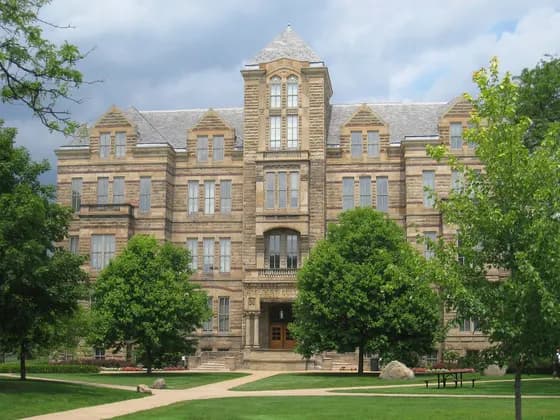

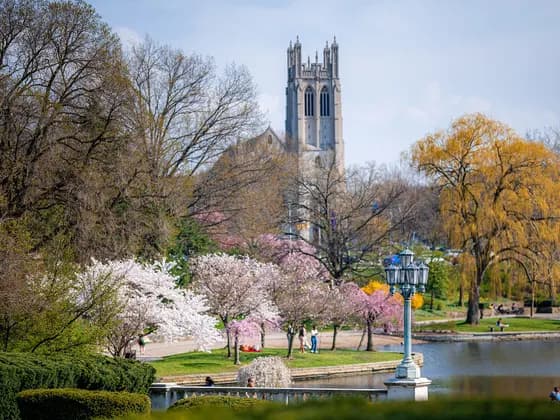
Photo: Rdikeman at English Wikipedia · CC BY-SA 3.0 · cropped
Photo: Daderot · Public domain · Photo: Daderot · Public domain · Photo: Erik Drost · CC BY 2.0
How to get into Case Western Reserve School of Dental Medicine (DMD) dentistry
Step-by-step: entry requirements, admission tests, personal statement, interview format and the key deadlines.
Open the guide →Case Western Reserve School of Dental Medicine (DMD) entry requirements
Admission profile, interview format, decision dates and what makes Case Western Reserve School of Dental Medicine (DMD) different.
See the profile →The Case Western Reserve School of Dental Medicine (DMD) dentistry interview
Case Western Reserve University School of Dental Medicine uses a traditional interview format with two sessions (faculty and student) at its Cleveland, Ohio campus. Case Western Dental is a private research-intensive dental school closely affiliated with Case Western University School of Medicine.
Case Western Dental has a strong emphasis on biomaterials and dental technology research and is a leader in translational dental research. Interviewers probe research interest and the oral-systemic health connection.
The school serves Cleveland's diverse and economically challenged patient population through its dental clinics and community partnerships, and interviewers probe awareness of Cleveland-specific oral health disparities.
Case Western Reserve School of Dental Medicine (DMD) interview at a glance (2027 entry)
| Annual DMD class size | ~75 |
|---|---|
| Interview format | Traditional — faculty + student sessions |
| DAT required | Yes — via ADEA AADSAS |
| Tuition (2025–26) | ~USD 70,000/year |
| Application system | ADEA AADSAS primary + CWRU secondary |
| Interview window | October–February |
Interview format
- Two sessions: faculty and student.
- No MMI.
Sample interview questions
Why dentistry rather than medicine or another health profession?
Case Western wants applicants committed to dentistry specifically. Speak to the procedural craft, the blend of art and science, the autonomy of practice, and the lasting patient relationships. Avoid presenting dentistry as a fallback from medicine, even though the school is closely tied to its medical school.
Case Western Dental is research-intensive and known for biomaterials and translational research. What draws you to a school with that focus?
Reference the biomaterials and dental technology research, the close affiliation with the Case Western School of Medicine, and the translational emphasis. Show genuine engagement — if you have research experience, be specific about it; if not, articulate authentic curiosity about how research advances clinical care.
Dentistry demands fine-motor precision. How have you developed and tested your manual dexterity?
Give concrete evidence — art, an instrument, model-building, or lab and craft work — and reflect on improvement with deliberate practice. Connect it to the steadiness, hand-eye coordination, and patience chairside dentistry requires; lab and bench work can also demonstrate this aptitude.
What concerns you most about a career in dentistry, and how would you cope?
Show informed self-awareness:
- the physical toll of clinical posture
- the emotional weight of anxious patients
- the repetition of routine procedures
- the business pressures of practice
Offer concrete coping strategies rather than minimizing the challenges.
A novel dental material is heavily marketed but has limited long-term evidence. A patient asks for it. How should you respond?
This fits Case Western's research focus. Discuss evidence-based practice, the difference between marketing and peer-reviewed data, honest communication about the unknowns, and respecting autonomy while not overstating benefits. Show you can weigh innovation against the evidence base.
You are involved in a study and notice early results may not favor the sponsor's product. What are your obligations?
Research integrity is paramount. Discuss honest reporting regardless of commercial interest, the dangers of bias and selective reporting, and the duty to patients and the scientific record. Translational research only helps patients if its findings are trustworthy.
A patient cannot afford the ideal restorative plan and asks for a cheaper option you consider clinically inferior. How do you handle this?
Respect autonomy and financial reality while being honest about trade-offs. Discuss informed consent, offering a range of acceptable options, and avoiding both paternalism and substandard care. Cleveland's economically challenged patient population makes affordability a real factor.
You discover a colleague recommends expensive implant-based treatments when simpler options would serve the patient equally well. What do you do?
Patient welfare and integrity outweigh collegial loyalty. Discuss verifying the pattern, raising it directly first, and escalating if it continues. Over-treatment is a genuine hazard, and access to evidence on when newer technology actually benefits patients matters here.
How would you explain a new treatment option, including its uncertainties, to a patient without overwhelming or misleading them?
Use plain language, present benefits and unknowns honestly, check understanding with teach-back, and support shared decision-making. Given Case Western's technology focus, communicating about innovation responsibly is a core skill.
Describe a meaningful clinical, research, or community experience and what it taught you about dentistry.
Go deep on one experience and reflect on what you learned — whether about the chairside relationship, the research process, or Cleveland's underserved patients. Reflection matters more than breadth, and research experiences are welcome given the school's culture.
Case Western is known for biomaterials research. How do you think advances in dental materials — implants, CAD/CAM ceramics, bioactive cements — will change practice in your career?
Discuss digital dentistry, implant biomechanics, and the importance of the evidence base for novel materials. Show genuine engagement with how technology is changing clinical dentistry, while keeping a critical eye on what is proven versus promising.
What is the connection between oral health and systemic health?
Cover the periodontal-systemic links — diabetes, cardiovascular disease, adverse pregnancy outcomes — and the dentist's screening and detection role. The close tie to the medical school makes the oral-systemic connection a natural theme at Case Western.
Why are prevention and regular recall so central to dentistry, including in an underserved urban population?
Most dental disease is preventable or best managed early, yet underserved patients often present late. Discuss prevention, sealants and fluoride, and the public-health and cost logic of catching disease early, relevant to Cleveland's patient base.
A patient is skeptical of a recommended digital scan and CAD/CAM crown, preferring 'the old way.' Address their concerns. (Hypothetical scenario.)
Respect the patient's preference, explain the evidence and benefits honestly without overselling, acknowledge the unknowns, and support an informed choice. Show you can communicate about new technology in a balanced, patient-centered way.
A patient from an economically challenged Cleveland neighborhood is embarrassed about the state of their teeth and apologetic. Reassure them and agree a plan. (Hypothetical scenario.)
Lead with empathy and remove the shame. Acknowledge barriers without judgment, prioritize their concerns, discuss realistic and affordable options, and frame the relationship as a partnership built on trust.
A study reports a new bonding material outperforms the standard, but the trial was small and industry-funded. How would you appraise this before changing your practice?
Consider sample size, funding bias, study design, follow-up length, and whether results have been replicated. Show you can critically appraise evidence rather than adopt new materials on the strength of a single promising study — a key skill in a research-intensive school.
Practise the Case Western Reserve School of Dental Medicine (DMD) interview
Rehearse the real format before the day — on demand with our AI interviewers, or live with a tutor.
Sit a mock with photoreal AI interviewers — any time
A timed MMI or panel interview on video — American & international voices — with interviewers who listen, react and press with follow-ups. Rubric-scored feedback and a replay the moment you finish.






Live mocks with a tutor who’s been in the room
A full Case Western Reserve School of Dental Medicine (DMD)-style mock with a medic or dentist tutor — honest scoring against real marking criteria, a station-by-station debrief and a written action plan.
Book a mock interviewHow to prepare for the Case Western Reserve School of Dental Medicine (DMD) interview
Common pitfalls to avoid
Case Western Reserve School of Dental Medicine (DMD) interview — frequently asked questions
Sources & official admissions information
Ready to nail your Case Western Reserve School of Dental Medicine (DMD) interview?
Book a mock interview with a tutor who knows the US interview formats, orpractice unlimited stations from our interview question bank.