
The Ohio State University College of Dentistry Interview
Format, Questions & Prep Tips
The Ohio State University College of Dentistry dentistry interviews for 2027 entry are multiple mini interviews (MMI). Published figures: Annual DDS class size ~110.
- Institution
- The Ohio State University College of Dentistry
- Interview (2027 entry)
- October through February; rolling invitations after secondary review
- Decisions (2027 entry)
- Rolling decisions from November through March; waitlist movement through spring


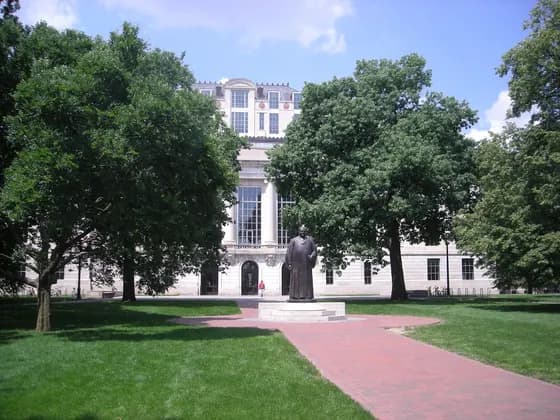

Photo: Nheyob · CC BY-SA 3.0 · cropped
Photo: Kevin Payravi · CC BY-SA 4.0 · Photo: Michael Barera · CC BY-SA 4.0 · Photo: Ɱ · CC BY-SA 4.0
How to get into The Ohio State University College of Dentistry (DDS) dentistry
Step-by-step: entry requirements, admission tests, personal statement, interview format and the key deadlines.
Open the guide →The Ohio State University College of Dentistry (DDS) entry requirements
Admission profile, interview format, decision dates and what makes The Ohio State University College of Dentistry (DDS) different.
See the profile →The The Ohio State University College of Dentistry (DDS) dentistry interview
The Ohio State University College of Dentistry uses a traditional one-on-one faculty interview format at its Columbus campus. Founded in 1890, OSU Dentistry is one of the nation’s oldest public dental schools, with a large clinical training volume, strong specialty education programs, and an active research enterprise.
Casper is not currently required at The Ohio State University College of Dentistry — verify on the official admissions page each cycle, as requirements change. Ohio residents receive meaningful preference as a public university with a state workforce mission.
OSU Dentistry interviewers pay particular attention to interpersonal skills given the school’s patient-centered clinical culture.
The Ohio State University College of Dentistry (DDS) interview at a glance (2027 entry)
| Annual DDS class size | ~110 |
|---|---|
| Interview format | Traditional one-on-one faculty interview |
| DAT required | Yes — via ADEA AADSAS |
| CASPer required | No |
| In-state preference | Strong — public Ohio university |
| Application system | ADEA AADSAS primary + OSU secondary |
| Interview window | October–February |
Interview format
- Traditional one-on-one faculty interviews, typically 30–45 minutes.
- Casper is not currently required — verify on the official admissions page each cycle.
- Clinic and simulation laboratory tour at the OSU dental complex.
- Lunch with current DDS students; informal admissions information session.
Sample interview questions
Why The Ohio State University College of Dentistry, and what aspect of its program most aligns with your goals?
Reference OSU's specific strengths — large clinical volume, specialty education programs, research infrastructure, or Wexner Medical Center affiliation. Show you've researched the school beyond its ranking.
Walk me through your path to dentistry — what specific experiences confirmed this is the right career for you?
Be specific about shadowing experiences, patient interactions, or moments of clinical insight. Avoid generic answers about liking science and helping people.
A patient presents with signs of oral cancer but is uninsured and anxious about costs. What is your responsibility as their dentist?
Address timely referral, patient education, financial assistance resources, and the dentist's duty of care. OSU Dentistry's large clinical setting sees exactly these complex social determinants of health cases.
How did CASPer preparation change how you think about professional judgment scenarios?
Show self-reflection. Casper is not currently required at The Ohio State University College of Dentistry — verify on the official admissions page each cycle.
Describe a time when you had to adapt your communication style to connect with a patient or colleague who was initially resistant.
Use STAR structure. Focus on what you read in the other person, what you changed, and what you learned about your own communication habits.
You suspect a patient is experiencing domestic violence. What do you do?
Cover mandatory reporting obligations, patient safety, confidentiality limits, trauma-informed communication, and referral to social services. Oral healthcare providers are frontline identifiers of domestic violence injuries.
OSU has strong advanced specialty education programs. Do you plan to specialize, and if so, how will dental school prepare you for that path?
Be honest about your current thinking. If you are speciality-focused, name the speciality and show you understand the additional training pathway. If undecided, explain how you plan to use dental school to explore.
What research area in dentistry interests you most and why?
Reference OSU's research areas: oral biology, biomaterials, dental public health, oral oncology, or craniofacial research. Show genuine intellectual curiosity, not just a desire to pad a CV.
How would you explain the link between gum disease and cardiovascular disease to a patient who has never heard of it?
What they are listening for:
- Plain language explanation
- motivational interviewing to encourage behavior change
- practical home care advice
Oral-systemic communication is a core competency.
A colleague performs a procedure you believe was unnecessary and was likely motivated by financial incentives. How do you handle this?
Address peer accountability, patient welfare, reporting obligations, and the role of professional ethics in maintaining trust in the dental profession.
You are shown a chart from OSU's clinic: patients from certain Columbus ZIP codes have markedly higher rates of advanced periodontal disease at first visit. How do you interpret this and what would you want to do with it?
Read the disparity in terms of access, insurance, and prior care rather than patient behavior alone. Propose targeted outreach or earlier screening and a way to measure impact. OSU's large clinical volume makes population-level reasoning relevant.
Your simulated patient disagrees with your recommended treatment because they read online that the procedure is unnecessary. How do you handle the conversation?
What they are listening for:
- Stay curious
- not defensive — ask what they read
- address it with evidence in plain language
- respect autonomy
- document
Restore trust while being honest about the clinical picture.
OSU Dentistry has a large research enterprise. If you joined a project, what question would you pursue, and how would CASPer-style professional-judgment thinking carry into research integrity?
Name a genuine research interest and connect rigor and honesty in research to the same professionalism CASPer probes. OSU values applicants who treat both clinical and scholarly integrity seriously.
A faculty member you respect tells you to record a procedure as more extensive than it was so the clinic captures a higher fee. What do you do?
Refuse to misrepresent treatment in the record — this is fraud and a patient-trust violation. Raise it through appropriate channels. Hierarchy does not override documentation integrity.
Describe a time you had to give honest, difficult feedback to a peer or teammate. How did you do it?
Balance candour with respect, focus on behavior and impact, and aim for the relationship to survive. Clinical teams and peer accountability depend on this skill.
Practise the The Ohio State University College of Dentistry (DDS) interview
Rehearse the real format before the day — on demand with our AI interviewers, or live with a tutor.
Sit a mock with photoreal AI interviewers — any time
A timed MMI or panel interview on video — American & international voices — with interviewers who listen, react and press with follow-ups. Rubric-scored feedback and a replay the moment you finish.






Live mocks with a tutor who’s been in the room
A full The Ohio State University College of Dentistry (DDS)-style mock with a medic or dentist tutor — honest scoring against real marking criteria, a station-by-station debrief and a written action plan.
Book a mock interviewHow to prepare for the The Ohio State University College of Dentistry (DDS) interview
Common pitfalls to avoid
The Ohio State University College of Dentistry (DDS) interview — frequently asked questions
Sources & official admissions information
Ready to nail your The Ohio State University College of Dentistry (DDS) interview?
Book a mock interview with a tutor who knows the US interview formats, orpractice unlimited stations from our interview question bank.