
Stony Brook University School of Dental Medicine Interview
Format, Questions & Prep Tips
Stony Brook University School of Dental Medicine dentistry interviews for 2027 entry are a traditional interview, held September 2026 through February 2027. Published figures: Annual DDS class size ~46; Tuition (2025–26) ~USD 30,000 (in-state) / USD 55,000 (out-of-state) estimated.
- Institution
- Stony Brook University School of Dental Medicine
- Interview (2027 entry)
- September through February
- Decisions (2027 entry)
- Rolling; decisions typically within 4–6 weeks of interview

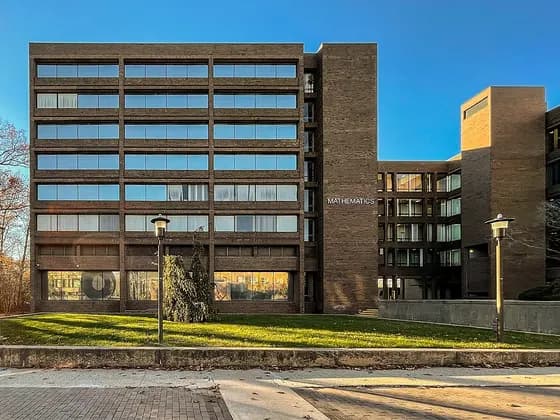


Photo: Kenneth C. Zirkel · CC BY-SA 4.0 · cropped
Photo: Kenneth C. Zirkel · CC BY-SA 4.0 · Photo: Vitsuha · CC BY-SA 4.0 · Photo: CWii · CC BY-SA 3.0
How to get into Stony Brook University School of Dental Medicine (DDS) dentistry
Step-by-step: entry requirements, admission tests, personal statement, interview format and the key deadlines.
Open the guide →Stony Brook University School of Dental Medicine (DDS) entry requirements
Admission profile, interview format, decision dates and what makes Stony Brook University School of Dental Medicine (DDS) different.
See the profile →The Stony Brook University School of Dental Medicine (DDS) dentistry interview
Stony Brook University School of Dental Medicine conducts traditional one-on-one faculty interviews on its Long Island campus. Stony Brook is the only dental school on Long Island and a flagship SUNY (State University of New York) institution — it serves one of the densest and most diverse suburban patient populations in the northeast US.
The school is integrated with Stony Brook University Hospital, providing access to hospital-based dental and oral medicine training that distinguishes it from freestanding dental schools. Expect questions about research interest and the hospital-dental interface alongside standard clinical motivation.
New York State residents have a strong admissions advantage as a SUNY school. Out-of-state applicants must make a compelling case for choosing Stony Brook.
Stony Brook University School of Dental Medicine (DDS) interview at a glance (2027 entry)
| Annual DDS class size | ~46 |
|---|---|
| Interview format | Traditional — faculty one-on-one |
| DAT required | Yes — via ADEA AADSAS |
| Tuition (2025–26) | ~USD 30,000 (in-state) / USD 55,000 (out-of-state) estimated |
| Application system | ADEA AADSAS primary + Stony Brook secondary |
| Interview window | September–February |
Interview format
- Faculty one-on-one interview — 30–45 minutes.
- Research interest may be probed (SUNY research university).
- Clinic and hospital facilities tour.
- Informal student interactions.
Sample interview questions
Why Stony Brook School of Dental Medicine — and what specifically attracts you to training on Long Island?
What they are listening for:
- SUNY value
- Long Island patient population diversity
- hospital integration with Stony Brook University Hospital
- research culture
Show genuine knowledge of the school.
Stony Brook's dental school is integrated with Stony Brook University Hospital. What clinical training opportunities does that create that a freestanding dental school would not have?
What they are listening for:
- Hospital dental rotations
- oral medicine
- complex medically compromised patients
- interdisciplinary case management
- oral surgery in a hospital setting
Shows you have researched the specific curriculum.
Have you had any experience with or interest in dental research? How does a research university environment influence clinical training?
Stony Brook is a major research university — evidence-based practice, clinical research exposure, access to research faculty. Even if research is not your career goal, show awareness of the evidence-based practice connection.
Long Island has significant dental access disparities in its immigrant and low-income communities. How would you address those disparities in your practice?
What they are listening for:
- Community health center practice
- Medicaid acceptance
- linguistic access
- culturally competent care
Suffolk County has large immigrant populations — cultural and linguistic competence are clinically practical here.
A patient with a complex medical history — on warfarin, with a history of cardiac valve replacement — presents needing an extraction. How do you approach the case?
What they are listening for:
- Medical consultation with physician before procedure
- anticoagulation management
- hospital dental setting when appropriate
Complex medically compromised patients are exactly where Stony Brook's hospital integration shines — show you understand that context.
Describe your most meaningful dental shadowing or work experience and what you specifically observed that confirmed your interest in the field.
What they are listening for:
- Concrete
- specific
- sensory-level description
The best answers describe a particular patient interaction, procedure, or moment — not a summary of hours logged.
Long Island has large Spanish-speaking, Korean-speaking, and Chinese-speaking communities. How would you approach patient communication in these contexts?
What they are listening for:
- Professional interpreters
- cultural competence
- translated materials
- building community relationships over time
Do not suggest relying on family members as medical interpreters.
You discover that a treatment error was made by a previous clinician in the patient's chart — the patient is currently in your chair. What do you do?
Treat the current clinical need, document accurately, inform supervising faculty, and address the error through appropriate channels. Patient safety and transparency are primary.
How do you stay current with advances in dental materials and techniques? Give a specific example of something you have learned recently.
What they are listening for:
- Journals (JADA, Journal of Dental Research)
- continuing education
- evidence-based dentistry principles
Shows professional identity formation beyond basic requirements.
An anxious patient refuses X-rays that you consider clinically necessary. How do you handle the appointment?
Informed consent and patient autonomy — they can decline. Explain your rationale clearly, document the refusal, proceed with the clinical assessment you can perform, and establish a plan to revisit in a future appointment.
You are shown two studies on a new bioactive restorative material: a manufacturer-funded trial with strong results and a smaller independent trial with mixed results. How do you decide whether to adopt it at Stony Brook?
What they are listening for:
- Appraise sample size
- conflict of interest
- outcome definitions
- follow-up duration
Favor independent replication and longer-term data over a single funded trial. Evidence-based reasoning is fair game at a SUNY research university.
Your simulated patient is a Stony Brook University Hospital inpatient on multiple anticoagulants who is anxious about a bedside dental consult and says they 'just want to go home'. How do you conduct the encounter?
Acknowledge the stress of being hospitalized, explain why the consult matters now, coordinate with the medical team on anticoagulation, and keep the dental ask proportionate. This is exactly the hospital-dental interface Stony Brook is known for — show you can work inside a ward.
If you joined a Stony Brook summer research project, what oral-biology or craniofacial question would you most want to investigate, and why does it matter clinically?
Pick a genuine interest — periodontal immunology, biomaterials, oral oncology, salivary diagnostics — and connect it to patient care. Stony Brook values research literacy even from students who will practice clinically.
A Suffolk County patient brings their teenage child to interpret because they speak limited English. How do you handle informed consent for the parent's extraction?
Decline to use the child as interpreter — use a professional or telephone interpreter, protect the child from clinical burden, and confirm understanding with teach-back. Name why family interpreters are a consent and safeguarding risk.
During a hospital rotation you notice an attending dentist rarely washes hands between patients despite protocol. You are a student. What do you do?
Patient safety and infection control are non-negotiable. Raise it through appropriate channels — speak up tactfully in the moment if safe, and escalate to a supervisor or infection-control lead. Hierarchy does not excuse a safety lapse.
Practise the Stony Brook University School of Dental Medicine (DDS) interview
Rehearse the real format before the day — on demand with our AI interviewers, or live with a tutor.
Sit a mock with photoreal AI interviewers — any time
A timed MMI or panel interview on video — American & international voices — with interviewers who listen, react and press with follow-ups. Rubric-scored feedback and a replay the moment you finish.






Live mocks with a tutor who’s been in the room
A full Stony Brook University School of Dental Medicine (DDS)-style mock with a medic or dentist tutor — honest scoring against real marking criteria, a station-by-station debrief and a written action plan.
Book a mock interviewHow to prepare for the Stony Brook University School of Dental Medicine (DDS) interview
Common pitfalls to avoid
Stony Brook University School of Dental Medicine (DDS) interview — frequently asked questions
Sources & official admissions information
Ready to nail your Stony Brook University School of Dental Medicine (DDS) interview?
Book a mock interview with a tutor who knows the US interview formats, orpractice unlimited stations from our interview question bank.