
Yeshiva University College of Dental Medicine Interview
Format, Questions & Prep Tips
Yeshiva University College of Dental Medicine dentistry interviews for 2027 entry are a traditional interview.
- Institution
- Yeshiva University College of Dental Medicine
- Interview (2027 entry)
- Verify with school — program opened 2026
- Decisions (2027 entry)
- Verify with school — inaugural program

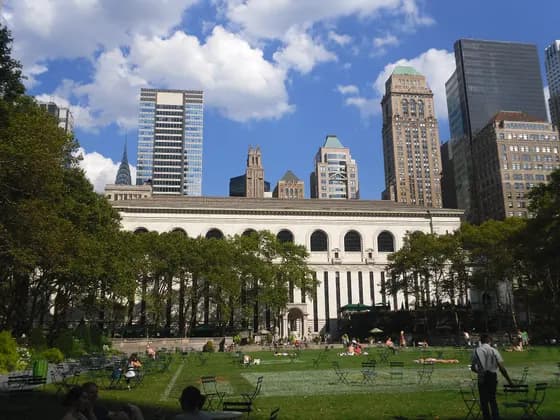
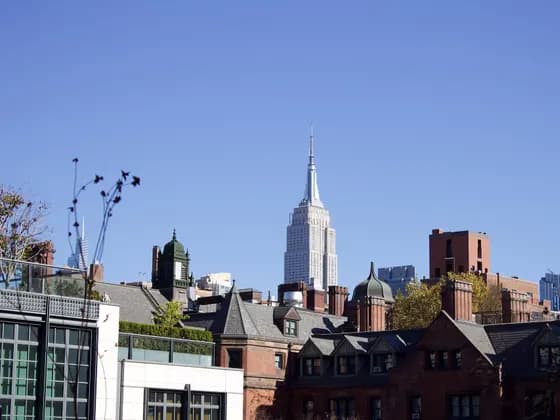

Photo: Beyond My Ken · CC BY-SA 4.0 · cropped
Photo: Elmschrat [1] · CC BY-SA 3.0 · Photo: Lupita Midore · CC BY 4.0 · Photo: Bruce Emmerling · CC BY-SA 4.0
How to get into Yeshiva University College of Dental Medicine (DDS) dentistry
Step-by-step: entry requirements, admission tests, personal statement, interview format and the key deadlines.
Open the guide →Yeshiva University College of Dental Medicine (DDS) entry requirements
Admission profile, interview format, decision dates and what makes Yeshiva University College of Dental Medicine (DDS) different.
See the profile →The Yeshiva University College of Dental Medicine (DDS) dentistry interview
Yeshiva University College of Dental Medicine is described in the manifest as the newest accredited dental school in the US, noted as opening in 2026. The school is affiliated with Yeshiva University, Albert Einstein College of Medicine, and Montefiore Medical Center in New York City — a combination that places dental education at the intersection of major medical research and urban community health.
Given the school’s very recent opening, specific interview format details should be verified directly with the admissions office. The general framework below reflects what is known from Yeshiva University’s institutional values and the Einstein/Montefiore context.
Yeshiva University is rooted in Jewish heritage and values of intellectual responsibility, community service, and tikkun olam (repairing the world). Students of all backgrounds are welcomed. Interviewers are likely to probe these values alongside clinical motivation and interprofessional awareness.
Important caveat: As a newly opened program, applicants should conduct thorough due diligence on accreditation conditions and board preparation support before applying.
Yeshiva University College of Dental Medicine (DDS) interview at a glance (2027 entry)
| Annual DMD class size | Inaugural — verify with school |
|---|---|
| Interview format | Traditional — verify with school |
| DAT required | Yes — via ADEA AADSAS |
| Tuition (2025–26) | Verify with school — inaugural program |
| Application system | ADEA AADSAS primary + YU secondary |
| Interview window | Verify with school |
Interview format
- Traditional faculty interview — details to be confirmed with admissions.
- Einstein/Montefiore affiliation may shape oral-systemic focus.
- Jewish heritage institutional values (tikkun olam, community responsibility).
- New program — be prepared for an interview culture still being established.
Sample interview questions
Yeshiva University College of Dental Medicine is brand new. Why would you choose an inaugural dental school over an established program?
What they are listening for:
- Opportunity to shape institutional culture
- Einstein/Montefiore access
- interprofessional education
- trust in the Yeshiva University/Einstein research enterprise
Be honest about what appeals and what concerns you.
Yeshiva University's institutional values include tikkun olam — repairing the world through service and responsibility. How do those values connect to your vision of dental practice?
What they are listening for:
- Service to community through clinical care
- reducing oral health disparities
- professional responsibility as a form of social repair
Engage thoughtfully with the concept — not as religious knowledge, but as a professional ethic.
The school's affiliation with Albert Einstein College of Medicine and Montefiore Medical Center is a distinctive feature. How would you leverage that medically-integrated environment in your dental training?
What they are listening for:
- Interprofessional education
- complex medically compromised patient management
- hospital dental rotations
- oral oncology
- oral medicine
Be specific about what the medical-dental interface offers.
As a dentist in a medically integrated academic health system, how do you see your role in the management of patients with complex chronic diseases?
What they are listening for:
- Oral-systemic disease management
- coordinating with physicians
- participating in care teams
- contributing to treatment planning for medically complex patients
The Einstein/Montefiore context makes this a practical reality, not just a theoretical concept.
You are starting dental school at a brand new institution. The curriculum is still developing and some systems are not yet established. How do you thrive in that environment?
What they are listening for:
- Adaptability
- self-directed learning
- constructive feedback culture
- contributing to building the program
Show intellectual maturity about choosing a new school with its inherent uncertainties.
New York City has one of the most diverse populations in the world, including large Orthodox Jewish communities in Brooklyn and the Bronx. How do you approach culturally and religiously sensitive patient care?
What they are listening for:
- Scheduling around Shabbat and Jewish holidays
- sensitivity to tzniut (modesty norms)
- diverse patient expectations
Cultural competence is clinically practical in New York City — not abstract.
What does it mean to practice with intellectual honesty in clinical dentistry?
What they are listening for:
- Acknowledging uncertainty
- staying current with evidence
- communicating limitations to patients
- asking for help when needed
Yeshiva University's academic tradition values intellectual humility and rigor.
A patient from a religious community declines treatment during a specific religious period and the delay carries a clinical risk. How do you handle this?
Respect religious autonomy, clearly explain clinical risks, document thoroughly, provide emergency contact for urgent situations, schedule the earliest appropriate time after the religious period. Never coerce.
Why dentistry rather than medicine, given that this school's institutional home is primarily a medical enterprise?
The oral-systemic integration actually makes dentistry more medically relevant here than at most dental schools. Address the uniqueness of the dentist-patient relationship, preventive focus, and the specific clinical scope of dentistry.
How do you plan to stay connected to the dental profession's evidence base throughout your career, starting in dental school?
What they are listening for:
- Journals
- continuing education
- professional associations (ADA, state dental societies)
- evidence-based clinical guidelines
Show professional identity formation beyond the graduation requirement.
The Bronx, where Montefiore is based, has some of the highest rates of childhood caries and diabetes in New York State. As a YU dental student, how would you read those statistics and let them shape your training priorities?
Connect the disease burden to oral-systemic care, school-based prevention, and the Einstein/Montefiore integrated model. Move from epidemiology to a concrete training or service priority rather than reciting figures.
Your simulated patient is an Orthodox Jewish woman who appears uncomfortable being treated by a male student and asks whether a female clinician is available. How do you respond?
Respond with respect, not defensiveness — accommodate the request where possible, involve faculty to arrange a female clinician or chaperone, and avoid making the patient justify the preference. Tzniut sensitivity is practical cultural competence in New York City.
In an academic health system like Einstein/Montefiore, how would you, as a dentist, contribute to a multidisciplinary team caring for a patient about to undergo head-and-neck cancer radiotherapy?
What they are listening for:
- Pre-radiation dental clearance
- managing osteoradionecrosis risk
- fluoride and caries prevention
- ongoing coordination with oncology
This is where the medical-dental integration is most concrete — show you grasp the dentist's specific role.
Describe a time you joined a group or system that was disorganized or still forming, and helped bring structure or improvement.
An inaugural class will face evolving systems. Show initiative, constructive feedback, and resilience — concrete contribution to building something, not just tolerance of chaos.
As an inaugural-class student, you find a gap in the school's clinical or safety protocols. Walk me through how you would raise and help resolve it.
What they are listening for:
- Patient safety first; escalate constructively through faculty and student governance
- propose a solution rather than just flagging a problem
- follow up
New programs need students who improve systems, not who quietly work around them.
Practise the Yeshiva University College of Dental Medicine (DDS) interview
Rehearse the real format before the day — on demand with our AI interviewers, or live with a tutor.
Sit a mock with photoreal AI interviewers — any time
A timed MMI or panel interview on video — American & international voices — with interviewers who listen, react and press with follow-ups. Rubric-scored feedback and a replay the moment you finish.


Live mocks with a tutor who’s been in the room
A full Yeshiva University College of Dental Medicine (DDS)-style mock with a medic or dentist tutor — honest scoring against real marking criteria, a station-by-station debrief and a written action plan.
Book a mock interviewHow to prepare for the Yeshiva University College of Dental Medicine (DDS) interview
Common pitfalls to avoid
Yeshiva University College of Dental Medicine (DDS) interview — frequently asked questions
Sources & official admissions information
Ready to nail your Yeshiva University College of Dental Medicine (DDS) interview?
Book a mock interview with a tutor who knows the US interview formats, orpractice unlimited stations from our interview question bank.