
University at Buffalo School of Dental Medicine Interview
Format, Questions & Prep Tips
University at Buffalo School of Dental Medicine dentistry interviews for 2027 entry are a traditional interview, held September 2026 through February 2027. Published figures: Annual DDS class size ~85; Tuition (2025–26) ~USD 30,000 (in-state) / USD 56,000 (out-of-state) estimated.
- Institution
- University at Buffalo School of Dental Medicine
- Interview (2027 entry)
- September through February
- Decisions (2027 entry)
- Rolling; decisions typically within 4–6 weeks of interview
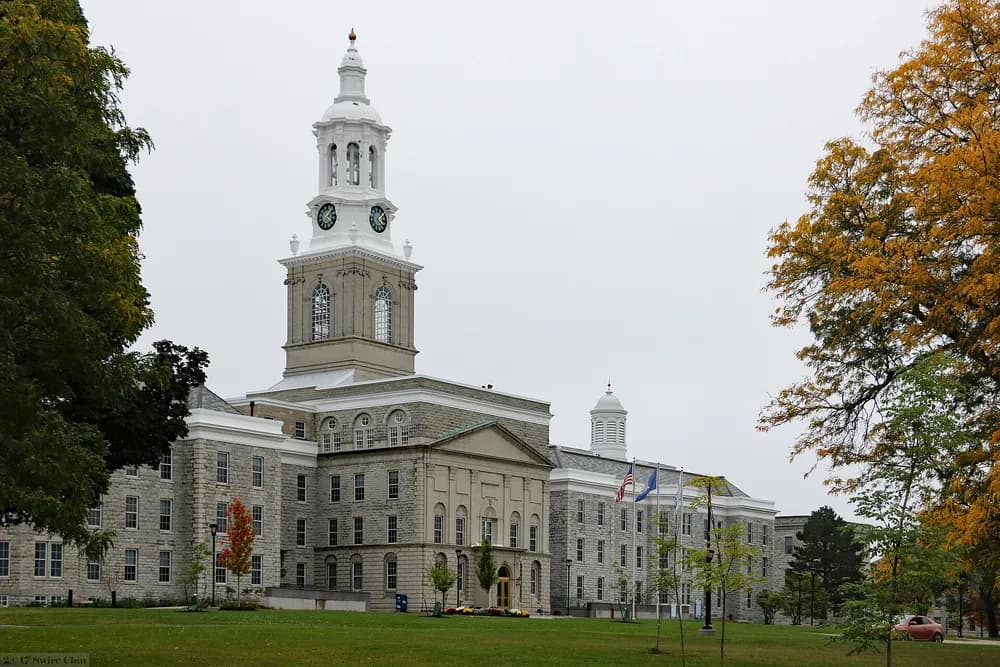
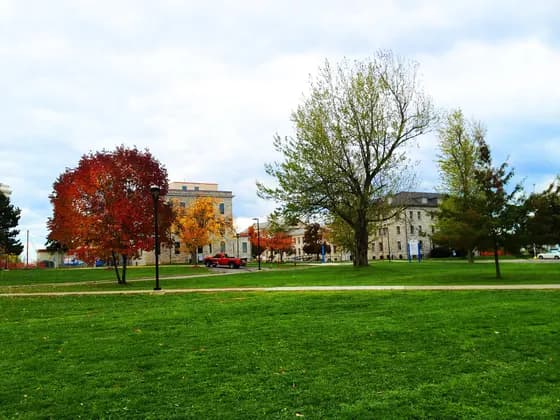
Photo: Can Pac Swire · CC BY-SA 2.0 · cropped
Photo: Davidhar · CC BY-SA 3.0 · Photo: bobistraveling · CC BY 2.0 · Photo: w_lemay · CC BY-SA 2.0
How to get into University at Buffalo School of Dental Medicine (DDS) dentistry
Step-by-step: entry requirements, admission tests, personal statement, interview format and the key deadlines.
Open the guide →University at Buffalo School of Dental Medicine (DDS) entry requirements
Admission profile, interview format, decision dates and what makes University at Buffalo School of Dental Medicine (DDS) different.
See the profile →The University at Buffalo School of Dental Medicine (DDS) dentistry interview
The University at Buffalo School of Dental Medicine conducts traditional one-on-one faculty interviews on UB’s South Campus in Buffalo, New York. UB Dental is one of the oldest dental schools in the US (founded 1892), a SUNY flagship research institution, and a major dental training program for Western New York and the broader state.
UB is co-located with the Jacobs School of Medicine and Biomedical Sciences — one of New York’s major medical schools — making interprofessional education and research participation genuine features of the dental curriculum. Research interest is valued more here than at most public dental schools.
Buffalo’s Rust Belt urban context provides access to a diverse, working-class patient population with significant dental health disparities — clinical training breadth is a genuine strength. NY State residents have a strong admissions advantage as a SUNY school.
University at Buffalo School of Dental Medicine (DDS) interview at a glance (2027 entry)
| Annual DDS class size | ~85 |
|---|---|
| Interview format | Traditional — faculty one-on-one |
| DAT required | Yes — via ADEA AADSAS |
| Tuition (2025–26) | ~USD 30,000 (in-state) / USD 56,000 (out-of-state) estimated |
| Application system | ADEA AADSAS primary + UB secondary |
| Interview window | September–February |
Interview format
- Faculty one-on-one interview — 30–45 minutes.
- Research interest may be explored (SUNY flagship).
- Clinic, simulation lab, and research facilities tour.
- Informal student interactions.
Sample interview questions
Why UB School of Dental Medicine — and why Buffalo specifically?
What they are listening for:
- SUNY flagship
- research culture
- Jacobs co-location
- Buffalo clinical diversity
- affordable public education
- Western NY community
Show genuine school-specific knowledge.
UB's dental school is co-located with the Jacobs School of Medicine. How would you take advantage of that in your dental training?
What they are listening for:
- Interprofessional education
- oral-systemic research
- shared curriculum components
- hospital dental rotations
- collaborative case management
Name specific examples.
UB Dental has strong research infrastructure. Are you interested in dental research — and if so, what area most interests you?
No wrong answer — but show genuine awareness of what dental research involves and why evidence-based practice matters. If you have research experience, describe it specifically.
Buffalo has significant oral health disparities in its African American, immigrant, and low-income communities. How do you plan to serve those populations as a dentist?
What they are listening for:
- Community health center practice
- Medicaid acceptance
- cultural competence
- language access
Buffalo context is specific — show you have thought about Western New York, not just generic underserved communities.
Describe a situation where you demonstrated leadership in a team or academic environment.
STAR format. Dental practice and dental school require clinical team leadership — hygienists, assistants, consultants. Demonstrate collaborative leadership, not just authority.
A patient asks you to provide a prescription for pain medication that you do not believe is clinically indicated. What do you do?
Opioid stewardship — assess the clinical situation thoroughly, explain your reasoning, offer evidence-based alternatives (NSAIDs, non-pharmacological), document carefully. Do not prescribe without clinical justification.
How does your dental training at UB prepare you to contribute to managing systemic conditions like diabetes in your patient population?
What they are listening for:
- Bidirectional diabetes-periodontitis relationship
- screening at dental visits
- referral protocols
- communication with primary care physicians
- patient education
Interprofessional care in action.
Buffalo has large refugee and immigrant populations from East Africa, Southeast Asia, and Eastern Europe. What communication strategies would you use in clinical practice with these patients?
What they are listening for:
- Professional interpreter services
- culturally competent communication
- translated materials
- patience
- trust-building across cultural difference
Language is a practical clinical barrier, not just an equity concern.
Describe your most impactful dental shadowing experience. What did you observe that changed your understanding of what dentistry involves?
Specific and sensory. A particular patient, procedure, or conversation. Show that you have seen real clinical dentistry and have processed what it means to do this work daily.
You are a new dental student in clinic and a patient complains loudly that they have been waiting too long and demands to see a faculty dentist instead. How do you respond?
Acknowledge the patient's frustration without apologizing for appropriate clinical supervision protocols. Offer to get your supervisor. De-escalate without compromising your training relationship.
A Buffalo refugee-health clinic reports that newly arrived patients present with far more untreated decay and far fewer prior dental visits than the city average. As a UB student, how would you interpret that and design a response?
Separate barriers (no prior access, cost, language, distrust) from clinical need. Propose a language-concordant prevention and triage approach through a community health center, and a way to measure uptake. Buffalo's specific refugee context should ground the answer.
Your simulated patient is an East African refugee who, through an interpreter, says they do not trust that the proposed extraction is necessary because a previous provider rushed them. How do you build trust and proceed?
Validate the prior experience, slow down, use the interpreter to walk through the diagnosis and alternatives, and offer the patient genuine choice. Trust-building across cultural difference is a practical clinical skill in Buffalo, not an abstraction.
If you pursued a research elective at UB, which oral-biology or biomaterials question would you choose, and how would you go about investigating it?
Name a genuine interest — periodontal immunology, craniofacial development, dental biomaterials — and outline a basic approach. UB weights research literacy more heavily than most public dental schools; show you understand how a question becomes a study.
How would you explain to an elderly Buffalo patient with limited health literacy why their uncontrolled diabetes is making their gum disease worse and harder to treat?
What they are listening for:
- Plain language
- a simple two-way cause-and-effect explanation
- motivational interviewing
- a concrete home-care step
Avoid jargon and lecturing; check understanding with teach-back.
You are a student in the UB clinic and realize you have made a minor procedural error on a patient that no one else noticed. What do you do?
What they are listening for:
- Disclose to your supervising faculty immediately
- prioritize the patient's wellbeing
- document honestly
- learn from it
Integrity and transparency outweigh the discomfort of admitting a mistake.
Practise the University at Buffalo School of Dental Medicine (DDS) interview
Rehearse the real format before the day — on demand with our AI interviewers, or live with a tutor.
Sit a mock with photoreal AI interviewers — any time
A timed MMI or panel interview on video — American & international voices — with interviewers who listen, react and press with follow-ups. Rubric-scored feedback and a replay the moment you finish.


Live mocks with a tutor who’s been in the room
A full University at Buffalo School of Dental Medicine (DDS)-style mock with a medic or dentist tutor — honest scoring against real marking criteria, a station-by-station debrief and a written action plan.
Book a mock interviewHow to prepare for the University at Buffalo School of Dental Medicine (DDS) interview
Common pitfalls to avoid
University at Buffalo School of Dental Medicine (DDS) interview — frequently asked questions
Sources & official admissions information
Ready to nail your University at Buffalo School of Dental Medicine (DDS) interview?
Book a mock interview with a tutor who knows the US interview formats, orpractice unlimited stations from our interview question bank.