
Herman Ostrow School of Dentistry of USC Interview
Format, Questions & Prep Tips
Herman Ostrow School of Dentistry of USC dentistry interviews for 2027 entry are a traditional interview, held October 2026 through February 2027. Published figures: Annual DDS class size ~144.
- Institution
- Herman Ostrow School of Dentistry of USC
- Interview (2027 entry)
- October through February
- Decisions (2027 entry)
- Rolling; decisions within 4–8 weeks of interview

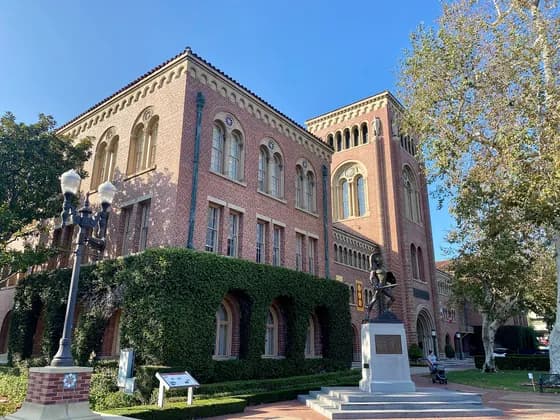
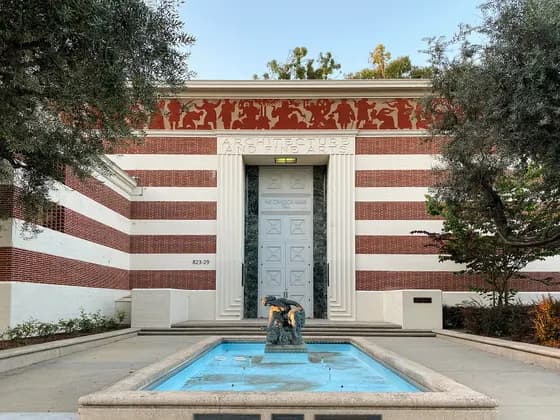
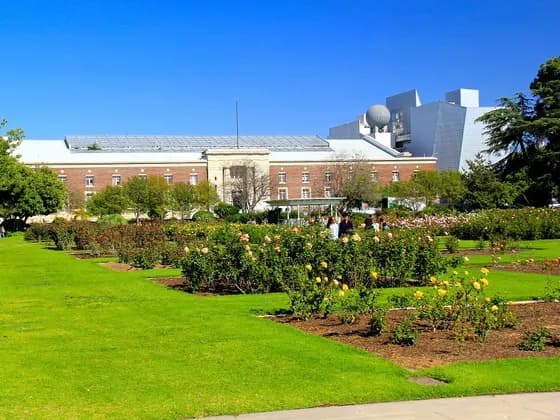
Photo: EEJCC · CC BY-SA 4.0 · cropped
Photo: EEJCC · CC0 · Photo: EEJCC · CC BY-SA 4.0 · Photo: MikeJiroch · CC BY-SA 3.0
How to get into Herman Ostrow School of Dentistry of USC (DDS) dentistry
Step-by-step: entry requirements, admission tests, personal statement, interview format and the key deadlines.
Open the guide →Herman Ostrow School of Dentistry of USC (DDS) entry requirements
Admission profile, interview format, decision dates and what makes Herman Ostrow School of Dentistry of USC (DDS) different.
See the profile →The Herman Ostrow School of Dentistry of USC (DDS) dentistry interview
Herman Ostrow School of Dentistry of USC uses a traditional interview format — one-on-one or panel faculty interviews at its Health Sciences campus in Los Angeles. USC Ostrow is a historic private dental school, founded in 1897, with one of the largest DDS programs in the western US and a state-of-the-art simulation facility.
Applications are via ADEA AADSAS. The DAT is required. No in-state preference — USC is a private institution.
USC Ostrow’s Los Angeles location provides access to extraordinary clinical diversity. Interviewers probe motivation, research and specialty interests, manual dexterity, and the oral-systemic health connection. Candidates should be prepared to articulate why USC specifically — not just California — is their choice.
Herman Ostrow School of Dentistry of USC (DDS) interview at a glance (2027 entry)
| Annual DDS class size | ~144 |
|---|---|
| Interview format | Traditional — faculty one-on-one or panel |
| DAT required | Yes — via ADEA AADSAS |
| Location | Los Angeles, CA (Health Sciences campus) |
| Application system | ADEA AADSAS primary + USC secondary |
| Interview window | October–February |
Interview format
- Traditional one-on-one or panel faculty interview; approximately 30–45 minutes per session.
- May include one to two interview sessions.
- Tour of dental simulation lab and clinical facilities.
- Rolling decisions after interview.
Sample interview questions
Why USC Ostrow specifically — what drew you to this school over other California dental schools?
Demonstrate specific knowledge:
- USC's simulation technology
- specialty program reputation
- Los Angeles clinical diversity
- research infrastructure within USC's university system
Generic California school answers will not stand out.
USC Ostrow has one of the most advanced dental simulation laboratories in the US. How do you expect to use simulation training to build clinical confidence?
Show that you understand the role of simulation in developing fine motor precision, building procedural fluency before patient care, and reducing anxiety in early clinical training.
Given USC's diverse Los Angeles patient population, how might oral-systemic health considerations differ across different patient groups?
Different communities have different risk profiles — uncontrolled diabetes in Latino communities, cardiovascular disease risk, HIV/AIDS management in oral health. Cultural competency in managing oral-systemic health is critical in a diverse urban clinic.
USC is a research-intensive university. Is research an interest for you, and if so, what area of dentistry would you want to explore?
Be honest — not every dental student needs research experience, but at a research university, demonstrating curiosity and awareness of dental research (biomaterials, craniofacial biology, oral cancer) adds value.
How have you specifically developed fine motor skills, and how will that prepare you for USC Ostrow's simulation lab training?
Connect your experience directly to what you expect in simulation lab — dental carving exercises, wax-up practice, hand scaling. Be specific.
A patient in USC's dental clinic is undocumented and afraid to provide personal information required for the intake process. How do you handle this?
Demonstrates cultural sensitivity, patient advocacy, and ADA ethics. Know that dental school clinics serving LA's diverse population frequently encounter this. Focus on patient-centered care and the clinic's obligations to provide care regardless of immigration status.
What are the key oral health disparities in Los Angeles, and what role can a dental school clinic play in addressing them?
Know:
- lack of Medi-Cal dentist participation
- dental deserts in South LA and the San Fernando Valley
- high rates of untreated decay in Latino and Black communities
- the role of dental school clinics as safety-net providers
Are you considering a dental specialty, and if so, why? If not, what draws you to general practice?
USC has strong specialty programs — orthodontics, periodontics, oral surgery, prosthodontics. If you have a specialty interest, be able to articulate it. If general practice appeals, explain what specific aspects — patient relationships, diversity of cases, community practice.
How would you handle a disagreement with a supervising attending over the treatment plan for one of your patients?
Demonstrates professionalism, communication skills, and patient advocacy. The correct answer involves raising concerns respectfully through appropriate channels, not simply deferring or confronting publicly.
USC is a large school with significant tuition costs. How have you thought about the financial investment, and does it affect where you practice after graduation?
A realistic financial conversation is appropriate. Show you have thought about debt-to-income ratios, repayment options, and how practice setting (private, group, community health) affects financial planning.
In USC's clinic, a patient grows angry when you explain a planned treatment will take several appointments and is more than they expected to pay. They raise their voice in the waiting area. How do you de-escalate?
Stay calm, move to privacy, acknowledge the frustration, clarify costs and phasing, and discuss financing or alternatives. Show composure and patient-centered communication in a busy urban clinic.
You read that one LA neighborhood has far higher untreated-decay rates than the county average despite several dental offices nearby. What might explain the paradox, and what data would clarify it?
Offices nearby is not the same as accessible care: insurance accepted, language, hours, cost, and trust. Probe Medi-Cal participation and capacity before concluding. Reflects LA disparities Ostrow serves.
How would you explain to a diverse, mixed-literacy patient why USC students are involved in their care and how supervision protects them?
Transparent, reassuring framing of the student-clinic model and attending oversight; build trust without jargon. Important in a high-volume teaching clinic serving vulnerable patients.
USC carries one of the highest dental-school price tags in the country. How have you reflected on taking on that debt, and how might it shape — or not shape — your choices after graduation?
Mature financial self-awareness:
- debt-to-income reasoning
- repayment options
- honesty about whether finances steer specialty or setting
Naivety about cost is a noted weakness.
A patient who is undocumented hesitates to complete intake paperwork at the USC clinic, fearing the information will be shared. How do you handle it ethically?
Reassure on confidentiality and the clinic's duty to treat regardless of status, collect only what is clinically necessary, and prioritize care. Cultural sensitivity plus patient advocacy.
Practise the Herman Ostrow School of Dentistry of USC (DDS) interview
Rehearse the real format before the day — on demand with our AI interviewers, or live with a tutor.
Sit a mock with photoreal AI interviewers — any time
A timed MMI or panel interview on video — American & international voices — with interviewers who listen, react and press with follow-ups. Rubric-scored feedback and a replay the moment you finish.




Live mocks with a tutor who’s been in the room
A full Herman Ostrow School of Dentistry of USC (DDS)-style mock with a medic or dentist tutor — honest scoring against real marking criteria, a station-by-station debrief and a written action plan.
Book a mock interviewHow to prepare for the Herman Ostrow School of Dentistry of USC (DDS) interview
Common pitfalls to avoid
Herman Ostrow School of Dentistry of USC (DDS) interview — frequently asked questions
Sources & official admissions information
Ready to nail your Herman Ostrow School of Dentistry of USC (DDS) interview?
Book a mock interview with a tutor who knows the US interview formats, orpractice unlimited stations from our interview question bank.