
Western University College of Dental Medicine Interview
Format, Questions & Prep Tips
Western University College of Dental Medicine dentistry interviews for 2027 entry are multiple mini interviews (MMI), held October 2026 through March 2027. Western University College of Dental Medicine describes the format as: In-person interview day with a 30-minute interview block and an MMI block (school’s sample schedule, August 2026). Published figures: Annual DMD class size ~69.
- Institution
- Western University College of Dental Medicine
- Interview (2027 entry)
- October through March
- Decisions (2027 entry)
- Rolling; decisions within 4–8 weeks of interview

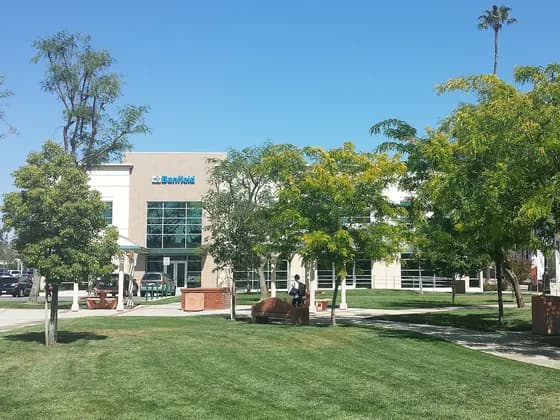
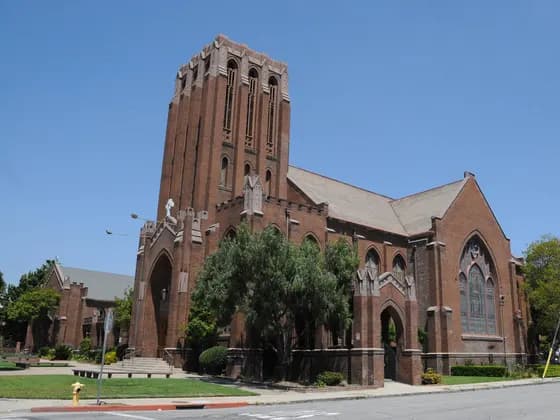

Photo: Ryan Hoff · CC BY-SA 4.0 · cropped
Photo: Ryan Hoff · CC BY-SA 4.0 · Photo: JERRYE & ROY KLOTZ, M.D. · CC BY-SA 4.0 · Photo: Los Angeles · CC BY-SA 3.0
How to get into Western University College of Dental Medicine (DMD) dentistry
Step-by-step: entry requirements, admission tests, personal statement, interview format and the key deadlines.
Open the guide →Western University College of Dental Medicine (DMD) entry requirements
Admission profile, interview format, decision dates and what makes Western University College of Dental Medicine (DMD) different.
See the profile →The Western University College of Dental Medicine (DMD) dentistry interview
Western University College of Dental Medicine uses an **MMI or traditional interview format at its Pomona, California campus. WesternU CDM is defined by its interprofessional education model** — dental students share foundational coursework with osteopathic medicine, pharmacy, nursing, and other health professions students from Year 1.
Applications are via ADEA AADSAS. The DAT is required. No in-state preference — WesternU is a private institution.
Interviewers assess motivation, interprofessional healthcare interest, oral-systemic health fluency, manual dexterity, and community health orientation. The Inland Empire location provides a large, diverse, underserved patient population — community health awareness is valued.
Western University College of Dental Medicine (DMD) interview at a glance (2027 entry)
| Annual DMD class size | ~69 |
|---|---|
| Interview format | MMI or traditional faculty interview |
| DAT required | Yes — via ADEA AADSAS |
| Location | Pomona, CA (Inland Empire) |
| Application system | ADEA AADSAS primary + WesternU secondary |
| Interview window | October–March |
Interview format
- MMI-style or traditional faculty interview; approximately 2–3 hours total.
- Stations or sessions assess communication, ethics, interprofessional values, and motivation.
- Campus tour includes interprofessional learning spaces and dental clinic.
- Rolling decisions after interview.
Sample interview questions
WesternU CDM students share coursework with osteopathic medicine, pharmacy, and other health professions students. How does that experience change how you will practice dentistry?
Be concrete: medication-dental interactions, shared patient cases, referral pathways, understanding of DO manipulative treatment for TMJ patients, pharmacist collaboration on drug interactions. Show genuine enthusiasm for collaborative learning, not just theoretical appreciation.
How would you apply oral-systemic health thinking when treating a patient who is also being managed by a physician and pharmacist for hypertension?
Demonstrate knowledge of antihypertensive drug-dental interactions (e.g., calcium channel blockers causing gingival hyperplasia, gag reflex suppression from certain medications). Show how interprofessional collaboration improves patient safety.
Why WesternU CDM rather than a more traditional dental school model?
Show specific knowledge of WesternU's interprofessional model and how it aligns with your values. Avoid generic California dental school answers.
Describe a task that developed your fine motor precision and how it will prepare you for clinical dental work.
Be specific and connect your experience to dental clinical expectations. Show readiness for simulation lab and early patient care.
During a patient encounter, you identify that the patient may be experiencing domestic abuse. What do you do?
Demonstrates knowledge of mandatory reporting obligations for healthcare providers, compassionate communication, patient safety, and referral to appropriate support services. Know that dentists are mandatory reporters in California.
The Inland Empire has significant oral health challenges. What do you know about the dental access landscape in this region?
Know: San Bernardino and Riverside counties have some of the worst oral health access metrics in California. Large Latino, working-class, and Medi-Cal populations with limited dental access. Community health centers and school-based dental programs are key access points.
How does team-based care improve outcomes for patients with complex chronic conditions in a community health setting?
Think about patients with diabetes, hypertension, HIV, and mental health conditions who need coordinated dental and medical care. Demonstrate how dentists contribute uniquely to the care team.
A pharmacist colleague alerts you that a patient's prescription from their physician may interact dangerously with a dental anesthetic you plan to use. How do you proceed?
A concrete interprofessional scenario. Demonstrates professional communication across disciplines, patient safety, and the value of the pharmacist-dentist relationship. Modify treatment plan, contact the prescribing physician, document the consultation.
Tell us about a healthcare service experience that involved working with patients from a different social or cultural background.
Cultural humility and community health orientation matter at WesternU CDM. Be specific about what you learned and how it changed your approach to care.
What is one challenge you anticipate in dental school that you have specifically prepared yourself to handle?
Demonstrates self-awareness and planning. Valid challenges include the volume of material, the precision demands of simulation lab, financial pressure, or balancing collaborative study with individual learning.
During a patient encounter you notice signs that make you concerned about possible domestic abuse, but the patient's partner is in the room and unwilling to leave. How do you proceed safely?
What they are listening for:
- Create a private moment
- ask non-judgmentally
- know California mandatory-reporting duties
- connect to resources without escalating risk
Tests safety judgment and communication, not just a recited protocol.
You are shown data showing San Bernardino and Riverside counties have some of California's worst oral-health access metrics. What would you want to know before designing a community program there?
What they are listening for:
- Medi-Cal dentist supply
- language
- school-based access
- transport
- clinic capacity
Show structural, data-aware reasoning tied to WesternU's Inland Empire context.
A pharmacist colleague warns that a patient's prescribed medication could interact dangerously with the dental anesthetic you planned. How would you explain the change of plan to the worried patient?
Translate the interprofessional safety decision into reassuring plain language and explain why the adjustment protects them. WesternU's shared-coursework model makes this exact scenario realistic.
Learning alongside DO, pharmacy, and nursing students means constant collaboration. Tell us about a time team learning challenged you, and what you took from it.
What they are listening for:
- Self-awareness about collaboration
- conflict
- growth
WesternU's whole identity is interprofessional — a candid example beats generic praise of teamwork.
In a community-clinic setting with limited appointment slots, how should the team decide between a patient with a painful urgent need and several patients overdue for important preventive care?
Engage triage and the justice principle openly — urgency, equity, and transparent criteria. WesternU's community-health orientation rewards thoughtful allocation reasoning.
Practise the Western University College of Dental Medicine (DMD) interview
Rehearse the real format before the day — on demand with our AI interviewers, or live with a tutor.
Sit a mock with photoreal AI interviewers — any time
A timed MMI or panel interview on video — American & international voices — with interviewers who listen, react and press with follow-ups. Rubric-scored feedback and a replay the moment you finish.






Live mocks with a tutor who’s been in the room
A full Western University College of Dental Medicine (DMD)-style mock with a medic or dentist tutor — honest scoring against real marking criteria, a station-by-station debrief and a written action plan.
Book a mock interviewHow to prepare for the Western University College of Dental Medicine (DMD) interview
Common pitfalls to avoid
Western University College of Dental Medicine (DMD) interview — frequently asked questions
Sources & official admissions information
Ready to nail your Western University College of Dental Medicine (DMD) interview?
Book a mock interview with a tutor who knows the US interview formats, orpractice unlimited stations from our interview question bank.