
University of Pittsburgh School of Dental Medicine Interview
Format, Questions & Prep Tips
University of Pittsburgh School of Dental Medicine dentistry interviews for 2027 entry are a traditional interview. Published figures: Annual DMD class size ~86.
- Institution
- University of Pittsburgh School of Dental Medicine
- Interview (2027 entry)
- October through February; rolling invitations after secondary review
- Decisions (2027 entry)
- Rolling decisions from November through March; waitlist movement through spring

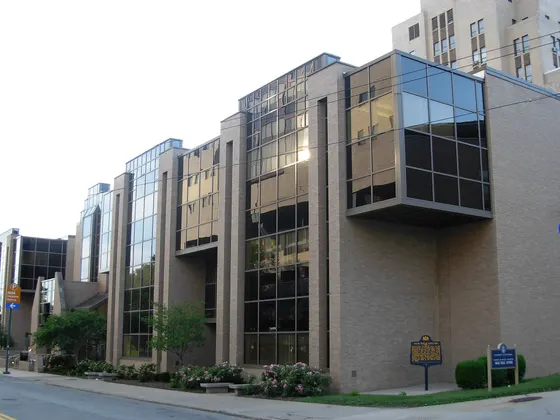


Photo: Kevin Albright · CC BY-SA 3.0 · cropped
Photo: Piotrus · CC BY-SA 3.0 · Photo: Cbaile19 · CC0 · Photo: Dllu · CC BY-SA 4.0
How to get into University of Pittsburgh School of Dental Medicine (DMD) dentistry
Step-by-step: entry requirements, admission tests, personal statement, interview format and the key deadlines.
Open the guide →University of Pittsburgh School of Dental Medicine (DMD) entry requirements
Admission profile, interview format, decision dates and what makes University of Pittsburgh School of Dental Medicine (DMD) different.
See the profile →The University of Pittsburgh School of Dental Medicine (DMD) dentistry interview
University of Pittsburgh School of Dental Medicine uses a traditional one-on-one faculty interview format at its Pittsburgh, Pennsylvania campus. Founded in 1896, Pitt Dental is one of the most research-intensive dental schools in the United States, with strong connections to the University of Pittsburgh’s biomedical research enterprise and UPMC’s hospital network.
The school values academic excellence, research curiosity, and diversity — and interviewers probe candidates’ depth of engagement with dentistry as both a clinical and scientific field.
The school uses ADEA AADSAS. DAT is required. Pitt Dental places notable emphasis on reasoning and science given its research-intensive identity.
University of Pittsburgh School of Dental Medicine (DMD) interview at a glance (2027 entry)
| Annual DMD class size | ~86 |
|---|---|
| Interview format | Traditional one-on-one faculty interview |
| DAT required | Yes — via ADEA AADSAS |
| In-state preference | Moderate — public Pennsylvania university |
| Application system | ADEA AADSAS primary + Pitt secondary |
| Interview window | October–February |
Interview format
- One or two traditional one-on-one faculty interviews, each approximately 30–45 minutes.
- Interviewers typically have reviewed the full ADEA AADSAS application and may probe research or service narratives in depth.
- Clinic and simulation laboratory tour at Pitt's dental facility.
- Interaction with current DMD students; admissions information session.
Sample interview questions
Pitt Dental is one of the most research-intensive dental schools in the US. How has research — either participating in it or reading about it — shaped your understanding of dentistry?
Reference specific dental research you have read or participated in. Pitt interviewers probe genuine scientific curiosity, not just a desire to check the research box.
Why Pitt Dental specifically — and what aspect of the program is most aligned with your five-year career vision?
Reference Pitt's specific research centers (McGowan Institute), UPMC affiliation, specialty tracks, or combined DMD/PhD program. Generic "great program" answers are not sufficient.
You read a new study suggesting that a treatment you commonly perform may not be as effective as previously believed. What do you do clinically and professionally?
What they are listening for:
- Evidence-based practice
- patient communication
- professional responsibility to update clinical practice
This is a natural question at a research-intensive school.
Walk me through a research or academic project you worked on and what you contributed to it.
Research experience (even as an undergraduate) is valued at Pitt Dental. Describe your actual contribution, what you learned, and how it shapes how you think about questions in dentistry.
How would you explain the difference between a composite and amalgam restoration to a patient making a treatment decision?
What they are listening for:
- Plain-language clinical communication covering materials
- aesthetics
- longevity
- cost
- patient preference
Patient-centered treatment planning is assessed here.
A dental industry representative offers your practice a significant financial incentive to prescribe their product. What is your ethical obligation?
What they are listening for:
- Conflict of interest
- patient welfare
- ADA ethics
- professional independence
Pitt Dental produces dentists who enter practice and academic careers — professional ethics framing is appropriate.
Are you considering a clinical academic career, and if so, how does Pitt Dental's combined DMD/PhD program align with that goal?
If research careers interest you, engage seriously with what the combined program entails. If not, show genuine respect for research while articulating a clear clinical practice vision.
How would you manage a patient who is highly anxious about a root canal procedure you have recommended?
Address anxiety management, informed consent, pre-procedural communication, and the technical explanation of why the procedure is necessary. Empathy and clinical confidence simultaneously.
A colleague who is a highly skilled clinician occasionally uses techniques you believe are outside accepted evidence-based guidelines. What do you do?
What they are listening for:
- Professionalism
- peer accountability
- patient safety
- the limits of individual clinical autonomy
Pitt Dental's evidence-based culture makes this a natural probe.
What do you think will be the most significant advance in dental materials or technology over the next decade?
Digital CAD/CAM, ceramic biomaterials, biodegradable scaffolds, AI-aided diagnostics, 3D printing, or photobiomodulation are all valid. Show genuine intellectual engagement with the field.
You are handed two clinical trials of a new caries-prevention agent that disagree. Walk me through how you would appraise them and decide whether to change your practice.
Compare sample size, blinding, outcome definitions, follow-up, and funding source; weigh the body of evidence over a single study; and consider applicability to your patients. Pit's research-intensive culture rewards genuine critical appraisal.
Your simulated patient is a well-informed engineer who pushes back on your treatment plan and wants to see the evidence behind each recommendation. How do you handle it?
Welcome the scrutiny, explain the evidence and uncertainty in plain terms, and treat it as shared decision-making rather than a challenge to your authority. Confidence and humility together — a natural fit at an evidence-based school.
If you joined a project at Pitt's biomaterials or tissue-engineering labs, what question would you want to answer, and why does it matter for patients?
Name a genuine interest — a restorative material, a regenerative scaffold, a diagnostic tool — and connect the science to clinical benefit. Pitt probes whether your research interest is real, not a box to tick.
How would you explain an uncertain prognosis — for example, a tooth that might be saved with a root canal but could still fail — to a patient deciding between that and extraction?
What they are listening for:
- Communicate probability honestly without overwhelming
- lay out the trade-offs
- support an informed choice
Handling uncertainty transparently is core to evidence-based, patient-centered dentistry.
You are listed as a co-author on a research abstract but did little of the work. The lead asks you to keep your name on it. What do you do?
Authorship requires genuine contribution; raise the concern and decline undeserved credit. Research integrity is a professional obligation Pitt takes seriously, not an academic technicality.
Practise the University of Pittsburgh School of Dental Medicine (DMD) interview
Rehearse the real format before the day — on demand with our AI interviewers, or live with a tutor.
Sit a mock with photoreal AI interviewers — any time
A timed MMI or panel interview on video — American & international voices — with interviewers who listen, react and press with follow-ups. Rubric-scored feedback and a replay the moment you finish.






Live mocks with a tutor who’s been in the room
A full University of Pittsburgh School of Dental Medicine (DMD)-style mock with a medic or dentist tutor — honest scoring against real marking criteria, a station-by-station debrief and a written action plan.
Book a mock interviewHow to prepare for the University of Pittsburgh School of Dental Medicine (DMD) interview
Common pitfalls to avoid
University of Pittsburgh School of Dental Medicine (DMD) interview — frequently asked questions
Sources & official admissions information
Ready to nail your University of Pittsburgh School of Dental Medicine (DMD) interview?
Book a mock interview with a tutor who knows the US interview formats, orpractice unlimited stations from our interview question bank.