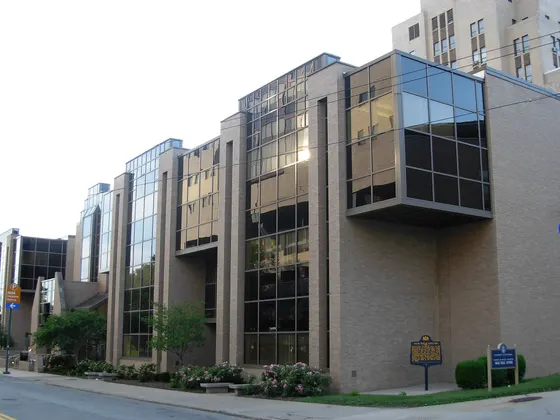
Pittsburgh, PA, USEst. 1896

University of Pittsburgh School of Dental Medicine (DMD) Dental School - 2027 Entry Requirements & Interview Format

The University of Pittsburgh School of Dental Medicine, founded in 1896, is a top-20 US dental school and one of the most research-intensive dental programmes in the country. Located in Pittsburgh on Pitt's health sciences campus, the school conducts leading research in oral biology, biomaterials, and craniofacial development through affiliation with the McGowan Institute for Regenerative Medicine and other University of Pittsburgh research centres. Pitt Dental produces graduates who are competitive for both clinical practice and academic careers.

Entry Requirements

What you need to apply to University of Pittsburgh School of Dental Medicine (DMD).

Admission overview
Bachelor's degree and DAT required. Applications via ADEA AADSAS. Pennsylvania residents receive moderate preference as a public university. Competitive applicants demonstrate strong academic record (GPA and DAT), dental experience, research interest, and community service. Research experience is valued but not required.
GPA median
3.70 overall / 3.64 science (BCPM)
Acceptance rate
4.0%
Class size
86
In-state preference
Moderate — some OOS consideration
In-state matriculants
45%
CASPer
Not required
Holistic review emphasis
Academic record, DAT performance, dental experience, research interest, community service.
Notes
Estimates from ADEA AADSAS and Pitt School of Dental Medicine class profiles; verify for current cycle.
Specialities offered
Orthodontics, Periodontics, Oral and Maxillofacial Surgery, Endodontics, Prosthodontics

Interview Format

How University of Pittsburgh School of Dental Medicine (DMD) interviews applicants.

Format
Traditional one-on-one faculty interview
Interview window
October–February
Decision date
Rolling admissions
Post-interview chances
Approximately 25–35% post-interview (estimated).

What to expect at a University of Pittsburgh School of Dental Medicine (DMD) interview

University of Pittsburgh School of Dental Medicine conducts traditional one-on-one faculty interviews at its Pittsburgh, Pennsylvania campus, typically October through February. Interview days include one or two faculty sessions of 30–45 minutes each assessing motivation for dentistry, oral-systemic health knowledge, ADA ethics, manual dexterity, and community awareness. Candidates tour Pitt Dental's clinic and simulation facilities and interact with current DMD students. The school values academic excellence, research interest, and diversity; interviewers often probe candidates' research or service narratives in depth. Post-interview rolling decisions are typically issued within 4–8 weeks.

What makes University of Pittsburgh School of Dental Medicine (DMD) different

Applications via ADEA AADSAS. Pitt Dental's integration with the University of Pittsburgh's research infrastructure — including the McGowan Institute and UPMC's hospital network — is a genuine academic differentiator. Combined DMD/PhD and DMD/MS research tracks are available, making Pitt Dental one of the best options for aspiring dental academics or researchers.

Tutor insight

Pitt Dental is a research-intensive programme — even if you plan to practice clinically, demonstrate awareness of and curiosity about dental research. In your interview, show you have researched specific faculty and their research areas. Pennsylvania residency provides moderate advantage; out-of-state applicants need highly competitive profiles. Prepare strong answers on the oral-systemic link and ADA ethics, as these are standard Pitt Dental interview themes.
Prometheus
405 dentistry questions inside

Interview questions matched to University of Pittsburgh School of Dental Medicine (DMD)

Two questions our tutors flagged as a strong fit for University of Pittsburgh School of Dental Medicine (DMD)’s interview style. Try answering them out loud, then open Prometheus for the model answers and follow-up tips.

HardPanel · MMIQ1

Post-SCOTUS Holistic Review: Race, Lived Experience, and Dental School Diversity

Following the 2023 Supreme Court decisions in SFFA v. Harvard and SFFA v. UNC, dental schools — like all professional schools — may no longer use race as a factor in admissions decisions. However, admissions committees may still consider how an applicant's lived experiences, including experiences shaped by race or ethnicity, have influenced their path to dentistry, motivation to serve underserved communities, and capacity to contribute to a diverse learning environment. How do you understand this distinction, and how does it affect how you present your background in your dental school application?

Likely follow-up · As a dental student interviewing with an admissions committee, how would you respond to the question: 'How has your background shaped your decision to pursue dentistry?'

3 expert tips in Prometheus
HardPanel · MMIQ2

The Oral-Systemic Link: Diabetes and Periodontal Disease

The relationship between diabetes and periodontal disease is now recognized as bidirectional: poorly controlled diabetes increases susceptibility to periodontal disease, and severe periodontal disease may worsen glycemic control. As a dental student entering clinical training, how do you incorporate an understanding of this bidirectional relationship into your approach to patient assessment, treatment planning, and communication with a diabetic patient who presents with active periodontal disease? How should dentists and physicians coordinate care in cases like this?

Likely follow-up · Your diabetic patient tells you their primary care doctor has never asked about their dental health. How do you approach this interdisciplinary communication gap as a dental student, and what would you do differently as a licensed dentist?

3 expert tips in Prometheus

Ready to practise University of Pittsburgh School of Dental Medicine (DMD)?

Book a school-specific mock interview with University of Pittsburgh School of Dental Medicine (DMD) preselected.

Book a University of Pittsburgh School of Dental Medicine (DMD) mock

University of Pittsburgh School of Dental Medicine (DMD) - Frequently asked questions

Bachelor's degree and DAT required. Applications via ADEA AADSAS. Pennsylvania residents receive moderate preference as a public university. Competitive applicants demonstrate strong academic record (GPA and DAT), dental experience, research interest, and community service. Research experience is valued but not required.

Traditional one-on-one faculty interview. University of Pittsburgh School of Dental Medicine conducts traditional one-on-one faculty interviews at its Pittsburgh, Pennsylvania campus, typically October through February. Interview days include one or two faculty sessions of 30–45 minutes each assessing motivation for dentistry, oral-systemic health knowledge, ADA ethics, manual dexterity, and community awareness. Candidates tour Pitt Dental's clinic and simulation facilities and interact with current DMD students. The school values academic excellence, research interest, and diversity; interviewers often probe candidates' research or service narratives in depth. Post-interview rolling decisions are typically issued within 4–8 weeks.

University of Pittsburgh School of Dental Medicine (DMD) typically interviews in October–February.

Decisions are released Rolling admissions.

Applications via ADEA AADSAS. Pitt Dental's integration with the University of Pittsburgh's research infrastructure — including the McGowan Institute and UPMC's hospital network — is a genuine academic differentiator. Combined DMD/PhD and DMD/MS research tracks are available, making Pitt Dental one of the best options for aspiring dental academics or researchers.
Reviewed by Isaac Butler-King, medical student at the University of Glasgow. Last reviewed: 6 June 2026 · NextGen MedPrep editorial team
University of Pittsburgh School of Dental Medicine (DMD) DMD | DAT, GPA & Interview Format | NGMP