
University of the Pacific Arthur A. Dugoni School of Dentistry Interview
Format, Questions & Prep Tips
University of the Pacific Arthur A. Dugoni School of Dentistry dentistry interviews for 2027 entry are a traditional interview, held October 2026 through February 2027. Published figures: Annual DDS class size ~145; Program length 3 years (accelerated, year-round).
- Institution
- University of the Pacific Arthur A. Dugoni School of Dentistry
- Interview (2027 entry)
- October through February
- Decisions (2027 entry)
- Rolling; decisions within 4–8 weeks of interview

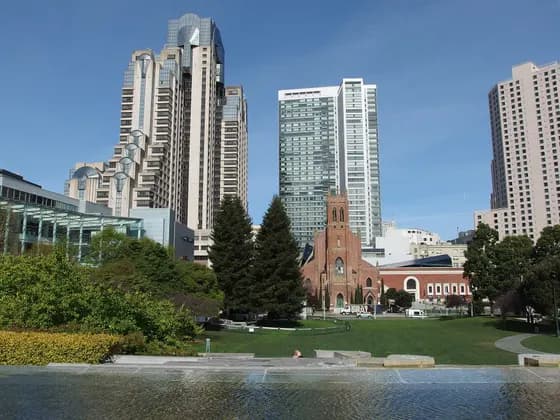


Photo: Daderot · CC0 · cropped
Photo: Guilhem Vellut from Annecy, France · CC BY 2.0 · Photo: Frank Schulenburg · CC BY-SA 4.0 · Photo: Bernard Gagnon · CC BY-SA 3.0
How to get into University of the Pacific Arthur A. Dugoni School of Dentistry (DDS) dentistry
Step-by-step: entry requirements, admission tests, personal statement, interview format and the key deadlines.
Open the guide →University of the Pacific Arthur A. Dugoni School of Dentistry (DDS) entry requirements
Admission profile, interview format, decision dates and what makes University of the Pacific Arthur A. Dugoni School of Dentistry (DDS) different.
See the profile →The University of the Pacific Arthur A. Dugoni School of Dentistry (DDS) dentistry interview
University of the Pacific Arthur A. Dugoni School of Dentistry uses a traditional interview format — one-on-one or panel faculty interviews at its San Francisco campus. Dugoni is distinguished by its accelerated 3-year DDS program — one of the very few three-year dental programs in the United States — and its nationally recognized humanism in dental education culture.
Applications are via ADEA AADSAS. The DAT is required. No in-state preference — Pacific is a private institution.
Interviewers evaluate personal character, empathy, collaborative values, and readiness for intensive year-round study as much as academic metrics. The 3-year program is a genuine commitment — applicants must demonstrate they have thought seriously about what it entails.
University of the Pacific Arthur A. Dugoni School of Dentistry (DDS) interview at a glance (2027 entry)
| Annual DDS class size | ~145 |
|---|---|
| Interview format | Traditional — faculty one-on-one or panel |
| Program length | 3 years (accelerated, year-round) |
| DAT required | Yes — via ADEA AADSAS |
| Location | San Francisco, CA |
| Interview window | October–February |
Interview format
- Traditional one-on-one or panel faculty interview; approximately 30–45 minutes per session.
- Humanism values and personal character are actively assessed.
- Campus tour including clinical and simulation facilities.
- Rolling decisions after interview.
Sample interview questions
Dugoni is one of the only 3-year DDS programs in the US. Why does that model appeal to you, and what do you understand about what it demands?
This is a critical question. Be concrete: year-round study, intensive schedule, no summer breaks, compressed curriculum. Acknowledge the demands honestly and explain your genuine reasons — financial, career timing, personal readiness.
Dugoni is known for humanism in dental education. What does that concept mean to you, and how have you demonstrated it in your life so far?
Humanism in dental education means treating the whole patient with dignity, empathy, and respect; it also means faculty who mentor rather than compete with students. Give specific examples from your own life of empathy, patient advocacy, or collaborative problem-solving.
Why dentistry rather than medicine, and why San Francisco — what draws you to this city for your dental training?
San Francisco has a specific context: diverse patient population, LGBTQ+ health needs, unhoused populations, tech worker demographics. The city provides clinical diversity that complements Dugoni's training model.
How would you approach a patient with uncontrolled diabetes who requires periodontal treatment?
Demonstrate knowledge of the bidirectional periodontal-diabetes relationship, the importance of medical collaboration and referral, treatment sequencing, and communication with the patient about systemic implications of periodontal disease.
Dugoni has early patient contact from Year 1. How have you prepared your manual skills for that kind of early clinical work?
Connect specific experiences to dental clinical demands. Highlight any wax carving, dental assisting, or technical precision work. Show readiness for early simulation and patient care.
A colleague in your cohort consistently takes credit for collaborative work in a team setting. How do you handle this?
Demonstrates professionalism, communication, and collaborative values — central to Dugoni's culture. The correct answer involves direct, respectful communication with the colleague before escalating.
What oral health challenges are particularly acute in San Francisco's diverse patient population?
Know: unhoused population oral health needs, HIV/AIDS oral complications, immigrant community access barriers, LGBTQ+ oral health, Medi-Cal dental access. San Francisco has distinct demographic oral health needs.
The 3-year program means you will graduate a year earlier than most of your peers. How are you planning to use that time advantage?
Think about debt repayment, entering practice sooner, advanced training, fellowship, or personal goals. Show that you have genuinely planned around the program timeline.
How does the ADA Principle of Justice apply to dental education at a school like Dugoni that charges significant private school tuition?
A thoughtful question about access to dental education and the role of private dental schools in serving underserved communities despite high training costs. Show nuance rather than defensiveness.
Describe your most meaningful dental shadowing experience and what you learned about the patient-dentist relationship.
Dugoni values the humanistic side of dentistry — patient relationships, communication, and the craft of care. Show that you observed and reflected on the relationship dimension of dental practice, not just procedures.
In the accelerated program you are juggling a heavy week when a patient in your chair becomes tearful, saying a recent diagnosis has left them overwhelmed and unable to focus on the treatment plan. How do you respond in the moment?
Pause clinical tasks, show empathy and presence, simplify or reschedule as appropriate, and connect to support. Reflects Dugoni's humanism culture even under the time pressure of a 3-year program.
You are shown data on San Francisco's unhoused population indicating very high rates of untreated dental disease but low clinic attendance. What would you want to understand before proposing a solution?
Barriers beyond willingness: trust, scheduling, competing survival needs, outreach models, and data reliability. Demonstrate structural thinking about a population Dugoni's clinics serve.
How would you give a nervous LGBTQ+ patient, who has had poor healthcare experiences before, a respectful and reassuring first dental visit?
Use inclusive language, take a careful history, build trust, and avoid assumptions. San Francisco's population makes culturally responsive communication a genuine expectation.
The 3-year, year-round model removes the breaks most students rely on to recover. Honestly, how will you sustain your performance and wellbeing across that schedule?
What they are listening for:
- Concrete self-management
- support systems
- realistic expectations
Dugoni wants candidates who have genuinely reckoned with the accelerated demands, not romanticized them.
In a collaborative cohort that prizes humanism, you realize a classmate is quietly struggling and at risk of failing a requirement. Do you intervene, stay out of it, or tell a faculty member?
Balance peer support, the classmate's autonomy, and patient-safety/professional obligations. The 'right' answer usually starts with a direct, supportive conversation. Fits Dugoni's collaborative-values emphasis.
Practise the University of the Pacific Arthur A. Dugoni School of Dentistry (DDS) interview
Rehearse the real format before the day — on demand with our AI interviewers, or live with a tutor.
Sit a mock with photoreal AI interviewers — any time
A timed MMI or panel interview on video — American & international voices — with interviewers who listen, react and press with follow-ups. Rubric-scored feedback and a replay the moment you finish.




Live mocks with a tutor who’s been in the room
A full University of the Pacific Arthur A. Dugoni School of Dentistry (DDS)-style mock with a medic or dentist tutor — honest scoring against real marking criteria, a station-by-station debrief and a written action plan.
Book a mock interviewHow to prepare for the University of the Pacific Arthur A. Dugoni School of Dentistry (DDS) interview
Common pitfalls to avoid
University of the Pacific Arthur A. Dugoni School of Dentistry (DDS) interview — frequently asked questions
Sources & official admissions information
Ready to nail your University of the Pacific Arthur A. Dugoni School of Dentistry (DDS) interview?
Book a mock interview with a tutor who knows the US interview formats, orpractice unlimited stations from our interview question bank.