
Nova Southeastern University College of Dental Medicine Interview
Format, Questions & Prep Tips
Nova Southeastern University College of Dental Medicine dentistry interviews for 2027 entry are a traditional interview, held October 2026 through February 2027. Published figures: Annual DMD class size ~125–135; Tuition (2025–26) ~USD 60,000–65,000/year (estimate).
- Institution
- Nova Southeastern University College of Dental Medicine
- Interview (2027 entry)
- October through February
- Decisions (2027 entry)
- Rolling decisions; waitlist through spring

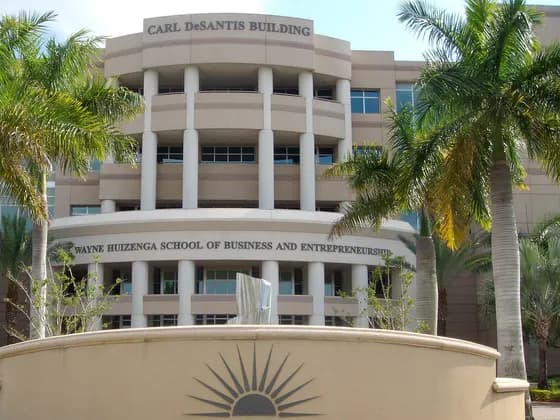
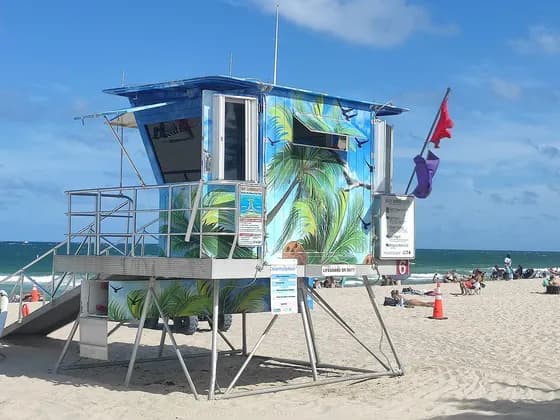

Photo: Dgreco · CC BY-SA 3.0 · cropped
Photo: Dgreco ( talk ) · CC BY-SA 3.0 · Photo: MdeVicente · CC BY-SA 4.0 · Photo: Richard Mc Neil · CC BY 3.0
How to get into Nova Southeastern University College of Dental Medicine (DMD) dentistry
Step-by-step: entry requirements, admission tests, personal statement, interview format and the key deadlines.
Open the guide →Nova Southeastern University College of Dental Medicine (DMD) entry requirements
Admission profile, interview format, decision dates and what makes Nova Southeastern University College of Dental Medicine (DMD) different.
See the profile →The Nova Southeastern University College of Dental Medicine (DMD) dentistry interview
Nova Southeastern University College of Dental Medicine uses a traditional interview format — typically one faculty session and one student session at its Fort Lauderdale campus. NSU Dental is one of the largest private dental schools in the US (~130 students per year) and serves a distinctively diverse South Florida population.
NSU’s cultural competence and community service identity is central to its interview process. Fort Lauderdale’s patient base includes large Hispanic, Caribbean, and Haitian communities; interviewers probe multilingual clinical readiness and commitment to underserved populations.
All applications are via ADEA AADSAS; DAT required. Questions follow dental interview patterns: manual dexterity, oral-systemic health, ADA ethics, and career direction.
Nova Southeastern University College of Dental Medicine (DMD) interview at a glance (2027 entry)
| Annual DMD class size | ~125–135 |
|---|---|
| Interview format | Traditional — faculty + student sessions |
| DAT required | Yes — via ADEA AADSAS |
| Tuition (2025–26) | ~USD 60,000–65,000/year (estimate) |
| Application system | ADEA AADSAS primary + NSU secondary |
| Interview window | October–February |
Interview format
- Two sessions: one faculty, one current student; ~30 minutes each.
- Campus tour and financial aid presentation included.
- No MMI.
Sample interview questions
Why dentistry rather than medicine — what specifically draws you to oral health over systemic medicine?
What they are listening for:
- Direct hands-on patient care
- precision and manual skill
- the combination of clinical work and small-business ownership
- the oral-systemic connection
Avoid generic answers.
NSU serves a patient population that speaks many languages and comes from many cultural backgrounds. How do you plan to provide effective care to patients whose first language is not English?
What they are listening for:
- Professional interpreter services
- trained bilingual staff
- building trust through non-verbal communication
If you speak Spanish or another relevant language, say so — it is a genuine asset at NSU.
A patient presents with severe dental disease but refuses X-rays due to radiation concerns. How do you proceed?
ADA ethics: patient autonomy vs. beneficence. Educate on low radiation levels, explore digital X-ray options, document informed refusal. You cannot treat without diagnosis.
Describe a specific time you used fine motor skills — what did you do, and what does it demonstrate about your readiness for clinical dentistry?
Be specific:
- suturing practice
- art
- pottery
- model-building
- instrument repair
Connect directly to restorative or surgical precision.
South Florida has one of the highest rates of uninsured dental patients in the country. What systemic factors drive dental health disparities in communities like those NSU serves?
What they are listening for:
- Lack of Medicaid dental coverage for adults
- cost
- geographic access
- language barriers
- cultural mistrust of dental care
Discuss NSU's community clinics as one response.
A patient comes to your clinic clearly in pain. Examination reveals they need a root canal immediately, but they are visibly frightened and want to leave. How do you manage this appointment?
Dental anxiety management: explain the procedure, offer nitrous or other sedation options, validate the fear, give the patient control over the pace. Respect autonomy but address pain.
NSU has community dental clinics across South Florida. Do you see yourself practicing in a community health setting after graduation?
Honest answer about career direction. Community health, private practice, specialization — all valid, but show awareness of the public health dimension of NSU's mission.
What do you know about NSU's curriculum and clinical training model, and how does it match your learning style?
What they are listening for:
- Integrated curriculum
- early patient contact
- large clinical volume
- community rotation sites
Discuss how you learn best with a patient-facing, hands-on approach.
An interviewer tells you that roughly one in three adults in South Florida has untreated tooth decay and that adult Medicaid dental coverage in Florida is very limited. How would you interpret those two figures together, and what do they imply for where NSU graduates are most needed?
Connect prevalence to the coverage gap: untreated disease concentrates where insurance is thinnest. Discuss safety-net clinics, FQHCs, and NSU's community sites as the realistic access point. Hedge any number you are unsure of rather than asserting it.
A Haitian Creole-speaking patient nods and says yes to everything you explain, but you suspect they have not understood the treatment plan. The interpreter line has a long wait. How do you proceed?
Recognize that nodding is not consent. Do not rely on family members or staff as ad hoc interpreters for complex consent. Use teach-back, wait for the professional interpreter for the consent discussion, and reschedule the irreversible step if needed. Patient safety over clinic flow.
A long-standing patient offers to pay you privately, off the books, to skip the clinic's records and billing so their employer never sees a dental claim. How do you respond?
ADA principles of veracity and justice plus legal/billing integrity. Explain you cannot falsify or omit records; explore why they are worried (job security, immigration fears) and offer legitimate confidential options. Decline the off-record arrangement without shaming the patient.
A parent brings a child with rampant early-childhood caries and is visibly defensive, expecting to be blamed. How do you open the conversation?
Lead with the child's future, not the parent's past. Non-judgmental framing, ask about bottle/diet habits with curiosity, give two or three concrete changes. Building the alliance is what makes the parent return — central to NSU's underserved-population mission.
Explain the oral-systemic link you find most compelling and how you would describe it to a skeptical patient who thinks the mouth and the body are separate.
Pick one well-evidenced relationship (periodontal-diabetes bidirectionality, or periodontal disease and cardiovascular inflammation) and explain mechanism simply. Avoid overclaiming causation; frame it as shared risk and inflammation. Tie to NSU's whole-patient emphasis.
NSU is one of the largest private dental schools in the country and also one of the more expensive. How have you thought about financing this and how it might shape your early career choices?
Show financial literacy:
- total cost of attendance
- loan burden vs. associate/community salaries
- NHSC and state loan-repayment options
A grounded answer signals maturity; avoid pretending cost is irrelevant.
During the student session, a current NSU student casually asks what you would do if a classmate asked you to share answers before a practical exam. How do you answer?
Treat it as a genuine professionalism probe even in an informal setting. Academic integrity and patient safety downstream; decline, offer to study together instead, escalate if pressured. Consistency between formal and informal interactions matters at NSU.
Practise the Nova Southeastern University College of Dental Medicine (DMD) interview
Rehearse the real format before the day — on demand with our AI interviewers, or live with a tutor.
Sit a mock with photoreal AI interviewers — any time
A timed MMI or panel interview on video — American & international voices — with interviewers who listen, react and press with follow-ups. Rubric-scored feedback and a replay the moment you finish.






Live mocks with a tutor who’s been in the room
A full Nova Southeastern University College of Dental Medicine (DMD)-style mock with a medic or dentist tutor — honest scoring against real marking criteria, a station-by-station debrief and a written action plan.
Book a mock interviewHow to prepare for the Nova Southeastern University College of Dental Medicine (DMD) interview
Common pitfalls to avoid
Nova Southeastern University College of Dental Medicine (DMD) interview — frequently asked questions
Sources & official admissions information
Ready to nail your Nova Southeastern University College of Dental Medicine (DMD) interview?
Book a mock interview with a tutor who knows the US interview formats, orpractice unlimited stations from our interview question bank.