
University of Florida College of Dentistry Interview
Format, Questions & Prep Tips
University of Florida College of Dentistry dentistry interviews for 2027 entry are a traditional interview. University of Florida College of Dentistry describes the format as: One open-file interview of about 20–30 minutes with 3–4 Admissions Committee members, on an in-person interview day. Published figures: Degree awarded DMD (4-year predoctoral program); Annual DMD class size ~90 (figures vary by cycle).
- Institution
- University of Florida College of Dentistry
- Interview (2027 entry)
- September through January, with most interviews concentrated in the autumn
- Decisions (2027 entry)
- Rolling; decisions typically within 4–8 weeks of interview, in line with the AADSAS cycle

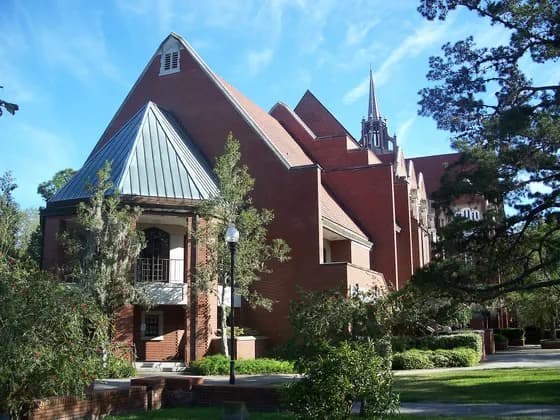
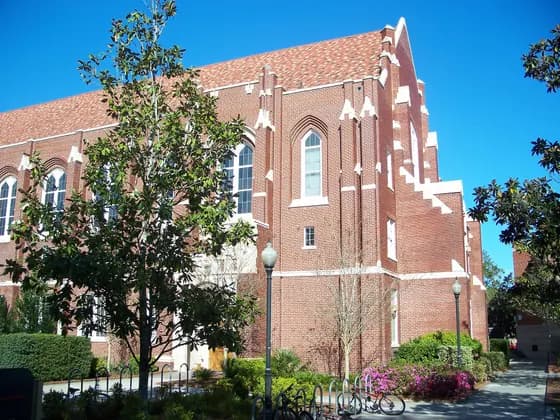

Photo: Ebyabe · CC BY-SA 3.0 · cropped
Photo: Ebyabe · CC BY-SA 3.0 · Photo: Ebyabe · CC BY-SA 3.0 · Photo: Ebyabe · CC BY 2.5
How to get into University of Florida College of Dentistry (DMD) dentistry
Step-by-step: entry requirements, admission tests, personal statement, interview format and the key deadlines.
Open the guide →University of Florida College of Dentistry (DMD) entry requirements
Admission profile, interview format, decision dates and what makes University of Florida College of Dentistry (DMD) different.
See the profile →The University of Florida College of Dentistry (DMD) dentistry interview
The University of Florida College of Dentistry awards the DMD and is the only public dental school in the state of Florida, based in Gainesville on UF's Health Science Center campus. It is consistently among the nation's strongest programs for the combination of clinical training, research funding, and in-state value, and it carries an explicit public mission to educate the dental workforce that Florida communities need.
Applications are made through ADEA AADSAS with a required UF supplemental application, and the DAT (Dental Admission Test) is required. Florida residents hold a strong preference — the substantial majority of each class is in-state — so out-of-state applicants must articulate a genuine, specific connection to UF and to practicing in Florida.
UF's interview assesses far more than academic metrics. Interviewers look for evidence of manual dexterity and where it was developed, a clear understanding of why dentistry rather than medicine, awareness of the oral-systemic health relationship and Florida's access-to-care landscape, and authentic motivation for a research-intensive public program. Knowing UF's strengths — its research output, its community outreach clinics, and its statewide workforce role — is essential for a convincing performance.
University of Florida College of Dentistry (DMD) interview at a glance (2027 entry)
| Degree awarded | DMD (4-year predoctoral program) |
|---|---|
| Annual DMD class size | ~90 (figures vary by cycle) |
| Application system | ADEA AADSAS primary + UF supplemental |
| DAT required | Yes — Dental Admission Test |
| Interview format | Faculty/student panel and one-on-one sessions |
| Location | Gainesville, FL (UF Health Science Center) — public, in-state preference |
Interview format
- On-campus interview day combining one-on-one and/or panel sessions with faculty and current students; typically a half-day commitment.
- Conversational, file-aware format — interviewers have read your application and probe motivation, dexterity, and fit rather than running timed MMI stations.
- Tour of the College of Dentistry clinics, simulation lab, and the broader UF Health Science Center campus.
- Opportunities to speak informally with current DMD students about clinical and research life in Gainesville.
- Strong attention to in-state ties and intent to serve Florida communities after graduation.
- Rolling decisions issued after the interview within the AADSAS cycle.
Sample interview questions
Why dentistry rather than medicine or another health profession?
This is the foundational dental-school question and UF expects a specific, dexterity-aware answer. Speak to the blend of hands-on procedural craft, the autonomy of running your own clinical decisions, and the long-term relationship with patients in a single tissue system. Avoid framing it as medicine with shorter training.
Why the University of Florida College of Dentistry specifically, and not simply any DMD program?
Demonstrate concrete knowledge of UF — its standing as Florida's only public dental school, its research intensity, and its statewide outreach clinics. Connect those strengths to your own goals rather than reciting rankings.
How have you developed your manual dexterity, and how do you know you have the fine-motor aptitude dentistry demands?
Give concrete, sustained examples — instruments, art, crafts, surgical assisting, lab work — and reflect on what they taught you about precision, patience, and working in a confined field. Connect the experience explicitly to operating in the small, mirror-image environment of the oral cavity.
As Florida's only public dental school, UF has a workforce mission. Where do you see yourself practicing after your DMD, and how does that connect to Florida?
Florida residents should draw on genuine ties to the state and awareness of its underserved regions. Out-of-state applicants need a credible, specific reason UF appeals and a realistic plan to contribute to Florida's dental workforce.
A long-standing patient asks you to perform a cosmetic procedure that you do not believe is clinically necessary and may carry risk. How do you respond?
Balance respect for patient autonomy with your duty of non-maleficence and informed consent. Show you would explain the risks, benefits, and alternatives clearly, document the conversation, and decline to proceed if you judged the intervention genuinely harmful.
Many Florida residents lack dental insurance or live in dental health professional shortage areas. What role should dentists and dental schools play in addressing access to care?
Know the landscape:
- limited Medicaid dental participation
- rural and agricultural communities
- large older and migrant populations
Discuss community clinics, the workforce mission of a public school, and the justice principle without overclaiming a single fix.
You notice that a classmate has been cutting corners on infection-control protocol in the simulation clinic. What do you do?
Patient and peer safety and professional integrity come first. Describe addressing it directly and respectfully where appropriate, and escalating to faculty if it continues, framing it as protecting standards rather than punishing a peer.
How would you apply the ADA Principles of Ethics — autonomy, non-maleficence, beneficence, justice, and veracity — to a real clinical decision?
Pick one principle and ground it in a concrete scenario. The strongest answers show you can hold competing principles in tension rather than reciting definitions, e.g. balancing autonomy against non-maleficence when a patient refuses a recommended treatment.
Explain to an anxious adult patient, in plain language, why they need a root canal rather than an extraction.
Avoid jargon, check understanding, and acknowledge the fear. Frame the explanation around preserving the natural tooth, the procedure's purpose, and the trade-offs, pausing to let the patient ask questions — this assesses chairside communication, not technical recall.
Tell us about a time you had to give difficult feedback or deliver unwelcome news to someone. How did you approach it?
Use a structured example showing empathy, clarity, and follow-through. Reflect on what you would keep or change — interviewers want evidence you can handle the hard conversations dentistry regularly requires.
Explain the oral-systemic health connection and give an example relevant to Florida's patient population.
Know the bidirectional periodontal-diabetes relationship and links between oral health and cardiovascular disease and adverse pregnancy outcomes. A Florida-aware answer might reference the large older population, high diabetes prevalence, or oral cancer screening for tobacco and sun-exposed lip lesions.
UF is a research-intensive dental school. Tell us about a research or scholarly experience and how it shapes your approach to evidence-based dentistry.
Describe a project specifically — your role, the question, and what you learned about evidence and uncertainty. Connect it to UF's research environment and to practicing dentistry that is grounded in current evidence rather than habit.
Role-play: a parent in your clinic is reluctant to allow fluoride treatment for their child because of something they read online. Talk them through it.
Stay non-judgmental, acknowledge the concern, and explain the evidence for fluoride safety and benefit in accessible terms. The assessor is watching how you build trust and respect autonomy while advocating for the child's oral health.
Role-play: a fellow student confides that they are overwhelmed and falling behind in the pre-clinical program. How do you respond?
Demonstrate active listening and empathy before problem-solving. Signpost realistic support — faculty advisors, student wellbeing resources, peer study — and show you take a colleague's wellbeing seriously without overstepping into a counselor role.
You are shown a chart of dental caries prevalence across Florida counties. What does it suggest, and what would you want to know before drawing conclusions?
Read the trend, then interrogate it: denominators, water fluoridation status, access to care, and socioeconomic confounders. Strong answers separate observation from inference and identify what additional data would sharpen the picture.
What do you understand about the day-to-day realities and frustrations of clinical dentistry, and what evidence do you have that you have looked beyond the appeal?
Reference shadowing and clinical exposure honestly — repetitive procedures, anxious patients, business pressures, ergonomic strain. UF wants applicants who have tested their motivation against the realities, not an idealized picture.
Practise the University of Florida College of Dentistry (DMD) interview
Rehearse the real format before the day — on demand with our AI interviewers, or live with a tutor.
Sit a mock with photoreal AI interviewers — any time
A timed MMI or panel interview on video — American & international voices — with interviewers who listen, react and press with follow-ups. Rubric-scored feedback and a replay the moment you finish.




Live mocks with a tutor who’s been in the room
A full University of Florida College of Dentistry (DMD)-style mock with a medic or dentist tutor — honest scoring against real marking criteria, a station-by-station debrief and a written action plan.
Book a mock interviewHow to prepare for the University of Florida College of Dentistry (DMD) interview
Common pitfalls to avoid
University of Florida College of Dentistry (DMD) interview — frequently asked questions
Sources & official admissions information
Ready to nail your University of Florida College of Dentistry (DMD) interview?
Book a mock interview with a tutor who knows the US interview formats, orpractice unlimited stations from our interview question bank.