
East Carolina University School of Dental Medicine Interview
Format, Questions & Prep Tips
East Carolina University School of Dental Medicine dentistry interviews for 2027 entry are a panel interview, held September 2026 through February 2027. Published figures: Annual DMD class size ~55; Tuition (2025–26) ~USD 20,000 (in-state) / USD 50,000 (out-of-state) estimated.
- Institution
- East Carolina University School of Dental Medicine
- Interview (2027 entry)
- September through February
- Decisions (2027 entry)
- Rolling; decisions typically within 4–6 weeks of interview

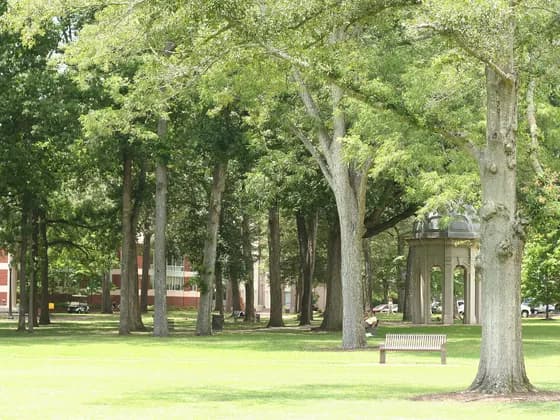
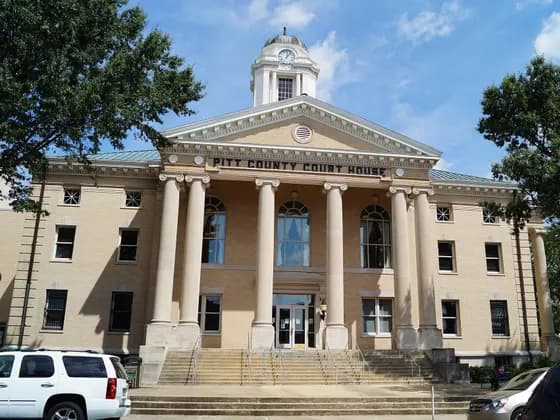
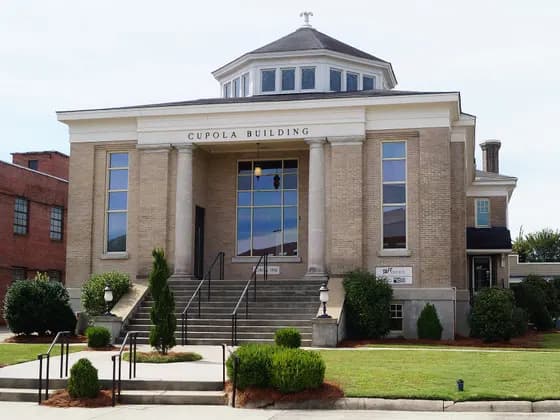
Photo: Wikiuser2787 · CC BY-SA 3.0 · cropped
Photo: Brent Hoard from USA · CC BY 2.0 · Photo: Tradewinds · CC BY-SA 3.0 · Photo: Tradewinds · CC BY-SA 3.0
How to get into East Carolina University School of Dental Medicine (DMD) dentistry
Step-by-step: entry requirements, admission tests, personal statement, interview format and the key deadlines.
Open the guide →East Carolina University School of Dental Medicine (DMD) entry requirements
Admission profile, interview format, decision dates and what makes East Carolina University School of Dental Medicine (DMD) different.
See the profile →The East Carolina University School of Dental Medicine (DMD) dentistry interview
East Carolina University School of Dental Medicine uses a **Multiple Mini Interview (MMI) format — one of very few US dental schools to do so. ECU SDM was founded in 2011 with an explicit mission to address the severe dental access crisis in Eastern North Carolina**, one of the most dental-access-deprived regions in the country.
The MMI stations at ECU are heavily themed around rural and underserved community dental care — ethical scenarios about access, communication challenges with patients in low-resource settings, and situational judgment in community health contexts. Applicants without genuine engagement with these issues are quickly apparent in the MMI format, which does not allow rehearsed narrative answers.
ECU SDM trains dentists for Eastern NC through a community-based clinical model, placing students in rural health centers across the region from Year 2. North Carolina residents have a very strong admissions advantage.
East Carolina University School of Dental Medicine (DMD) interview at a glance (2027 entry)
| Annual DMD class size | ~55 |
|---|---|
| Interview format | MMI — multiple mini interview stations |
| DAT required | Yes — via ADEA AADSAS |
| Tuition (2025–26) | ~USD 20,000 (in-state) / USD 50,000 (out-of-state) estimated |
| Application system | ADEA AADSAS primary + ECU secondary |
| Interview window | September–February |
Interview format
- MMI format — typically 6–10 stations, approximately 8 minutes each.
- Stations: ethical scenarios, situational judgment, communication, motivation.
- Community health and rural dental access themes throughout.
- School tour and student informal sessions.
Sample interview questions
ECU was founded specifically to address Eastern NC's dental access crisis. Why does that mission align with your career goals?
Genuine community health commitment backed by specific experiences. ECU interviewers are expert at distinguishing authentic mission alignment from stated values. Rural upbringing, community health volunteering, FQHC experience — be concrete.
A rural patient in Eastern NC needs a root canal, but the nearest endodontist is two hours away and the patient lacks transportation. You are a general dentist. What do you do?
Assess urgency, discuss options (referral vs. extraction vs. temporary treatment), patient transportation barriers, teledentistry consultation with specialist, patient preferences and financial situation. Rural dental practice requires creative problem-solving within scope of practice.
You are in an MMI station. You walk in and there is a patient actor who is visibly distressed and refusing to open their mouth for a clinical assessment. You have 8 minutes. What do you do?
Acknowledge distress first, before any clinical action. Build rapport. Ask open-ended questions about what is causing the distress. Do not force the assessment. Offer to reschedule. Show empathy-first clinical communication.
Eastern North Carolina has among the highest rates of tooth loss and untreated dental disease in the US. What structural factors drive those statistics?
What they are listening for:
- Medicaid dental coverage gaps in NC
- low dentist-to-population ratio
- rural geography
- poverty
- distrust of healthcare
- transportation barriers
Health equity literacy is expected, not optional, at ECU SDM.
A community health center director offers to pay you more than the standard salary if you agree to see 30% more patients per day than clinical guidelines recommend. What do you do?
Quality of care and patient safety over financial incentive. Clearly decline, explain clinical rationale, propose evidence-based productivity models. Escalate if director persists. ADA ethics apply.
Eastern NC has very high rates of diabetes and cardiovascular disease. How does your role as a dentist connect to managing those conditions in your patients?
What they are listening for:
- Periodontitis-diabetes bidirectional relationship
- blood pressure screening at dental visits
- referral for suspected undiagnosed systemic conditions
Eastern NC's specific disease burden makes oral-systemic care practically urgent.
You discover that a patient you are treating at a community health center has been seeing two different dentists and obtaining duplicate prescriptions for pain medication. What do you do?
Prescription drug monitoring program (PDMP) check, direct but non-judgmental conversation with patient, involve supervising faculty, document thoroughly, manage the clinical relationship with integrity.
A community dental center where you work is overwhelmed — short-staffed and with a long waiting list. How do you prioritize care?
What they are listening for:
- Triage by urgency (pain, infection, functional impairment)
- fair allocation of limited resources
- transparent communication with patients on the waitlist
- peer coordination
Public health ethics applies.
ECU uses MMI rather than traditional interviews. Why do you think a dental school would choose that format?
MMI assesses interpersonal and situational skills more reliably than traditional interviews; reduces halo bias; more predictive of clinical performance. Shows you understand evidence-based education design.
You are 30 seconds from the end of a station. The actor playing a patient has just disclosed they are experiencing domestic violence. You have no time to complete a full response. What do you do?
Acknowledge the disclosure directly. Say clearly that this is important and that you want to help. Express that the time constraint does not diminish the importance of what they shared. In a real clinical setting: do not rush this disclosure, provide resources, document.
An MMI station hands you a card: a chart shows that one Eastern NC county has roughly one dentist per 5,000 residents while the state average is closer to one per 1,800. You have eight minutes. Interpret this and explain what it means for ECU's mission.
State plainly what the ratio implies for access and unmet need, link it to ECU's community-based model and service-area placements, and avoid over-claiming beyond the data. Concise, structured reasoning beats a long narrative in an MMI.
MMI station: a patient actor with low health literacy has just been told they need a full-mouth treatment plan and looks completely overwhelmed. Reset their understanding in the time you have.
Slow down, use plain language and one idea at a time, prioritize the most urgent care, and check understanding with teach-back. Empathy plus a phased, achievable plan — do not bury them in the whole plan at once.
MMI station: explain how community water fluoridation works and respond to a community member who has heard online that it is unsafe.
Explain the mechanism and the strong evidence for safety and caries reduction at recommended levels, acknowledge the person's concern without condescension, and point to credible sources. Rural public-health literacy is core to ECU's mission.
MMI station: a fellow student confides they are exhausted from the long rural rotation commutes and have started skipping parts of the infection-control checklist to save time. What do you say to them?
Support the person, but hold the line on patient safety — no shortcut on infection control is acceptable. Encourage them to seek help, and make clear you would escalate if it continued. Compassion and accountability together.
MMI station: tell me about a place or community you know well that has been overlooked by services. How did that shape how you think about access?
Authentic, specific, and reflective — ECU's MMI is built to surface genuine connection to underserved places rather than rehearsed mission language. Tie it to why rural dentistry, not just any dentistry.
Practise the East Carolina University School of Dental Medicine (DMD) interview
Rehearse the real format before the day — on demand with our AI interviewers, or live with a tutor.
Sit a mock with photoreal AI interviewers — any time
A timed MMI or panel interview on video — American & international voices — with interviewers who listen, react and press with follow-ups. Rubric-scored feedback and a replay the moment you finish.






Live mocks with a tutor who’s been in the room
A full East Carolina University School of Dental Medicine (DMD)-style mock with a medic or dentist tutor — honest scoring against real marking criteria, a station-by-station debrief and a written action plan.
Book a mock interviewHow to prepare for the East Carolina University School of Dental Medicine (DMD) interview
Common pitfalls to avoid
East Carolina University School of Dental Medicine (DMD) interview — frequently asked questions
Sources & official admissions information
Ready to nail your East Carolina University School of Dental Medicine (DMD) interview?
Book a mock interview with a tutor who knows the US interview formats, orpractice unlimited stations from our interview question bank.