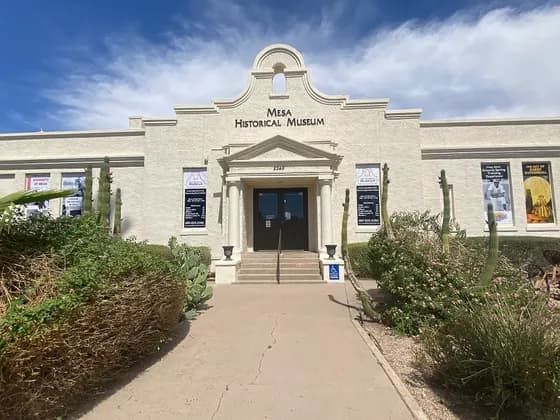
Mesa, AZ, USEst. 2007

ATSU-SOMA (DO) Medical School - 2027 Entry Requirements & Interview Format

A.T. Still University School of Osteopathic Medicine in Arizona (ATSU-SOMA), established in 2007, is a private osteopathic medical school in Mesa, Arizona. SOMA is part of the A.T. Still University system — which also includes KCOM in Kirksville, the birthplace of osteopathic medicine. SOMA is distinctive for its Community-Based Clinical Education (CBCE) model: after two years of foundational training in Mesa, students complete Years 3 and 4 embedded in federally qualified health centres and community health centres across the United States, training in the communities they will ultimately serve.

Entry Requirements

What you need to apply to ATSU-SOMA (DO).

Admission overview
Bachelor's degree and MCAT required. Applications via AACOMAS. Competitive applicants demonstrate strong community health orientation, DO shadowing, healthcare experience in underserved settings, and adaptability for distributed clinical training.
MCAT median
504 (range 499–510)
GPA median
3.54 overall / 3.48 science (BCPM)
Acceptance rate
4.5%
Class size
154
In-state preference
None
CASPer
Not required
Holistic review emphasis
Community health orientation, adaptability, DO shadowing, underserved medicine commitment.
Notes
Estimates from publicly available ATSU-SOMA and AACOMAS data; verify for current cycle.
Specialities offered
Primary Care, Community Health, Osteopathic Manipulative Medicine, Family Medicine, Health Equity

Interview Format

How ATSU-SOMA (DO) interviews applicants.

Format
Traditional faculty interview
Interview window
September–February
Decision date
Rolling admissions
Post-interview chances
Approximately 30–40% post-interview (estimated).

What to expect at a ATSU-SOMA (DO) interview

ATSU-SOMA conducts traditional faculty interviews at its Mesa, Arizona campus, typically 30–45 minutes in length. SOMA's distinctive community-based distributed clinical education (CBCE) model means that Years 3–4 are spent embedded in underserved community health centres across the US rather than at a traditional academic medical centre. Interviewers assess fit for this unique model: independence, adaptability, and genuine commitment to community health. Post-interview decisions are rolling.

What makes ATSU-SOMA (DO) different

Applications via AACOMAS. SOMA's CBCE model is unique among US osteopathic schools — graduates are trained in the communities they will serve, giving them unparalleled primary care and community health experience. SOMA emphasises personalised faculty attention within its community-based model.

Tutor insight

SOMA's interview is fundamentally an assessment of whether you can thrive in a decentralised, self-directed clinical environment. Applicants must convey that they are ready to spend Years 3–4 dispersed across the US in community health settings rather than in a traditional teaching hospital. If you have worked in FQHCs, free clinics, or rural health settings, make those experiences central to your narrative. The SOMA model is not for everyone — and interviewers know that — so be honest about why it specifically suits you.
Prometheus
595 medicine questions inside

Interview questions matched to ATSU-SOMA (DO)

Two questions our tutors flagged as a strong fit for ATSU-SOMA (DO)’s interview style. Try answering them out loud, then open Prometheus for the model answers and follow-up tips.

HardPanel · MMIQ1

Service Orientation: Gun Violence as a Public Health Crisis

Gun violence kills approximately 45,000 Americans per year and is the leading cause of death for children and adolescents in the United States. Some physicians argue that this is a public health crisis requiring physician engagement -- including universal screening and counselling. Others argue that physicians should stay out of a politically charged policy debate. How do you think about the physician's role in addressing gun violence, and what specific actions are within the scope of medicine?

Likely follow-up · What is the Dickey Amendment, and how has it historically limited gun violence research funding at the NIH and CDC?

3 expert tips in Prometheus
MediumPanelQ2

AAMC Core Competency: Resilience and Adaptive Expertise

During your gap year you were deeply involved in a longitudinal research project that was abruptly terminated when the principal investigator lost funding. Months of your work were never published and the project was archived. How did you respond to that setback, and what did it teach you about resilience, uncertainty, and the nature of scientific progress?

Likely follow-up · How do you anticipate managing the uncertainty and setbacks inherent in clinical medicine, where not all patients recover and not all diagnoses are clear?

3 expert tips in Prometheus

Ready to practise ATSU-SOMA (DO)?

Book a school-specific mock interview with ATSU-SOMA (DO) preselected.

Book a ATSU-SOMA (DO) mock

ATSU-SOMA (DO) - Frequently asked questions

Bachelor's degree and MCAT required. Applications via AACOMAS. Competitive applicants demonstrate strong community health orientation, DO shadowing, healthcare experience in underserved settings, and adaptability for distributed clinical training.

Traditional faculty interview. ATSU-SOMA conducts traditional faculty interviews at its Mesa, Arizona campus, typically 30–45 minutes in length. SOMA's distinctive community-based distributed clinical education (CBCE) model means that Years 3–4 are spent embedded in underserved community health centres across the US rather than at a traditional academic medical centre. Interviewers assess fit for this unique model: independence, adaptability, and genuine commitment to community health. Post-interview decisions are rolling.

ATSU-SOMA (DO) typically interviews in September–February.

Decisions are released Rolling admissions.

Applications via AACOMAS. SOMA's CBCE model is unique among US osteopathic schools — graduates are trained in the communities they will serve, giving them unparalleled primary care and community health experience. SOMA emphasises personalised faculty attention within its community-based model.
Reviewed by Isaac Butler-King, medical student at the University of Glasgow. Last reviewed: 6 June 2026 · NextGen MedPrep editorial team
ATSU-SOMA (DO) | MCAT median 504, GPA & DO Interview Format | NGMP