Campbell University CUSOM (DO) Medical School - 2027 Entry Requirements & Interview Format
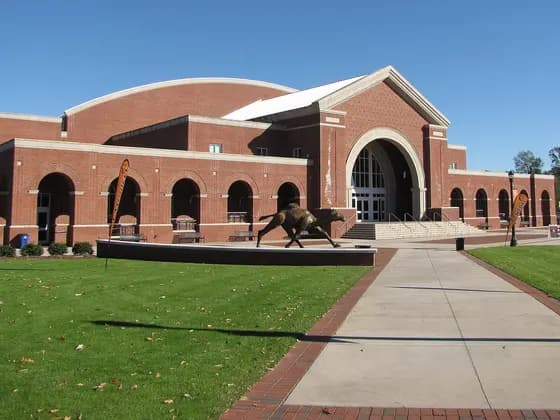
Campbell University Jerry M. Wallace School of Osteopathic Medicine (CUSOM), established in 2013, is a private osteopathic medical school in Lillington, North Carolina, affiliated with Campbell University — a Baptist-affiliated Christian liberal arts institution. Located in Harnett County, one of North Carolina's most rural and medically underserved counties, CUSOM trains osteopathic physicians for rural and community practice across the state. The school's clinical training network spans North Carolina's extensive rural hospital system.
Entry Requirements
What you need to apply to Campbell University CUSOM (DO).
Admission overview
Bachelor's degree and MCAT required. Applications via AACOMAS. Campbell University has a Christian liberal arts mission; applicants should be comfortable with a values-driven institutional culture. Competitive applicants demonstrate rural medicine commitment, DO shadowing, and healthcare experience.
MCAT median
506 (range 499–509)
GPA median
3.61 overall / 3.48 science (BCPM)
Acceptance rate
5.0%
Class size
158
In-state preference
Moderate — some OOS consideration
CASPer
Not required
Holistic review emphasis
Rural North Carolina commitment, faith/values alignment, DO shadowing, healthcare experience.
Notes
Estimates from publicly available CUSOM and AACOMAS data; verify for current cycle.
Specialities offered
Primary Care, Rural Medicine, Family Medicine, Osteopathic Manipulative Medicine, Internal Medicine
Interview Format
How Campbell University CUSOM (DO) interviews applicants.
Format
Traditional faculty interview
Interview window
September–February
Decision date
Rolling admissions
Post-interview chances
Approximately 30–40% post-interview (estimated).
What to expect at a Campbell University CUSOM (DO) interview
Campbell University CUSOM conducts traditional faculty interviews at its Lillington, North Carolina campus. Interviews are typically 30–45 minutes and assess commitment to rural North Carolina communities, osteopathic philosophy, and alignment with Campbell University's Christian liberal arts mission. As a faith-affiliated institution, CUSOM values servant leadership and compassionate, patient-centred care. Post-interview decisions are made on a rolling basis.
What makes Campbell University CUSOM (DO) different
Applications via AACOMAS. CUSOM's location in Harnett County — a rural county 35 miles south of Raleigh — is deliberately chosen to immerse students in the North Carolina rural health context. The school benefits from proximity to the Research Triangle while maintaining a rural training environment.
Tutor insight
CUSOM interviewers value genuine alignment with the school's dual identity: a faith-informed liberal arts institution and a rural medicine training programme. Applicants should be able to discuss North Carolina rural health challenges specifically — the state has significant health disparities in its rural and coastal counties — and connect their values framework to the CUSOM mission. DO shadowing in a North Carolina context, if possible, adds meaningful specificity to the application.
PrometheusQuestion Bank
595 medicine questions inside
Interview questions matched to Campbell University CUSOM (DO)
Two questions our tutors flagged as a strong fit for Campbell University CUSOM (DO)’s interview style. Try answering them out loud, then open Prometheus for the model answers and follow-up tips.
Medium·PanelQ1
Service Orientation: Rural Health Workforce Shortage
More than 60 million Americans live in rural areas that are federally designated as Health Professional Shortage Areas. Rural communities face physician shortages, longer distances to specialty care, and higher rates of chronic disease and mortality. You grew up in a rural town and have expressed an interest in practising there. What drives that commitment, and what do you understand about the structural challenges of rural medicine that most applicants do not?
Likely follow-up · What financial incentives and loan repayment programmes are designed to attract physicians to rural areas, and how significant are they in practice?
3 expert tips in Prometheus
Hard·MMI · PanelQ2
AAMC Core Competency: Quantitative Reasoning in Public Health
A state health department releases data showing that vaccination rates for childhood measles in a rural county have fallen to 68% — well below the 95% threshold needed for herd immunity. Local news attributes the decline to parental hesitancy fuelled by social media misinformation. The health department asks for a community communication strategy. As a future physician, how do you think about the quantitative framing of this problem, and what does the evidence tell us about effective communication with vaccine-hesitant parents?
Likely follow-up · How do you explain the concept of herd immunity — and why 95% matters — to a parent without a science background?
Campbell University CUSOM (DO) - Frequently asked questions
Bachelor's degree and MCAT required. Applications via AACOMAS. Campbell University has a Christian liberal arts mission; applicants should be comfortable with a values-driven institutional culture. Competitive applicants demonstrate rural medicine commitment, DO shadowing, and healthcare experience.
Traditional faculty interview. Campbell University CUSOM conducts traditional faculty interviews at its Lillington, North Carolina campus. Interviews are typically 30–45 minutes and assess commitment to rural North Carolina communities, osteopathic philosophy, and alignment with Campbell University's Christian liberal arts mission. As a faith-affiliated institution, CUSOM values servant leadership and compassionate, patient-centred care. Post-interview decisions are made on a rolling basis.
Campbell University CUSOM (DO) typically interviews in September–February.
Decisions are released Rolling admissions.
Applications via AACOMAS. CUSOM's location in Harnett County — a rural county 35 miles south of Raleigh — is deliberately chosen to immerse students in the North Carolina rural health context. The school benefits from proximity to the Research Triangle while maintaining a rural training environment.