Oregon Health & Science University School of Medicine (MD)
Portland, OR, US
Portland, OR, US•Est. 1887
Oregon Health & Science University School of Medicine (MD) Medical School - 2027 Entry Requirements & Interview Format
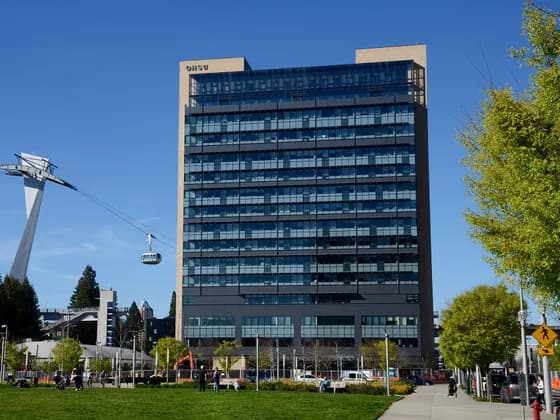
Oregon Health & Science University School of Medicine, founded in 1887, is the only institution in Oregon with authority to grant the MD degree and serves as the state's sole academic medical centre. Located on a hilltop campus above Portland, OHSU is the Pacific Northwest's most prominent academic health sciences university. The school trains physicians with a strong emphasis on research, rural health workforce development, and underserved community medicine across Oregon's diverse geographic landscape.
Entry Requirements
What you need to apply to Oregon Health & Science University School of Medicine (MD).
Admission overview
Bachelor's degree and MCAT required. Applications via AMCAS. OHSU gives preference to Oregon and Pacific Northwest residents but accepts out-of-state applicants given its statewide mandate. Secondary application required. CASPer is not currently required.
MCAT median
509 (range 505–514)
GPA median
3.66 overall / 3.57 science (BCPM)
Acceptance rate
3.3%
Class size
150
In-state preference
Strong — primarily in-state
In-state matriculants
82%
CASPer
Not required
Holistic review emphasis
MMI performance, Oregon/Pacific Northwest residency, rural health awareness, research experience, and community service.
Notes
Estimates from public AAMC FACTS / AACOMAS / ADEA AADSAS / class-profile; verify current cycle.
Specialities offered
Oncology, Neuroscience, Rural Medicine, Primary Care, Cardiovascular Medicine
Interview Format
How Oregon Health & Science University School of Medicine (MD) interviews applicants.
Format
MMI (multiple stations, typically 8–10, in-person or virtual)
Interview window
October–February
Decision date
March 30 (AAMC standard)
Post-interview chances
Estimated post-interview acceptance rate approximately 20–28%; MMI performance is blinded for most stations.
What to expect at a Oregon Health & Science University School of Medicine (MD) interview
OHSU School of Medicine uses a Multiple Mini Interview (MMI) format comprising 8–10 stations of approximately 8 minutes each with 2-minute preparation windows. Stations are held at the OHSU hilltop campus in Portland and cover ethical dilemmas, communication scenarios, collaborative problem-solving, policy discussions, and reflective prompts. Assessors include faculty clinicians, trained community members, and standardised patients. The full interview day spans approximately 4–5 hours and includes an admissions overview, a student-led tour of the OHSU clinical campus and Oregon Simulation Center, and informal interaction with current students. As the only MD-granting school in Oregon, OHSU's MMI specifically tests applicants' awareness of Oregon-specific health challenges and rural access issues.
What makes Oregon Health & Science University School of Medicine (MD) different
OHSU is the only institution in Oregon that grants MD degrees, giving it a unique statewide workforce development mandate. The school is affiliated with the OHSU Hospital — a level I trauma centre and the state's only academic medical centre. OHSU offers strong dual-degree pathways including MD/PhD (MSTP), MD/MPH, and MD/MBA. The school's Area Health Education Center (AHEC) programme places students in rural and underserved Oregon communities for training rotations.
Tutor insight
OHSU's MMI is blinded at most stations — your application does not follow you into station rooms. This means drill the 8-minute rhythm and ethical reasoning frameworks, not personal narrative. Oregon residency helps but OHSU does admit a meaningful number of out-of-state applicants, particularly those with rural Pacific Northwest ties or research backgrounds aligned with OHSU's strong oncology and neuroscience programmes. The rural Oregon mandate is taken seriously: if you are from outside Oregon, demonstrating awareness of Oregon's healthcare geography (rural Eastern Oregon, coastal communities, tribal health) shows genuine fit research. The OHSU campus is notoriously hilly and isolated — asking about student life and community in Portland shows contextual awareness.
PrometheusQuestion Bank
595 medicine questions inside
Interview questions matched to Oregon Health & Science University School of Medicine (MD)
Two questions our tutors flagged as a strong fit for Oregon Health & Science University School of Medicine (MD)’s interview style. Try answering them out loud, then open Prometheus for the model answers and follow-up tips.
Hard·MMI · PanelQ1
US Healthcare Ethics: End-of-Life Care and the POLST Framework
An 82-year-old patient with advanced heart failure and mild cognitive decline has completed a POLST (Physician Orders for Life-Sustaining Treatment) form indicating she does not want CPR or mechanical ventilation. She is brought to the emergency department by her adult son, who insists the team 'do everything.' The patient is conscious enough to confirm she remembers signing the POLST but seems uncertain and frightened. The son says his mother did not understand what she was signing. What ethical principles are in tension here, and how should the care team proceed?
Likely follow-up · How does a POLST differ from an advance directive, and which takes legal precedence in most US states?
3 expert tips in Prometheus
Hard·Panel · MMIQ2
AAMC Core Competency: Thinking Critically About Evidence-Based Medicine
A major randomised controlled trial published in the New England Journal of Medicine finds that a new blood pressure medication reduces major cardiovascular events by 15% compared to placebo in patients with stage 2 hypertension. The relative risk reduction is 15%, the absolute risk reduction is 1.5%, and the number needed to treat is 67. The press release headlines 'Drug Cuts Heart Risk by 15%.' A patient brings you the article and asks whether she should switch. How do you evaluate the study and counsel her?
Likely follow-up · What is the difference between relative risk reduction and absolute risk reduction, and which is more clinically meaningful?
Apply to Oregon Health & Science University School of Medicine (MD) with confidence
We've helped students get into Oregon Health & Science University School of Medicine (MD) and other US medicine schools. Get tailored support for each stage of the application.
Oregon Health & Science University School of Medicine (MD) - Frequently asked questions
Bachelor's degree and MCAT required. Applications via AMCAS. OHSU gives preference to Oregon and Pacific Northwest residents but accepts out-of-state applicants given its statewide mandate. Secondary application required. CASPer is not currently required.
MMI (multiple stations, typically 8–10, in-person or virtual). OHSU School of Medicine uses a Multiple Mini Interview (MMI) format comprising 8–10 stations of approximately 8 minutes each with 2-minute preparation windows. Stations are held at the OHSU hilltop campus in Portland and cover ethical dilemmas, communication scenarios, collaborative problem-solving, policy discussions, and reflective prompts. Assessors include faculty clinicians, trained community members, and standardised patients. The full interview day spans approximately 4–5 hours and includes an admissions overview, a student-led tour of the OHSU clinical campus and Oregon Simulation Center, and informal interaction with current students. As the only MD-granting school in Oregon, OHSU's MMI specifically tests applicants' awareness of Oregon-specific health challenges and rural access issues.
Oregon Health & Science University School of Medicine (MD) typically interviews in October–February.
Decisions are released March 30 (AAMC standard).
OHSU is the only institution in Oregon that grants MD degrees, giving it a unique statewide workforce development mandate. The school is affiliated with the OHSU Hospital — a level I trauma centre and the state's only academic medical centre. OHSU offers strong dual-degree pathways including MD/PhD (MSTP), MD/MPH, and MD/MBA. The school's Area Health Education Center (AHEC) programme places students in rural and underserved Oregon communities for training rotations.