US Medicine · 2027 Entry

Duke University School of Medicine (MD) Medical School2027 Entry Requirements & Interview Format

Location Durham, NC, United StatesEstablished 1930Interviews (2027 entry) September 2026–January 2027Decisions (2027 entry) March 30, 2027

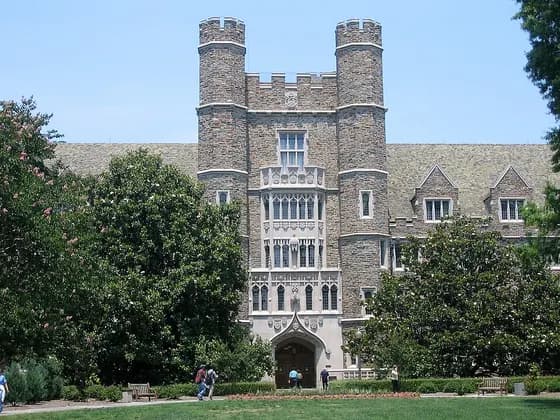
Photo: Discover Durham · CC BY 4.0 · cropped

Photo: self · Public domain · Photo: Ildar Sagdejev ( Specious ) · CC BY-SA 4.0 · Photo: Ildar Sagdejev ( Specious ) · CC BY-SA 4.0

Start here
Overview

About Duke University School of Medicine (MD)

Duke University School of Medicine was founded in 1930. It pioneered a compressed model that teaches the core basic sciences in the first year only. Year 2 is core clinical clerkships, Year 3 is a dedicated research and scholarship year, and Year 4 is electives.

That structure has produced one of the highest numbers of physician-scientist graduates of any medical school in the United States. Duke sits in Durham, North Carolina, and is affiliated with Duke University Hospital and the Duke Health system.

What makes Duke University School of Medicine (MD) different

Duke's dedicated third-year research requirement is unique among top US medical schools and produces graduates who are among the most publication-ready of any school. The compressed one-year basic-science phase means clinical clerkships begin in Year 2, and Year 3 is entirely research-focused. This curriculum is ideal for applicants committed to academic medicine and physician-scientist careers.

Duke University School of Medicine (MD) course & teaching

Traditional curriculum. 4-year MD structured as: Year 1–2 compressed preclinical (basic science + early clinical exposure), Year 3 dedicated research year, Year 4 clinical rotations and residency preparation. The 3-year preclinical model is unique nationally. All students complete a meaningful independent research project culminating in a scholarly paper or thesis.

Duke University School of Medicine (MD) research strengths

Duke University School of Medicine (MD) is strong in these research areas:

  • Cancer genomics
  • Immunotherapy
  • Global health
  • Health equity
  • Biomedical engineering

How the Duke University School of Medicine (MD) interview runs

Format: MMI; 3-year compressed preclinical curriculum frees Year 3 for research

Duke University School of Medicine (MD) intake

Approximately 120 students per year.

Duke University School of Medicine (MD) at a glance

Founded in 1930. Based in Durham, NC.

Programmes offered:

  • Physician-Scientist Training
  • Research
  • Oncology
  • Surgery
  • Global Health
Entry requirements

What you need to apply to Duke University School of Medicine (MD)

Admission overview
Bachelor's degree and MCAT required. Research experience is extremely highly valued — Duke's 3rd-year research requirement means applicants should have demonstrated capacity for independent scholarly work. Clinical exposure and service required.
MCAT median
521 (range 516–526)
GPA median
3.90 overall / 3.88 science (BCPM)
Acceptance rate
3.3%
Class size
123
In-state preference
None
CASPer
Not required
AAMC PREview
Not required
Holistic review emphasis
Research commitment, academic medicine potential, intellectual curiosity, and independent scholarly capacity.
Notes
MCAT/GPA approximate from Duke School of Medicine class profile.
Specialities offered
Physician-Scientist Training, Research, Oncology, Surgery, Global Health

MCAT, GPA, acceptance-rate and class-size figures are taken from Duke University School of Medicine's published admissions data. Class profiles are republished each year — confirm which entering class these numbers describe before you rely on them.

Working towards the MCAT score Duke University School of Medicine (MD) expects? Build a week-by-week plan from your test date — free for the first two weeks.

Interview

How Duke University School of Medicine (MD) interviews applicants

Format
MMI; 3-year compressed preclinical curriculum frees Year 3 for research
Interview window (2027 entry)
September 2026–January 2027
Decision date (2027 entry)
March 30, 2027
Tutor insight
Duke's MMI tests collaborative skills and ethical reasoning, but what truly differentiates successful Duke applicants is a compelling research narrative. You will spend your entire third year on research — make clear in your secondary essays what you want to investigate and why Duke's specific research environment will advance those goals. If you are uncertain about academic medicine, Duke may not be the best fit; its curriculum is explicitly structured to produce physician-scientists. Out-of-state applicants with strong research profiles are welcomed — Duke has no public university in-state preference.
Practice

Practise for your Duke University School of Medicine (MD) interview

PrometheusQuestion Bank621 medicine questions inside

Interview questions matched to Duke University School of Medicine (MD)

Two questions our tutors flagged as a strong fit for Duke University School of Medicine (MD)’s interview style. Try answering them out loud, then open Prometheus for the model answers and follow-up tips.

MediumMMIQ1

AAMC Core Competency: Dealing with Ambiguity and Diagnostic Uncertainty

A 45-year-old patient presents with fatigue, diffuse joint pain, mild anaemia, and a mildly positive ANA. The rheumatology consultant says the workup is 'incomplete and inconclusive' and recommends a three-month watchful waiting period before repeat testing. The patient is frustrated and asks you: 'Why can't you just tell me what's wrong?'

How do you respond, and what does tolerating diagnostic uncertainty require of a physician?

Likely follow-up · How do you explain watchful waiting to a patient who interprets it as medical inaction?

3 expert tips in Prometheus
MediumMMI · PanelQ2

Service Orientation: Free Clinic Volunteering

You have spent two years volunteering at a free clinic that serves uninsured and underinsured patients in your city. During that time you have noticed that many patients delay seeking care until their conditions are acute, often because they fear the cost even though the clinic is free.

What have you learned from this experience about the structural barriers to healthcare access in the United States, and how has it shaped your understanding of what it means to serve a community as a physician?

Likely follow-up · What policy changes, if any, do you believe would most meaningfully address the barriers you observed at the free clinic?

3 expert tips in Prometheus
Get support

Apply to Duke University School of Medicine (MD) with confidence

We've helped students into Duke University School of Medicine (MD) and other US medicine schools — get tailored support for each stage of the application.

Sources

Where Duke University School of Medicine (MD)'s figures come from

Duke University School of Medicine's official course page was opened and reconciled with this record on 14 August 2026. Figures the school does not publish on that page remain unconfirmed.

FAQ

Duke University School of Medicine (MD) — frequently asked questions

Duke University School of Medicine (MD) matriculants have a median MCAT of 521. The middle range of matriculants is 516–526. US schools publish medians rather than cut-offs, and committees review holistically — the MCAT is weighed alongside GPA, clinical and research experience, letters of recommendation and secondary essays.

Apply to Duke University School of Medicine (MD) with confidence

We've helped students turn their MCAT, personal statement and interview prep into offers from Duke University School of Medicine (MD) and other US medicine schools.