
The Duke University School of Medicine MD program
What you actually study, and where you will be
Duke University School of Medicine's MD is a 4-year program taught through team-based learning in an integrated curriculum, with patient contact from Year 1 and clinical rotations in Durham and other sites within 50 miles of Duke (2027 entry). Duke's MD puts the core basic sciences in year 1 and the core clerkships in year 2. Year 3 is a mentored research year, with a weekly outpatient clinic alongside, or a second degree. Year 4 holds a sub-internship, acute care training, the Capstone course and electives. Clinical training is based at Duke's hospitals in Durham and Raleigh, the Durham Veterans Affairs Medical Center and community sites.
- Degree
- MD
- Length
- 4 years
- Teaching
- Integrated + Team-based learning
- Clinical contact
- Year 1
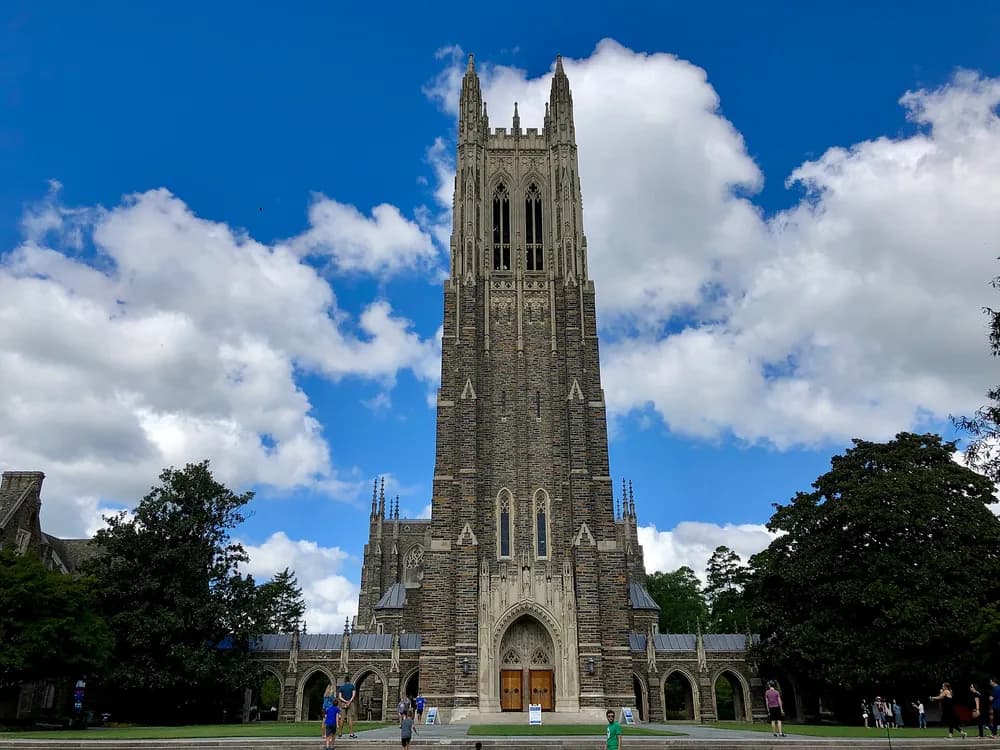
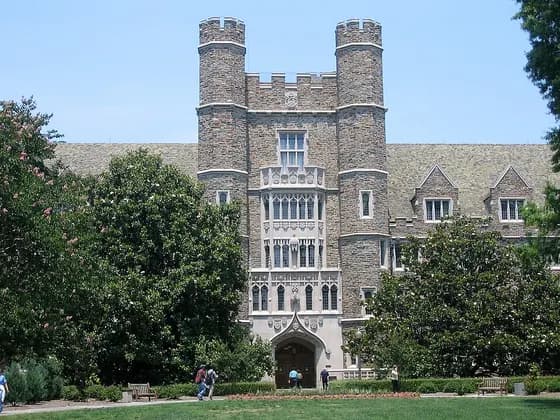
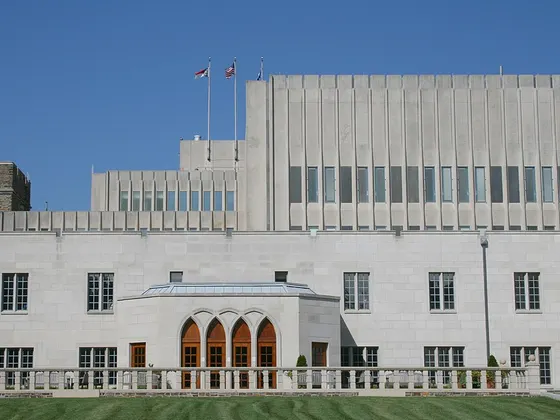

Photo: Warren LeMay from Cullowhee, NC, United States · CC0 · cropped
Photo: self · Public domain · Photo: Ildar Sagdejev ( Specious ) · CC BY-SA 4.0 · Photo: Ivy Dawned · CC BY-SA 2.0
The Duke University School of Medicine MD program at a glance (2027 entry)
Duke University School of Medicine, in Durham, North Carolina, runs a four-year MD program. In a traditionally structured US MD, about two years of classroom science come before two clinical years. Duke compresses that sequence. You learn the core basic sciences in year 1 and complete the core clerkships, full-time clinical rotations in the main specialties, in year 2.
The school describes this as condensing the usual four years of training into three, which frees year 3 for a mentored research project. Many students combine that year with a second degree.
Teaching follows the Patient FIRST curriculum, which the school phased in from 2021 and had extended to all four years by fall 2025. It is integrated: science is taught around patient symptoms, with clinical reasoning and the social context of illness built in. Year 1 is the pre-clerkship (pre-clinical) phase, the classroom-based stretch before clerkships, and at Duke it lasts one year, from early August to July.
Clinical skills start in your second week. In year 2 you act as the primary provider for your patients within hospital and clinic teams. You train at Duke's hospitals, the Durham Veterans Affairs (VA) Medical Center and community clinics, all within 50 miles of Duke.
Year 4 centers on a sub-internship, a month in which you take on an intern's duties, plus acute care training, the Capstone course and electives. Along the way you must pass a clinical skills exam and, before graduating, sit Step 1 and Step 2 Clinical Knowledge (CK) of the United States Medical Licensing Examination (USMLE). The program is accredited by the Liaison Committee on Medical Education (LCME), which accredits MD programs in the United States.
| Degree | MD |
|---|---|
| Program length | 4 years; average entry to graduation 4 years 9 months (2026 figure) |
| Curriculum | Patient FIRST, integrated; team-based cases, labs, lectures, clinical skills groups |
| Anatomy | Cadaveric dissection in small-group labs, late August to January of year 1 |
| First patient contact | Year 1: standardized patients and ward and clinic visits; clerkships from year 2 |
| Core clerkships | Year 2: eight hospital blocks plus PIONEER outpatient clinics and family medicine |
| Research year | Year 3: mentored research and a required thesis, or a dual degree |
| Step 1 timing | Chosen with your advisory dean; dedicated study time in the research year |
| Clinical sites | Duke hospitals, Durham VA and community sites within 50 miles |
| Grading | Pass/fail year 1; clerkships Satisfactory/Unsatisfactory; Honors to Fail in year 4 |
What makes the Duke University School of Medicine MD program different
All the core basic sciences in one year
Foundations of Patient Care runs for about ten months of year 1 and covers histology, gross anatomy, neuroscience, physiology, microbiology, immunology, pathology and pharmacology, each taught around patient cases. Because year 1 ends in July, you start full-time clerkships in August of your second year.
A full year for research, ending in a thesis
Year 3 is given to research with a mentor you choose, in one of 16 study programs ranging from cardiovascular science to medical humanities. You write a thesis of about 3,000 to 6,000 words, or submit a journal manuscript or grant proposal instead, and present your work at the school's August research symposium.
PIONEER: weekly clinics with the same preceptors
Launched in August 2023, PIONEER brings the approach of Duke's longitudinal clerkship, where students follow patients over months, to all students on the standard track. You return each week to the same clinics, alongside a longitudinal family medicine clerkship. Discovery and Trailblazing half-days add self-directed time and workshops on clinical skills, leadership, design thinking, ethics and population health.
A second degree can grow out of the research year
About 40 percent of Duke medical students graduate with two degrees. Options include an MD/MPH, usually at the University of North Carolina at Chapel Hill (UNC), and Duke degrees in business, law, public policy, global health, clinical research and engineering, among others. Typical totals run from four to six years, depending on the degree.
One advisory dean from your first day to graduation
When you enter, you are assigned one of five advisory deans, who follows you through all four years, writes your dean's letter for residency applications and hoods you at graduation.
How Duke University School of Medicine teaches medicine
Patient FIRST stands for Foundations, Immersion, Research, Social/Structural Drivers and Transformation; the bulletin's version has Service in place of the drivers. Its guiding principles are integration, iteration and inclusion. Integration links the sciences with each other and with clinical medicine. Iteration means meeting the same material several times, with more complexity each time, until you master it.
In year 1 the science comes through one course, Foundations of Patient Care: Part 1 from late August to January, and Part 2 from February to June. Part 2 opens with the principles of immunology, microbiology, pathology and pharmacology, then teaches common diseases organ system by organ system.
Each unit starts and ends with sessions that frame the science around patients. End-of-unit cases use interactive videos that walk you through a patient encounter, both on your own and as a team. Technology delivers part of the core content, so class time goes to synthesis and team work. Pathologist assistant students take the biomedical sciences with you.
Required year 1 activities, including required videos and assignments, average no more than 40 hours a week, and you generally get a half-day a week of unstructured time. From year 2 the teaching moves into clerkships, while small-group courses in clinical skills, structural determinants of health and leadership carry on.
The ways you will learn
| Team-based learning and cases | Foundations of Patient Care presents core material through team-based learning, where you prepare beforehand and then solve problems with your team, alongside lectures, readings and case-based problem solving. Faculty from LEAD (Leadership Education and Development) help each anatomy and team-based learning group write a team charter. |
|---|---|
| Small-group labs and simulation | Small-group labs cover cadaveric dissection, histology and pathology, and human simulation cases add practice with simulated patients. LEAD faculty coach you during the patient simulations at the end of year 1. |
| Clinical Skills Foundation groups | A small group meets four hours a week through year 1 for interviewing, physical examination, communication and basic counseling, with a physical exam intensive in February. The same group continues in year 2 as Clinical Skills Foundation 2, reflecting on your rotations and on topics such as ethics, spirituality, pain management and end-of-life care. |
| Standardized patients | Trained actors play patients so you can practice interviews and examinations safely and get immediate feedback on how your approach affects a patient. |
| Clerkships | Full-time rotations in year 2: hospital blocks where you join a team caring for inpatients, and PIONEER's weekly outpatient clinics. Clinical work is paired with teaching, such as weekly case-based seminars in obstetrics and gynecology and conferences in surgery. |
| LEAD | This leadership thread runs through all four years. Years 1 and 2 use lectures, workshops and team-based exercises on emotional intelligence, integrity, teamwork, service and critical thinking; years 3 and 4 offer elective leadership roles, including facilitating LEAD sessions. |
How anatomy is taught at Duke University School of Medicine
Gross anatomy, the study of body structures you can see without a microscope, is part of Foundations of Patient Care 1, from late August to January of year 1. It runs alongside microanatomy (tissues under the microscope), physiology and brain science, and the course also covers embryology. The current First Year page lists cadaveric dissection among the course's small-group labs, so you learn anatomy by dissecting a human body with your team.
An older version of the anatomy course website, last updated in 2019 according to its footer, gives more detail. It described 28 labs, with each team assigned to one cadaver and working from an online dissector, and CT scans of the team's own cadaver to study alongside. Team members took turns as the day's dissection captain and radiology captain, and radiology residents or fellows came into the lab to help. Treat these details as the course as it ran then.
When you first meet patients at Duke University School of Medicine
Clinical skills start in your second week. The two-week Clinical Skills Training Immersion covers history-taking, physical examination, point-of-care (bedside) ultrasound and evidence-based medicine in small and large groups. Clinical Skills Foundation 1 small groups then continue through the year. Foundations of Patient Care adds standardized patients, patient visits on the wards and in clinics, and clinical correlations with patients.
Year 2 is fully clinical. You take your own patients' histories, examine them and draw up and carry out plans for their tests, as the primary provider within a team of several professions. On the medicine clerkship each student carries an average of two to four patients a day. Clinical duty hours are capped at 80 a week and you get one full day a week free, both averaged over four weeks, with no shift longer than 28 hours.
In the research year, the Third Year Clinical Experience, a weekly outpatient clinic, keeps you seeing patients unless you are exempt.
Year by year at Duke University School of Medicine
- Year 1
The basic science year
Year 1 is the pre-clerkship phase, running from early August to July. You learn the core biomedical sciences in one integrated course while clinical skills, structural drivers of health and leadership run alongside it.
- Introduction to the Medical Profession (first week of August): an overview of the profession and what it will ask of you as you move from college to physician-in-training, in large and small groups.
- Clinical Skills Training Immersion (two weeks): history-taking, physical examination, evidence-based medicine, professional identity formation and point-of-care ultrasound.
- Foundations of Patient Care 1 (late August to January, 22 weeks): microanatomy, gross anatomy with dissection, physiology and brain science, with biochemistry, cell biology, embryology and genetics.
- Foundations of Patient Care 2 (February to June, 21 weeks): pathology, pharmacology, microbiology, immunology and behavioral health, then common diseases by organ system.
- All-year threads: Clinical Skills Foundation 1, Social and Structural Drivers of Health (reflective writing, lectures and small-group discussion) and LEAD leadership sessions.
- Consolidation and Integration of Medical Knowledge (two weeks, June to July): self-paced study built on three self-directed modules, aimed at long-term retention and at preparing for cumulative and standardized exams.
- Year 2
Core clerkships and PIONEER
The whole year is clinical, from August to the following August. You rotate through hospital block clerkships and the PIONEER outpatient course, with small-group courses alongside.
- Clinical Skills Intensive in August: two weeks on the 2026-27 calendar, three in the bulletin, plus a one-week radiology primer. It covers radiology training, procedure practice, electronic health record documentation, working with interpreters, sharps safety and orientation to each clerkship.
- Hospital block lengths in the MD program pages, bulletin and February 2026 graphic: Medicine 6 weeks, Surgery 7, Obstetrics and Gynecology 6, Pediatrics 4, Psychiatry 4, Neurology 2, Radiology 2, Anesthesia 1. These sources give PIONEER and Family Medicine 12 each; the bulletin counts all ten as core clerkships.
- PIONEER, short for outpatient integrated longitudinal experience: weekly clinics in internal medicine, neurology and pediatrics, emergency medicine shifts, and Discovery and Trailblazing half-days. A longitudinal Family Medicine clerkship of weekly full-day clinics runs alongside, and PIONEER's course record adds outpatient obstetrics and gynecology.
- Other sources differ. PIONEER and Family Medicine: 16 weeks (PIONEER's course record, September 2026 residency information page, department pages). Obstetrics and Gynecology: 4 (department page, 2023 course record). Family Medicine: 4 (department page, 2022 course record). Surgery: 8 (department page; the 2026-27 orientation's national end-of-clerkship exam falls in week 8).
- Longitudinal courses run all year. The Clinical Skills Course teaches procedures such as intravenous lines on simulators, plus electrocardiogram (ECG) and lab interpretation. Clinical Skills Foundation 2, Structural Determinants of Health and Disease and LEAD continue alongside.
- Two two-week selectives, described under Electives.
- End-of-year OSCE (Objective Structured Clinical Examination), a clinical skills exam that you must pass to graduate.
- Year 3
The research year
You spend the year on mentored scholarly work in one of 16 study programs, or on an approved dual degree. You choose a mentor and program, submit a research proposal and secure ethics approvals, then present your work and submit a thesis. Your mentor grades the research pass/fail, separately from the thesis.
- Length: the curriculum pages say 9 to 12 months, and the 2026-27 calendar sets a late-May thesis deadline for the nine-month track. The bulletin says ten, eleven or twelve months and 36 credits. Any remaining months can go to more research or clinical electives.
- Study programs include cardiovascular science, clinical research, global health, human genetics, medical education research, medical humanities, molecular medicine, neurosciences, pathology, and radiology, radiation oncology and medical physics.
- Thesis: a quantitative scientific manuscript of about 3,000 to 6,000 words (15 to 25 double-spaced pages), or a manuscript submitted to a peer-reviewed journal or a grant proposal. Acceptance is not needed, and medical humanities theses may be qualitative. You need it to start year 4 rotations and to graduate.
- Required courses: Medical Statistics in the fall (waivable with equivalent training), eight spring sessions of Evidence-Based Medicine, and research ethics due 30 days after you start.
- Third Year Clinical Experience: a weekly outpatient half-day for 30 weeks, at up to three sites in the Duke health system or the Durham VA. Dual-degree (including MD/PhD), study-away and some scholarship students are exempt and take an outpatient elective in year 4 instead.
- MedSym, the student research symposium on the first Friday in August: presenting there is mandatory unless you are studying away.
- You may take one fourth-year clinical elective or sub-internship before submitting your thesis.
- Year 4
Sub-internship, acute care, Capstone and electives
You plan your final year with your advisory dean and complete 28 clinical credits, enrolling for at least eight credits a term. Graduation activities fall in early May.
- Sub-internship (four weeks, five credits, at Duke): you typically follow the interns' schedule and act as primary provider for more patients than in year 2. There are about 25 to choose from, usually in the field you plan to enter.
- Critical care: a four-week elective at Duke from more than 10 options, taken with the Acute Care Curriculum, which uses high-fidelity (lifelike) simulation in small groups to teach core critical care.
- Capstone: a longitudinal course centered on March, with a coach, covering clinical skills, ethics, communication, medical-legal issues, health systems and self-care, and including Match Day, when residency matches are announced. Web pages describe a three-week onsite portion; the 2026-27 calendar schedules Capstone Live for March 1 to 26, 2027.
- Electives: more than 125, of 1 to 4 credits, from inpatient to ambulatory settings; up to 4 credits can be classroom courses in areas such as humanities, informatics, health policy, leadership or medical education.
How you are assessed at Duke University School of Medicine
Grading changes by year. Year 1 courses are pass/fail and assessed mostly through objective tests. Year 2 clerkships moved from Honors, High Pass, Pass and Fail to Satisfactory or Unsatisfactory in 2020 and have stayed there, with assessment mostly through narrative evaluations. The research year is pass/fail, and year 4 sub-internships and electives return to Honors, High Pass, Pass or Fail.
Some clerkships end with an NBME shelf exam, a national multiple-choice subject exam from the National Board of Medical Examiners. The medicine clerkship adds a clinical performance exam, an ECG interpretation exam and an online case-based exam to its shelf exam. In 2026-27 the surgery clerkship requires a raw shelf score of at least 55 percent, plus a faculty oral exam, a suturing assessment and weekly quizzes.
An OSCE puts you through a series of standardized clinical cases. Duke's tests your approach to common complaints, covering history-taking, examination, communication and diagnostic reasoning, with cases spread across patient ages, organ systems and the clerkship specialties. You must pass it to graduate. Its course record, the MD program pages and the school's information pages place it at the end of year 2; the bulletin's requirements text puts it in the first month of year 3.
The USMLE is the three-step exam series whose results state medical boards use in licensing doctors. Step 1 tests the science behind medicine and has been reported only as pass or fail since January 26, 2022; Step 2 CK tests clinical medicine. For MD students, LCME accreditation is what establishes eligibility to sit them; students at accredited osteopathic (DO) schools and at schools outside the US can also take them.
To graduate, you must sit Step 1 and Step 2 CK before the last day of fourth-year classes. Duke treats licensure as your own responsibility, so passing is not required to progress, and its information page for residency programs lists passing as not required. You work out with your advisory dean when to take Step 1.
In August 2026 the USMLE program announced a move to designated testing dates from January 2029, with Step exams offered less often each year. Its June 2026 announcement had named 2028. On the current schedule and a four-year track, a 2027 entrant starts the research year in August 2029 and must sit Step 2 CK before fourth-year classes end in spring 2031. If you sit Step 1 in the research year, both exams fall after the change, though some students may sit Step 1 earlier.
- Dedicated Step study time sits in the research year: six weeks timed with your mentor, on the Third Year pages and February 2026 graphic. The mentor guidance allows up to six weeks in total for Steps 1 and 2; the bulletin gives four weeks of Step 1 study on the ten- and eleven-month tracks.
- Courses and clerkships of four weeks or more give you formal feedback at the midpoint and include a written narrative of your performance.
- You get one retake of a failed exam. All year 1 courses must be passed before clerkships start, and retakes of clinical exams must happen within 12 months.
- Failing a course places you on academic probation. Failing two final exams, including shelf exams, brings review by the Promotions Committee, and failing two courses or the same course twice leads to a recommendation for dismissal.
- The dean's letter sent to residency programs contains no ranking, and nothing from pass/fail courses that could be used to rank you.
- The LCME directory lists Duke's MD as fully accredited, with the next survey in 2032-33; Duke reports a full eight-year term after its October 2024 visit.
Where you will actually train at Duke University School of Medicine
Clinical training is based in Duke's own hospitals and clinics and at the Durham VA. The bulletin lists hospitals with cooperative teaching programs for medical students. They include Duke University Hospital, Duke Regional Hospital, Duke Raleigh Hospital (a campus of Duke University Hospital), the Durham VA Medical Center and Central Regional Hospital. Pediatrics adds Duke Children's Hospital, and family medicine uses community practices across the Triangle, the Durham, Raleigh and Chapel Hill area.
Clinical course directors assign sites, all within a 50-mile radius of Duke. You can ask for an alternative site by emailing the clerkship director and coordinator at least a week before the course starts. Requests can be granted if there is space and the site meets the course objectives. Every student should expect assignments outside Durham in year 2, and with limited public transport the school expects you to have a car or use ride services.
Medicine students rotate through two of Duke University Hospital, Duke Regional and the Durham VA. Surgery places you on two services of 3.5 weeks each, with site directors at Duke Raleigh, Duke Regional and the VA, plus one overnight trauma shift at Duke University Hospital. Pediatrics uses Duke Children's Hospital and the Duke Regional nursery, and psychiatry spans inpatient services at three hospitals. Family medicine asks for your site preferences on a form before year 2.
The four-year Primary Care Leadership Track (PCLT), launched in 2011, builds year 2 around a seven-month longitudinal integrated clerkship (LIC), where you follow patients across specialties over months instead of in blocks. You choose the PCLT on your Duke MD application, selecting it when you set up your Duke applicant account, and PCLT decisions arrive with MD admissions decisions. PCLT students work in outpatient family medicine, pediatrics, general internal medicine and gynecology clinics, serve a community agency a half-day a week and follow pregnant patients through group prenatal care.
The 2026-27 bulletin still describes a separate LIC route that students apply for in year 1, with a 12-month second year built around a seven-month longitudinal component. The MD program's current pages describe the LIC as the model for PIONEER and as the PCLT's clinical year. The Dual Degrees and Specialty Tracks page still mentions a longitudinal-care track without describing it, so ask whether a separate LIC route will run for your class.
Duke University Hospital has 1,062 inpatient beds and a regional emergency and trauma center. Duke Regional has 388 beds, and the VA medical center has 151 operating beds and lists Duke among its academic affiliates.
- Duke University Hospital
- Duke Children's Hospital
- Duke Regional Hospital
- Durham VA Medical Center
A 204-bed campus of Duke University Hospital serving Wake County, and one of the surgery clerkship's sites.
- Duke Raleigh Hospital
Family medicine students work with community-based family physicians. PCLT pediatrics includes time at Lincoln Community Health Center, and PCLT family medicine places students across the Triangle and the state.
- Family medicine practices across the Triangle
- Lincoln Community Health Center
The geriatric psychiatry selective can include Central Regional Hospital's inpatient unit, and either site can host the year 4 inpatient psychiatry sub-internship.
- Central Regional Hospital
- Duke Behavioral Health North Durham at Duke Regional Hospital
Electives, selectives and away rotations at Duke University School of Medicine
Selectives are short required slots where you choose the subject. In year 2 you take two two-week selectives from about 30 options, in subspecialties the clerkships do not cover, graded credit/no credit with no exams. Examples include A Taste of Palliative Care, Child Abuse and Family Violence, Prenatal Diagnosis, Neurocritical Care, and Trauma and Acute Care Surgery.
Electives are courses you pick. In year 1 you can join Advanced Clinically Centered Education in Spanish, capped at 20 students with intermediate or advanced Spanish, or audit one non-clinical course a semester. Most elective time falls in year 4.
Away rotations are electives at other medical schools, arranged through the Association of American Medical Colleges' Visiting Student Learning Opportunities service and a Duke study-away application. If you passed all of years 1 and 2 with strong performance, you can earn up to 12 credits from three approved away rotations. The sub-internship and critical care elective must be done at Duke. Classmates' anonymized feedback on away rotations is available on a dashboard.
Under a reciprocal agreement you can also take electives at UNC, Wake Forest or East Carolina University's Brody School of Medicine, usually for courses Duke does not offer. Further afield, a four-credit externship places students on the medicine and surgical wards of Teaching Hospital Karapitiya and Teaching Hospital Mahamodara in Galle, Sri Lanka.
Dual degrees and research years at Duke University School of Medicine
The research year is a requirement of the Duke MD, and the school says it has been part of the curriculum for more than 60 years. You can browse approved mentors in DMAST, a searchable database; each mentor takes at most two third-year students a year, and weekly one-on-one meetings are recommended. Most research scholarships need a full 12 months, and with approval you can study at another institution for up to 36 credits.
Duke-NUS Medical School in Singapore, a partnership with the National University of Singapore (NUS), is a separate graduate-entry school whose graduates receive a joint MD from Duke and NUS. Durham students can spend a 10-month research year there, giving at least 80 percent of their time to research and 6 to 8 hours a week to mentoring Duke-NUS students.
About 40 percent of Duke medical students graduate with two degrees, and dual degrees are built around the research year. The MD/MPH is most often taken at UNC's Gillings School of Global Public Health and typically takes four to five years in all. The MD/MBA at Duke's Fuqua School of Business and the MD/MPP at the Sanford School of Public Policy typically take five, and the MD/JD six.
Other options include master's degrees in clinical research, global health, population health sciences, clinical informatics (MD/MMCi) and engineering (MD/MEng). There are also degrees in bioethics and science policy, liberal studies and theological studies, plus informatics and library science at UNC. If your second degree is at another institution, you take a leave of absence from Duke and return to complete the research-year requirements.
The Medical Scientist Training Program (MSTP), Duke's MD/PhD, began in 1966 and typically takes seven to eight years. After years 1 and 2 you spend about four years in a PhD program, which counts as your research year, then return for the final clinical year. If you already hold a recent quantitative biomedical PhD when you enter, you can apply in year 1 to waive the research year and finish the MD in three years.
You can also extend research with the same mentor for up to three semesters. Duke's September 2026 information page for residency programs puts the average time from matriculation to graduation at 4 years 9 months, up from 4 years 7 months in the 2025 edition.
Facilities and support at Duke University School of Medicine
Where you will learn
The Trent Semans Center for Health Education houses the Clinical Skills Lab on its fifth floor, with ten simulated clinic rooms and two simulated hospital rooms, each with clinical tools and a computer. The LearningSpace system records encounters so faculty and students can review them online. The Office of Student Affairs, home of the advisory deans, is on the building's fourth floor.
The Standardized Patient Program, set up in 1991, employs more than 70 actors. The Medical Center Library and Archives, in the Seeley G. Mudd Building connected to the Trent Semans Center, has bookable group study rooms and a recording studio. Surgical skills sessions run in the Surgical Education and Activities Lab, and the anesthesia clerkship adds hands-on practice in the Patient Safety Center, a simulation center.
Support while you study
Advising runs through the Office of Student Affairs, where five advisory deans, three staff members and an academic resources consultant follow students through medical school. You are assigned a dean when you start, though you can see any of them. The system dates to the 1980s and covers academic progress, course choices, residency applications, disability accommodations, leave and personal difficulties.
In year 1 your dean meets your lunch group of 12 advisees each week, on Tuesday or Thursday at noon, for informal talk about ethics, careers and current events, plus individual meetings. In year 2 your dean's group has dinner once every clerkship block. In years 3 and 4 you meet one-on-one several times to plan research, electives and your residency application.
A Progress Committee reviews every student's performance through the year to offer early support to anyone who needs it, and a learning support specialist works with students on a learning plan. Under the 2026-27 plan, entering students get a three-year subscription to UWorld, a commercial question bank, for Step 1 and Step 2 CK. Second-years get an NBME practice self-assessment for each clerkship with an NBME exam.
The Office of Learning Environment and Well-Being (Le Well) has a full-time Well-Being Navigator, a licensed clinical social worker. Counselors from Duke's Counseling and Psychological Services hold free, confidential hours in the Medical Center Library on Tuesdays and Wednesdays. Anyone who treats you is kept out of your assessment and promotion, and mistreatment can be reported anonymously.
Is the Duke University School of Medicine program right for you?
This program may suit you if
- You want a full year of protected, mentored research with a thesis built into your MD, in fields from lab science to medical humanities.
- You would rather start clerkships in your second year than spend two years mainly in the classroom.
- You are weighing an MPH, MBA, JD or another master's and want it to grow out of the research year.
- You value continuity: one advisory dean for all four years and weekly PIONEER clinics with the same preceptors.
- You enjoy learning in teams, through team-based learning, dissection groups and small clinical skills groups.
Things to think about
- The core basic sciences are packed into about ten months, and the bulletin warns that the curriculum makes heavy demands on students.
- Sites can be up to 50 miles from Duke and year 2 brings assignments outside Durham, so budget for a car or rides.
- A dual degree or extra research adds time: the school's 2026 average from matriculation to graduation is 4 years 9 months.
- The USMLE's January 2029 switch to designated testing dates falls during your training, and the USMLE says the later date gives schools time to adjust policies and curricula, so Duke's Step timing could change.
Duke University School of Medicine MD program — frequently asked questions
Applying to Duke University School of Medicine?
How to get into Duke University School of Medicine
Prerequisites, MCAT, AMCAS personal statement, secondaries and interview, step by step.
Open the guide →Duke University School of Medicine admissions profile
MCAT and GPA profile, acceptance rate, interview format and key dates.
See the profile →Compare Duke University School of Medicine with other schools
Put the teaching style, anatomy teaching and clinical sites next to another school.
Open the comparison →Prepare for the Duke University School of Medicine interview
Format breakdown, school-specific sample questions and prep tips from tutors who interviewed here.
Read the guide →Where this Duke University School of Medicine program guide came from
This guide was written from 101 official sources — Duke University School of Medicine's own program pages and curriculum documents, plus the accreditor and the hospitals and health systems the school trains students in where they publish detail — read on 2026-10-10, then checked claim by claim against those sources.
- Duke University School of Medicine: Doctor of Medicine (MD) program
- Duke MD program: Curriculum
- Duke MD program: Curriculum Innovation (Patient FIRST)
- Duke MD program: First Year
- Duke MD program: Second Year
- Duke MD program: Third Year
- Duke MD program: Fourth Year
- Duke MD program: Longitudinal Curricular Experiences
- Duke MD program: Leadership Education and Development (LEAD) Curriculum
- Text version of the Duke MD curriculum graphic, May 2026
- Duke Patient FIRST curriculum graphic, updated February 2026
- Duke Third Year: Goals and Objectives
- Duke Third Year: Course Requirements
- Duke Third Year: Planning your Scholarly Experience
- Duke Third Year: Study Programs
- Duke Third Year: Dual Degree Programs
- Duke Third Year: Study Away
- Duke Third Year: Scholarship Opportunities
- Duke Third Year: Mentor Information
- 57th Annual Duke School of Medicine Student Research Symposium
- Duke MD program: Dual Degrees and Specialty Tracks
- Duke Primary Care Leadership Track
- About the PCLT Program
- Duke PCLT Application Process
- Duke Medical Scientist Training Program (MD/PhD)
- About the Duke MSTP Program
- About the Duke MD Program (accreditation and history)
- Duke MD program: Advising
- Duke Office of Student Affairs
- Duke Clinical Skills Program
- Duke MD program: Student Resources and 2026-27 study preparation plan
- Duke MD program: Student Experience
- Duke Office of Learning Environment and Well-Being (Le Well)
- Duke Student Wellness Resources and Support Services
- Duke MD program: LCME Accreditation Visit
- Duke MD program: LCME Visit Timeline
- Duke MD Admissions FAQs: transportation and clinical assignments
- 2026-27 School of Medicine Bulletin: Doctor of Medicine (overview, curriculum, advising)
- 2026-27 Bulletin: MD Course Requirements
- 2026-27 Bulletin: MD Academic Calendar
- 2026-27 Bulletin: MD Assessment and Evaluation policies
- 2026-27 Bulletin: MD Advancement and Promotions policies
- 2026-27 Bulletin: Student Wellness and the Learning Environment policies
- 2026-27 Bulletin: MD Enrollment and Registration policies
- 2026-27 Bulletin: MD Dual-Degree Programs
- 2026-27 Bulletin: MD Courses of Instruction
- 2026-27 Bulletin: Advanced standing and additional degrees
- 2026-27 Bulletin: School of Medicine Institutes, Buildings and Facilities
- 2026-27 Bulletin: Student Resources and Student Life
- Duke Medical School Information Page (MSPE Appendix E), September 2026
- Duke Medical School Information Page, September 2025
- USMLE: Designated Testing Dates Information Hub
- USMLE: Updated timeline, transition to designated testing dates in January 2029 (August 6, 2026)
- USMLE: Transition to limited testing dates (June 23, 2026, since updated)
- USMLE: Designated Testing Dates FAQs (updated August 6, 2026)
- USMLE: Step 1 transition to pass/fail only score reporting
- USMLE: Step Exams
- LCME: Accredited Programs directory
- LCME: About the LCME
- VA Durham Health Care: About Us
- Duke Department of Medicine: Medical Student Education
- Duke Department of Medicine: PIONEER news item, May 2025
- Duke Department of Medicine: PIONEER task force article, March 2022
- Duke Department of Medicine: About Duke and Durham (the Research Triangle)
- Duke Obstetrics and Gynecology: Medical Student Education
- Duke Pediatrics: Medical Student Education
- Duke Pediatrics: Second Year
- Duke Psychiatry and Behavioral Sciences: Medical Student Education
- Duke Surgery: Doctor of Medicine
- Duke Surgery Clerkship Orientation 2026-27
- Duke Family Medicine and Community Health: Medical Student Programs
- Duke Anatomy: human gross anatomy course information (footer dated 2019)
- Bulletin course record INTERDIS 107B: Introduction to the Medical School Profession
- Bulletin course record INTERDIS 109B: Clinical Skills Training Immersion
- Bulletin course record INTERDIS 112B: Foundations of Patient Care 1
- Bulletin course record INTERDIS 113B: Foundations of Patient Care 2
- Bulletin course record INTERDIS 115B: Consolidation and Integration of Medical Knowledge
- Bulletin course record INTERDIS 201C: PIONEER
- Bulletin course record INTERDIS 203C: Clinical Skills Assessment (OSCE)
- Bulletin course record INTERDIS 204C: Clinical Skills Course
- Bulletin course record INTERDIS 205C: Clinical Skills Foundation 2
- Bulletin course record INTERDIS 213C: Structural Determinants of Health and Disease
- Bulletin course record MEDICINE 205C: Medicine clerkship
- Bulletin course record SURGERY 205C: Surgery clerkship
- Bulletin course record PEDS 205C: Pediatrics clerkship
- Bulletin course record OBGYN 205C: Obstetrics and Gynecology clerkship
- Bulletin course record PSYCHTRY 205C: Psychiatry clerkship
- Bulletin course record COMMFAM 205C: Family Medicine clerkship
- Bulletin course record ANESTH 220C: Clinical Anesthesiology
- Bulletin course record PEDS 206C: PCLT Pediatrics
- Bulletin course record COMMFAM 206C: PCLT Family Medicine
- Bulletin course record INTERDIS 211C: Longitudinal Integrated Clerkships
- Bulletin course record INTERDIS 300B: Medical Statistics
- Bulletin course record INTERDIS 305C: Third Year Clinical Experience
- Bulletin course record INTERDIS 310C: Evidence Based Medicine
- Bulletin course record INTERDIS 312B: Research Ethics
- Bulletin course record THESIS 301B: Thesis
- Bulletin course record CRS 301B: Continuation of Research Study
- Bulletin course record INTERDIS 401C: Acute Care Curriculum
- Bulletin course record INTERDIS 450C: Capstone
- Bulletin course record STDYAWAY 440C: Externship in Galle, Sri Lanka
Curricula are restructured between cycles. Anything here that decides your application — how anatomy is taught, a clinical campus assignment, a required research year — should be confirmed against the official page for your entry year.
Applying to Duke University School of Medicine?
We help US applicants with MCAT strategy, the AMCAS personal statement, secondary essays and interview prep — everything you need for a competitive Duke University School of Medicine application.