
Duke University School of Medicine Interview
Format, Questions & Prep Tips
Duke University School of Medicine medicine interviews for 2027 entry are multiple mini interviews (MMI), held October 2026 through February 2027. Duke University School of Medicine describes the format as: Virtual MMI: 8–10 stations of about 10 minutes, including five ethical stations, two traditional interviews, team stations and a video station. Published figures: Annual MD class size ~112; Interview format Virtual MMI — 8–10 scenario stations, ~10 min each; Distinctive feature Year 3 research/scholarship year.
- Institution
- Duke University School of Medicine
- Interview (2027 entry)
- October through February
- Decisions (2027 entry)
- Regular decisions by late March; waitlist through spring

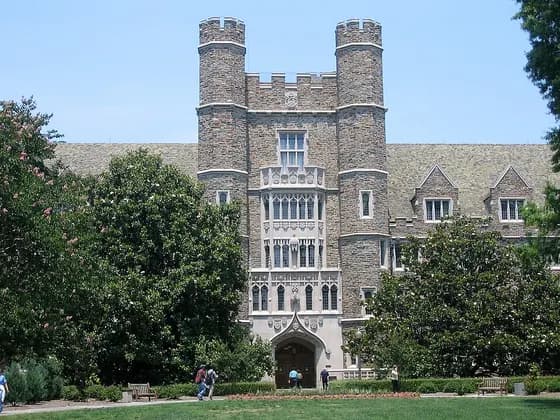
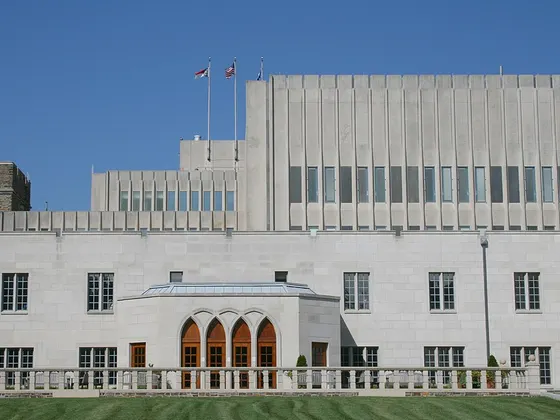

Photo: Warren LeMay from Cullowhee, NC, United States · CC0 · cropped
Photo: self · Public domain · Photo: Ildar Sagdejev ( Specious ) · CC BY-SA 4.0 · Photo: Ivy Dawned · CC BY-SA 2.0
How to get into Duke University School of Medicine (MD) medicine
Step-by-step: entry requirements, admission tests, personal statement, interview format and the key deadlines.
Open the guide →Duke University School of Medicine (MD) entry requirements
Admission profile, interview format, decision dates and what makes Duke University School of Medicine (MD) different.
See the profile →The Duke University School of Medicine MD program
Integrated + Team-based learning, 4 years, clinical rotations across Durham and other sites within 50 miles of Duke.
See the program →The Duke University School of Medicine (MD) medicine interview
Duke School of Medicine uses a **virtual Multiple Mini Interview (MMI) — a series of 8–10 scenario stations of roughly 10 minutes each, with raters blinded to your application. Duke has a distinctive Third Year** model: after two years of pre-clinical training, Year 3 is a dedicated research or non-clinical scholarship year before students return to clinical clerkships in Year 4. This '3+1' format is unusual and interviewers probe whether applicants have a genuine Year 3 project in mind.
Duke's clinical-research integration is exceptionally tight — the Duke Clinical Research Institute (DCRI) is the world's largest academic clinical research organization, and Duke's translational medicine culture means virtually every clinical faculty member has an active research program. Applicants are expected to show research literacy even if clinically focused.
Duke's location in North Carolina's Research Triangle (with UNC and NC State) creates a biomedical ecosystem and interviewers frequently probe interest in biotech, genomics, and precision medicine.
Duke University School of Medicine (MD) interview at a glance (2027 entry)
| Annual MD class size | ~112 |
|---|---|
| Interview format | Virtual MMI — 8–10 scenario stations, ~10 min each |
| Distinctive feature | Year 3 research/scholarship year |
| Tuition (2025–26) | ~USD 66,000/year |
| Application system | AMCAS + Duke secondary |
| Interview window | October–February |
Interview format
- A series of 8–10 virtual MMI scenario stations, ~10 minutes each.
- Raters blinded to your file; scenario-based, not knowledge-based.
- Interview day includes a Year 3 curriculum overview and tour of Duke Medical Center.
Working towards the MCAT score Duke University School of Medicine (MD) expects? Build a week-by-week plan from your test date — free for the first two weeks.
Sample interview questions
Duke compresses the basic sciences into Year 1 and clerkships into Year 2, then frees Year 3 for scholarship. Why does that structure appeal to you specifically?
Show you understand Duke's accelerated 'Year 1 science, Year 2 clinical, Year 3 research, Year 4 advanced' model and why a protected scholarly year fits your goals. Do not describe it as merely an early start to clinical work.
Even if you intend to be primarily a clinician, the DCRI is the world's largest academic clinical research organization. How does clinical research fit into your vision of practice?
Frame research literacy as part of being an excellent clinician: reading and critiquing trials, contributing to evidence, and the translational pipeline. Duke wants physicians who can interrogate evidence, not only apply it.
Tell us about a problem you couldn't stop thinking about. What did you do about your curiosity?
Use this to reveal the intellectual drive Year 3 demands. A genuine, sustained question — academic, clinical, or community — matters more than a polished result.
What would you want your Duke classmates and faculty to say about you by graduation?
Reveal values and self-awareness. Tie character traits (reliability, intellectual honesty, generosity to peers) to concrete behaviors rather than listing adjectives.
Rural eastern North Carolina has severe primary-care shortages and high poverty, while the Research Triangle prospers nearby. What obligation does a Duke-trained physician have toward those communities?
Engage rural health policy, HPSA designations, workforce pipelines, and the limits of individual obligation versus systemic solutions. Acknowledge the genuine tension between elite training hubs and rural need.
A patient in a clinical trial you are helping run wants to keep receiving the study drug after the trial ends because she believes it is helping. How should the team respond?
Cover post-trial access, the therapeutic misconception, equipoise, and the duty owed to research participants. Duke's trial-heavy environment makes research ethics concrete, so reason carefully rather than reflexively.
Genomic testing reveals an incidental finding unrelated to why the patient sought care. Do you disclose it, and how do you decide?
Weigh the right to know, the right not to know, actionability, and the duty to recontact. Precision-medicine and genomics are central in the Research Triangle, so show structured ethical reasoning.
Is it acceptable to enroll patients in a placebo-controlled trial when an existing treatment is available? When is placebo justified?
Discuss clinical equipoise, the standard-of-care comparison, informed consent, and patient protection. A nuanced answer distinguishes settings where placebo is and is not ethically defensible.
Explain to a patient with no science background what a clinical trial is and why you cannot promise the treatment arm will help them.
Avoid jargon, manage hope honestly, and convey randomization and uncertainty plainly. The goal is informed trust, not reassurance that overstates benefit.
Describe a time you had to deliver feedback or difficult news to someone. How did you approach it?
Show empathy, clarity, and follow-through. Reflect on what you would keep or change, demonstrating the relational skill Duke expects alongside intellectual rigor.
Year 3 is a dedicated research or scholarship year. What question are you drawn to, and what might your project look like?
You do not need a finalized plan, but a real driving question signals readiness for the Year 3 model. Any rigorous area is welcome — basic science, clinical, health services, policy, or global health.
Walk me through a research experience. What was genuinely yours, and what did the result actually show?
Separate your independent contribution from supervised tasks and be precise about findings and limitations. Methodological honesty is prized at a research-intensive school.
How do you decide whether a published trial should change your practice?
Address internal validity, generalisability, effect size, confidence intervals, and conflicts of interest. Show you can move from a paper to a clinical decision deliberately.
A research participant tells you she no longer wants to continue in the study but worries she will 'let the team down'. Speak with her.
Reaffirm her right to withdraw without penalty, relieve the guilt, and ensure she leaves understanding her care is unaffected. Protecting autonomy comes before protecting the study.
A classmate on your Year 3 project is not pulling their weight and a deadline is approaching. Have the conversation with them.
Address the behavior, not the person, with curiosity about what is going on. Aim for a constructive plan rather than blame, while being clear about shared accountability.
A trial reports a statistically significant 2% absolute reduction in a surrogate endpoint. How would you interpret that for a patient, and what would you still want to know?
What they are listening for:
- Separate statistical from clinical significance
- question the surrogate's link to outcomes that matter
- ask about number needed to treat
- harms
- cost
Duke rewards numerate, skeptical reading.
Practise the Duke University School of Medicine (MD) interview
Rehearse the real format before the day — on demand with our AI interviewers, or live with a tutor.
Sit a mock with photoreal AI interviewers — any time
A timed MMI or panel interview on video — American & international voices — with interviewers who listen, react and press with follow-ups. Rubric-scored feedback and a replay the moment you finish.






Live mocks with a tutor who’s been in the room
A full Duke University School of Medicine (MD)-style mock with a medic or dentist tutor — honest scoring against real marking criteria, a station-by-station debrief and a written action plan.
Book a mock interviewHow to prepare for the Duke University School of Medicine (MD) interview
Common pitfalls to avoid
Duke University School of Medicine (MD) interview — frequently asked questions
Sources & official admissions information
Ready to nail your Duke University School of Medicine (MD) interview?
Book a mock interview with a tutor who knows the US interview formats, orpractice unlimited stations from our interview question bank.