
Wake Forest University School of Medicine Interview
Format, Questions & Prep Tips
Wake Forest University School of Medicine medicine interviews for 2027 entry are a traditional interview, held October 2026 through February 2027. Published figures: Annual MD class size ~122; Tuition (2025–26) ~USD 62,000/year.
- Institution
- Wake Forest University School of Medicine
- Interview (2027 entry)
- October through February
- Decisions (2027 entry)
- Regular decisions by late March; waitlist through spring

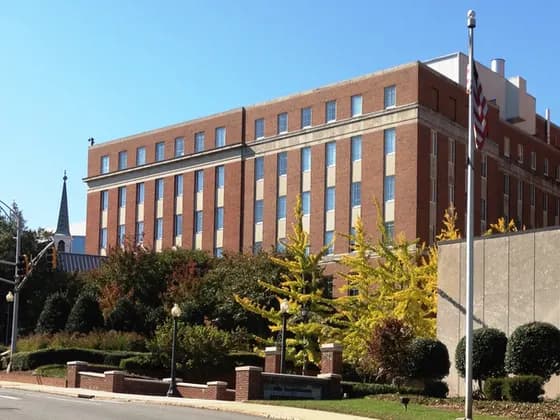
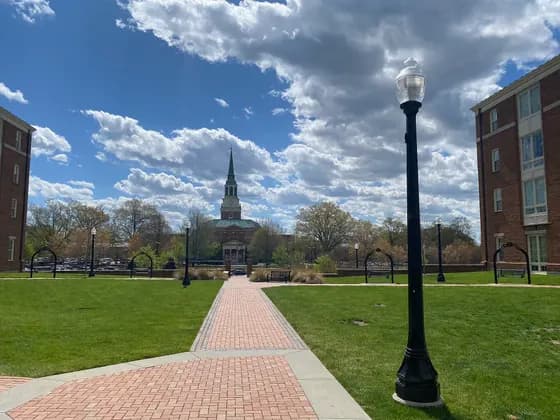

Photo: P. Hughes · CC BY 4.0 · cropped
Photo: Merveilleux · CC BY-SA 3.0 · Photo: Maggiehc23 · CC BY-SA 4.0 · Photo: P. Hughes · CC BY 4.0
How to get into Wake Forest University School of Medicine (MD) medicine
Step-by-step: entry requirements, admission tests, personal statement, interview format and the key deadlines.
Open the guide →Wake Forest University School of Medicine (MD) entry requirements
Admission profile, interview format, decision dates and what makes Wake Forest University School of Medicine (MD) different.
See the profile →The Wake Forest University School of Medicine MD program
Integrated, 4 years, clinical rotations across Winston-Salem, Charlotte and affiliated North Carolina sites.
See the program →The Wake Forest University School of Medicine (MD) medicine interview
Wake Forest School of Medicine uses a traditional interview format with two sessions (faculty and student). Wake Forest is a mid-size private medical school in Winston-Salem, North Carolina, with a strong clinical training program at Atrium Health Wake Forest Baptist Medical Center.
Wake Forest has a distinctive Physician Assistant Studies program that operates alongside the MD program, and the school has invested heavily in interprofessional education — MD and PA students train together in team-based simulations and clinical settings. Interviewers probe genuine respect for non-physician clinicians and readiness to function in collaborative teams.
Wake Forest is notable for its work in health disparities in rural and Appalachian North Carolina — a region with high rates of diabetes, hypertension, and opioid misuse. Interviewers probe awareness of these challenges and commitment to serving medically underserved populations.
Wake Forest University School of Medicine (MD) interview at a glance (2027 entry)
| Annual MD class size | ~122 |
|---|---|
| Interview format | Traditional — faculty + student sessions |
| Tuition (2025–26) | ~USD 62,000/year |
| Application system | AMCAS + Wake Forest secondary |
| Interview window | October–February |
Interview format
- Two one-on-one sessions: faculty (open-file) and student.
- No MMI.
Working towards the MCAT score Wake Forest University School of Medicine (MD) expects? Build a week-by-week plan from your test date — free for the first two weeks.
Sample interview questions
Wake Forest trains MD and PA students together. Describe a time you worked in a team where you were not the most senior person. How did you contribute while respecting others' expertise?
Interprofessional education is genuine here — show you understand that PA-level clinical expertise is substantive and that good teams are not strictly hierarchical.
Tell us about a time you disagreed with a teammate or supervisor. How did you raise it while keeping the working relationship intact?
AAMC Interpersonal Skills competency. Show respectful assertiveness, focus on the issue rather than the person, and a willingness to be wrong.
Why Wake Forest specifically? What about its interprofessional, team-based culture and its place in North Carolina fits how you want to train?
Connect genuine respect for collaborative practice to Wake Forest's embedded IPE, and reference the rural and Appalachian populations the school serves. Avoid generic praise.
Wake Forest serves rural and Appalachian North Carolina, a region with high rates of diabetes, hypertension, and opioid misuse. What draws you to serving medically underserved communities?
Show concrete awareness of the region's health challenges and a credible, personal source of motivation rather than a generic wish to help.
Tell us about a time you learned something important from someone in a non-physician role — a nurse, technician, social worker, or PA. How did it change your thinking?
This previews the IPE culture. Show you already value the expertise of the wider care team and can name what you learned.
What kind of physician do you hope to become, and why does team-based, whole-person care matter to that vision?
Tie your future-self vision to collaborative practice and to the kinds of communities Wake Forest serves. Specificity beats idealistic generalities.
Rural Appalachian North Carolina has among the highest opioid mortality rates in the US. What has driven the opioid crisis in this region, and what does an effective physician response look like?
Discuss economic despair, historic over-prescribing, pharmaceutical marketing, limited treatment access, and harm-reduction approaches such as medication for opioid use disorder and naloxone distribution.
A PA on your team makes a clinical recommendation you think is wrong. The attending is unavailable. How do you handle the disagreement in front of the patient?
Patient safety first, raising concerns respectfully and ideally away from the bedside, and recognizing that hierarchy should not silence valid concerns nor license disrespect of a colleague.
A patient with diabetes in a rural county cannot afford the medication and the nearest specialist is two hours away. How do you weigh ideal care against what is achievable for this patient?
Discuss generic and patient-assistance options, telehealth, sliding-scale clinics, and shared decision-making that meets the patient where they are rather than prescribing an unworkable ideal.
A colleague repeatedly cuts corners on documentation to save time. It has not harmed a patient yet. Do you say something, and to whom?
What they are listening for:
- Professionalism and patient safety
- the duty to address concerns directly first where appropriate
- escalation when behavior persists
Show proportionality.
Walk us through a research or scholarly project you have been part of. What did you learn about working in a team to answer a question?
AAMC thinking-and-reasoning and science competencies. Emphasize your specific contribution and any collaborative dynamics, which fit Wake Forest's team ethos.
Describe a subject you initially struggled with. What changed in how you approached it?
Show metacognition and resilience — how you diagnosed the difficulty and adjusted — rather than simply asserting eventual success.
You are a trainee. A patient's family member confronts you in the corridor, upset that 'too many different people' keep coming in and out of the room. How do you respond?
Acknowledge the frustration, explain the value of a coordinated team in plain language, and reassure them about continuity and communication. A chance to articulate IPE to a patient.
A classmate from the PA program tells you they feel talked down to by some of the MD students. As a peer, how do you respond?
Listen and validate, reflect on your own behavior, and model the collaborative respect Wake Forest expects. Avoid defensiveness on behalf of your cohort.
You are shown data showing that rural NC counties have far fewer physicians per capita than urban ones, alongside worse chronic-disease outcomes. How do you interpret the link?
What they are listening for:
- Access barriers
- workforce maldistribution
- travel and economic obstacles
- the role of pipeline programs and team-based care in extending reach
Avoid implying the gap is about patient choices.
Practise the Wake Forest University School of Medicine (MD) interview
Rehearse the real format before the day — on demand with our AI interviewers, or live with a tutor.
Sit a mock with photoreal AI interviewers — any time
A timed MMI or panel interview on video — American & international voices — with interviewers who listen, react and press with follow-ups. Rubric-scored feedback and a replay the moment you finish.






Live mocks with a tutor who’s been in the room
A full Wake Forest University School of Medicine (MD)-style mock with a medic or dentist tutor — honest scoring against real marking criteria, a station-by-station debrief and a written action plan.
Book a mock interviewHow to prepare for the Wake Forest University School of Medicine (MD) interview
Common pitfalls to avoid
Wake Forest University School of Medicine (MD) interview — frequently asked questions
Sources & official admissions information
Ready to nail your Wake Forest University School of Medicine (MD) interview?
Book a mock interview with a tutor who knows the US interview formats, orpractice unlimited stations from our interview question bank.