
Albert Einstein College of Medicine Interview
Format, Questions & Prep Tips
Albert Einstein College of Medicine medicine interviews for 2027 entry are a traditional interview. Published figures: Annual MD class size ~180; Interview format Traditional panel — 1–2 interviewers, ~30–45 min; MCAT median ~518.
- Institution
- Albert Einstein College of Medicine
- Interview (2027 entry)
- September through March; rolling invitations
- Decisions (2027 entry)
- Rolling decisions; most offers by March 30; waitlist movement through summer

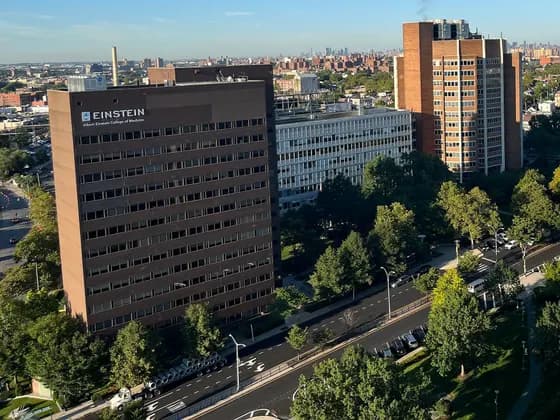

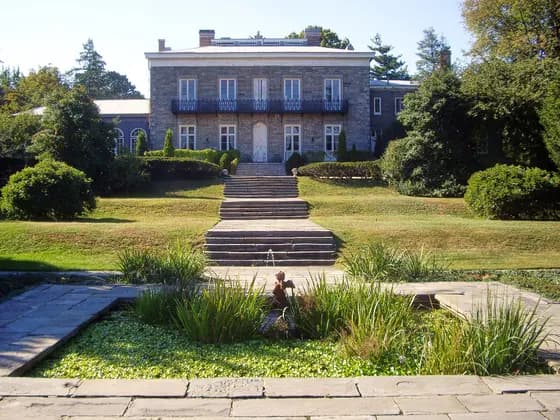
Photo: Dave Johnson · CC BY 3.0 · cropped
Photo: HAL333 · CC0 · Photo: King of Hearts · CC BY-SA 4.0 · Photo: Dmadeo · CC BY-SA 3.0
How to get into Albert Einstein College of Medicine (MD) medicine
Step-by-step: entry requirements, admission tests, personal statement, interview format and the key deadlines.
Open the guide →Albert Einstein College of Medicine (MD) entry requirements
Admission profile, interview format, decision dates and what makes Albert Einstein College of Medicine (MD) different.
See the profile →The Albert Einstein College of Medicine (MD) medicine interview
Albert Einstein College of Medicine uses a traditional panel interview format — one or two sessions of 30–45 minutes each with faculty members, clinicians, or medical students who have reviewed the full application in advance.
Einstein occupies a distinctive dual identity: one of the most research-funded private medical schools in the US AND a school embedded in the Bronx — one of the most medically underserved and ethnically diverse urban environments in America. Interviewers probe both dimensions. You cannot credibly apply to Einstein on research interest alone without engaging with the Bronx community health mission, and vice versa.
Research background carries exceptional weight at Einstein — students are expected to engage substantively with the research environment. Candidates who cannot articulate a genuine research interest or who have not done meaningful research are at a meaningful disadvantage relative to the competitive applicant pool.
Albert Einstein College of Medicine (MD) interview at a glance (2027 entry)
| Annual MD class size | ~180 |
|---|---|
| Interview format | Traditional panel — 1–2 interviewers, ~30–45 min |
| MCAT median | ~518 |
| GPA median | ~3.85 |
| Application system | AMCAS |
| Interview window | September–March |
| Research strength | Top-tier NIH funding; aging, HIV, cancer, diabetes |
Interview format
- One or two traditional one-on-one sessions with faculty or medical students.
- Each session ~30–45 minutes; full interview day spans ~5–7 hours.
- Non-blind — interviewers read your full application and probe specific research and clinical experiences.
- Research depth and Bronx/urban health orientation are both explicit evaluation criteria.
- Student lunch and campus tour are informal evaluation opportunities.
Working towards the MCAT score Albert Einstein College of Medicine (MD) expects? Build a week-by-week plan from your test date — free for the first two weeks.
Sample interview questions
Tell me about your most significant research experience. What was your scientific question, and what did you contribute intellectually — not just operationally?
Einstein expects deep research engagement. Describe your specific intellectual contribution, not just what you pipetted. What did you understand about the question that you brought to the work? What would you do differently?
Einstein is located in the Bronx. What do you know about the Bronx as a healthcare context, and how does that shape why you want to train here?
Show genuine Bronx-specific knowledge: highest asthma rates in NY, poverty concentration, racial health disparities, food insecurity, Montefiore as the primary safety-net academic medical center. Avoid tourist-level engagement.
What research question would you pursue at Einstein, and why does this institution's infrastructure make it the right place to answer it?
Reference specific Einstein programs: the Institute for Aging Research, the Center for AIDS Research, the Einstein Cancer Center. Show you have researched actual labs or faculty whose work intersects with your interest.
A pharmaceutical company offers to fund your research lab in exchange for first right of refusal on any patents developed. Your institution's technology transfer office approves it. Do you proceed?
What they are listening for:
- Conflict of interest
- research independence
- publication bias
- patient safety
Discuss disclosure requirements, structural protections (publication rights, data access), and the distinction between acceptable and unacceptable industry relationships.
You are caring for a patient with severe mental illness who is refusing a psychiatric medication that you and the treatment team believe is essential. They are not acutely dangerous. What do you do?
Discuss patient autonomy, capacity assessment, shared decision-making, motivational approaches, and the legal framework for involuntary treatment in New York. Forced medication in the absence of dangerousness is an ethical and legal bright line.
A Bronx patient who works two jobs and has three children tells you they cannot follow your dietary management recommendations for their diabetes because healthy food is too expensive and they do not have time to cook. How do you respond?
This is a social determinants scenario. Do not lecture. Validate the constraint, ask what IS feasible, identify community resources (food banks, WIC, cooking classes), and work with a care team (dietitian, social worker). Show practical problem-solving.
What is the most important scientific or medical discovery of the last 20 years, in your view, and why?
Show genuine intellectual engagement with biomedical science. Have a specific, well-reasoned answer — not a safe consensus answer. The "why" matters more than the "what." Defend your view if challenged.
Research published in your field has recently been retracted due to data manipulation. How should the scientific community respond, and what systemic changes could prevent this?
Research integrity is central to an institution with Einstein's research profile. Discuss replication culture, raw data sharing, pre-registration, institutional review, and the career pressures that incentivize misconduct.
Einstein has one of the most diverse medical school classes in the US. What does that diversity mean to you as a future physician and colleague?
Move beyond "diversity is good." Discuss how diverse peer perspectives improve clinical reasoning, cultural humility, patient communication, and the research questions the field asks. Be specific about your own identity and what you bring.
Aging research is a signature strength at Einstein. With America's population aging rapidly, what do you see as the most pressing unmet need in geriatric medicine?
Options:
- dementia care
- polypharmacy
- frailty assessment
- end-of-life care quality
- social isolation
- Medicare financial sustainability
Argue one with specificity. If aging is your genuine interest, connect to Einstein's Institute for Aging Research.
The Bronx has long recorded some of the highest childhood-asthma rates in New York, with emergency visits concentrated in its poorest neighborhoods. Why does asthma cluster so tightly by geography and income, and what can a physician at Montefiore do that a prescription alone cannot?
Connect the figures to housing quality, pollution and traffic corridors, indoor allergens, and access to consistent care. The physician's role includes environmental history-taking, home-trigger remediation referrals, school-based care, and advocacy — show structural thinking grounded in the Bronx.
Role play: a Montefiore patient juggling two jobs and three children says they cannot keep their follow-up appointments or afford the medication regimen you have outlined for their hypertension. Talk to them.
Do not lecture. Validate the constraints, ask what actually is feasible, simplify the regimen, identify generic/assistance options, and bring in social work and team resources. Demonstrate practical, social-determinants-aware problem-solving.
Tell me about a time you explained a difficult scientific or research finding to someone without a science background. How did you make it land?
STAR. Einstein bridges deep research and community care, so translation skill matters. Emphasize plain language, relevance to the listener, and checking understanding rather than simplifying once.
You are invited to enroll your own clinic patients in a research study you are involved in. Several are from vulnerable Bronx populations who deeply trust you. How do you protect genuine informed consent given that trust and the power imbalance?
Engage therapeutic misconception, voluntariness, the dual role of physician-investigator, and protections for vulnerable populations. Discuss independent consent processes, clear separation of care and recruitment, and that trust raises rather than lowers the consent bar.
Einstein is defined by both elite research and a safety-net mission in the Bronx. Tell me honestly how those two pulls fit together for you — and which one you would lean toward if you had to choose.
Interviewers probe imbalance, so engage both authentically rather than performing equal passion. Show how research questions and Bronx community needs can inform each other, and be candid about your own center of gravity.
Practise the Albert Einstein College of Medicine (MD) interview
Rehearse the real format before the day — on demand with our AI interviewers, or live with a tutor.
Sit a mock with photoreal AI interviewers — any time
A timed MMI or panel interview on video — American & international voices — with interviewers who listen, react and press with follow-ups. Rubric-scored feedback and a replay the moment you finish.






Live mocks with a tutor who’s been in the room
A full Albert Einstein College of Medicine (MD)-style mock with a medic or dentist tutor — honest scoring against real marking criteria, a station-by-station debrief and a written action plan.
Book a mock interviewHow to prepare for the Albert Einstein College of Medicine (MD) interview
Common pitfalls to avoid
Albert Einstein College of Medicine (MD) interview — frequently asked questions
Sources & official admissions information
Ready to nail your Albert Einstein College of Medicine (MD) interview?
Book a mock interview with a tutor who knows the US interview formats, orpractice unlimited stations from our interview question bank.