
Icahn School of Medicine at Mount Sinai Interview
Format, Questions & Prep Tips
Icahn School of Medicine at Mount Sinai medicine interviews for 2027 entry are a traditional interview, held October 2026 through February 2027. Published figures: Annual MD class size ~140; Tuition (2025–26) ~USD 65,000/year.
- Institution
- Icahn School of Medicine at Mount Sinai
- Interview (2027 entry)
- October through February
- Decisions (2027 entry)
- Regular decisions by late March; waitlist through May–August

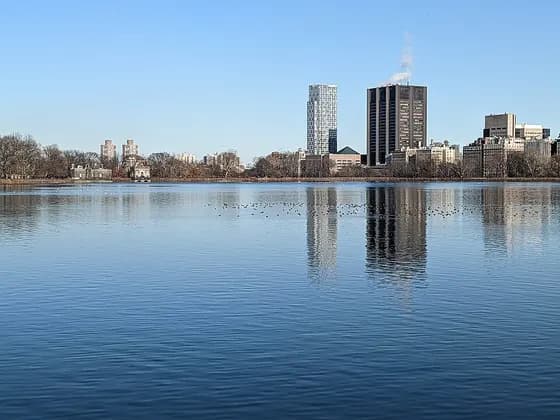
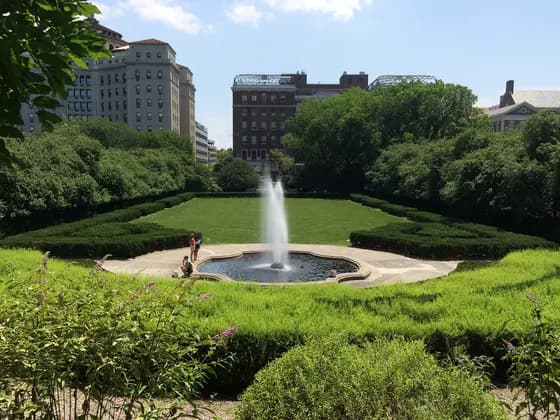

Photo: Homieg340 (cropped by Beyond My Ken) · CC BY-SA 3.0 · cropped
Photo: Eden, Janine and Jim from New York City · CC BY 2.0 · Photo: Bb337 · CC BY-SA 4.0 · Photo: PortableNYCTours · CC BY-SA 4.0
How to get into Icahn School of Medicine at Mount Sinai (MD) medicine
Step-by-step: entry requirements, admission tests, personal statement, interview format and the key deadlines.
Open the guide →Icahn School of Medicine at Mount Sinai (MD) entry requirements
Admission profile, interview format, decision dates and what makes Icahn School of Medicine at Mount Sinai (MD) different.
See the profile →The Icahn School of Medicine at Mount Sinai MD program
Integrated, 4 years, clinical rotations across New York City, plus one pediatrics site in New Jersey.
See the program →The Icahn School of Medicine at Mount Sinai (MD) medicine interview
Icahn School of Medicine at Mount Sinai uses a traditional interview format with two sessions (faculty and student). Mount Sinai is renowned for its commitment to urban medicine and health equity — its flagship hospital sits at the intersection of the Upper East Side and East Harlem, one of the starkest health inequality boundaries in the US, and the school's Elmezzi Graduate School, Global Health program, and Institute for Health Equity Research reflect this mission.
Mount Sinai developed the Arnhold Global Health Institute and has major programs in Africa, the Caribbean, and Southeast Asia. Interviewers frequently probe global health commitment and cross-cultural care.
A distinctive Mount Sinai theme is physician leadership and advocacy — the school has a formal curriculum on healthcare systems, policy, and advocacy (the Health System Science thread), and applicants are expected to have views on healthcare reform.
Icahn School of Medicine at Mount Sinai (MD) interview at a glance (2027 entry)
| Annual MD class size | ~140 |
|---|---|
| Interview format | Traditional — faculty + student sessions |
| Tuition (2025–26) | ~USD 65,000/year |
| Application system | AMCAS + Mount Sinai secondary |
| Interview window | October–February |
| Notable program | FlexMed (early assurance for non-traditional applicants) |
Interview format
- Two one-on-one sessions: faculty (open-file) and student.
- No MMI.
- Mount Sinai's FlexMed program (early assurance for juniors/seniors and non-traditional applicants) has a separate interview process.
Working towards the MCAT score Icahn School of Medicine at Mount Sinai (MD) expects? Build a week-by-week plan from your test date — free for the first two weeks.
Sample interview questions
Mount Sinai sits at the boundary between the Upper East Side and East Harlem — two communities with dramatically different health outcomes separated by a few city blocks. What does it mean to train in that context?
What they are listening for:
- Income segregation
- access to care
- environmental health exposures
- the history of urban renewal in East Harlem
This geographic tension is central to Mount Sinai's identity.
Why the Icahn School of Medicine at Mount Sinai specifically? What about its mission in urban medicine and health equity fits you?
Name the East Harlem context, the Institute for Health Equity Research, or the Health System Science thread. Show genuine fit with an advocacy-oriented, urban-medicine mission, not just the reputation.
Mount Sinai's Arnhold Global Health Institute runs major programs in Africa, the Caribbean, and Southeast Asia. Does global health feature in your vision, and how?
Prior international experience is not required, but you should have reflected on cross-cultural care and how local and global health connect. East Harlem itself is a legitimate starting point.
Tell me about a time you advocated for change in a system, not just for an individual. What did you do, and what happened?
Mount Sinai trains physician-leaders and advocates. Show sustained, structural engagement and honest reflection on what worked and what you would do differently.
Mount Sinai's Health System Science curriculum asks students to engage with healthcare policy. What one policy change would most improve health equity in New York City, and why?
NYC-specific:
- Medicaid managed-care quality
- FQHC funding
- housing as a health intervention
- mental-health service gaps
Defend a concrete position with evidence.
A patient is repeatedly readmitted because they are unhoused and cannot follow a discharge plan. What is the physician's obligation beyond each admission?
What they are listening for:
- Housing as a social determinant
- safe-discharge planning
- harm reduction
- systemic advocacy
Acknowledge the limits of hospital-based care without stable housing.
East Harlem has some of the highest asthma rates in the country, driven partly by environmental exposures. How should physicians respond when the cause of disease lies outside the clinic?
What they are listening for:
- Environmental justice
- screening for exposures
- partnership with community organizations
- advocacy
Mount Sinai expects clinicians who act on the upstream determinants.
A patient with limited English proficiency signs a consent form they may not fully understand. How do you make consent genuinely informed?
Professional interpreters, teach-back to confirm comprehension, and recognizing that a signature is not understanding. Mount Sinai serves one of the most diverse cities in the world.
Describe an experience that required you to navigate significant cultural or linguistic difference in a healthcare or community setting.
Mount Sinai trains physicians for one of the most diverse cities in the world. Show genuine cultural humility and adaptive communication, not just exposure to difference.
You need to persuade a skeptical community group to participate in a health program they distrust because of past mistreatment by institutions. How do you approach it?
Acknowledge the history honestly, listen before pitching, and build trust through partnership rather than persuasion. Credibility is earned, especially in communities harmed before.
Describe a research or scholarly project you contributed to. What was your role, and what was its main limitation?
Mount Sinai is a major research institution. Show methodological understanding and the honesty to name limitations and next steps rather than overstating findings.
How would you study whether a housing intervention actually reduces hospital readmissions among unhoused patients?
Discuss outcome definition, comparison group, confounding, and feasibility. This connects health-services research to Mount Sinai's equity and advocacy mission.
How do you weigh evidence when deciding whether a policy or clinical practice should change?
What they are listening for:
- Study design
- strength and consistency of evidence
- applicability to the population affected
Balance rigor with the need to act on persistent inequities.
A patient from East Harlem is frustrated that they feel rushed and unheard at a hospital that 'isn't for people like them.' Talk to them.
Acknowledge the legitimacy of that feeling, slow down, and demonstrate you are listening. The Upper East Side / East Harlem divide is a live reality for these patients.
A classmate dismisses a patient's missed appointments as 'non-compliance.' Respond to them as a peer.
Reframe non-compliance around barriers — transport, work, childcare, cost — without lecturing. Mount Sinai's culture rejects blaming patients for structural obstacles.
You are shown NYC data where two neighborhoods a mile apart have very different life expectancies. What questions do you ask before concluding why?
What they are listening for:
- Probe income
- housing
- access to care
- environmental exposures
- data quality
Connect the gap to structural determinants rather than individual behavior.
Practise the Icahn School of Medicine at Mount Sinai (MD) interview
Rehearse the real format before the day — on demand with our AI interviewers, or live with a tutor.
Sit a mock with photoreal AI interviewers — any time
A timed MMI or panel interview on video — American & international voices — with interviewers who listen, react and press with follow-ups. Rubric-scored feedback and a replay the moment you finish.






Live mocks with a tutor who’s been in the room
A full Icahn School of Medicine at Mount Sinai (MD)-style mock with a medic or dentist tutor — honest scoring against real marking criteria, a station-by-station debrief and a written action plan.
Book a mock interviewHow to prepare for the Icahn School of Medicine at Mount Sinai (MD) interview
Common pitfalls to avoid
Icahn School of Medicine at Mount Sinai (MD) interview — frequently asked questions
Sources & official admissions information
Ready to nail your Icahn School of Medicine at Mount Sinai (MD) interview?
Book a mock interview with a tutor who knows the US interview formats, orpractice unlimited stations from our interview question bank.