
Columbia University VP&S Interview
Format, Questions & Prep Tips
Columbia University VP&S medicine interviews for 2027 entry are a traditional interview, held October 2026 through February 2027. Published figures: Annual MD class size ~149; Interview format Traditional open-file — single faculty session ~60 min; Tuition (2025–26) ~USD 67,000/year.
- Institution
- Columbia University Vagelos College of Physicians and Surgeons
- Interview (2027 entry)
- October through February
- Decisions (2027 entry)
- Regular decisions by late March; waitlist movement through May–August

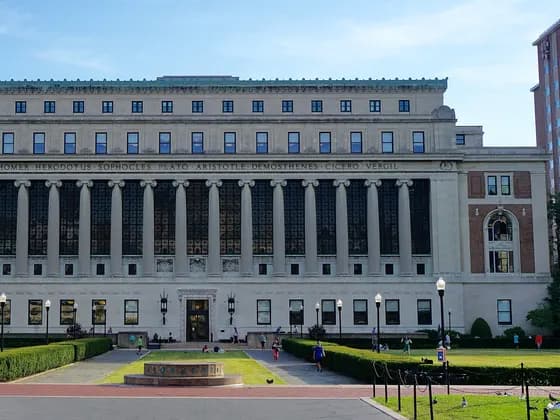

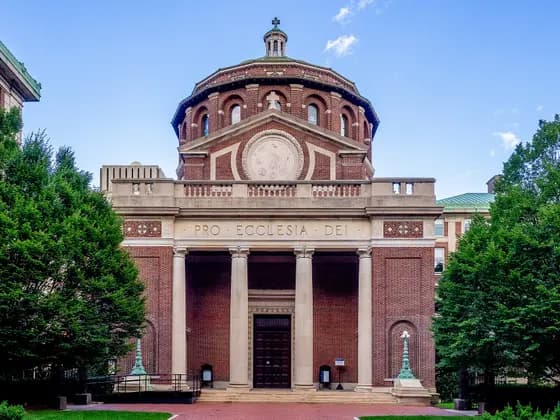
Photo: King of Hearts · CC BY-SA 4.0 · cropped
Photo: JSquish · CC BY-SA 4.0 · Photo: Jay Dobkin · CC BY-SA 4.0 · Photo: Ajay Suresh · CC BY 2.0
How to get into Columbia University VP&S (MD) medicine
Step-by-step: entry requirements, admission tests, personal statement, interview format and the key deadlines.
Open the guide →Columbia University VP&S (MD) entry requirements
Admission profile, interview format, decision dates and what makes Columbia University VP&S (MD) different.
See the profile →The Columbia University VP&S MD program
Integrated, 4 years, clinical rotations across Northern Manhattan, the tri-state area, Cooperstown, New Mexico and Arizona.
See the program →The Columbia University VP&S (MD) medicine interview
Columbia Vagelos College of Physicians and Surgeons (VP&S) uses a traditional open-file interview — applicants typically meet with one faculty member for approximately one hour. The session is open-ended and conversational; Columbia interviewers are known for allowing the applicant to drive the conversation through their own experiences and interests.
VP&S is distinguished by its biosciences integration — the Zuckerman Institute for Mind, Brain & Behavior and the Mailman School of Public Health are on the same campus. Interviewers frequently probe interest in the neurosciences, global health, and Columbia's work in underserved Upper Manhattan communities.
A notable VP&S theme is narrative medicine — Columbia pioneered this field through the work of Rita Charon, and it is embedded in the first-year curriculum. Interviewers may probe your capacity for empathy, storytelling, and reflective practice.
Columbia University VP&S (MD) interview at a glance (2027 entry)
| Annual MD class size | ~149 |
|---|---|
| Interview format | Traditional open-file — single faculty session ~60 min |
| Distinctive program | Narrative Medicine (first-year requirement) |
| Tuition (2025–26) | ~USD 67,000/year |
| Application system | AMCAS + VP&S secondary |
| Interview window | October–February |
Interview format
- Single one-on-one interview with a faculty member — approximately 60 minutes.
- Open-file: the interviewer has read your application.
- The session is largely unscripted — many interviewers begin with "Tell me about yourself."
- Some interview days include a brief second session with a current student (informal).
Working towards the MCAT score Columbia University VP&S (MD) expects? Build a week-by-week plan from your test date — free for the first two weeks.
Sample interview questions
What drew you to Columbia VP&S — how does the Washington Heights and Harlem community context fit with where you are headed as a physician?
Reference the Harlem/Washington Heights community health center network and Columbia's Dominican health studies. Avoid prestige framing.
Narrative medicine asks physicians to attend closely to patients' stories. Describe a moment when listening to someone's story — not their symptoms, but their story — changed how you understood their situation.
VP&S narrative medicine is distinctive. Show you have reflected on the difference between a biomedical history and a lived narrative.
A patient with opioid use disorder is admitted after an overdose and discloses that the person who sold him heroin also deals to his teenage daughter. What are your obligations?
Multiple layers: Tarasoff-type duty to warn vs. confidentiality, mandatory reporting of child abuse, harm reduction approach, and substance use disorder as a medical condition.
New York State recently expanded its Medical Aid in Dying law. How do you feel about physician participation, and what role should personal belief play in a physician's decisions?
What they are listening for:
- Conscience clauses
- patient access to legal services
- professional obligation to refer
- the limits of conscientious objection
Tell me about a time you realized you had misunderstood something important about another person's experience. How did you find out, and what changed?
Self-awareness and cultural humility. Choose a real moment of misunderstanding, not a triumphal awareness narrative.
Columbia shares a campus with the Zuckerman Institute for Mind, Brain & Behavior. Tell me about a question in neuroscience or the mind sciences that genuinely fascinates you and why.
VP&S rewards applicants who can speak at length on intellectual passions. Show genuine curiosity and some depth rather than name-dropping the institute — connect the question to your own reading, research, or experience.
Describe a research or scholarly project where the most interesting part was a result you did not expect. What did you do with the surprise?
Intellectual curiosity and rigor. The unexpected finding is the signal — show how it changed your thinking or generated a new question, and how you guarded against fooling yourself.
A patient in your Washington Heights clinic, recently arrived from the Dominican Republic, has stopped taking her diabetes medication. She tells you, through your halting Spanish, that she trusts her family's remedies more. Talk with her.
Cultural humility, not correction. Use a professional interpreter, explore her beliefs without dismissing them, find common ground, and negotiate a plan that respects her framework. Columbia's narrative-medicine ethos rewards attending to her story, not just her labs.
Your closest friend in your first-year class confides that they have been struggling badly with their mental health and are thinking about taking a leave. They ask you not to tell anyone. Respond to them.
Hold the tension between confidence and concern for safety. Listen, validate, encourage them toward support and resources, and be honest about the limits of secrecy if safety is at risk. Presence and empathy matter more than fixing it.
You are shown data showing markedly higher rates of uncontrolled hypertension in Upper Manhattan neighborhoods compared to wealthier parts of the city. What might explain this and what would you want to know?
Read it through social determinants — access, food environment, medication cost, chronic stress, mistrust — and distinguish association from causation. Identify what further data would clarify drivers, in keeping with VP&S's community focus.
Narrative medicine asks physicians to read a patient's story closely. A patient hands you a one-page letter about their illness instead of answering your history questions. Walk me through how you would respond.
What they are listening for:
- Honor the chosen form of communication
- read it attentively
- reflect it back to confirm understanding
- weave it into the clinical encounter rather than redirecting to a checklist
This is the heart of Columbia's distinctive curriculum.
New York permits medical aid in dying under recent legislation. A patient asks you about it and you have personal reservations. What are your obligations?
What they are listening for:
- Patient access to a legal option
- the duty to provide full information or a timely referral
- conscience clauses and their limits
- non-abandonment
Keep the patient's autonomy central.
A patient with opioid use disorder discloses, during a harm-reduction visit, information that suggests a child in the home may be at risk. How do you weigh confidentiality, mandated reporting, and the therapeutic relationship?
Layer the obligations:
- mandatory child-abuse reporting
- the limits of confidentiality
- a harm-reduction (non-punitive) frame for the patient's addiction
- how to preserve trust while meeting legal duties
VP&S sits in one of the most diverse and unequal parts of New York. What in your own background has prepared you to care for patients whose lives are very different from yours?
Post-SFFA holistic review — draw on lived experience, language, community work, or socioeconomic background concretely. Avoid tokenizing; show genuine reflection on what you still have to learn.
Tell me about a time listening carefully revealed that the real problem was completely different from what you first assumed. What changed your understanding?
Choose a genuine moment of reframing through listening — the narrative-medicine skill VP&S prizes. Focus on the cues you initially missed and what you did differently once you understood.
Practise the Columbia University VP&S (MD) interview
Rehearse the real format before the day — on demand with our AI interviewers, or live with a tutor.
Sit a mock with photoreal AI interviewers — any time
A timed MMI or panel interview on video — American & international voices — with interviewers who listen, react and press with follow-ups. Rubric-scored feedback and a replay the moment you finish.






Live mocks with a tutor who’s been in the room
A full Columbia University VP&S (MD)-style mock with a medic or dentist tutor — honest scoring against real marking criteria, a station-by-station debrief and a written action plan.
Book a mock interviewHow to prepare for the Columbia University VP&S (MD) interview
Common pitfalls to avoid
Columbia University VP&S (MD) interview — frequently asked questions
Sources & official admissions information
Ready to nail your Columbia University VP&S (MD) interview?
Book a mock interview with a tutor who knows the US interview formats, orpractice unlimited stations from our interview question bank.