
The Columbia University VP&S MD program
What you actually study, and where you will be
Columbia University VP&S's MD is a 4-year program with an integrated curriculum, with patient contact from Year 1 and clinical rotations in Northern Manhattan, the tri-state area, Cooperstown, New Mexico and Arizona (2027 entry). Columbia's MD runs in three phases rather than four separate years. Fundamentals, 18 months of preclinical courses, leads into a 12-month Major Clinical Year of clerkships at NewYork-Presbyterian and affiliated hospitals. Step 1 comes after the clerkship year, and the final 14 months hold electives, a required scholarly project and Step 2 CK. Students on a separate Columbia-Bassett track spend most of the clinical year in rural Cooperstown, New York.
- Degree
- MD
- Length
- 4 years
- Teaching
- Integrated
- Clinical contact
- Year 1

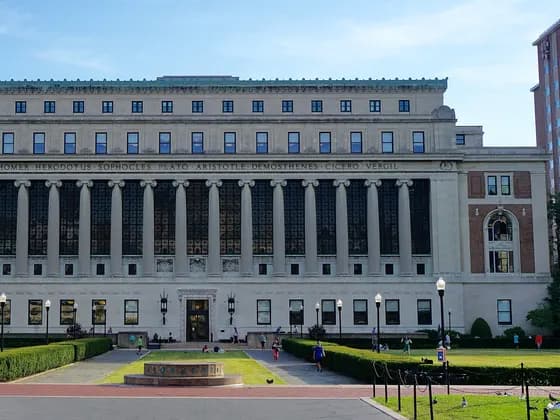
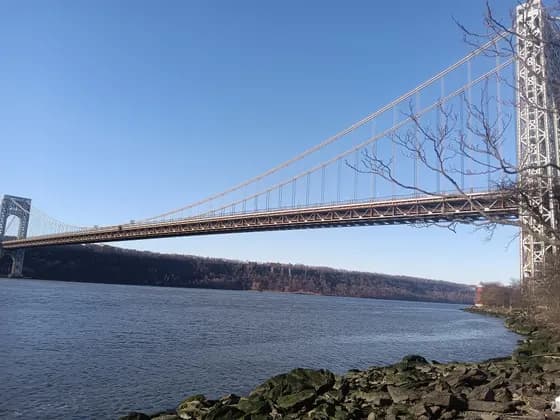
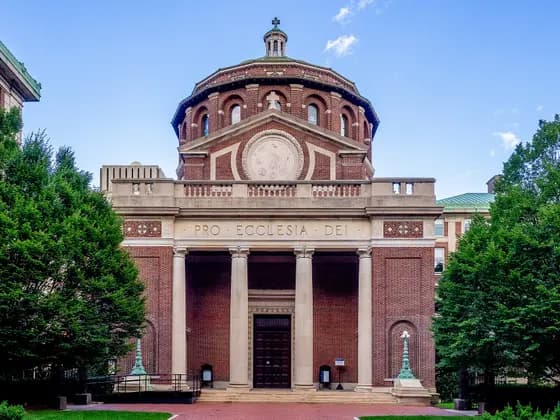
Photo: King of Hearts · CC BY-SA 4.0 · cropped
Photo: JSquish · CC BY-SA 4.0 · Photo: Jay Dobkin · CC BY-SA 4.0 · Photo: Ajay Suresh · CC BY 2.0
The Columbia University VP&S MD program at a glance (2027 entry)
Columbia University's Vagelos College of Physicians and Surgeons (VP&S) awards a four-year MD and takes 140 new students a year. It is part of Columbia University Irving Medical Center (CUIMC) in Washington Heights, Northern Manhattan. NewYork-Presbyterian Hospital, which shares the campus, is its primary teaching hospital. The Liaison Committee on Medical Education (LCME), which accredits US MD programs, lists VP&S as fully accredited, with its next survey due in 2033-34.
VP&S describes its curriculum in phases rather than as first to fourth year. Fundamentals is the pre-clerkship, or preclinical, phase: 18 months of classroom, lab and clinical skills teaching. The Major Clinical Year (MCY) is 12 months of clerkships, the core clinical rotations in which you work on hospital and clinic teams. Differentiation and Integration (D&I) is a final 14 months of electives, research and preparation for residency, the specialty training that follows medical school.
Two parts of the United States Medical Licensing Examination (USMLE), the national licensing exams, fall inside the program. Step 1, which tests the sciences behind medicine and has been reported only as pass or fail since January 2022, comes after the clerkship year. Step 2 Clinical Knowledge (CK), which tests how you apply that knowledge to patient care, must follow by July 31 after the clerkship year. You must pass both to graduate.
Fundamentals is taught in the Vagelos Education Center. You dissect a donated body in your first semester and practice interviews with standardized patients, actors trained to play patients, from your first month. Clerkship sites come by lottery from NewYork-Presbyterian and affiliated hospitals in and beyond the city. Students on the Columbia-Bassett track spend most of the clinical year in Cooperstown.
| Degree | MD |
|---|---|
| Program length | 4 years; about 37 percent of a recent class took extra time |
| Structure | Fundamentals 18 months, Major Clinical Year 12, Differentiation and Integration 14 |
| Class size | 140 new students a year |
| Main campus | Columbia University Irving Medical Center, Washington Heights, Manhattan |
| Anatomy | Dissection of donated bodies, August to December of year 1 |
| First patient contact | Standardized patients in month one; real patients in tutorials from semester two |
| Step 1 timing | After the Major Clinical Year, before March 1 of year 3 |
| Grading | Pass/fail in Fundamentals; Honors to Fail tiers in long clerkships |
| Clinical sites | NewYork-Presbyterian and affiliates by lottery, including Stamford and Cooperstown |
What makes the Columbia University VP&S MD program different
Step 1 after a full year of clerkships
You sit Step 1 after the Major Clinical Year: before March 1, or before April 1 on the Columbia-Bassett track. By then you have finished your clerkships and their shelf exams, the end-of-clerkship subject tests set by the National Board of Medical Examiners (NBME). With three months set aside for board study after the clerkship year, you prepare with a year of patient care behind you.
A longitudinal clinical year in rural Cooperstown
On the Columbia-Bassett track, which you apply for separately, most of the clinical year is a longitudinal integrated clerkship at Bassett Healthcare. You keep the same clinic supervisors, or preceptors, all year and follow your own patients through their visits, procedures and operations. You also lead a project on a real problem in the hospital's systems.
A required four-month scholarly project
Unless you waive it with a research year or a second degree, you spend at least 16 weeks of D&I on a mentored project in one of five tracks. Optional funded summer research after year 1 lets you start earlier.
Primary care with the same mentors for four years
The Daniel Noyes Brown Primary Care Scholars Program, which has its own application, is a four-year mentorship for students interested in primary care. It adds no coursework: your first-year clinical sessions, physical diagnosis teaching, primary care clerkship and outpatient pediatrics all happen at one community site with the same faculty.
How Columbia University VP&S teaches medicine
Fundamentals mixes large-group lectures with a lot of required small-group work: case-based discussions, team-based learning, problem-solving sessions and a journal club where students debate the data in classic papers.
Clerkships put you on clinical teams. On the medicine clerkship you work with residents, who are doctors in specialty training, and attending physicians, the fully trained doctors in charge. Together you admit patients and care for them. Two week-long Mechanisms and Practice intersessions bring the class back to small-group classroom teaching on themes that cross specialties, such as the patient-physician relationship.
In D&I you build your own schedule of electives, research and sub-internships. In a sub-internship, sometimes called an acting internship, you do much of the work of an intern, a first-year resident. Near the end, the four-week Ready for Residency course brings the class back together for case sessions, virtual patients and simulation.
School pages last updated between 2018 and 2021 describe four themes, or threads, taught to every student over the four years. Most sessions sit in Foundations of Clinical Medicine, the Mechanisms and Practice weeks and Ready for Residency. The threads are public health, medical decision-making, biomedical informatics (data and computing in patient care) and Systems, Leadership, Integration and Management (SLIM), on leading and improving health systems. Columbia-Bassett students take a deeper version of SLIM.
The ways you will learn
| Lectures | Large-group lectures carry each Fundamentals course's core content and are recorded on Echo360, the medical center's lecture-capture platform. |
|---|---|
| Small groups and team-based learning | Case discussions, problem-solving sessions and team-based learning, a format in which you prepare beforehand and then work through problems with your team in class. |
| Anatomy and histology labs | Dissection in Clinical Gross Anatomy, and histology labs with digitized slides, gross specimens and multiheaded microscopes, timed to match the body region being dissected. |
| Foundations of Clinical Medicine (FCM) | The clinical skills course running through Fundamentals, with weekly seminars led by faculty coaches on communication, ethics, health systems and narrative medicine, and patient tutorials from the second semester. |
| Simulation and standardized patients | About 60 hours over four years in the Mary & Michael Jaharis Simulation Center, from standardized patient interviews in Fundamentals to manikin scenarios on clerkships. It also hosts Objective Structured Clinical Examinations (OSCEs), timed and observed patient encounters. |
| MCY Foundations reflection groups | After you write a short reflection, a Foundations preceptor and senior students lead a group discussion of each clerkship's pressures. Examples include pain and suffering in obstetrics and uncertainty in surgery. |
A typical week on the Columbia University VP&S program
The work-hours policy approved in April 2024 shapes the Fundamentals week. Required work must average no more than 60 hours a week. The cap counts scheduled sessions plus assigned readings, write-ups, online modules and weekly questions, but not your own studying. You also get two afternoons a week free of required activities, though not the same afternoons for everyone.
Recorded lectures are optional under the July 2024 attendance policy. Small groups, labs, simulation, FCM seminars, patient sessions and exams are mandatory and logged, and a third unapproved absence brings a faculty committee review.
On clerkships you are expected in every weekday, and on weekends when on call. Duty hours are capped at 80 a week averaged over four weeks, with a full day off every seven days on average. Each core clerkship gives a half day for wellness and a half day for shelf study. The clerkship year's only protected holidays are Juneteenth, Independence Day, Thanksgiving and the day after.
The Columbia-Bassett pages publish an example week from the longitudinal clerkship year:
- Monday: outpatient cardiology, then outpatient neurology.
- Tuesday: outpatient surgery, then following your own patients, with emergency room call from 8 p.m.
- Wednesday: outpatient psychiatry, then teaching sessions.
- Thursday: systems improvement time, then outpatient pediatrics.
- Friday: school-based health care for children, then an operating room session.
How anatomy is taught at Columbia University VP&S
Anatomy is taught by dissection in Clinical Gross Anatomy. According to Columbia Magazine (Fall 2024), the course runs from August to December. Dissection is part of the first year for Columbia's medical, dental and physical therapy students alike. You start with the chest, move to the arms and legs, return to the chest and abdomen, and finish with the head, which stays covered until then.
Because donated bodies are in short supply, two groups of students share each donor and dissect different parts, learning from each other's work. The lab is open at all hours, so you can return at night or on weekends to study other donors. The class keeps a moment of silence when the donors are first brought out and another before the head is uncovered.
The school's own course page dates from 2018. It describes teams of four learning through dissection, clinical cases, palpation (examining by touch) and prosections, specimens already dissected by experts. X-rays and cross-sectional images are used too, and clinicians link anatomy to radiology and surgery. The lab is on the fifth floor of the Vagelos Education Center.
When you first meet patients at Columbia University VP&S
You meet patients, real and simulated, from the start. Within the first month, FCM seminars bring standardized patients into small-group sessions in the Simulation Center. Faculty coach you closely as you learn to interview people of different ages and backgrounds. Patient-as-Professor sessions also bring patients into class in the first semester to share their stories.
From the second semester, FCM tutorials teach the full interview and physical examination with real patients, and simulation adds motivational interviewing, a counseling method for helping patients change behavior. Psychiatric Medicine includes small-group interviews with psychiatric patients. In the third semester, standardized patient cases turn to domestic violence, substance use and breaking bad news.
Full-time clinical work starts in January of year 2. Under the supervision policy in force since January 2024, you never provide care unsupervised, and a supervisor must be in the room for any procedure. Each core clerkship lists required clinical experiences, such as taking part in a vaginal delivery or placing an IV line. You log them in OASIS, the school's online scheduling and records system.
Year by year at Columbia University VP&S
- Fundamentals, semester 1 (August to December, year 1)
Cells, tissues and the dissection lab
In the 2026-27 calendar, new students had orientation from August 3 to 7, ending with the White Coat Ceremony, and a fall term from August 6 to December 23. The school's course descriptions date from 2018, but the course names still match its 2026 curriculum office pages.
- Molecular Mechanisms and Disease: the biochemistry and pharmacology of tissues; of nerve, muscle, immune and blood cells; of metabolism; and of the genome.
- Histology and Pathology: normal tissues under the microscope and the basic disease processes of inflammation, repair and neoplasia (tumor growth).
- Clinical Gross Anatomy, the dissection course described under Anatomy.
- FCM Seminars: rapport, interviewing, the patient-physician relationship, your professional role and medical ethics, with reflective writing.
- Fundamentals, semesters 2 and 3 (January, year 1, to December, year 2)
The body, one organ system at a time
The Body: In Health and Disease runs from January to June of year 1 and from August to December of year 2, alongside FCM and Psychiatric Medicine. In between comes the summer after year 1, the last long unscheduled break of medical school, when you can apply for funded research.
- The Body's ten sections: microbiology and infectious diseases, immunology, cardiovascular, pulmonary, renal, endocrinology and reproduction, neurosciences, gastrointestinal and liver, hematology and oncology, and rheumatology and musculoskeletal.
- FCM Tutorials: the full interview and physical exam with patients, case write-ups and presentations. Seminars cover health systems, health promotion and narrative medicine, which builds your skill in understanding patients' stories of illness.
- Psychiatric Medicine (semester 2): the major psychiatric syndromes, normal development and treatment.
- Semester 3 FCM: clinical epidemiology, evidence-based medicine and difficult encounters such as substance use, end-of-life care and domestic violence.
- Major Clinical Year (12 months from January, year 2)
Core clerkships at NewYork-Presbyterian and affiliates
For the class that entered in 2025, the 2026-27 calendar runs the clerkship year from January 4 to December 23, 2027. The school's 2020 scheduling page has the class rotating in eight groups of 18 to 20; the lengths below come from it.
- Medicine with emergency medicine, 12 weeks, at NewYork-Presbyterian, with ophthalmology built in; emergency medicine adds procedure labs and bedside ultrasound.
- Surgery with anesthesiology, 6 weeks, with surgery at NewYork-Presbyterian, Stamford Hospital, Bassett or Harlem Hospital.
- Obstetrics and gynecology (5 weeks, NewYork-Presbyterian or Stamford Hospital) and pediatrics with otolaryngology (6 weeks; pediatrics at Morgan Stanley Children's Hospital or Harlem Hospital) share an 11-week block.
- Psychiatry, 5 weeks, on inpatient, outpatient, child and emergency psychiatry services, based at one of six sites.
- Neurology, 4 weeks, on inpatient services and clinics at the main medical center, with lumbar puncture simulation.
- Primary care, 5 weeks, in outpatient practices from Washington Heights to Westchester, Stamford and Cooperstown. Farther away are Indian Health Service sites in Shiprock and Zuni, New Mexico, and an option in Miami, with airfare reimbursed.
- One week each of orthopedic surgery, urology and neurosurgery.
- October to December: you plan your D&I schedule with advisors.
- Columbia-Bassett track (all four years)
Fundamentals in New York, then a year in Cooperstown
Columbia-Bassett is a parallel track with its own application before you enroll; switching out later is allowed only in rare circumstances. After Fundamentals in New York City, most of your Major Clinical Year is a longitudinal integrated clerkship (LIC) at Bassett. In an LIC you train in the core specialties side by side, following your own patients for months, instead of rotating through one specialty at a time.
- During Fundamentals: a one-week orientation in Cooperstown, monthly SLIM seminars, nine monthly Life Experiences Curriculum seminars on trauma-informed care, and reflection sessions with faculty.
- Rapid Inpatient Block, the first 10 weeks of the clinical year: one or two weeks each on seven inpatient services, such as medicine and surgery, plus a SLIM week.
- Longitudinal block, April to December (36 weeks): clinical experience across 14 specialties, with outpatient preceptors you keep all year, including a primary care preceptor at a Bassett regional clinic. Inpatient weeks, weekly teaching, shelf exams and two intersession weeks in New York City complete it.
- A year-long SLIM project on a real problem at Bassett Hospital, using Lean and Six Sigma process-improvement methods, presented to senior leaders.
- Afterward comes a four-week Primary Care Capstone at your regional clinic in January, then Step 1 before April 1. In D&I you take 16 weeks of electives rather than 20, plus a sub-internship at CUIMC, the Allen Hospital or Harlem Hospital. You graduate with the same Columbia MD.
- Board study, then D&I (January, year 3, to May, year 4)
Step exams, sub-internship, electives and research
After the clerkship year you get three months of board preparation. January is protected, and the school's scheduling guidance enrolls every student in Board Prep for February and March too, though you can swap a month for an elective. Step 1 is due before March 1. You then build your D&I schedule around the 2025 graduation requirements below, while applying for residency.
- A four-week core sub-internship from an approved list, such as medicine, pediatrics or surgery, with primary responsibility for patients and possibly night call.
- Twenty weeks of electives, at least 12 of them clinical at CUIMC or affiliates, including a four-week final clinical elective there between January and April of your graduation year.
- The 16-week scholarly project.
- Step 2 CK by July 31 after the clerkship year; the graduation rules count four weeks of CK study time within D&I.
- Residency applications open in early June and are due in late September. You take one or two interview months, usually in the November to January interview season. The Match, which pairs graduates with residency programs, comes in mid-March.
- Ready for Residency, four weeks in March or April of your final year, including life-support training; you can ask to waive it.
- A coaching and portfolio review called Reflection on Learning Growth.
How you are assessed at Columbia University VP&S
Every Fundamentals course is pass/fail, and you must pass each of its blocks or sections, which typically takes about 70 percent. Exams are taken on a laptop or iPad through the Examplify app. A failed exam gets a retest, usually the following weekend in the first semester and during a later break after that. In the first semester only, you get one more chance before the course is failed.
Practice exams give feedback without counting. You take customized NBME exams at the end of the first semester and the start of the third, and an NBME basic science self-assessment at the end of Fundamentals. FCM and Psychiatric Medicine add written narrative assessments, and the education center's 2023 FAQ says the FCM courses include a sequence of OSCEs before clerkships.
In the Major Clinical Year, core clerkships longer than two weeks are graded Honors, High Pass, Pass or Fail, and the one-week rotations are pass/fail. Seven core clerkships end with an NBME shelf exam, taken on your own laptop; your first score counts, but a failed shelf must be retaken and passed. Narrative comments from your clerkships feed the Medical Student Performance Evaluation (MSPE), the summary letter residency programs read.
You must pass every part of your clerkships, shelf exams included, before sitting Step 1. If you fail Step 1 you get a month off to study and must retake it within 90 days. Three failed attempts at either Step can lead to dismissal. From the Class of 2028 onward, Student Competency Committees track progress against eight program objectives, on dashboards shared with you and your coach.
- Neurology: an observed neurological history and exam, an OSCE and the shelf.
- Surgery: the shelf and an in-house Clinical Skills Exam.
- Pediatrics: a formative telemedicine OSCE, which is practice and does not count.
- Primary care: a formative OSCE and the NBME Ambulatory Care shelf.
- Every core clerkship: a temporary Conditional Pass until any missing required clinical experiences are logged.
- D&I: sub-internships and clinical electives are graded in tiers starting at Honors; research, away and global health electives are pass/fail.
Where you will actually train at Columbia University VP&S
The school and Presbyterian Hospital developed the Columbia-Presbyterian Medical Center together in 1928, and the hospital, now NewYork-Presbyterian (NYP), is the school's primary teaching hospital. Under the 2025 assignment policy, students in the lottery do medicine, neurology and six specialty rotations, including anesthesiology and emergency medicine, at NYP hospitals. Obstetrics and gynecology, psychiatry, pediatrics, surgery and primary care also use affiliated sites.
Sites come from a three-phase lottery in OASIS. You rank the groups that set your clerkship order, then a top-choice site for one clerkship, and a fill lottery assigns the rest. You can swap with classmates in your group after each round. Expect one to three overnight sites, too far to commute, with lodging provided; exemptions are possible for health, caregiving or major family events.
A Lyft account covers trips to local affiliates before 6 a.m. or after 7 or 8 p.m., depending on the season. Shuttles run to Harlem Hospital and the Allen Hospital, and Metro-North fares to Stamford are reimbursed. Cars are provided for some psychiatry and primary care sites, and airfare is reimbursed for primary care in Miami and at the Indian Health Service. Transportation is not provided for D&I electives.
Home base for most rotations, plus local primary care practices.
- NewYork-Presbyterian/Columbia University Irving Medical Center, including Milstein Hospital
- NewYork-Presbyterian Morgan Stanley Children's Hospital
- New York State Psychiatric Institute
- NewYork-Presbyterian Allen Hospital, near West 220th Street
- Associates in Internal Medicine, Farrell Family Medicine and Washington Heights Family Health Center
A hospital with 556 beds in operation, used for pediatrics, surgery, psychiatry and primary care, and reached by the Columbia intercampus shuttle.
- Harlem Hospital Center (NYC Health + Hospitals/Harlem)
Psychiatry, plus primary care at the Bronx VA and on Columbia's Morningside campus; a state car is provided for Creedmoor.
- Gracie Square Hospital
- Bronx VA Medical Center
- Creedmoor Psychiatric Center, Queens
- Morningside Student Health Services
Primary care with a Zipcar account, and psychiatry at Rockland with a state car. Helen Hayes and NYP Westchester are also on the school's list of rotation sites.
- ColumbiaDoctors practices in Eastchester, White Plains and Cortlandt
- Rockland Psychiatric Center, Orangeburg
- Helen Hayes Hospital
- NewYork-Presbyterian Westchester Hospital
Obstetrics and gynecology, surgery and primary care, with housing and a train-station shuttle. Surgery and OB/GYN students round at 6 a.m. on Mondays, so travel back the day before.
- Stamford Hospital
- Stamford Family Medicine Clinic
A rural health system about 200 miles, or a three-and-a-half-hour drive, from New York City, hosting the Columbia-Bassett clinical year and some surgery and primary care rotations. Student housing is a few minutes' walk from the hospital.
- Bassett Healthcare
Primary care clerkships at Shiprock and Zuni, with a rental car for daily travel. Whiteriver appears on the school's 2023 list of affiliated sites.
- Indian Health Service, Shiprock, New Mexico
- Indian Health Service, Zuni, New Mexico
- Indian Health Service hospital, Whiteriver, Arizona
An out-of-state option for the primary care clerkship.
Electives, selectives and away rotations at Columbia University VP&S
Electives fill most of D&I. Clinical types include sub-internships, consult services, where you see patients referred by other teams, and preceptorships with one faculty member. Non-clinical types include self-arranged research and project-based courses. You rank choices month by month in OASIS, and some electives, such as those at Stamford and Bassett, are waitlist-only and need the site's approval.
Under the 2025 electives policy, each elective lasts at least two weeks. The final clinical elective must be at a home or affiliated site, with at least 80 percent of your time spent working up and managing patients. Between March and September, when demand peaks before residency applications, you can take at most one internal medicine and one pediatrics sub-internship at NYP or affiliated hospitals. Students applying in medicine or neurology get priority for the medicine places.
Away rotations at other schools are capped at 12 weeks unless a dean approves more. The school's student knowledge base says an away rotation must last four weeks to earn credit, or three in the University of California system. That is longer than the two-week minimum the 2025 policy sets for every elective, away rotations included. Many host schools take applications through Visiting Student Learning Opportunities (VSLO), a shared application platform.
Global health electives, arranged through Columbia's Global Health Exchange Program, other university programs or on your own, are pass/fail. Twelve students in the class of 2026 traveled for one. Columbia also has exchange agreements with more than 20 international medical schools, whose students take electives at VP&S.
Dual degrees and research years at Columbia University VP&S
The Scholarly Projects Program pairs you with a faculty mentor for at least 16 weeks of full-time work in D&I, finished by the end of March before graduation. You choose one of five tracks: basic and translational science, clinical research, global and population health, medical education, or narrative and social medicine. Your track director approves your proposal in the first month, and you finish with a written Capstone report and a poster.
The project can grow to five months in place of an elective month, or longer with an individualized learning plan. A 12-month research year or a second degree lets you waive it and take 11 electives instead of 7.
Research can start earlier. The three-credit Medical Scholars Seminar in Fundamentals helps you choose a mentor and plan a summer project. After year 1 you can apply for 11 weeks of funded summer research, with a stipend of at least $5,000. Programs include the VP&S Summer Research Program, backed by National Institutes of Health grants, and Global Pop, for global and population health projects at home or abroad.
About 37 percent of a recent graduating class took extra time for research or a dual degree, the school's FAQ says. A research year usually falls during D&I and can be funded by fellowships or sometimes departments. D&I also allows up to three months of research electives. Most dual degrees are applied for after you enroll; the MD-PhD and PhD-to-MD have their own entry routes.
- MD-PhD: Columbia's Medical Scientist Training Program aims for 12 to 15 students a year. You take Fundamentals and at least one clerkship, Step 1, three or four PhD years, then an 11-month clinical year. Most finish in 7 or 8 years.
- 3-Year PhD-to-MD, for people who already hold a PhD: 18 months of preclinical courses, a 12-month clinical year and six months of sub-internship and electives.
- MD-MPH with the Mailman School of Public Health: 42 extra credits in one of five concentrations, usually taken between the third and fourth years, making five years in all.
- MD-MBA with Columbia Business School: three consecutive terms, starting in January after the clerkship year or of your fourth year.
- Also offered: the MD-MS in Biomedical Sciences, a 30-credit research degree with a thesis, plus the MD-MS in Biomedical Engineering and the MD-MA in Biomedical Informatics. Master's degrees in bioethics, human nutrition and narrative medicine are open too.
Facilities and support at Columbia University VP&S
Where you will learn
The Roy and Diana Vagelos Education Center (VEC), a 14-floor teaching building on the CUIMC campus, holds the Fundamentals courses. You return for Mechanisms and Practice, shelf exams and OSCEs during the clinical year, and for Ready for Residency. It has an auditorium seating about 265, a 190-seat lecture hall, classrooms, the anatomy lab, a student commons, study balconies and a lounge.
The Mary & Michael Jaharis Simulation Center occupies the cellar and parts of floors 6 to 8. It has 14 OSCE rooms set up like doctors' offices, with observation glass and recording. Two simulation suites each hold a mock operating room and a mock patient room for manikin scenarios. A 20-station anatomy lab hosts advanced surgical skills courses and task training.
Many students live in CUIMC housing on the medical campus, from studios to multi-room apartments for groups of friends.
Support while you study
Advisory deans, part of a program running since 2003, give academic, career and personal guidance in group and individual meetings that you are expected to attend. In 2023 they hosted lunches every two weeks on transitions such as exam preparation and the clinical year, and met each first-year student one to one.
Since August 2022 every new student has also joined one of six houses, small communities named after Washington Heights streets. Each is made of two FCM seminar groups and led by an advisory dean with two faculty coaches and second-year peer advisors. Coaching itself dates from 2016: your coach stays with you for four years, meeting you every three months during clerkships to review your evaluations and reflective portfolio. Those conversations stay confidential and off your record.
The student-run Student Success Network holds review sessions for most blocks, led by second- and fourth-year students, with review sheets and practice questions. Learning specialists at the Center for Education Research and Evaluation (CERE) advise on study strategies. If a pattern of difficulty emerges, a team including the student affairs dean draws up a support plan.
Student Health on Haven provides primary care and counseling on campus, and Disability Services arranges accommodations. Career advising runs from shadowing and advisory dean lunches early on to a specialty advisor, personal statement workshops and mock interviews in D&I. Columbia-Bassett students also have Life Experiences faculty mentors, who take no part in grading.
Is the Columbia University VP&S program right for you?
This program may suit you if
- You would rather take Step 1 after a year of clerkships than straight after the classroom phase.
- You want to dissect a donated body yourself in your first semester.
- You want research built in: a scholarly project in D&I, funded summer research after year 1, and many classmates taking a research year or second degree.
- You would like a year following your own patients in a rural health system, through the Columbia-Bassett track.
- You value close mentoring: an advisory dean, a house of peers and a faculty coach who stays with you for four years.
Things to think about
- Clerkship order and sites come from a lottery, with one to three overnight sites unless you are exempted.
- Until clerkships start in January of year 2, patient contact comes mainly through FCM and other scheduled sessions, not daily ward work.
- Columbia-Bassett means committing, before you enroll, to most of the clinical year in Cooperstown, about 200 miles from New York City. The program says a car is not required there but is strongly advised.
- In Fundamentals, small groups, labs and patient sessions are compulsory, with attendance logged, though lectures are optional.
- Fundamentals is pass/fail, but clerkships over two weeks are graded Honors, High Pass, Pass or Fail, and their narratives go into the MSPE letter residency programs read.
Columbia University VP&S MD program — frequently asked questions
Applying to Columbia University VP&S?
How to get into Columbia University VP&S
Prerequisites, MCAT, AMCAS personal statement, secondaries and interview, step by step.
Open the guide →Columbia University VP&S admissions profile
MCAT and GPA profile, acceptance rate, interview format and key dates.
See the profile →Compare Columbia University VP&S with other schools
Put the teaching style, anatomy teaching and clinical sites next to another school.
Open the comparison →Prepare for the Columbia University VP&S interview
Format breakdown, school-specific sample questions and prep tips from tutors who interviewed here.
Read the guide →Where this Columbia University VP&S program guide came from
This guide was written from 110 official sources — Columbia University Vagelos College of Physicians and Surgeons's own program pages and curriculum documents, plus the accreditor and the hospitals and health systems the school trains students in where they publish detail — read on 2026-10-10, then checked claim by claim against those sources.
- VP&S: MD Curriculum (the three phases and their lengths)
- VP&S: About the Curriculum (2018 page, updated 2021)
- VP&S: Fundamentals (course list by semester, 2018)
- VP&S: Fundamentals course descriptions (2018)
- VP&S: Major Clinical Year (MCY)
- VP&S: MCY scheduling (2020)
- VP&S: Descriptions for clerkships and required clinical experiences
- VP&S: Differentiation and Integration (D&I)
- VP&S: D&I planning and affiliated sites
- VP&S: D&I course registration
- VP&S: Ready 4 Residency course
- VP&S: Global health opportunities
- VP&S: Welcome to the MD program (Vice Dean for Education)
- VP&S: Medical Education Program Objectives
- VP&S curricular threads: Systems, Leadership, Integration and Management (2021)
- VP&S curricular threads: Public health (2021)
- VP&S curricular threads: Medical decision-making (2021)
- VP&S curricular threads: Biomedical informatics (2018)
- VP&S policy: USMLE Step 1 and Step 2 (updated July 2025)
- VP&S policy: Graduation requirements (updated June 2025)
- VP&S policy: Assessment (2024)
- VP&S policy: Course and clerkship grading, timeliness and appeals (December 2024)
- VP&S policy: Electives (updated September 2025)
- VP&S policy: Required clinical experiences (June 2025)
- VP&S policy: Academic progression, promotion and appeal (August 2025)
- VP&S policy: MCY clerkship assignment, transport and housing (2025)
- VP&S policy: Attendance and absence
- VP&S policy: Work hours (April 2024)
- VP&S policy: Clinical supervision of medical students (January 2024)
- VP&S career planning: USMLE preparation time and deadlines
- VP&S: Career planning by phase
- VP&S: Roadmap to residency
- VP&S: Academic calendar 2026-27
- VP&S: Summer opportunities and global health
- VP&S Scholarly Projects Program: program description
- VP&S Scholarly Projects Program: tracks
- VP&S Scholarly Projects Program: timeline
- VP&S: Student research programs
- VP&S: Research year
- VP&S: Global Pop summer research
- VP&S Student Research: courses and seminars
- VP&S: MD dual degrees and special programs
- VP&S: MD-PhD Dual Degree Program (Medical Scientist Training Program)
- VP&S MD-PhD program: about us
- VP&S MD-PhD program: MD program part 1 (2022)
- VP&S MD-PhD program: frequently asked questions
- Department of Medicine: 3-Year PhD-to-MD Program
- VP&S: MD-MBA
- VP&S: MD-MPH
- VP&S: MD-MS in Biomedical Sciences
- VP&S: MD-MS in Biomedical Engineering
- VP&S: MD-MA in Biomedical Informatics
- VP&S Student Research: additional dual degrees for MD students
- VP&S: Columbia-Bassett Program
- Columbia-Bassett Program: about us
- Columbia-Bassett Program: our program
- Columbia-Bassett Program: curriculum structure and timeline
- Columbia-Bassett Program: longitudinal integrated curriculum
- Columbia-Bassett Program: rapid inpatient block
- Columbia-Bassett Program: Life Experiences Curriculum
- Columbia-Bassett Program: SLIM curriculum
- Columbia-Bassett Program: frequently asked questions
- About Bassett Healthcare Network (Columbia-Bassett pages)
- VP&S: Daniel Noyes Brown Primary Care Scholars Program
- VP&S: Advisory Dean Program
- VP&S: Medical Student Coaching Program
- VP&S: Community building and VP&S houses
- Columbia Medicine magazine, Spring/Summer 2023: the new house program
- VP&S: Student Success Network
- VP&S: Center for Education Research and Evaluation
- VP&S: Health and wellness
- VP&S: Disability services
- VP&S: Housing
- Jaharis Simulation Center: simulation programs
- Jaharis Simulation Center: about us
- Jaharis Simulation Center: spaces
- Jaharis Simulation Center: anatomy lab
- Jaharis Simulation Center: OSCE exam rooms
- Jaharis Simulation Center: simulation suites
- VP&S: Vagelos Education Center FAQs (2023)
- Columbia Magazine, Fall 2024: Columbia's Anatomical Donor Program
- VP&S: Affiliated hospitals and institutions
- VP&S Office of Medical Education: MCY site directory
- VP&S Office of Medical Education: NBME shelf exams
- VP&S Office of Medical Education: clerkships at Bassett
- VP&S Office of Medical Education: housing and transport for Stamford clerkships
- VP&S Office of Medical Education: how Fundamentals exams are taken
- VP&S Office of Medical Education: types of electives
- VP&S Office of Medical Education: elective rank scheduling and board prep
- VP&S Office of Medical Education: away electives planning
- VP&S Office of Medical Education: away electives FAQs
- VP&S Office of Medical Education: waiving the scholarly project
- VP&S Office of Medical Education: Ready for Residency attendance
- VP&S Office of Medical Education: medicine sub-internship scheduling
- LCME directory of accredited programs (updated July 2026)
- LCME: about the school directory
- USMLE: Step 1 transition to pass/fail score reporting
- USMLE: Step 1 overview
- USMLE: Step 2 CK overview
- USMLE: Updated timeline for designated testing dates, transition in January 2029
- VP&S: Facts and statistics
- VP&S: History of the college
- VP&S: Admissions FAQs (student life and research years)
- VP&S: Summer research program
- VP&S: Summer Research Program (NIH T35)
- VP&S: Research electives in D&I
- VP&S: Office of Curricular Affairs (2026 course names)
- NYC Health + Hospitals/Harlem
- VP&S: MD program admissions page (the official course page on file)
- USMLE: Designated Testing Dates information hub (dates the January 2029 timeline announcement August 6, 2026)
Curricula are restructured between cycles. Anything here that decides your application — how anatomy is taught, a clinical campus assignment, a required research year — should be confirmed against the official page for your entry year.
Applying to Columbia University VP&S?
We help US applicants with MCAT strategy, the AMCAS personal statement, secondary essays and interview prep — everything you need for a competitive Columbia University VP&S application.