
SUNY Downstate Health Sciences University College of Medicine Interview
Format, Questions & Prep Tips
SUNY Downstate Health Sciences University College of Medicine medicine interviews for 2027 entry are a traditional interview. SUNY Downstate Health Sciences University College of Medicine describes the format as: About an hour with a single faculty interviewer, plus a 30-minute peer conversation with a current medical student. Published figures: Annual MD class size ~185; Applications received ~6,000–9,000 per cycle; Interview format Traditional — 2–3 sessions, faculty + student, ~30–45 min each.
- Institution
- SUNY Downstate Health Sciences University College of Medicine
- Interview (2027 entry)
- October through March; rolling invitations; in-state applicants generally given priority scheduling
- Decisions (2027 entry)
- Rolling decisions from December; most offers by late March; waitlist activity through summer



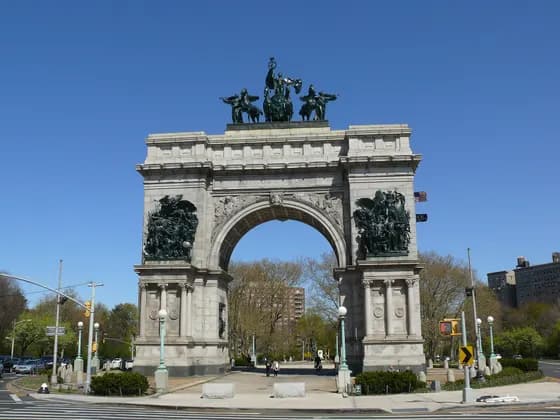
Photo: Jim.henderson · CC0 · cropped
Photo: Ashley98lee · CC BY-SA 4.0 · Photo: Jim.henderson · CC BY-SA 4.0 · Photo: Ad Meskens · CC BY-SA 3.0
How to get into SUNY Downstate Health Sciences University College of Medicine (MD) medicine
Step-by-step: entry requirements, admission tests, personal statement, interview format and the key deadlines.
Open the guide →SUNY Downstate Health Sciences University College of Medicine (MD) entry requirements
Admission profile, interview format, decision dates and what makes SUNY Downstate Health Sciences University College of Medicine (MD) different.
See the profile →The SUNY Downstate Health Sciences University College of Medicine (MD) medicine interview
SUNY Downstate College of Medicine uses a traditional panel interview format — two to three separate one-on-one sessions with faculty physicians and a current medical student. Interviewers read the full application in advance.
As the only SUNY medical school in New York City, Downstate trains physicians for Brooklyn’s urban and underserved communities. Interview questions are heavily oriented toward health equity, social determinants of health, and commitment to safety-net medicine. Candidates who lack genuine engagement with urban underserved populations will struggle.
Expect questions that probe the AAMC Premed Competencies, which fall into three categories: Professional, Science, and Thinking and Reasoning.
SUNY Downstate Health Sciences University College of Medicine (MD) interview at a glance (2027 entry)
| Annual MD class size | ~185 |
|---|---|
| Applications received | ~6,000–9,000 per cycle |
| Interview format | Traditional — 2–3 sessions, faculty + student, ~30–45 min each |
| Curriculum | Traditional organ-system; high-acuity Brooklyn clinical sites |
| Tuition (in-state, 2025–26) | ~USD 38,000–44,000/year |
| Application system | AMCAS |
| Interview window | October–March |
Interview format
- Traditional one-on-one sessions with one or two faculty interviewers and one current student.
- Each session approximately 30–45 minutes; interviewers read the full application beforehand.
- Open-ended motivational, behavioral, and ethics questions; health equity themes are prominent.
- Interview day includes admissions overview, tour of University Hospital of Brooklyn, and Q&A with current students.
- Kings County Hospital Center affiliation is frequently referenced — knowing its role is advantageous.
Working towards the MCAT score SUNY Downstate Health Sciences University College of Medicine (MD) expects? Build a week-by-week plan from your test date — free for the first two weeks.
Sample interview questions
Why SUNY Downstate — and why Brooklyn? What specifically about this school's patient population and mission resonates with you?
Reference Brooklyn's demographics, Kings County Hospital's safety-net role, the school's underrepresented-in-medicine student body, and any personal connection to urban underserved communities. Vague "great clinical training" answers miss the point.
Tell me about an experience where you cared for or worked alongside patients from a background very different from your own. What did you learn?
Cultural humility and patient-centered care are central to Downstate's values. Be specific about what you learned — not that "it was eye-opening" but what concrete change it made in how you approach people.
A patient who is undocumented and uninsured presents to the ED with a chronic condition that has gone untreated for years due to cost. How do you address their immediate care needs and systemic barriers?
EMTALA covers emergency stabilization. Discuss community health referrals, 340B drug program for medications, connecting patients to FQHC networks, and the broader policy argument for immigrant healthcare access.
Health equity is central to Downstate's mission. What do you understand by structural racism in healthcare, and what can a physician do about it?
Go beyond buzzwords. Discuss specific mechanisms: bias in clinical algorithms (race-adjusted eGFR), differential pain management, residential segregation driving environmental health disparities. Physicians can advocate, teach, participate in QI, and support policy change.
A newly admitted patient has an active substance use disorder and refuses treatment for an infection that requires IV antibiotics, saying they will use their IV line to inject drugs. How do you proceed?
Harm reduction approach: explore motivations for refusal, offer addiction medicine consultation, establish PICC safety protocols where possible, and document the discussion. Do not abandon the patient; engage the ethics service if needed.
You are a third-year student on rounds. The attending makes a clinical decision you believe is incorrect. What do you do?
Hierarchy is real but patient safety is paramount. Speak up through appropriate channels: ask a clarifying question in the moment, then discuss with the attending privately, and escalate if the patient is at risk. Show you are neither silent nor reckless.
A patient diagnosed with HIV asks you not to disclose this to their spouse, whom you also treat. How do you handle the confidentiality conflict?
Discuss partner notification laws in New York State, Tarasoff duty-to-warn considerations, the difference between confidentiality and the duty to protect identifiable third parties at risk, and how to counsel the patient toward voluntary disclosure.
What does it mean to you to practice medicine with cultural humility? Give a specific example.
Cultural humility ≠ cultural competency. It means lifelong learning, recognizing power imbalances, and ongoing self-reflection rather than mastery of a cultural checklist. Use a real example of when you adapted your approach based on patient feedback or context.
You are delivering a diabetes education class to a group of patients in Brooklyn. A patient challenges the advice and says the dietary recommendations you are giving are "for white people." How do you respond?
This tests cultural sensitivity in health education. Acknowledge the critique — culturally appropriate dietary counseling is a real gap. Discuss how you would adapt recommendations to the patient's food culture, preferences, and budget, and show you take the feedback seriously.
If a medical school could improve one aspect of how physicians are trained for urban underserved practice, what would it be?
Shows systems-level thinking about medical education. Argue for structural competency training, social work integration, harm reduction medicine, or language and interpreter training — with rationale beyond generic "more empathy" answers.
Role-play: You are a third-year student at Kings County and must explain to a patient (played by the interviewer) being discharged after an opioid-overdose reversal why you are offering them naloxone to take home. They feel insulted, saying it implies they will use again. Begin.
Frame naloxone as universal harm-reduction, not a judgment, and normalize it the way you would a seatbelt. Validate the feeling, avoid moralizing, and center the patient's safety and dignity. This reflects the harm-reduction culture central to Downstate's clinical world.
You are told that a widely used kidney-function equation historically applied a race correction that systematically raised estimated function for Black patients, delaying specialist referral. Walk me through why that is a problem and what it illustrates about data in medicine.
Explain how an embedded race coefficient delayed nephrology referral and transplant listing for Black patients, illustrating how 'objective' algorithms can encode bias. Reference the shift to race-free eGFR. Downstate expects clinical specificity on structural racism, not slogans.
A safety-net hospital's emergency department is so overwhelmed that boarding times routinely exceed a day. Administration proposes diverting ambulances to protect quality. What are the equity implications of that decision for Brooklyn's most vulnerable patients?
Recognize that diversion can shift burden onto patients with the fewest alternatives and erode access for the surrounding community. Weigh quality-and-safety arguments against the safety-net obligation, and discuss systemic causes of boarding. Show structural reasoning.
You are counseling a young Brooklyn patient newly diagnosed with HIV who is terrified about disclosure to family and partners and distrustful of the medical system. How do you structure this first conversation?
Lead with confidentiality and rapport, address stigma and fear before logistics, and introduce partner notification and treatment-as-prevention without coercion. Demonstrate cultural humility and trauma-informed care given the trust gap. Avoid front-loading legal obligations.
Clinical training at Kings County is famously high-acuity and demanding. What specifically about that intensity draws you, rather than deters you?
Connect the high-volume, high-complexity environment to genuine reasons — formative skill-building, serving patients with the greatest need, learning structural medicine first-hand. Show realism about the toll alongside the draw; pure bravado reads as naive.
Practise the SUNY Downstate Health Sciences University College of Medicine (MD) interview
Rehearse the real format before the day — on demand with our AI interviewers, or live with a tutor.
Sit a mock with photoreal AI interviewers — any time
A timed MMI or panel interview on video — American & international voices — with interviewers who listen, react and press with follow-ups. Rubric-scored feedback and a replay the moment you finish.


Live mocks with a tutor who’s been in the room
A full SUNY Downstate Health Sciences University College of Medicine (MD)-style mock with a medic or dentist tutor — honest scoring against real marking criteria, a station-by-station debrief and a written action plan.
Book a mock interviewHow to prepare for the SUNY Downstate Health Sciences University College of Medicine (MD) interview
Common pitfalls to avoid
SUNY Downstate Health Sciences University College of Medicine (MD) interview — frequently asked questions
Sources & official admissions information
Ready to nail your SUNY Downstate Health Sciences University College of Medicine (MD) interview?
Book a mock interview with a tutor who knows the US interview formats, orpractice unlimited stations from our interview question bank.