
New York Medical College Interview
Format, Questions & Prep Tips
New York Medical College medicine interviews for 2027 entry are multiple mini interviews (MMI). Published figures: Annual MD class size ~200; Applications received ~11,000–14,000 per cycle; Interview format Traditional — 2–3 separate one-on-one sessions, ~25–40 min each.
- Institution
- New York Medical College
- Interview (2027 entry)
- September through March; rolling invitations; earlier dates preferred for maximizing decision timeline
- Decisions (2027 entry)
- Rolling decisions from November; most offers by late March; waitlist activity through summer

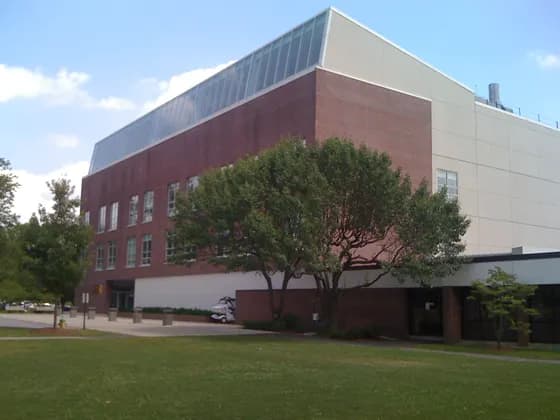


Photo: Johnathanly · CC BY-SA 4.0 · cropped
Photo: Somguy885 ( talk ) · Public domain · Photo: Flickr user Melissa Martin. · CC BY-SA 2.0 · Photo: Daniel Case · CC BY-SA 3.0
How to get into New York Medical College (MD) medicine
Step-by-step: entry requirements, admission tests, personal statement, interview format and the key deadlines.
Open the guide →New York Medical College (MD) entry requirements
Admission profile, interview format, decision dates and what makes New York Medical College (MD) different.
See the profile →The New York Medical College (MD) medicine interview
New York Medical College (NYMC) uses a traditional conversational interview format — applicants meet with two to three faculty physicians and a current medical student in separate one-on-one sessions. Interviews are non-standardized and open-ended; interviewers read the full application in advance.
NYMC is one of the largest private MD programs in the US (~200 students/year), affiliated with Westchester Medical Center and the Touro University System. Interviewers tend to probe academic record, research or clinical experience, and fit with the school’s collegial culture.
Expect questions that probe the AAMC Premed Competencies, which fall into three categories: Professional, Science, and Thinking and Reasoning.
New York Medical College (MD) interview at a glance (2027 entry)
| Annual MD class size | ~200 |
|---|---|
| Applications received | ~11,000–14,000 per cycle |
| Interview format | Traditional — 2–3 separate one-on-one sessions, ~25–40 min each |
| Curriculum | Traditional organ-system; clinical skills from Year 1 |
| Tuition (2025–26) | ~USD 60,000–64,000/year |
| Application system | AMCAS |
| Interview window | September–March |
Interview format
- Traditional conversational format — separate sessions with one faculty member and one current student.
- Each session runs approximately 25–40 minutes; interviewers read the full application beforehand.
- Questions are open-ended and behavioral; no MMI stations or scripted prompts.
- Interview day includes an admissions presentation, campus tour, and lunch at Westchester Medical Center.
- Large cohorts of applicants interviewed simultaneously; atmosphere is structured but relaxed.
Working towards the MCAT score New York Medical College (MD) expects? Build a week-by-week plan from your test date — free for the first two weeks.
Sample interview questions
Walk me through your path to medicine. What experiences have been most formative?
Classic traditional-interview opener. Tell a coherent story — not a chronological résumé recitation. Interviewers want to see a through-line of meaning, not a list of accomplishments.
Why NYMC? What specifically about Westchester Medical Center and the Touro affiliation interests you?
What they are listening for:
- Research WMC's Level I Trauma Center
- its academic clinical programs
- Touro's health professions focus
Avoid generic "New York location" answers.
A terminally ill patient tells you they want to stop treatment and go home. The family wants everything done. How do you navigate this?
The patient has capacity → their autonomous wishes prevail. Discuss goals-of-care conversations, palliative care referral, how to support the family while honoring the patient, and the role of ethics consultation.
Tell me about your most significant research or clinical research experience. What was the question, the finding, and what did it teach you?
NYMC values academic rigor. Show intellectual ownership — know your methodology, limitations, and what you would do differently. If you have no formal research, a clinical observation project or quality improvement initiative works.
A hospital administrator pressures your department to discharge patients faster to reduce costs. You feel some patients are not ready. What do you do?
Discuss documentation of clinical concern, escalation through patient safety channels, attending support, and the tension between institutional financial pressures and quality of care.
A patient declines a blood transfusion on religious grounds following a traumatic injury. What do you do?
Jehovah's Witness scenario. Confirm capacity, respect the refusal, document fully, explore alternatives (cell salvage, EPO, etc.), involve ethics committee if needed. Do not be paternalistic.
What specialty are you considering, and how has that interest shaped your pre-medical experiences?
Answer honestly; NYMC does not penalize primary care vs. subspecialty interests. Show that your clinical exposure matches your stated interest and that you have reflected on it.
Should physicians be required to provide services that conflict with their personal beliefs, such as prescribing contraception or performing certain procedures?
Discuss conscientious objection frameworks, duty to refer, patient non-abandonment, and the distinction between individual belief and professional obligation. Acknowledge the tension without dismissing either side.
Describe a time when a team member disagreed with your approach to a task. How did you handle it?
STAR structure. Show that you listen, seek common ground, and can change your mind with new information — not just that you were ultimately right.
What would your closest friend say is your greatest weakness as it relates to becoming a physician?
Pick a real, non-trivial weakness — not "I work too hard." Show self-awareness and describe concrete steps you have taken to address it.
Role-play: You are a student volunteer and must explain to a patient (played by the interviewer) that the specialist appointment they were promised at Westchester Medical Center has been delayed by several weeks. They are anxious and upset. Begin.
Apologize genuinely without making excuses, validate the anxiety, give whatever concrete information and interim plan you can, and avoid over-promising a fix you cannot guarantee. The skill assessed is honest, empathic communication under a patient's frustration.
You are shown two studies on the same drug: a large observational study suggesting strong benefit, and a smaller randomized controlled trial showing no significant effect. How do you reconcile them, and which would you weight more?
Discuss confounding and indication bias in observational data versus the internal validity of randomization, while noting the RCT's power limitations and generalisability. NYMC values academic rigor — show you can critically appraise conflicting evidence rather than just quoting a hierarchy.
NYMC is one of the largest MD programs in the country, with around 200 students per class. How do you see yourself thriving and standing out in a large cohort rather than a small one?
Turn the size into a positive — breadth of peers, clubs, research mentors, and clinical sites — while showing self-awareness about staying engaged and finding mentorship in a big class. Avoid implying you would prefer a smaller school; that reads as poor fit.
A research mentor offers to add your name to a paper you contributed only minimally to, saying it will help your residency application. How do you respond?
Apply authorship ethics (ICMJE criteria): authorship requires substantial contribution. Discuss declining gift authorship, the integrity cost of padding a CV, and how to raise it tactfully with a senior mentor. Show that long-term integrity outweighs a line on an application.
Touro's institutional values emphasize community, service, and respect for diverse backgrounds. How do those values translate into the daily behavior of a good physician, beyond admissions rhetoric?
Move from abstract values to concrete clinical behaviors — accommodating religious and cultural practices, treating ancillary staff with respect, serving patients regardless of background. Show you understand institutional mission as lived practice, not a brochure phrase.
Practise the New York Medical College (MD) interview
Rehearse the real format before the day — on demand with our AI interviewers, or live with a tutor.
Sit a mock with photoreal AI interviewers — any time
A timed MMI or panel interview on video — American & international voices — with interviewers who listen, react and press with follow-ups. Rubric-scored feedback and a replay the moment you finish.



Live mocks with a tutor who’s been in the room
A full New York Medical College (MD)-style mock with a medic or dentist tutor — honest scoring against real marking criteria, a station-by-station debrief and a written action plan.
Book a mock interviewHow to prepare for the New York Medical College (MD) interview
Common pitfalls to avoid
New York Medical College (MD) interview — frequently asked questions
Sources & official admissions information
Ready to nail your New York Medical College (MD) interview?
Book a mock interview with a tutor who knows the US interview formats, orpractice unlimited stations from our interview question bank.