
University of Rochester School of Medicine and Dentistry Interview
Format, Questions & Prep Tips
University of Rochester School of Medicine and Dentistry medicine interviews for 2027 entry are a traditional interview, held October 2026 through February 2027. Published figures: Annual MD class size ~105; Tuition (2025–26) ~USD 65,000/year.
- Institution
- University of Rochester School of Medicine and Dentistry
- Interview (2027 entry)
- October through February
- Decisions (2027 entry)
- Regular decisions by late March; waitlist through spring

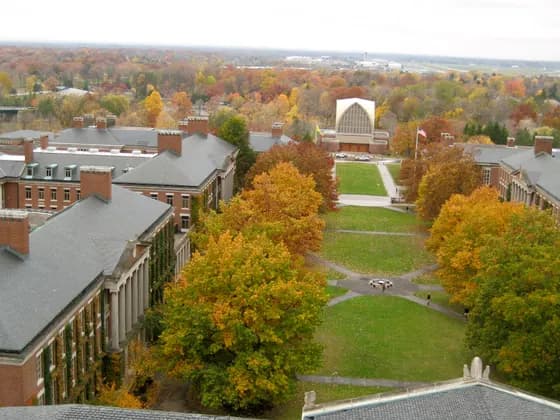

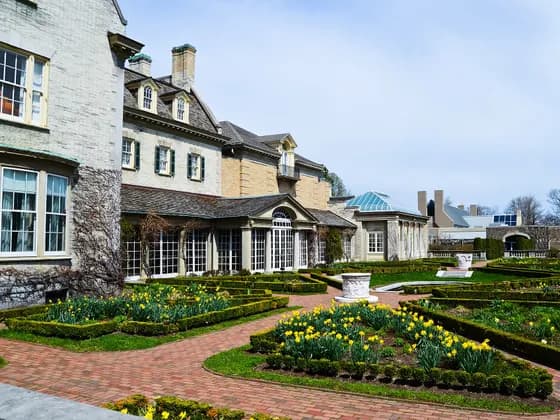
Photo: DanielPenfield · CC BY-SA 4.0 · cropped
Photo: Douglas.flowe ( talk ) · Public domain · Photo: Evilarry · Public domain · Photo: Ryan Hyde from Ann Arbor, United States · CC BY-SA 2.0
How to get into University of Rochester School of Medicine and Dentistry (MD) medicine
Step-by-step: entry requirements, admission tests, personal statement, interview format and the key deadlines.
Open the guide →University of Rochester School of Medicine and Dentistry (MD) entry requirements
Admission profile, interview format, decision dates and what makes University of Rochester School of Medicine and Dentistry (MD) different.
See the profile →The University of Rochester School of Medicine and Dentistry MD program
Integrated + Problem-based learning, 4 years, clinical rotations across Rochester and Canandaigua, New York.
See the program →The University of Rochester School of Medicine and Dentistry (MD) medicine interview
University of Rochester School of Medicine uses a traditional interview format with two sessions (faculty and student). Rochester is home to the Biopsychosocial Model — the foundational concept introduced by George Engel at Rochester in 1977 that integrates biological, psychological, and social factors in clinical care. This model shapes the entire Rochester curriculum and interview themes.
Rochester's Double Helix Curriculum integrates pre-clinical and clinical learning from Year 1, and the school emphasizes that every clinical encounter involves biological, psychological, and social dimensions simultaneously. Interviewers probe whether applicants have genuinely internalized the biopsychosocial framework or treat it as a buzzword.
Rochester is located in an upstate New York city with significant post-industrial economic challenges and health disparities, and Strong Memorial Hospital (the primary teaching hospital) serves a complex mix of urban poor, rural, and suburban patients.
University of Rochester School of Medicine and Dentistry (MD) interview at a glance (2027 entry)
| Annual MD class size | ~105 |
|---|---|
| Interview format | Traditional — faculty + student sessions |
| Distinctive framework | Biopsychosocial Model (originated at Rochester) |
| Curriculum | Double Helix — integrated pre-clinical and clinical |
| Tuition (2025–26) | ~USD 65,000/year |
| Application system | AMCAS + Rochester secondary |
| Interview window | October–February |
Interview format
- Two one-on-one sessions: faculty (open-file) and student.
- No MMI.
- Interview day includes a Double Helix curriculum overview.
Working towards the MCAT score University of Rochester School of Medicine and Dentistry (MD) expects? Build a week-by-week plan from your test date — free for the first two weeks.
Sample interview questions
George Engel developed the biopsychosocial model at Rochester in 1977. What does it mean to actually practice biopsychosocial medicine — not just acknowledge it — in a busy clinical environment?
The model requires attending to social context, psychological state, and biological processes simultaneously. Operationalize it with a concrete example rather than reciting the definition, and acknowledge the time pressures that make it hard.
Why the University of Rochester specifically, given that many schools claim to value humanism? What about the Double Helix Curriculum and the biopsychosocial tradition fits how you want to learn?
Connect the early clinical integration of the Double Helix Curriculum to your own learning style, and tie the biopsychosocial heritage to a value you genuinely hold. Avoid generic praise that could apply to any school.
Tell us about a patient or person whose illness you could only understand by looking beyond the biology. What did the psychological or social dimension change about how you saw them?
Pick a real encounter where context reshaped your understanding. Show reflection on what you learned about whole-person care rather than narrating events.
Strong Memorial serves urban poor, rural, and refugee patients in a post-industrial city. What draws you to a complex, mixed safety-net and tertiary environment rather than a narrower setting?
Show you understand Rochester's specific population — including its large refugee resettlement community — and articulate why clinical and social complexity appeals to you.
Rochester is a post-industrial city with high poverty and persistent health disparities. How should Strong Memorial balance its role as a tertiary academic center with its obligation to the surrounding community?
Discuss anchor-institution obligations, community benefit, primary-care access, and the tension between subspecialty or research excellence and community health needs. There is no clean answer — show you can hold both.
A patient with poorly controlled diabetes repeatedly misses appointments. A colleague labels them non-compliant. Using a biopsychosocial lens, how do you reframe and respond to this situation?
Reframe non-adherence as a signal of unmet needs — transport, work, mental health, health literacy, food insecurity. Show curiosity about causes before judgment, and propose practical steps.
Rochester has been hit hard by the opioid crisis. A patient with a history of opioid use disorder presents with genuine acute pain. How do you weigh effective analgesia against the risk of relapse?
Pain deserves treatment regardless of substance-use history. Discuss multimodal analgesia, involving addiction medicine, honesty with the patient, and avoiding the stigma that leads to undertreated pain.
A 16-year-old asks you not to tell her parents she is sexually active and wants contraception. How do you navigate confidentiality, the law, and the parents' role?
What they are listening for:
- Adolescent confidentiality protections
- the limits of those protections
- encouraging family communication where safe
- centering the patient's autonomy and safety
Note that specifics vary by state.
You must tell a patient with limited health literacy that their biopsy shows cancer. How do you structure this conversation?
What they are listening for:
- Plain language
- chunking information
- checking understanding (teach-back)
- attending to emotional response
- not overwhelming with data
Reference a structured approach such as SPIKES if you know it.
Describe a time you had to deliver difficult feedback or unwelcome news to someone. How did you balance honesty with compassion?
AAMC Interpersonal Skills competency. Show you can be direct without being harsh, and that you read the other person's emotional state and adjusted.
Engel introduced the biopsychosocial model partly as a critique of the prevailing biomedical model. What were the limits of pure biomedicine that he was responding to?
The biomedical model reduces illness to molecular and physiological deviation and excludes the psychological and social. Show you understand the intellectual argument, not just the slogan.
Some critics argue the biopsychosocial model is too broad to guide specific clinical decisions. How would you respond to that critique?
Engage honestly: the model is a framework rather than an algorithm. Argue for its value in structuring attention and humility while acknowledging it does not replace clinical specifics.
Walk us through a research project or scholarly piece of work you have done. What was the question, and what would you do differently with hindsight?
AAMC thinking-and-reasoning and science competencies. Show genuine intellectual ownership, methodological awareness, and the capacity for self-critique.
A friend confides that they have been feeling hopeless and have thought about not being around anymore. They beg you not to tell anyone. Talk through what you say to them.
Stay calm and present, ask directly about safety and plan, validate their feelings, and explain gently why you cannot keep this secret. Prioritize connecting them to help.
A patient is angry because they have waited three hours in a busy clinic and feel ignored. You are the trainee they encounter first. How do you respond?
Acknowledge and validate the frustration, avoid defensiveness, apologize for the wait without over-promising, and focus on what you can do now. De-escalation through empathy.
You are shown county data where life expectancy in Rochester's poorest ZIP codes is roughly a decade lower than in affluent suburbs a few miles away. How do you interpret this, and what does it imply for a physician?
Read the gradient as driven by social determinants — income, housing, environment, access — rather than individual behavior alone. Connect to upstream advocacy and the biopsychosocial frame.
Practise the University of Rochester School of Medicine and Dentistry (MD) interview
Rehearse the real format before the day — on demand with our AI interviewers, or live with a tutor.
Sit a mock with photoreal AI interviewers — any time
A timed MMI or panel interview on video — American & international voices — with interviewers who listen, react and press with follow-ups. Rubric-scored feedback and a replay the moment you finish.


Live mocks with a tutor who’s been in the room
A full University of Rochester School of Medicine and Dentistry (MD)-style mock with a medic or dentist tutor — honest scoring against real marking criteria, a station-by-station debrief and a written action plan.
Book a mock interviewHow to prepare for the University of Rochester School of Medicine and Dentistry (MD) interview
Common pitfalls to avoid
University of Rochester School of Medicine and Dentistry (MD) interview — frequently asked questions
Sources & official admissions information
Ready to nail your University of Rochester School of Medicine and Dentistry (MD) interview?
Book a mock interview with a tutor who knows the US interview formats, orpractice unlimited stations from our interview question bank.