
D’Youville University COM Interview
Format, Questions & Prep Tips
D’Youville University COM medicine interviews for 2027 entry are a traditional interview, held September 2026 through February 2027. Published figures: Annual DO class size ~110 (growing); Tuition (2025–26) ~USD 52,000/year (estimated).
- Institution
- D’Youville University College of Osteopathic Medicine
- Interview (2027 entry)
- September through February
- Decisions (2027 entry)
- Rolling decisions, typically 4–8 weeks post-interview

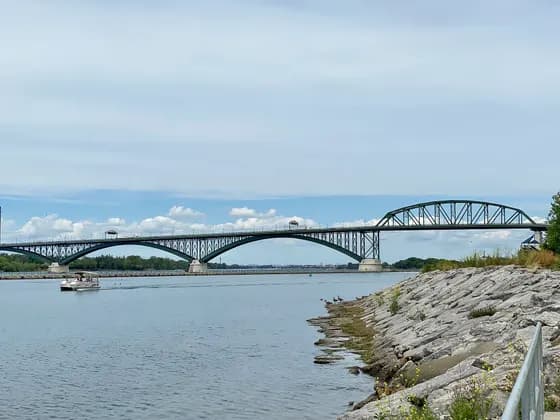
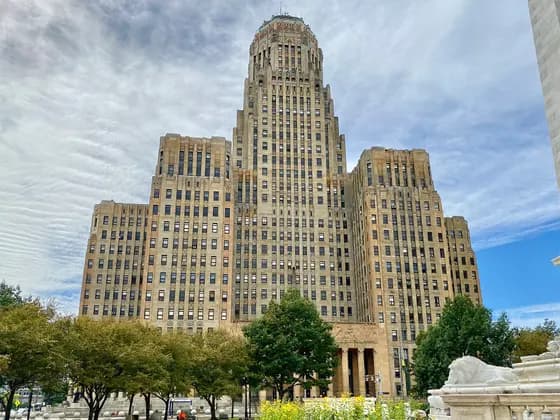
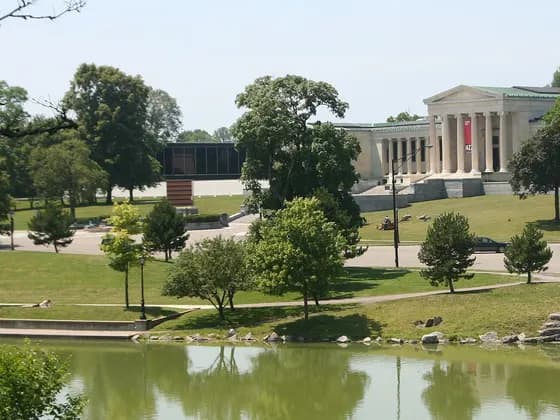
Photo: Kenneth C. Zirkel · CC BY 4.0 · cropped
Photo: w_lemay · CC BY-SA 2.0 · Photo: w_lemay · CC BY-SA 2.0 · Photo: Dave Pape · Public domain
How to get into D’Youville University COM (DO) medicine
Step-by-step: entry requirements, admission tests, personal statement, interview format and the key deadlines.
Open the guide →D’Youville University COM (DO) entry requirements
Admission profile, interview format, decision dates and what makes D’Youville University COM (DO) different.
See the profile →The D’Youville University COM (DO) medicine interview
D’Youville University College of Osteopathic Medicine uses a traditional interview format — faculty sessions at its Buffalo, New York campus.
AACOMAS is the primary application service. CASPer is not currently required (verify for current cycle).
D’Youville is one of the newest DO programs in the US, welcoming its inaugural class in 2023. It is housed within D’Youville University, a Catholic health sciences institution in Buffalo with a long history of nursing, pharmacy, and rehabilitation sciences education. Buffalo is a post-industrial city with significant African-American and immigrant communities, a large poverty footprint, and distinctive urban health challenges. Interviewers here want to see genuine commitment to Western New York’s communities and comfort with pioneering a program that is still developing its institutional identity.
D’Youville University COM (DO) interview at a glance (2027 entry)
| Annual DO class size | ~110 (growing) |
|---|---|
| Interview format | Traditional — faculty session |
| CASPer required | No |
| Application system | AACOMAS primary + D'Youville secondary |
| Tuition (2025–26) | ~USD 52,000/year (estimated) |
| Interview window | September–February |
Interview format
- Traditional faculty interview; approximately 30–45 minutes.
- New program context: questions about accreditation awareness and adaptability.
- No MMI.
Working towards the MCAT score D’Youville University COM (DO) expects? Build a week-by-week plan from your test date — free for the first two weeks.
Sample interview questions
D’Youville COM is one of the newest osteopathic medical schools in the US. Why did you choose to apply to a brand-new program?
Research D’Youville’s COCA candidacy/accreditation status. Show you understand the considerations: benefits (innovative culture, direct faculty access) and risks (evolving curriculum, limited match outcome data). Demonstrate you made an informed, not uninformed, choice.
Buffalo is a post-industrial city with significant urban health challenges. What do you know about Western New York’s health landscape, and why do you want to practice here?
Research Buffalo specifically:
- high rates of poverty in certain zip codes
- cardiovascular disease
- asthma and lead exposure in older housing stock
- large Medicaid-dependent population
- the City of Buffalo’s health equity initiatives
D’Youville University is a Catholic-affiliated institution. How do your values align with this institutional culture?
You do not need to be Catholic. Show genuine respect for Catholic social teaching’s emphasis on human dignity, service to the poor and vulnerable, and whole-person care — which aligns naturally with osteopathic principles.
A Catholic-affiliated hospital in your clinical rotation declines to provide certain reproductive health services. A patient asks you directly for those services. How do you respond?
Institutional religious exemptions, your obligation to the patient, referral pathways, and how to ensure the patient gets the care she needs while respecting the institutional context.
Describe a meaningful experience serving in an urban or underserved community health context.
Authenticity and specificity. Urban health challenges differ from rural — show you understand the difference (housing instability, environmental exposures, access to specialty care in dense but under-resourced neighborhoods).
D’Youville has existing programs in nursing, pharmacy, physical therapy, and occupational therapy. How do you envision using that interprofessional environment in your medical training?
Interprofessional education (IPE) in action: working with nursing and pharmacy students on simulated cases, understanding scope of practice across health professions, and building collaborative skills for team-based care.
Buffalo has significant health disparities tied to post-industrial economic decline. What role can a physician play in addressing health challenges rooted in economic and environmental factors?
Social determinants of health: lead exposure in old housing, food insecurity, transportation access, unemployment and mental health. The physician’s role extends beyond the clinic — community engagement, public health advocacy, and addressing structural drivers.
Buffalo has a growing Burmese, Somali, and Arabic-speaking refugee population. How will you provide culturally and linguistically competent care for these communities?
What they are listening for:
- Professional interpretation
- cultural humility
- community health worker partnerships
- refugee health-specific training (TB, mental health, nutrition transition issues)
Describe a time you worked in an interprofessional team. What did each profession contribute that you could not have provided alone?
AAMC Interpersonal: teamwork and collaboration. Specifically relevant to D’Youville’s IPE environment.
What is the most important thing you want to learn about being a physician that you cannot learn in a classroom?
Emotional intelligence, presence with suffering, navigating uncertainty — show you have thought seriously about the non-technical dimensions of medical practice.
Certain Buffalo zip codes have far higher rates of childhood lead exposure and asthma, tied to old housing stock. How would you think about measuring whether a primary care practice is effectively addressing these environmental health risks in its pediatric panel?
Population-health framing:
- lead-screening rates by age
- asthma controller adherence and ED visits
- linking clinical data to housing and neighborhood factors
- the role of community partnerships
Distinguish process from outcome measures.
A recently resettled refugee patient who speaks limited English seems anxious and confused about why she is in your Buffalo clinic. The interpreter is on a phone line with a poor connection. Show me how you'd handle the opening of this visit.
Demonstrate the encounter: slow down, confirm the interpreter line, avoid using family members for sensitive content, use simple language and reassurance, and attend to refugee-specific concerns (prior trauma, unfamiliar health system).
As one of the earliest cohorts at a 2023-founded program, you will help build study culture with limited upper-year mentorship. What is your concrete plan for self-directed learning and COMLEX-USA preparation?
Spaced repetition, active recall, a board-preparation timeline, building peer-study structures from scratch, and resourcefulness where alumni and tutoring networks are still forming.
During a rotation at a Catholic-affiliated hospital, a patient asks you for contraception that the institution does not provide. How do you balance your obligation to her with the institutional context?
Patient's right to information and timely care, transparent counseling, clear referral pathways to where the service is available, and respect for the institution's policy without abandoning the patient. Relevant given D'Youville's Catholic affiliation and likely Catholic clinical sites.
Describe how you would explain a new diagnosis to a patient and, separately, hand off that patient's plan to a pharmacy student and a nursing student on your interprofessional team. What changes between the two conversations?
Audience adaptation: plain language and teach-back for the patient; precise, structured clinical handover (e.g. SBAR-style) for the team. Directly relevant to D'Youville's interprofessional education environment.
Practise the D’Youville University COM (DO) interview
Rehearse the real format before the day — on demand with our AI interviewers, or live with a tutor.
Sit a mock with photoreal AI interviewers — any time
A timed MMI or panel interview on video — American & international voices — with interviewers who listen, react and press with follow-ups. Rubric-scored feedback and a replay the moment you finish.





Live mocks with a tutor who’s been in the room
A full D’Youville University COM (DO)-style mock with a medic or dentist tutor — honest scoring against real marking criteria, a station-by-station debrief and a written action plan.
Book a mock interviewHow to prepare for the D’Youville University COM (DO) interview
Common pitfalls to avoid
D’Youville University COM (DO) interview — frequently asked questions
Sources & official admissions information
Ready to nail your D’Youville University COM (DO) interview?
Book a mock interview with a tutor who knows the US interview formats, orpractice unlimited stations from our interview question bank.