
Jacobs School of Medicine and Biomedical Sciences at UB Interview
Format, Questions & Prep Tips
Jacobs School of Medicine and Biomedical Sciences at UB medicine interviews for 2027 entry are a traditional interview. Published figures: Annual MD class size ~180; Applications received ~6,000–8,000 per cycle; Interview format MMI — 6–8 stations, ~8 min each.
- Institution
- Jacobs School of Medicine and Biomedical Sciences at the University at Buffalo
- Interview (2027 entry)
- October through March; rolling invitations; earlier scheduling advantageous for in-state applicants
- Decisions (2027 entry)
- Rolling decisions from December; final decisions by late March; waitlist through summer

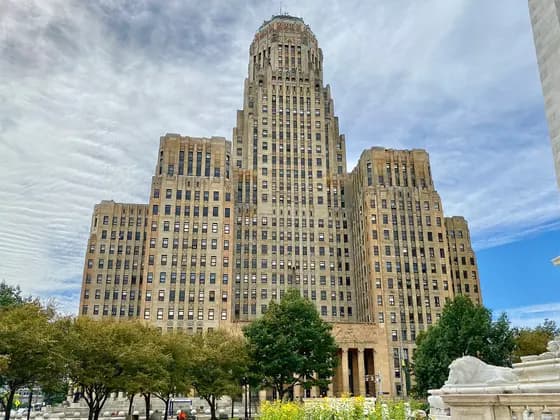
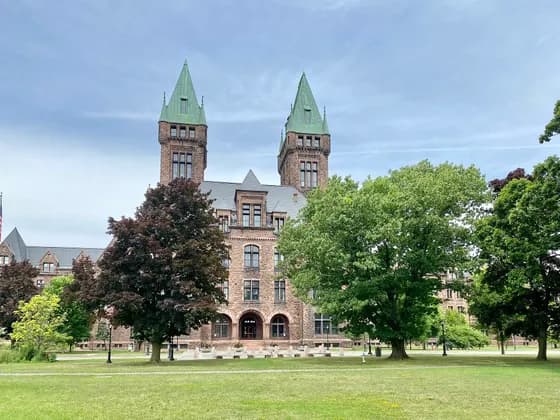
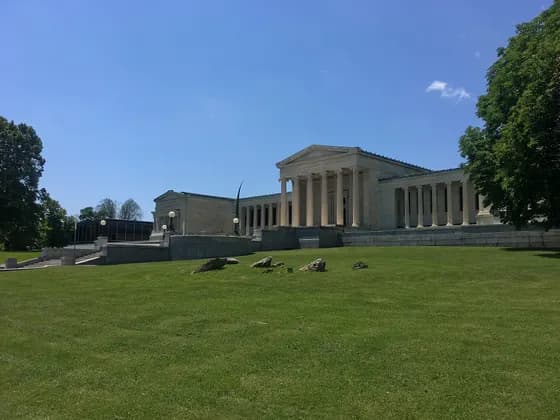
Photo: Buffaboy · CC BY-SA 4.0 · cropped
Photo: w_lemay · CC BY-SA 2.0 · Photo: w_lemay · CC BY-SA 2.0 · Photo: Andre Carrotflower · CC BY-SA 4.0
How to get into Jacobs School of Medicine and Biomedical Sciences at UB (MD) medicine
Step-by-step: entry requirements, admission tests, personal statement, interview format and the key deadlines.
Open the guide →Jacobs School of Medicine and Biomedical Sciences at UB (MD) entry requirements
Admission profile, interview format, decision dates and what makes Jacobs School of Medicine and Biomedical Sciences at UB (MD) different.
See the profile →The Jacobs School of Medicine and Biomedical Sciences at UB (MD) medicine interview
The Jacobs School of Medicine at the University at Buffalo uses a **Multiple Mini Interview (MMI)** format with approximately six to eight stations of eight minutes each. Stations cover ethical dilemmas, communication role-plays, situational judgment, and reflective personal prompts.
Jacobs is the flagship SUNY research medical school, located in Buffalo’s medical corridor adjacent to the Gates Vascular Institute and Kaleida Health hospitals. Interviewers are drawn from faculty with active research portfolios and clinical affiliations; academic curiosity and Western New York community commitment are assessed alongside the standard premed competencies.
Expect questions that probe the AAMC Premed Competencies, which fall into three categories: Professional, Science, and Thinking and Reasoning.
Jacobs School of Medicine and Biomedical Sciences at UB (MD) interview at a glance (2027 entry)
| Annual MD class size | ~180 |
|---|---|
| Applications received | ~6,000–8,000 per cycle |
| Interview format | MMI — 6–8 stations, ~8 min each |
| Curriculum | Organ-system integrated; simulation and SP labs |
| Tuition (in-state, 2025–26) | ~USD 38,000–44,000/year |
| Application system | AMCAS |
| Interview window | October–March |
Interview format
- MMI with 6–8 stations, each approximately 8 minutes; 1 minute to read prompt outside.
- Station types: ethical dilemma, communication role-play, policy scenario, personal reflection, and sometimes a collaborative station.
- No interviewer has access to your application; each station is scored independently.
- Interview day includes admissions presentation, tour of the new Jacobs building and Gates Vascular Institute, and student Q&A.
- Some stations reflect Western New York community health themes: rural access, refugee health, industrial disease legacy.
Working towards the MCAT score Jacobs School of Medicine and Biomedical Sciences at UB (MD) expects? Build a week-by-week plan from your test date — free for the first two weeks.
Sample interview questions
Why Jacobs School at UB — and why Buffalo? What draws you to Western New York's healthcare environment?
Reference specific features:
- the Gates Vascular Institute
- Erie County Medical Center Level I Trauma
- the Buffalo VA
- community health work with the area's large refugee population
Avoid "good SUNY school" generic answers.
You are a physician and discover that a colleague is practicing medicine while impaired. How do you handle this?
Discuss reporting obligations to the hospital's physician health program or state medical board, patient safety as the primary obligation, and how to approach the colleague directly first if it is safe to do so.
A patient is reluctant to start chemotherapy for a newly diagnosed cancer. How do you approach the conversation?
Explore fears and concerns first (side effects, loss of function, cultural beliefs). Use shared decision-making: present options, explain evidence, explore what matters most to the patient. Respect their autonomy while ensuring they have full information.
Describe your most significant research experience. What question were you investigating, and what did you learn about the scientific process?
Jacobs is part of a major research university. Show intellectual ownership: your hypothesis, your role, limitations of the study, and what you would do differently. If your experience is limited, discuss what research question you would pursue and why.
Buffalo has a significant refugee population. A refugee patient presents with a condition common in their country of origin that you have limited training in. What is your obligation?
Demonstrate cultural humility and intellectual honesty: acknowledge your limits, seek consultation (infectious disease, travel medicine, community health liaison), and use interpreters for all communication. Show you do not guess when you do not know.
Should medical schools have a responsibility to ensure a portion of their graduates practice in underserved areas? How would you implement such a policy?
Policy ethics. Explore loan forgiveness programs (NHSC), service obligation scholarships, rural training tracks, and the tensions between autonomy and workforce needs. Nuanced arguments are more credible than simple yes/no.
You must deliver a "do not resuscitate" conversation to a family whose elderly parent is deteriorating rapidly. How do you prepare and conduct this discussion?
Use the SPIKES protocol: Setting, Perception, Invitation, Knowledge, Empathy, Strategy/Summary. Acknowledge grief, provide space for emotion, be clear about clinical prognosis without being blunt, and align the discussion with the patient's known values.
The Gates Vascular Institute is one of UB's flagship research and clinical programs. If you could contribute to its work, what research question in vascular medicine would you pursue?
You do not need to be a vascular expert — show intellectual curiosity and the ability to connect a general health challenge (atherosclerosis, peripheral artery disease in diabetics, stroke prevention) to a specific research angle.
A gun violence survivor is admitted to your trauma service. You learn during the workup that there may be a home safety risk for the patient's family. What are your obligations?
Discuss mandatory reporting where applicable (domestic violence, child safety concerns), the role of social work, Tarasoff considerations for identifiable third parties at risk, and the limits of physician authority vs. patient confidentiality.
What type of physician do you want to be — and how does the Jacobs School curriculum and clinical environment help you get there?
Connect your career vision to specific Jacobs features: the integrated curriculum, research opportunities at UB, the clinical breadth of Western NY (trauma, VA, community health, academic medicine). Show you have researched the school, not just listed its name.
MMI role-play: You are a clinic volunteer working with a refugee patient in Buffalo (played by the interviewer) who, through an interpreter, is anxious and confused about why blood tests are needed before treatment. Begin the conversation.
Speak to the patient, not the interpreter, use short plain sentences, check understanding, and address fear about cost or immigration consequences. This reflects Buffalo's large refugee population — the skill assessed is culturally responsive, interpreter-mediated communication.
You are shown childhood blood-lead-level data by Buffalo neighborhood, with the highest levels clustering in older, post-industrial housing tracts. How do you interpret the geographic pattern, and what would you do with the finding?
Link elevated lead to aging housing stock and the region's industrial legacy, and discuss screening, remediation, and advocacy beyond the clinic. Show you can move from a data pattern to upstream structural causes and population-level action.
A pharmaceutical company offers the Jacobs School generous funding for a new research institute, with naming rights and informal expectations about research direction. Should the school accept, and on what conditions?
Discuss conflict of interest, academic independence, transparency, and firewalls between funding and findings. Argue a conditional position rather than a flat yes or no. At a research university, this tests understanding of how industry money interacts with scientific integrity.
You are part of a trauma team after a mass-casualty event at ECMC and must give a brief, calm update to a crowded, frightened waiting room of families. How do you approach it?
Balance honesty with reassurance, give a clear process and timeline rather than premature specifics, and protect individual confidentiality while addressing the group. Demonstrate composure and structured communication under pressure — relevant to a Level I trauma environment.
The Gates Vascular Institute deliberately co-locates clinicians, researchers, and engineers in one building. Why might that physical design accelerate translational medicine, and what are its limits?
Argue that proximity shortens the bench-to-bedside loop, sparks cross-disciplinary ideas, and speeds device iteration, while noting that co-location alone does not guarantee collaboration without aligned incentives. Shows engagement with UB's translational-research identity.
Practise the Jacobs School of Medicine and Biomedical Sciences at UB (MD) interview
Rehearse the real format before the day — on demand with our AI interviewers, or live with a tutor.
Sit a mock with photoreal AI interviewers — any time
A timed MMI or panel interview on video — American & international voices — with interviewers who listen, react and press with follow-ups. Rubric-scored feedback and a replay the moment you finish.






Live mocks with a tutor who’s been in the room
A full Jacobs School of Medicine and Biomedical Sciences at UB (MD)-style mock with a medic or dentist tutor — honest scoring against real marking criteria, a station-by-station debrief and a written action plan.
Book a mock interviewHow to prepare for the Jacobs School of Medicine and Biomedical Sciences at UB (MD) interview
Common pitfalls to avoid
Jacobs School of Medicine and Biomedical Sciences at UB (MD) interview — frequently asked questions
Sources & official admissions information
Ready to nail your Jacobs School of Medicine and Biomedical Sciences at UB (MD) interview?
Book a mock interview with a tutor who knows the US interview formats, orpractice unlimited stations from our interview question bank.