
Zucker School of Medicine at Hofstra/Northwell Interview
Format, Questions & Prep Tips
Zucker School of Medicine at Hofstra/Northwell medicine interviews for 2027 entry are multiple mini interviews (MMI). Published figures: Annual MD class size ~100; Applications received ~8,000–10,000 per cycle; Interview format MMI — 6–8 stations, ~8 min each.
- Institution
- Donald and Barbara Zucker School of Medicine at Hofstra/Northwell
- Interview (2027 entry)
- October through March; rolling invitations issued after secondary review
- Decisions (2027 entry)
- Rolling decisions from December; main release by late March; waitlist movement into summer

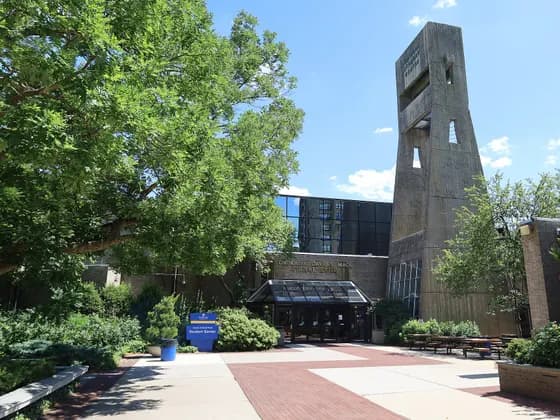
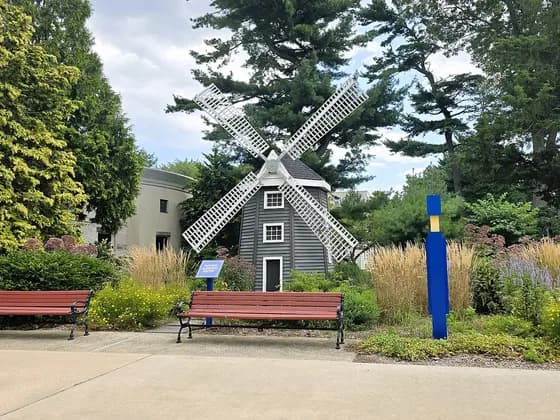

Photo: Antony-22 · CC BY-SA 4.0 · cropped
Photo: Antony-22 · CC BY-SA 4.0 · Photo: XanderAi · CC BY-SA 4.0 · Photo: Dmadeo · CC BY-SA 3.0
How to get into Zucker School of Medicine at Hofstra/Northwell (MD) medicine
Step-by-step: entry requirements, admission tests, personal statement, interview format and the key deadlines.
Open the guide →Zucker School of Medicine at Hofstra/Northwell (MD) entry requirements
Admission profile, interview format, decision dates and what makes Zucker School of Medicine at Hofstra/Northwell (MD) different.
See the profile →The Zucker School of Medicine at Hofstra/Northwell (MD) medicine interview
Zucker School of Medicine at Hofstra/Northwell uses a **Multiple Mini Interview (MMI)** format with six to eight timed stations of approximately eight minutes each. Stations present ethical dilemmas, communication challenges, and situational judgment tasks; some cycles include collaborative stations with other applicants.
The school is structurally embedded within Northwell Health — New York’s largest health system — and interviewers are attuned to whether candidates understand health systems complexity, interprofessional care, and population health, which are core curriculum themes.
Expect questions that probe the AAMC Premed Competencies, which fall into three categories: Professional, Science, and Thinking and Reasoning.
Zucker School of Medicine at Hofstra/Northwell (MD) interview at a glance (2027 entry)
| Annual MD class size | ~100 |
|---|---|
| Applications received | ~8,000–10,000 per cycle |
| Interview format | MMI — 6–8 stations, ~8 min each |
| Curriculum | Integrated organ-system + Health Systems Science thread |
| Tuition (2025–26) | ~USD 62,000–66,000/year |
| Application system | AMCAS |
| Interview window | October–March |
Interview format
- MMI format with 6–8 stations of ~8 minutes each; one minute to read the prompt before entering.
- Station types: ethical scenario, communication role-play, policy question, personal/values reflection, and occasionally a collaborative group task.
- No interviewer knows your application; assessments are standardized and scored independently per station.
- Interview day runs approximately 4–5 hours including admissions presentation and campus overview.
- Northwell Health facilities on Long Island are part of the tour where offered in person.
Working towards the MCAT score Zucker School of Medicine at Hofstra/Northwell (MD) expects? Build a week-by-week plan from your test date — free for the first two weeks.
Sample interview questions
You are a first-year medical student on a clerkship and you observe an attending physician dismiss a patient's pain complaint without examination, saying the patient "looks fine." What do you do?
Address the hierarchy, your duty to the patient, and how to escalate appropriately without being reckless. Show you understand the student role while still advocating for patient safety.
Why Zucker SOM? What specifically about the Northwell integration and Health Systems Science curriculum aligns with your goals?
Reference specific Northwell hospitals, the HSS thread, interprofessional education with nursing and pharmacy students, and population health. Avoid vague "great clinical training" answers.
A patient who just received a terminal cancer diagnosis asks you: "How long do I have?" You are a medical student with the attending unavailable. What do you do?
Do not give a prognosis you are not qualified to give. Show empathy, acknowledge the question, say you will get the attending, and sit with the patient while doing so. Demonstrate you do not abandon the person in a moment of distress.
Should the United States transition to a single-payer national health insurance system? Defend a position.
Argue a side but acknowledge trade-offs — cost containment vs. provider reimbursement disruption, universal coverage vs. wait times. Demonstrate systems-level thinking, not a partisan talking point.
Interprofessional education is a core part of the Zucker curriculum. Describe an experience working on a team that included non-physicians or non-medical professionals. What role did you play?
Connect your experience to the IPE framework. Show you understand that health outcomes improve with team-based care and that you can be a collaborative, not dominating, team member.
What does it mean to be a physician-leader? Give an example of leadership you have demonstrated.
Zucker explicitly develops physician leaders. Use a concrete example; leadership does not have to mean a formal title — it can be initiative, mentoring, or advocacy.
A hospital system is considering closing its emergency department in a low-income neighborhood because it operates at a financial loss. As a community physician, how do you respond?
Discuss the community health impact, the role of safety-net hospitals, potential advocacy channels, and the tension between hospital finances and health equity.
You are running five minutes late for a meeting with a patient who has waited 45 minutes. How do you begin the conversation?
Demonstrate a genuine apology (not a defensive one), acknowledge the patient's time, and transition to the clinical encounter with empathy. Simple communication competency station — do not over-complicate it.
What quality improvement project or population health initiative would you design if given the resources at Northwell Health?
Shows you have thought about health systems, not just clinical interactions. Suggest something realistic and evidence-based — e.g., reducing readmissions for CHF patients, or improving diabetic retinopathy screening rates in underserved Long Island communities.
A pharmaceutical company offers to fund a new medical school lecture series. Should the school accept the funding? What conditions, if any, are appropriate?
Discuss conflicts of interest, transparency requirements, academic independence, and the history of pharmaceutical influence on medical education. A nuanced position is more credible than an absolute rejection or acceptance.
MMI role-play station: You are a junior team member and must tell a colleague (played by the interviewer) that a quality-improvement project they led, and are proud of, is being discontinued by the department. Begin the conversation.
What they are listening for:
- Open with acknowledgment of their effort
- deliver the decision clearly and early rather than burying it
- leave room for their reaction
This is a communication station, not a debate — do not over-justify the department's decision; focus on the relationship and next steps.
You are shown a run chart of 30-day heart-failure readmission rates at a Northwell hospital before and after a new discharge-coordination program. Rates fall but then drift back up after six months. As a Health Systems Science student, how do you interpret this, and what would you do?
Recognize the classic pattern of an intervention that works initially then decays as attention fades. Discuss sustainability, special-cause versus common-cause variation, and the need to hard-wire the change (order sets, staffing, audit-and-feedback) rather than relying on enthusiasm. This rewards genuine QI literacy.
A health system is deciding whether to invest a large surplus in a new robotic-surgery suite that will attract well-insured patients, or in community paramedicine for high-utiliser patients in underserved Long Island towns. As a future physician-leader, how do you weigh this?
Frame it as margin versus mission, a real tension for integrated systems like Northwell. Acknowledge that the profitable service may cross-subsidize community work, and argue for a defensible balance rather than a purely idealistic answer. Show systems-level reasoning.
You are leading an interprofessional huddle with a nurse, a pharmacist, and a social worker. The pharmacist flags a medication concern but the nurse, who is more senior, dismisses it. How do you handle the moment?
Model psychological safety — invite the pharmacist to expand, treat the flag as valuable regardless of hierarchy, and de-escalate the interpersonal friction. Connect to Zucker's interprofessional-education ethos and the patient-safety rationale for flattening hierarchy.
Zucker integrates Health Systems Science as a third pillar alongside basic and clinical science. Some critics argue HSS dilutes time for hard science. How would you respond to that critique?
Acknowledge the curricular trade-off honestly, then argue that diagnostic error, low-value care, and fragmented systems harm patients as much as knowledge gaps do. Show you understand HSS as rigorous content — QI methods, epidemiology, policy — not soft filler.
Practise the Zucker School of Medicine at Hofstra/Northwell (MD) interview
Rehearse the real format before the day — on demand with our AI interviewers, or live with a tutor.
Sit a mock with photoreal AI interviewers — any time
A timed MMI or panel interview on video — American & international voices — with interviewers who listen, react and press with follow-ups. Rubric-scored feedback and a replay the moment you finish.






Live mocks with a tutor who’s been in the room
A full Zucker School of Medicine at Hofstra/Northwell (MD)-style mock with a medic or dentist tutor — honest scoring against real marking criteria, a station-by-station debrief and a written action plan.
Book a mock interviewHow to prepare for the Zucker School of Medicine at Hofstra/Northwell (MD) interview
Common pitfalls to avoid
Zucker School of Medicine at Hofstra/Northwell (MD) interview — frequently asked questions
Sources & official admissions information
Ready to nail your Zucker School of Medicine at Hofstra/Northwell (MD) interview?
Book a mock interview with a tutor who knows the US interview formats, orpractice unlimited stations from our interview question bank.