
NYITCOM Interview
Format, Questions & Prep Tips
NYITCOM medicine interviews for 2027 entry are a traditional interview, held September 2026 through March 2027. Published figures: Annual DO class size ~402 (Old Westbury + Jonesboro combined; 2024–25); Tuition (2025–26) ~USD 59,000/year.
- Institution
- New York Institute of Technology College of Osteopathic Medicine
- Interview (2027 entry)
- September through March
- Decisions (2027 entry)
- Rolling decisions

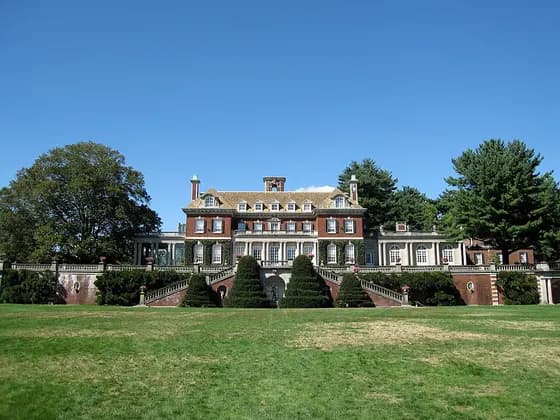
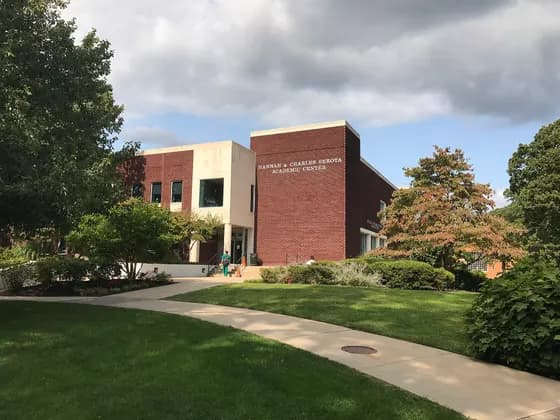

Photo: Zztfrd · CC BY-SA 4.0 · cropped
Photo: Gryffindor · CC BY-SA 3.0 · Photo: Nedzzzz · CC BY-SA 4.0 · Photo: Gryffindor · CC BY-SA 3.0
How to get into NYITCOM (DO) medicine
Step-by-step: entry requirements, admission tests, personal statement, interview format and the key deadlines.
Open the guide →NYITCOM (DO) entry requirements
Admission profile, interview format, decision dates and what makes NYITCOM (DO) different.
See the profile →The NYITCOM (DO) medicine interview
New York Institute of Technology College of Osteopathic Medicine (NYITCOM) uses a traditional interview format with two sessions (faculty and student) at its Old Westbury, NY campus (and separately at the Arkansas State University campus). NYITCOM trains physicians for underserved communities in the New York metro area, Long Island, and Arkansas, with a strong commitment to primary care, community health, and health equity.
Casper is not currently required at NYITCOM — verify on the official admissions page each cycle, as requirements change. The school's location in suburban Long Island (with a separate campus in Jonesboro, Arkansas) creates two distinct clinical training environments — one urban/suburban and one rural — and interviewers probe applicants' commitment to the specific campus context.
NYITCOM has invested heavily in simulation-based learning and its Simulation Learning Center is a key asset. Interviewers may probe readiness for technology-augmented clinical training.
NYITCOM (DO) interview at a glance (2027 entry)
| Annual DO class size | ~402 (Old Westbury + Jonesboro combined; 2024–25) |
|---|---|
| Interview format | Traditional — two sessions |
| CASPer required | No |
| Application system | AACOMAS primary + NYITCOM secondary |
| Tuition (2025–26) | ~USD 59,000/year |
| Interview window | September–March |
Interview format
- Two one-on-one sessions: faculty and student; ~30 minutes each.
- Confirm which campus (Old Westbury, NY or Arkansas) you are applying to — clinical context differs substantially.
- No MMI.
Working towards the MCAT score NYITCOM (DO) expects? Build a week-by-week plan from your test date — free for the first two weeks.
Sample interview questions
NYITCOM trains physicians for underserved communities in New York and Arkansas — very different contexts. Which campus are you applying to and what draws you to serving that community?
Show campus-specific awareness: Long Island's dense suburban population with underserved pockets, or rural Arkansas's primary-care desert and agricultural-health challenges. Be concrete about the community, not just the location.
Why osteopathic medicine specifically — not just medicine? What about the osteopathic whole-person philosophy drew you to a DO rather than an MD?
The single most important DO question, and NYITCOM probes DO identity in depth. Reference the osteopathic tenets — body unity, self-healing, structure-function, rational treatment — and frame osteopathic medicine on its own terms, never as a fallback.
NYITCOM has a strong commitment to primary care, community health, and health equity. How does your background connect to that mission?
Connect a credible personal motivation to primary care and underserved communities. Show genuine awareness of the populations NYITCOM serves rather than a generic wish to help.
NYITCOM has invested heavily in its Simulation Learning Center and technology-augmented training. How do you feel about learning core skills in high-fidelity simulation before working with patients?
Show genuine readiness for simulation-based learning: it builds safe repetition and team skills. Connect it to deliberate practice rather than treating it as a gimmick.
An elderly patient you are seeing at a community health center in Long Island tells you she has been skipping her hypertension medications because they are too expensive. What do you do?
Discuss medication affordability, patient-assistance programs, 340B pharmacies, generic substitution, and the social determinants of adherence. Explore the cause before judging.
A colleague intends to include OMT in a patient's treatment without explicitly informing them. What do you do?
Informed consent applies to OMT as to any procedure. Address the immediate situation and the broader implication for the ethics and credibility of osteopathic practice.
A patient in a rural Arkansas clinic with limited transport needs specialist care hours away that they cannot realistically reach. How do you weigh ideal care against what is achievable?
Telehealth, local resources, prioritizing what is truly time-sensitive, and shared decision-making that meets the patient where they are. Relevant to the Arkansas campus's primary-care-desert context.
You suspect a fellow student inflated their clinical-hours log on an application. No patient was harmed. What, if anything, do you do?
What they are listening for:
- Integrity and professionalism
- the duty to address it appropriately
- proportionality
- the trust the profession depends on
Show measured judgment rather than either ignoring or overreacting.
How would you explain to a patient who has never heard of a DO what osteopathic medicine is and how it differs from seeing an MD?
Plain language: DOs are fully licensed physicians with the same rights and residencies as MDs, trained additionally in the whole-person osteopathic approach and OMT. Avoid jargon and avoid implying DOs are lesser.
Describe a time you earned the trust of someone who was initially skeptical of you. What did you do, and what did you learn?
AAMC Interpersonal Skills competency. Trust-building is foundational to whole-person osteopathic care. Show concrete actions and reflection rather than just good intentions.
What does the osteopathic structure-function relationship mean, and can you give a clinical example of a structural problem producing a functional one?
AAMC science and thinking-and-reasoning competencies. Define the principle and ground it — e.g. musculoskeletal restriction affecting breathing or circulation — showing real grasp of osteopathic theory, not slogans.
What do you understand about the evidence base for OMT, and where is it strongest and weakest?
Show research literacy: OMT has its best evidence for conditions such as low back pain, with weaker or mixed evidence elsewhere. Honesty about limits signals scholarly maturity.
Describe a subject you found genuinely difficult. How did you change your approach to master it?
Show metacognition and resilience — diagnosing the difficulty and adjusting strategy — rather than simply asserting eventual success.
A patient is skeptical of OMT, saying it sounds like 'cracking backs' and is not for them. You have a few minutes. How do you talk with them?
Explore the concern, correct misconceptions in plain language, describe what OMT involves and its evidence for their condition, and respect their choice to decline. Inform, do not pressure.
An older patient at a community clinic seems embarrassed to admit she cannot afford her medications and is reluctant to discuss it. How do you open the conversation?
Normalize the topic non-judgmentally, ask about cost directly but gently, and reassure her there are options. Removing shame is the first step to solving adherence.
You are shown data showing that rural Arkansas counties have far fewer primary-care physicians per capita than the Long Island region, alongside worse chronic-disease outcomes. How do you interpret the link?
Connect workforce shortage and access barriers to worse outcomes, distinguish access from behavior, and discuss pipeline and team-based solutions. Ties directly to NYITCOM's two-campus mission.
Practise the NYITCOM (DO) interview
Rehearse the real format before the day — on demand with our AI interviewers, or live with a tutor.
Sit a mock with photoreal AI interviewers — any time
A timed MMI or panel interview on video — American & international voices — with interviewers who listen, react and press with follow-ups. Rubric-scored feedback and a replay the moment you finish.
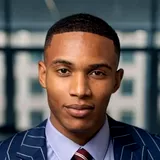
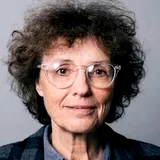


Live mocks with a tutor who’s been in the room
A full NYITCOM (DO)-style mock with a medic or dentist tutor — honest scoring against real marking criteria, a station-by-station debrief and a written action plan.
Book a mock interviewHow to prepare for the NYITCOM (DO) interview
Common pitfalls to avoid
NYITCOM (DO) interview — frequently asked questions
Sources & official admissions information
Ready to nail your NYITCOM (DO) interview?
Book a mock interview with a tutor who knows the US interview formats, orpractice unlimited stations from our interview question bank.