
CUNY School of Medicine Interview
Format, Questions & Prep Tips
CUNY School of Medicine medicine interviews for 2027 entry are a traditional interview. Published figures: Annual MD class size ~70–75; Applications received ~4,000–5,000 per cycle; Interview format Traditional panel — faculty + student, ~30–45 min each.
- Institution
- CUNY School of Medicine
- Interview (2027 entry)
- October through February; invitations issued on a rolling basis after secondary review
- Decisions (2027 entry)
- Decisions released on a rolling basis from December; most decisions by late March

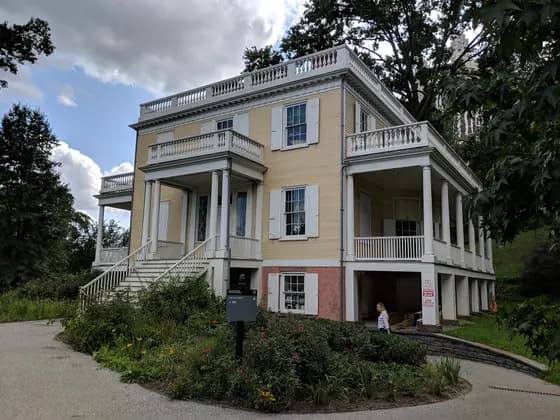

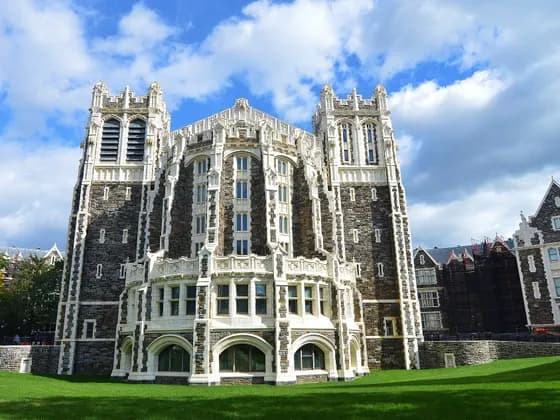
Photo: Ajay Suresh · CC BY 2.0 · cropped
Photo: Kalfatovic · CC BY-SA 4.0 · Photo: Roger Rowlett · CC BY-SA 2.5 · Photo: Gigi Altarejos · CC BY-SA 4.0
How to get into CUNY School of Medicine (MD) medicine
Step-by-step: entry requirements, admission tests, personal statement, interview format and the key deadlines.
Open the guide →CUNY School of Medicine (MD) entry requirements
Admission profile, interview format, decision dates and what makes CUNY School of Medicine (MD) different.
See the profile →The CUNY School of Medicine (MD) medicine interview
CUNY School of Medicine uses a traditional panel interview format — applicants meet with faculty physicians and a current medical student in separate one-on-one sessions. CUNY SOM is mission-driven, training physicians for New York City’s medically underserved communities, and interviewers probe alignment with that mission above all else.
The school’s distinctive 7-year BS/MD program through The City College of New York means the entering MD class includes both direct-pathway students and graduate-entry applicants; interviewers assess whether every candidate understands the school’s social-justice orientation.
Expect questions that probe the AAMC Premed Competencies, which fall into three categories: Professional, Science, and Thinking and Reasoning.
CUNY School of Medicine (MD) interview at a glance (2027 entry)
| Annual MD class size | ~70–75 |
|---|---|
| Applications received | ~4,000–5,000 per cycle |
| Interview format | Traditional panel — faculty + student, ~30–45 min each |
| Curriculum | Integrated, case-based; community health longitudinal thread |
| Tuition (in-state, 2025–26) | ~USD 25,000–30,000/year (among lowest in NY) |
| Application system | CUNY BS/MD + MPS-HS (not AMCAS) |
| Interview window | October–February |
Interview format
- Traditional one-on-one or small-panel sessions with a faculty interviewer and separately a student interviewer.
- Each session runs approximately 30–45 minutes; interviewers read the full application beforehand.
- Open-ended behavioral and motivational questions; no MMI stations.
- Interview day includes campus tour of The City College of New York, an admissions info session, and lunch with current students.
- Mission alignment is the central evaluative lens — expect direct questions about underserved care commitment.
Working towards the MCAT score CUNY School of Medicine (MD) expects? Build a week-by-week plan from your test date — free for the first two weeks.
Sample interview questions
Why CUNY School of Medicine specifically? What draws you to a mission-focused school serving New York's underserved communities?
Be specific about CUNY's unique model: affordability, NYC Health + Hospitals affiliation, social justice curriculum. Cite concrete experiences with underserved populations, not abstract ideals.
Tell me about an experience that confirmed medicine — and specifically primary or community care — was the right path for you.
CUNY leans toward primary care and community medicine. If your experience is in a sub-specialty, connect it back to the population health context.
A patient comes into the community clinic and refuses a recommended preventive intervention because of distrust of the healthcare system. How do you approach the conversation?
Acknowledge systemic mistrust, especially among communities of color. Discuss motivational interviewing, cultural humility, and respecting patient autonomy while not abandoning duty of care.
New York City has declared a public health emergency related to a communicable disease. Your hospital is overwhelmed. How do you triage limited resources?
Reference crisis standards of care, ethical frameworks for triage (utilitarian vs. equity-based), and the public health authority's role.
Describe a time when you worked with someone from a very different background than your own. What did you learn about communication across difference?
CUNY values cultural competency. Use a specific example; focus on active listening, perspective-taking, and adaptation rather than just describing the demographic difference.
What do you think is the single greatest structural barrier to healthcare access in New York City, and what would you do as a physician to address it?
Show policy literacy. Candidates might discuss housing instability, lack of insurance among undocumented residents, language barriers, or Medicaid underfunding of primary care.
How has your own socioeconomic, cultural, or family background shaped the kind of physician you want to become?
CUNY has one of the highest proportions of underrepresented-in-medicine students. Authentic personal narratives are valued — this is not a trick question, but specificity matters.
A colleague on your clinical team makes a racially insensitive comment about a patient. You are a medical student. What do you do?
Address the power dynamic directly. Discuss upstander behavior, when to speak in the moment vs. later, and the duty to advocate for patient dignity.
How would you explain a new Type 2 diabetes diagnosis to a patient who has limited health literacy and does not speak English as a first language?
Discuss use of professional interpreters (never family), teach-back method, plain-language tools, and culturally appropriate dietary counseling.
Where do you see yourself practicing in 15 years, and how does CUNY fit into that vision?
CUNY wants physicians who will remain in underserved New York communities. A response indicating a wish to serve in the community aligns well; vague responses about "keeping options open" do not.
Role-play: You are a community health worker at a CUNY-affiliated clinic in Harlem. A patient (played by the interviewer) has stopped picking up their blood-pressure medication and seems frustrated when you bring it up. Begin the conversation.
Lead with curiosity, not correction. Ask open questions about cost, side effects, pharmacy access, and competing priorities before offering solutions. Name concrete supports — sliding-scale pharmacy, 90-day fills, a community health worker follow-up — rather than lecturing on adherence.
You are shown a table comparing diabetes prevalence and amputation rates across five NYC neighborhoods, ranging from affluent to low-income. The lowest-income neighborhood has triple the amputation rate but only modestly higher prevalence. What does this pattern suggest, and what would you investigate?
Distinguish disease incidence from disease management and access. A gap between prevalence and complication rates points to downstream failures — delayed diagnosis, limited specialist access, food and pharmacy deserts. Propose looking at primary-care density, insurance mix, and time-to-vascular-referral before drawing conclusions.
A free clinic you volunteer at has funding to expand only one service: a diabetes prevention program that would help many, or an intensive case-management service for a small number of the sickest, most marginalized patients. How should the clinic decide?
Surface the utilitarian-versus-equity tension explicitly. Discuss how CUNY's mission to serve the most underserved might weight the equity case, while population reach favors prevention. Show you can reason about distributive justice rather than defaulting to a slogan.
A patient leaves a community-health appointment visibly angry after a long wait and a rushed encounter, telling the front desk that 'no one here listens to people like me.' You overhear this. What do you do?
Acknowledge the legitimacy of the frustration without defensiveness, and treat it as signal about systemic access problems, not just one bad visit. Discuss repairing trust in the moment and feeding the complaint back into clinic quality improvement.
CUNY's curriculum threads community health longitudinally across all four years rather than confining it to one course. Why might a school serving underserved NYC communities choose that design over a single dedicated module?
Argue that one-off modules signal community health is peripheral, whereas a longitudinal thread builds it into clinical reasoning, professional identity, and habit. Connect to spaced reinforcement and to CUNY's explicit social-justice orientation.
Practise the CUNY School of Medicine (MD) interview
Rehearse the real format before the day — on demand with our AI interviewers, or live with a tutor.
Sit a mock with photoreal AI interviewers — any time
A timed MMI or panel interview on video — American & international voices — with interviewers who listen, react and press with follow-ups. Rubric-scored feedback and a replay the moment you finish.





Live mocks with a tutor who’s been in the room
A full CUNY School of Medicine (MD)-style mock with a medic or dentist tutor — honest scoring against real marking criteria, a station-by-station debrief and a written action plan.
Book a mock interviewHow to prepare for the CUNY School of Medicine (MD) interview
Common pitfalls to avoid
CUNY School of Medicine (MD) interview — frequently asked questions
Sources & official admissions information
Ready to nail your CUNY School of Medicine (MD) interview?
Book a mock interview with a tutor who knows the US interview formats, orpractice unlimited stations from our interview question bank.