New York, NY, USEst. 1973

CUNY School of Medicine (MD) Medical School - 2027 Entry Requirements & Interview Format

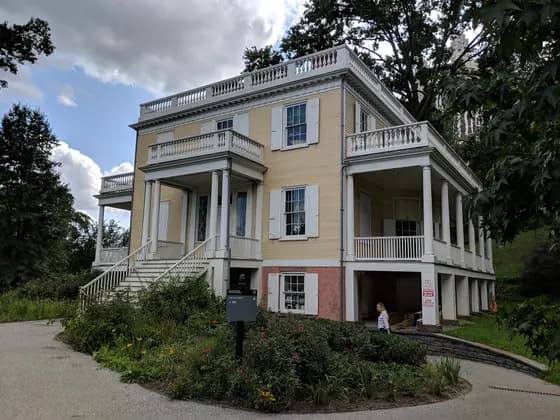
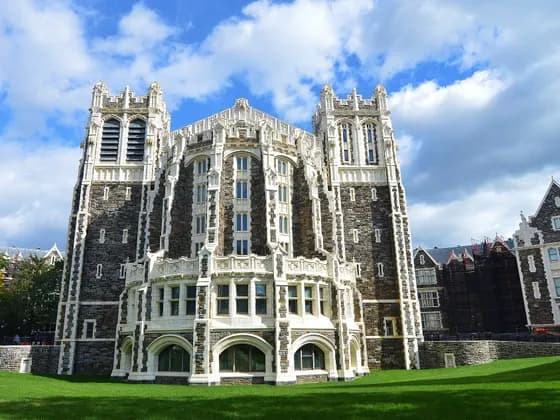
CUNY School of Medicine traces its origins to the Sophie Davis School of Biomedical Education, founded in 1973, and became an independent LCME-accredited MD-granting school in 2015/2016. Based at The City College of New York in Harlem, it is the only public medical school in New York City and among the most affordable MD pathways in the state. Its flagship route is an accelerated 7-year BS/MD programme that admits students directly from high school — with no MCAT required at any stage — alongside a smaller graduate-entry MD track. The school places a strong emphasis on social justice, urban health, and primary care, training physicians committed to serving New York's diverse and often underserved communities. Clinical training takes place at Harlem Hospital Center, Lincoln Hospital, and other New York Health + Hospitals facilities.

Entry Requirements

What you need to apply to CUNY School of Medicine (MD).

Admission overview
The flagship route is the accelerated 7-year BS/MD (Sophie Davis) programme, which admits students directly from high school via a City College undergraduate admissions pathway and requires no MCAT at any stage. A separate, smaller graduate-entry MD track requires a bachelor's degree and the MCAT, with prerequisite coursework in biology, chemistry, physics, and biochemistry and applications via AMCAS. The school strongly favours candidates with demonstrated commitment to serving medically underserved populations.
MCAT median
511 (range 506–517)
GPA median
3.70 overall / 3.65 science (BCPM)
Acceptance rate
2.0%
Class size
72
In-state preference
Strong — primarily in-state
In-state matriculants
85%
CASPer
Not required
Holistic review emphasis
Mission alignment with urban underserved care, socioeconomic diversity, community service, and primary care commitment.
Notes
Most matriculants enter via the no-MCAT 7-year BS/MD (Sophie Davis) route directly from high school; the MCAT median/range below reflects only the smaller graduate-entry cohort. Estimates from public AAMC FACTS / class-profile; verify current cycle.
Specialities offered
Urban Medicine, Primary Care, Community Health, Health Equity, Internal Medicine

Interview Format

How CUNY School of Medicine (MD) interviews applicants.

Format
Traditional panel interview — faculty and student interviewers in separate sessions
Interview window
October–February
Decision date
March 30 (AAMC standard)
Post-interview chances
Approximately 15–25% of interviewed applicants receive an offer; post-interview acceptance rates are moderate given the school's mission focus and strong preference for applicants aligned with its urban health mandate. Estimates based on class size and interview volume; verify with school.

What to expect at a CUNY School of Medicine (MD) interview

CUNY SOM typically conducts traditional one-on-one or small-panel interviews lasting approximately 30–45 minutes per session. Applicants meet with faculty physicians and a current student; interviewers review the full application beforehand and ask open-ended behavioural questions. Given the school's mission focus, interviews probe commitment to underserved communities and primary care. The full interview day includes a campus tour and an information session highlighting the BS/MD accelerated pathway and the school's unique City College of New York affiliation.

What makes CUNY School of Medicine (MD) different

CUNY SOM offers a distinctive 7-year BS/MD programme in partnership with The City College of New York, making it one of the most affordable pathways to an MD in New York. The school has a strong mission to train physicians for medically underserved urban communities and has one of the highest proportions of underrepresented-in-medicine students among US allopathic schools.

Tutor insight

CUNY SOM is a mission-driven school — your personal statement and interview must clearly articulate why you are committed to urban underserved medicine, not simply that you want to practise in New York. If you have shadowed or volunteered at a federally qualified health centre, community clinic, or safety-net hospital, highlight this prominently. The school's BS/MD track is highly competitive for undergraduates; graduate-entry applicants benefit from differentiated narratives that distinguish their experiences from direct-entry students. The very low tuition means competition for seats is fierce relative to the class size — treat your secondary essay as critically as your MCAT preparation.
Prometheus
595 medicine questions inside

Interview questions matched to CUNY School of Medicine (MD)

Two questions our tutors flagged as a strong fit for CUNY School of Medicine (MD)’s interview style. Try answering them out loud, then open Prometheus for the model answers and follow-up tips.

HardMMI · PanelQ1

US Healthcare Ethics: Conscientious Objection and Patient Care

A pharmacist in a state that permits pharmacy-level conscientious objection refuses to fill a prescription for emergency contraception on religious grounds, and the patient cannot easily access another pharmacy. A future physician trained in a state where your own religious convictions conflict with providing certain legal medical services asks you: when, if ever, is conscientious objection by a healthcare provider ethically acceptable, and what obligations come with invoking it?

Likely follow-up · Does the ethical analysis change depending on whether the provider is the only one available in the area?

3 expert tips in Prometheus
MediumPanel · MMIQ2

Holistic Review: First-Generation College Student Experience

You are a first-generation college student. Neither of your parents attended university, and you funded your undergraduate education through Pell Grants, work-study, and part-time employment. You carried a 20-hour-per-week job alongside a full academic load and still maintained a 3.68 GPA. An interviewer asks: 'Your science GPA is slightly below the median for our entering class. How do you want us to contextualise your academic record?'

Likely follow-up · How does the AAMC's Experiences, Attributes, and Metrics framework (holistic review) allow schools to contextualise academic performance relative to life circumstances?

3 expert tips in Prometheus

Ready to practise CUNY School of Medicine (MD)?

Book a school-specific mock interview with CUNY School of Medicine (MD) preselected.

Book a CUNY School of Medicine (MD) mock

CUNY School of Medicine (MD) - Frequently asked questions

The flagship route is the accelerated 7-year BS/MD (Sophie Davis) programme, which admits students directly from high school via a City College undergraduate admissions pathway and requires no MCAT at any stage. A separate, smaller graduate-entry MD track requires a bachelor's degree and the MCAT, with prerequisite coursework in biology, chemistry, physics, and biochemistry and applications via AMCAS. The school strongly favours candidates with demonstrated commitment to serving medically underserved populations.

Traditional panel interview — faculty and student interviewers in separate sessions. CUNY SOM typically conducts traditional one-on-one or small-panel interviews lasting approximately 30–45 minutes per session. Applicants meet with faculty physicians and a current student; interviewers review the full application beforehand and ask open-ended behavioural questions. Given the school's mission focus, interviews probe commitment to underserved communities and primary care. The full interview day includes a campus tour and an information session highlighting the BS/MD accelerated pathway and the school's unique City College of New York affiliation.

CUNY School of Medicine (MD) typically interviews in October–February.

Decisions are released March 30 (AAMC standard).

CUNY SOM offers a distinctive 7-year BS/MD programme in partnership with The City College of New York, making it one of the most affordable pathways to an MD in New York. The school has a strong mission to train physicians for medically underserved urban communities and has one of the highest proportions of underrepresented-in-medicine students among US allopathic schools.
Reviewed by Isaac Butler-King, medical student at the University of Glasgow. Last reviewed: 6 June 2026 · NextGen MedPrep editorial team
CUNY School of Medicine (MD) | MCAT median 511, GPA & Interview Format | NGMP