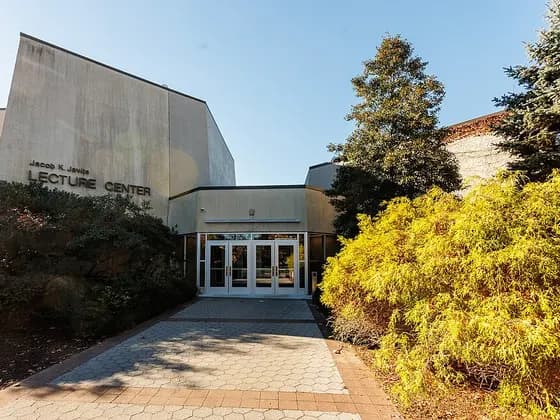
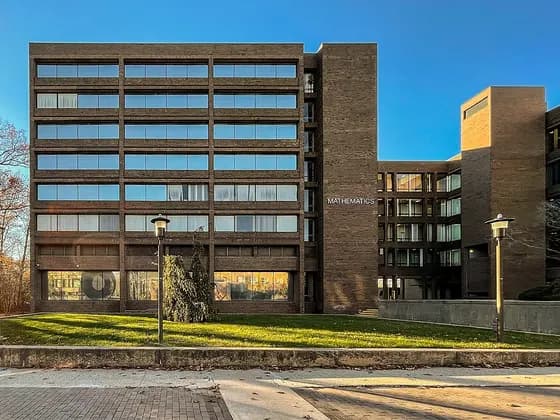
Stony Brook, NY, USEst. 1971

Renaissance School of Medicine at Stony Brook University (MD) Medical School - 2027 Entry Requirements & Interview Format

The Renaissance School of Medicine at Stony Brook University, established in 1971 and located on the Stony Brook campus in Suffolk County, Long Island, is a major public medical school with strong academic medicine and research strengths. Affiliated with Stony Brook University Hospital — a Level I Trauma Center and the only tertiary care referral centre on the eastern half of Long Island — the school trains approximately 135 students per year. Clinical training extends across multiple Long Island and New York City hospitals. The school is known for a strong research culture, a collaborative curriculum, and competitive residency matches into academic programmes nationally.

Entry Requirements

What you need to apply to Renaissance School of Medicine at Stony Brook University (MD).

Admission overview
Bachelor's degree and MCAT required. Prerequisite science coursework in biology, chemistry (general and organic), physics, and mathematics. Applications via AMCAS. The school values research experience, academic strength, clinical exposure, and community service. In-state applicants are given preference consistent with SUNY mission.
MCAT median
516 (range 511–521)
GPA median
3.89 overall / 3.86 science (BCPM)
Acceptance rate
2.2%
Class size
135
In-state preference
Strong — primarily in-state
In-state matriculants
80%
CASPer
Not required
Holistic review emphasis
Research experience, academic strength, clinical exposure, and alignment with the school's public mission.
Notes
Estimates from public AAMC FACTS / AACOMAS / ADEA AADSAS / class-profile; verify current cycle.
Specialities offered
Cancer Biology, Neuroscience, Cardiovascular Medicine, Emergency Medicine, Surgery

Interview Format

How Renaissance School of Medicine at Stony Brook University (MD) interviews applicants.

Format
Hybrid MMI plus traditional panel — MMI stations followed by a panel interview
Interview window
September–March
Decision date
March 30 (AAMC standard)
Post-interview chances
Approximately 15–25% of interviewed applicants receive an offer. In-state applicants have higher post-interview conversion rates consistent with SUNY in-state preference. Estimates based on publicly available data; verify with admissions.

What to expect at a Renaissance School of Medicine at Stony Brook University (MD) interview

Stony Brook Renaissance SOM uses a hybrid interview format combining Multiple Mini Interview stations with traditional panel sessions. Applicants typically complete four to six MMI stations of approximately eight minutes each, followed by a one-on-one or panel traditional interview with faculty. Stations cover ethical scenarios, communication tasks, and reflective questions. The traditional session allows faculty to probe application-specific experiences in depth. The full interview day includes an admissions presentation, student panel, and tour of Stony Brook University Hospital, a major academic medical centre on Long Island.

What makes Renaissance School of Medicine at Stony Brook University (MD) different

Stony Brook Renaissance SOM is the flagship SUNY medical school on Long Island, co-located with Stony Brook University's major research enterprise and a Level I Trauma Center. The school has particular strengths in biomedical research, cancer biology (Stony Brook Cancer Center), and neuroscience. A strong MD/PhD programme is available through the university's nationally competitive graduate programmes.

Tutor insight

Stony Brook's hybrid MMI + traditional format requires dual preparation: practise timed eight-minute structured responses for MMI stations while also preparing for open-ended application-specific probing in the traditional session. The school's research culture is genuine — if you have research experience, be ready to discuss it at depth; if you do not, prepare to articulate your research interests coherently. As a SUNY public school, in-state candidates are strongly favoured, but the school welcomes out-of-state applicants with clear ties to the region or strong research backgrounds. The Level I Trauma Center and cancer research infrastructure are selling points worth referencing in your secondary essays.
Prometheus
595 medicine questions inside

Interview questions matched to Renaissance School of Medicine at Stony Brook University (MD)

Two questions our tutors flagged as a strong fit for Renaissance School of Medicine at Stony Brook University (MD)’s interview style. Try answering them out loud, then open Prometheus for the model answers and follow-up tips.

HardPanel · MMIQ1

Cultural Humility: Race-Based Medicine and Algorithmic Bias

Medical algorithms -- such as the kidney function estimation equation (eGFR) and the Vaginal Birth After Caesarean calculator -- have historically incorporated race as a variable. Research has shown that including race in these equations can systematically underestimate disease severity in Black patients, resulting in delayed specialist referrals and treatment. How do you think about the appropriate use of race in clinical medicine, and what does the removal of race from these algorithms mean for clinical practice?

Likely follow-up · What is the difference between biological race and socially assigned race, and why does that distinction matter for clinical decision-making?

3 expert tips in Prometheus
MediumPanelQ2

MCAT: Biological Versus Social Models of Disease

The MCAT's Psychological, Social, and Biological Foundations section asks applicants to understand the biopsychosocial model as an alternative to a purely biomedical model of disease. Using the example of Type 2 diabetes, explain how the biopsychosocial model changes both the explanation and the treatment approach.

Likely follow-up · What are the limitations of the biopsychosocial model in clinical practice?

3 expert tips in Prometheus

Ready to practise Renaissance School of Medicine at Stony Brook University (MD)?

Book a school-specific mock interview with Renaissance School of Medicine at Stony Brook University (MD) preselected.

Book a Renaissance School of Medicine at Stony Brook University (MD) mock

Renaissance School of Medicine at Stony Brook University (MD) - Frequently asked questions

Bachelor's degree and MCAT required. Prerequisite science coursework in biology, chemistry (general and organic), physics, and mathematics. Applications via AMCAS. The school values research experience, academic strength, clinical exposure, and community service. In-state applicants are given preference consistent with SUNY mission.

Hybrid MMI plus traditional panel — MMI stations followed by a panel interview. Stony Brook Renaissance SOM uses a hybrid interview format combining Multiple Mini Interview stations with traditional panel sessions. Applicants typically complete four to six MMI stations of approximately eight minutes each, followed by a one-on-one or panel traditional interview with faculty. Stations cover ethical scenarios, communication tasks, and reflective questions. The traditional session allows faculty to probe application-specific experiences in depth. The full interview day includes an admissions presentation, student panel, and tour of Stony Brook University Hospital, a major academic medical centre on Long Island.

Renaissance School of Medicine at Stony Brook University (MD) typically interviews in September–March.

Decisions are released March 30 (AAMC standard).

Stony Brook Renaissance SOM is the flagship SUNY medical school on Long Island, co-located with Stony Brook University's major research enterprise and a Level I Trauma Center. The school has particular strengths in biomedical research, cancer biology (Stony Brook Cancer Center), and neuroscience. A strong MD/PhD programme is available through the university's nationally competitive graduate programmes.
Reviewed by Isaac Butler-King, medical student at the University of Glasgow. Last reviewed: 6 June 2026 · NextGen MedPrep editorial team
Renaissance School of Medicine at Stony Brook University (MD) | MCAT median 516, GPA & Interview Format | NGMP