
Alabama College of Osteopathic Medicine Interview
Format, Questions & Prep Tips
Alabama College of Osteopathic Medicine medicine interviews for 2027 entry are a traditional interview, held September 2026 through February 2027. Published figures: Annual DO class size ~158; Tuition (2025–26) ~USD 52,000/year (estimated).
- Institution
- Alabama College of Osteopathic Medicine
- Interview (2027 entry)
- September through February
- Decisions (2027 entry)
- Rolling decisions, typically 4–8 weeks post-interview

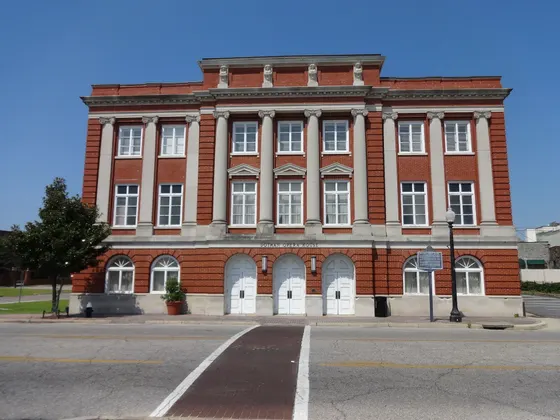
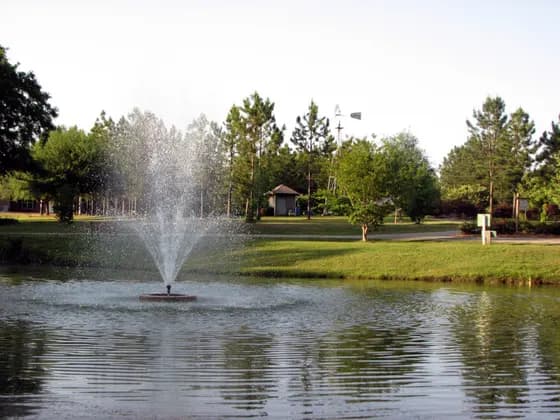
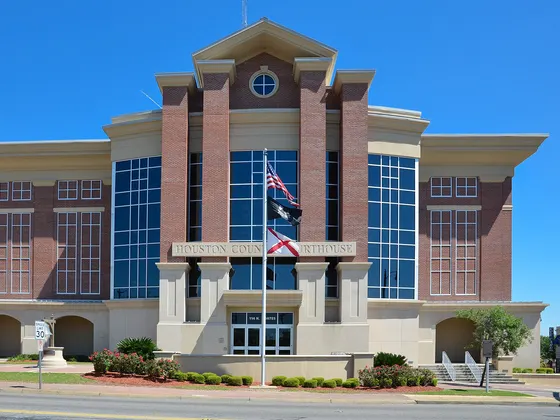
Photo: DrEverettVScott · CC BY-SA 4.0 · cropped
Photo: Michael Rivera · CC BY-SA 4.0 · Photo: Cvernon1 · CC BY-SA 3.0 · Photo: Wmr36104 · CC BY-SA 3.0
How to get into Alabama College of Osteopathic Medicine (DO) medicine
Step-by-step: entry requirements, admission tests, personal statement, interview format and the key deadlines.
Open the guide →Alabama College of Osteopathic Medicine (DO) entry requirements
Admission profile, interview format, decision dates and what makes Alabama College of Osteopathic Medicine (DO) different.
See the profile →The Alabama College of Osteopathic Medicine (DO) medicine interview
Alabama College of Osteopathic Medicine (ACOM) uses a traditional interview format — typically one-on-one or panel sessions with faculty at its Dothan, Alabama campus. ACOM was founded in 2013 with an explicit mission to address the physician shortage in rural Alabama and the broader Southeast, and every aspect of the interview reflects this mission.
AACOMAS is the primary application service. CASPer is not currently required by ACOM (verify for current cycle).
ACOM’s partnership with Southeast Health gives students immediate exposure to a regional health system serving underserved rural communities. Interviewers probe whether applicants genuinely want to practice in communities like those surrounding Dothan — small cities, agricultural counties, and medically underserved areas — rather than treating ACOM as a backup to urban programs.
Alabama College of Osteopathic Medicine (DO) interview at a glance (2027 entry)
| Annual DO class size | ~158 |
|---|---|
| Interview format | Traditional — faculty and/or student session |
| CASPer required | No |
| Application system | AACOMAS primary + ACOM secondary |
| Tuition (2025–26) | ~USD 52,000/year (estimated) |
| Interview window | September–February |
Interview format
- Traditional one-on-one or panel interview; approximately 30–45 minutes.
- Interview day includes campus tour and interaction with current students.
- No MMI.
Working towards the MCAT score Alabama College of Osteopathic Medicine (DO) expects? Build a week-by-week plan from your test date — free for the first two weeks.
Sample interview questions
ACOM was founded to address the physician shortage in rural Alabama. How does that mission connect to your own career goals?
Be specific about rural medicine commitment. Reference personal experience in rural or underserved settings, not just abstract admiration for ACOM's mission. Interviewers can tell when commitment is genuine.
Why osteopathic medicine rather than an MD program? What specifically draws you to the DO degree and OMM/OMT?
Demonstrate knowledge of Andrew Taylor Still's philosophy, AACOMAS vs. AMCAS, full practice rights for DOs, and your experience with or understanding of osteopathic manipulative treatment.
A patient in your rural clinic refuses a recommended test due to cost concerns. How do you approach this?
Address patient autonomy, shared decision-making, social determinants of health, rural resource limitations, and practical steps such as patient assistance programs or federally qualified health centers.
Describe a meaningful experience providing care or service to an underserved community. What did it teach you about the needs of rural or low-income patients?
Authenticity matters. Draw on specific experiences — free clinics, community health fairs, migrant health, mission trips — and reflect on what you learned about structural barriers to healthcare.
What do you know about Southeast Health and how does its role as ACOM's clinical partner shape your view of training here?
Demonstrate research into Southeast Health: its service area, patient demographics, and how the affiliation gives ACOM students early high-volume clinical exposure in a genuine community health setting.
Tell me about a time you had to explain a complex medical or scientific concept to someone without a medical background. How did you approach it?
Health literacy is critical in rural underserved settings. Show empathy, patience, and ability to tailor communication to patient needs.
Describe a situation where you worked on a team that experienced conflict. How did you contribute to resolving it?
AAMC Teamwork and Collaboration competency. Show you can work constructively with peers, accept feedback, and maintain relationships under stress.
You observe a classmate providing incorrect information to a patient during a clinical rotation. What do you do?
Patient safety first; professional responsibility to act; how you would speak to the classmate directly before escalating; the importance of a culture of safety in clinical training.
What is your greatest weakness as a future physician, and what are you doing to address it?
Genuine self-awareness (AAMC Commitment to Learning and Growth competency). Choose something real, not a humble-brag. Show active steps taken to improve.
Rural communities in Alabama face significantly higher rates of diabetes, heart disease, and maternal mortality than urban areas. What do you think are the root causes, and how can a physician address them?
Social determinants of health, food deserts, transportation barriers, insurance gaps, and the role of primary care physicians as community anchors in rural health system design.
Role-play: I am a patient at your rural Alabama clinic with poorly controlled diabetes. You have recommended I start insulin, and I am telling you I am scared of needles and cannot afford another medication. The assessor will play the patient — counsel me.
ACOM uses a traditional, often conversational format, but be ready to demonstrate patient interaction. Address the fear and the cost separately, offer concrete options (patient-assistance programs, FQHC sliding scale, simplified regimens), and use a whole-person osteopathic approach. Respond to what the patient actually says rather than reciting a plan.
You are shown data showing that several rural counties around Dothan have far higher diabetes and maternal-mortality rates and far fewer physicians per capita than urban Alabama. What does this association suggest, and what would you want to know before acting on it?
Connect physician shortage and outcomes through access, late presentation, and chronic-disease management gaps, while avoiding the claim that the data alone proves causation. Note confounders (poverty, food access, insurance) and what additional data would help. ACOM's rural mission makes this kind of population-health reasoning highly relevant.
What is the current evidence base for osteopathic manipulative treatment (OMT)? Where is the evidence strongest, and where is it weak?
Be honest and specific. The strongest evidence supports OMT for conditions such as low back pain; evidence for many other applications is limited or mixed. Demonstrating that you can discuss OMT's evidence critically — rather than overselling it — signals genuine osteopathic understanding, which ACOM values.
A senior physician at your rotation dismisses OMT as 'unscientific' in front of a patient who has just benefited from it. How do you handle this?
Maintain interprofessional respect: do not contradict the colleague aggressively in front of the patient, but reassure the patient and raise your perspective with the physician privately, citing the evidence base where it exists. Shows professional maturity and a grounded — not defensive — commitment to osteopathic practice.
A patient in a small Alabama town is hesitant about a referral to a specialist in Birmingham because of the distance and missing work. How do you respond?
Take the access barrier seriously, explore telehealth and co-management with the specialist, discuss transportation or scheduling solutions, and reassess the referral's urgency. Demonstrate that you see the rural generalist as the patient's coordinator and advocate — central to ACOM's training mission.
Practise the Alabama College of Osteopathic Medicine (DO) interview
Rehearse the real format before the day — on demand with our AI interviewers, or live with a tutor.
Sit a mock with photoreal AI interviewers — any time
A timed MMI or panel interview on video — American & international voices — with interviewers who listen, react and press with follow-ups. Rubric-scored feedback and a replay the moment you finish.




Live mocks with a tutor who’s been in the room
A full Alabama College of Osteopathic Medicine (DO)-style mock with a medic or dentist tutor — honest scoring against real marking criteria, a station-by-station debrief and a written action plan.
Book a mock interviewHow to prepare for the Alabama College of Osteopathic Medicine (DO) interview
Common pitfalls to avoid
Alabama College of Osteopathic Medicine (DO) interview — frequently asked questions
Sources & official admissions information
Ready to nail your Alabama College of Osteopathic Medicine (DO) interview?
Book a mock interview with a tutor who knows the US interview formats, orpractice unlimited stations from our interview question bank.