
USA Whiddon College of Medicine Interview
Format, Questions & Prep Tips
USA Whiddon College of Medicine medicine interviews for 2027 entry are a traditional interview. Published figures: Annual MD class size ~85–90; Applications received ~2,500–4,000 per cycle; Interview format Traditional one-on-one with faculty, ~30 min.
- Institution
- Frederick P. Whiddon College of Medicine at the University of South Alabama
- Interview (2027 entry)
- September through March; rolling invitations after secondary review
- Decisions (2027 entry)
- Rolling decisions; most offers extended by January–February; waitlist movement through May

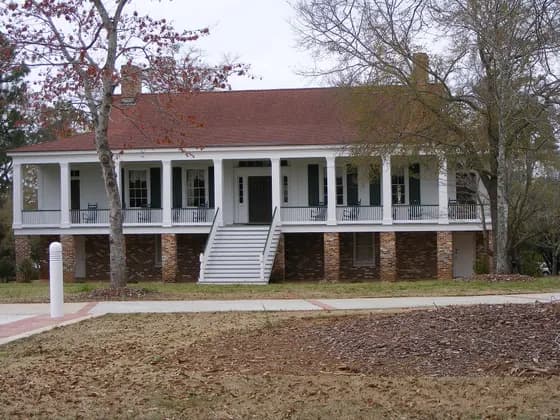
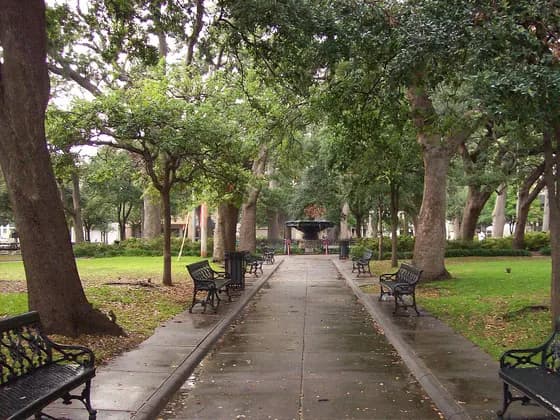

Photo: Jagboy13 · Public domain · cropped
Photo: Jagboy13 · Public domain · Photo: Altairisfar · Public domain · Photo: Tim D Williamson · CC BY-SA 4.0
How to get into USA Whiddon College of Medicine (MD) medicine
Step-by-step: entry requirements, admission tests, personal statement, interview format and the key deadlines.
Open the guide →USA Whiddon College of Medicine (MD) entry requirements
Admission profile, interview format, decision dates and what makes USA Whiddon College of Medicine (MD) different.
See the profile →The USA Whiddon College of Medicine MD program
Integrated, 4 years, clinical rotations across Mobile and community practices throughout Alabama.
See the program →The USA Whiddon College of Medicine (MD) medicine interview
The Frederick P. Whiddon College of Medicine uses a traditional one-on-one interview format. Applicants meet individually with faculty physicians in sessions of approximately 30 minutes. Interviewers review the full application in advance and direct questions at the applicant’s specific background, motivation for medicine, and interest in Gulf Coast healthcare.
As a regional school with a community and primary care mission, Whiddon interviewers pay particular attention to applicants' understanding of coastal Alabama’s healthcare challenges — rural access, the uninsured population, and environmental health issues unique to the Gulf region.
The small class size (~85 students) means the committee evaluates interpersonal fit closely. Being warm, clear, and self-aware rather than purely academic in tone tends to resonate well with Whiddon interviewers.
USA Whiddon College of Medicine (MD) interview at a glance (2027 entry)
| Annual MD class size | ~85–90 |
|---|---|
| Applications received | ~2,500–4,000 per cycle |
| Interview format | Traditional one-on-one with faculty, ~30 min |
| In-state preference | Strong (~85% Alabama residents) |
| Curriculum | Integrated 4-year MD |
| Application system | AMCAS + secondary |
| Interview window | September–March (rolling) |
Interview format
- Traditional one-on-one interview with a faculty physician or clinician.
- Sessions run approximately 30 minutes; some applicants have two separate interviews.
- Interviewers read your application file in advance — expect questions referencing your personal statement and activities.
- Student-led campus tour of the medical campus and USA Health University Hospital.
- Financial aid information session included in the interview day.
- No MMI stations — conversational and application-focused format throughout.
Working towards the MCAT score USA Whiddon College of Medicine (MD) expects? Build a week-by-week plan from your test date — free for the first two weeks.
Sample interview questions
Why the Whiddon College of Medicine and why Mobile, Alabama specifically?
Reference the Gulf Coast community health mission, USA Health as a regional trauma center, the close faculty-student environment, and your ties to or interest in the region. Avoid generic answers about class size or rankings.
What experience solidified your commitment to medicine and how did it shape what kind of physician you want to be?
Be specific and reflective. Whiddon values applicants oriented toward service. Show how the experience revealed something about you, not just about medicine.
A patient you are seeing in a rural clinic does not have health insurance and cannot afford the medication you have prescribed. What do you do?
Address patient assistance programs, 340B drug pricing, community health centers, generic alternatives, and the physician's advocacy role. Do not simply say "refer to social work" — show practical knowledge.
You notice that a senior colleague frequently dismisses patient complaints without thorough assessment. How do you handle this?
Address duty to patient, power dynamics, speaking up in a respectful and evidence-based way, and escalation pathways if the issue persists.
Tell me about a time you had to deliver difficult news to someone. What did you learn about effective communication?
STAR structure. Focus on empathy, active listening, clarity without jargon, and checking for understanding. Acknowledge what was hard.
What do you see as the greatest healthcare challenge facing the Gulf Coast or rural Alabama, and how do you plan to contribute?
Show specific knowledge:
- rural hospital closures
- high rates of cardiovascular disease and diabetes
- environmental health from Gulf industries
- Medicaid non-expansion impacts
Tell me about a research or academic project you are proud of. What was your specific contribution?
Be concrete about your role and what you learned. Whiddon values intellectual engagement even if research experience is limited — frame any scholarly work meaningfully.
Should physicians be required to treat patients whose lifestyle choices — smoking, obesity, opioid use — directly contribute to their illness? Why or why not?
Address non-judgmental care, professionalism, the ethics of patient autonomy versus beneficence, and social determinants of health that underlie lifestyle factors.
How would you handle a patient who refuses a blood transfusion on religious grounds in an emergency situation?
Discuss patient autonomy as a cornerstone of medical ethics, surrogate decision-making if the patient is incapacitated, legal frameworks in Alabama, and the physician's personal values versus professional duty.
Where do you see yourself practicing in 15 years, and how does Whiddon prepare you for that path?
Be honest and forward-thinking. If you are interested in primary care, community medicine, or the Gulf Coast — say so explicitly and connect it to Whiddon's curriculum and clinical sites.
You are seeing a patient at a rural Gulf Coast clinic who cannot afford the medication you have just prescribed. Talk with him about what to do next.
Be practical and specific — patient assistance programs, 340B pricing, generic alternatives, and community health center resources. Whiddon values applicants who problem-solve within the safety net rather than simply deferring the patient elsewhere.
You are shown data showing higher rates of cardiovascular disease and diabetes along coastal and rural Alabama compared with the state's urban centers. What might explain this and what would you want to know?
Read it through access, the uninsured population, food environment, environmental exposures from Gulf industry, and rural hospital closures. Distinguish association from causation and identify what further data would clarify the drivers.
A patient you have come to know well over several visits has just received a serious new diagnosis and is sitting quietly, clearly frightened. Talk with her.
Whiddon's small, relational culture prizes warmth. Acknowledge the fear, deliver information in manageable pieces, allow silence, and check understanding with empathy rather than rushing to logistics or false reassurance.
Tell me about an academic or scholarly experience that genuinely engaged you, even if it was not formal research. What did it teach you about how you learn?
Whiddon values intellectual engagement even where research experience is limited. Be concrete about your role and reflective about your learning style and resilience, rather than overstating a project's scale.
Explain to a patient with limited health literacy, in plain language, why managing their diabetes now matters for preventing complications years down the line.
Use everyday language, a concrete analogy, and teach-back, and acknowledge the cost and access barriers many Gulf Coast patients face. Show empathy and cultural humility, not lecturing.
Practise the USA Whiddon College of Medicine (MD) interview
Rehearse the real format before the day — on demand with our AI interviewers, or live with a tutor.
Sit a mock with photoreal AI interviewers — any time
A timed MMI or panel interview on video — American & international voices — with interviewers who listen, react and press with follow-ups. Rubric-scored feedback and a replay the moment you finish.






Live mocks with a tutor who’s been in the room
A full USA Whiddon College of Medicine (MD)-style mock with a medic or dentist tutor — honest scoring against real marking criteria, a station-by-station debrief and a written action plan.
Book a mock interviewHow to prepare for the USA Whiddon College of Medicine (MD) interview
Common pitfalls to avoid
USA Whiddon College of Medicine (MD) interview — frequently asked questions
Sources & official admissions information
Ready to nail your USA Whiddon College of Medicine (MD) interview?
Book a mock interview with a tutor who knows the US interview formats, orpractice unlimited stations from our interview question bank.