
The USA Whiddon College of Medicine MD program
What you actually study, and where you will be
USA Whiddon College of Medicine's M.D. is a 4-year program with an integrated curriculum, with patient contact from Year 1 and clinical rotations in Mobile and community practices throughout Alabama (2027 entry). Two pre-clerkship (classroom) years on the main campus in Mobile cover foundation modules, then the body one organ system at a time, alongside clinical skills training and clinic days with practicing physicians. Years 3 and 4 are spent in USA Health hospitals and clinics and in community practices: seven core clerkships, then four-week rotations. An optional Primary Care Pathway ties up to 10 students a class to one community clinic.
- Degree
- M.D.
- Length
- 4 years
- Teaching
- Integrated
- Clinical contact
- Year 1

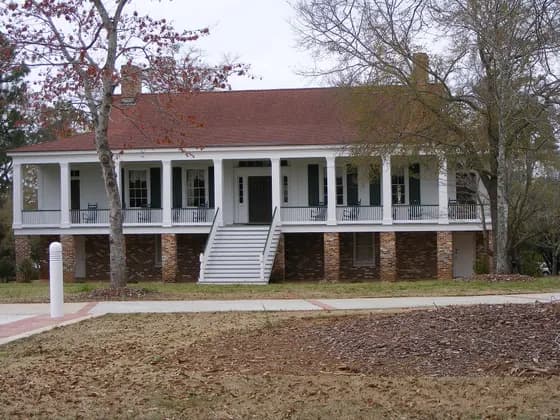
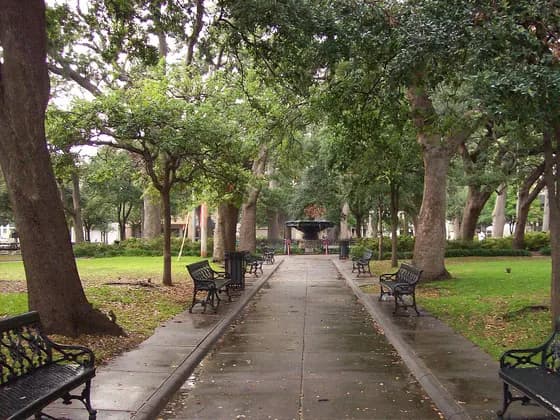

Photo: Jagboy13 · Public domain · cropped
Photo: Jagboy13 · Public domain · Photo: Altairisfar · Public domain · Photo: Tim D Williamson · CC BY-SA 4.0
The USA Whiddon College of Medicine MD program at a glance (2027 entry)
The Frederick P. Whiddon College of Medicine is the medical school of the University of South Alabama (USA) in Mobile, on the Gulf Coast. Its first class of 25 students started in January 1973, and its four-year M.D. program now enrolls approximately 80 students a year. You spend two years mainly on the main campus, then train in the hospitals and clinics of USA Health, the university's academic health system, and in community physicians' offices.
The first two years are the pre-clerkship phase, the classroom-based part of the program, taught in integrated modules. In the cardiovascular module, for example, you learn how the heart works, fails and is treated while practicing how to evaluate heart sounds and talk with patients. The curriculum is competency-based, framed around six core competencies set by the American Board of Medical Specialties and the Accreditation Council for Graduate Medical Education (ACGME), which accredits residency programs. Residency is the specialty training that follows medical school.
Patients appear from year 1, through simulated patients (trained actors) and assigned days with physicians in practice. Years 3 and 4 form the clerkship phase. Clerkships are the core clinical rotations, where you join hospital and clinic teams and care for patients under supervision: seven in year 3, then a fourth year of four-week rotations that you largely choose. An optional Primary Care Pathway links up to 10 students in each class to one community clinic in a rural or underserved area for four years.
The program is accredited by the Liaison Committee on Medical Education (LCME), which accredits M.D. programs in the United States. As of October 14, 2026, the LCME directory lists the program as fully accredited, with initial accreditation in 1972 and the next survey in 2026-27. The college's survey visit is scheduled for October 19-21, 2026, with the LCME's summary report expected in December 2026. LCME accreditation is what makes an M.D. program's students eligible to sit the United States Medical Licensing Examination (USMLE).
| Degree | M.D. (Doctor of Medicine) |
|---|---|
| Program length | 4 years: two pre-clerkship years, then two clerkship years |
| Class size | Approximately 80 a year; the Class of 2030 has 34 men and 39 women |
| Where you study | Main campus in years 1-2; USA Health and community practices in years 3-4 |
| Teaching style | Integrated organ-system modules: lectures, small groups, team-based learning, labs |
| Anatomy | Dissection, prosections and imaging; ultrasound sessions in the Gross Anatomy Laboratory |
| First patient contact | Year 1: simulated patients and clinic days with a primary care physician |
| Step 1 timing | Before year 3, after an eight-week study block in May and June |
| Grading | Honors, Pass or Fail in years 1 to 3; Pass/Fail in year 4 |
| Accreditation | LCME, full; survey visit scheduled for October 19-21, 2026 |
What makes the USA Whiddon College of Medicine MD program different
An optional primary care track built around one clinic
The Primary Care Pathway trains its students at the same community clinic, with the same supervisors, for four years. That includes a paid eight-week summer quality improvement project at the clinic and coaching in leadership.
Nutrition across four years, including culinary medicine
Every student takes culinary medicine sessions in a teaching kitchen, turning nutrition science into practical meal plans for patients. Nutrition runs from metabolism in the early modules to diet-related care on clerkships. In 2026 the college joined a federal initiative whose schools commit to at least 40 hours of nutrition education, or an equivalent, from fall 2026.
A simulation center that opened in 2024
The Whiddon College of Medicine Simulation Center has 12 clinic-style rooms for standardized patient (trained actor) encounters and six hospital rooms with full-size patient simulators, all able to record you for debriefing. In its first year it ran 139 clerkship sessions for medical students and earned provisional accreditation from the Society for Simulation in Healthcare.
Clinic days with a practicing physician from year 1
CLINIC, the Clinically Integrated Introductory Course, assigns you to a preceptor, a physician who teaches you in their practice, each semester of years 1 and 2. You keep a logbook, write reflections and complete an evidence-based medicine assignment prompted by a patient you met there.
Research honors noted on your diploma
The M.D. with Research Honors Program lets you pursue one project in depth with a faculty mentor. Completing it adds the notation Research with Honors to your transcript and diploma.
How USA Whiddon College of Medicine teaches medicine
Each organ-system module draws the sciences together around one part of the body, from development and normal function to disease and treatment, and clinical cases frame much of the teaching. Modules run one after another, each offered once a year. Some subjects run across modules: a medical ethics curriculum concentrated in the pre-clerkship years and a point-of-care ultrasound curriculum that teaches ultrasound as a bedside tool.
A college policy approved in January 2026 caps lectures at an average of 12 contact hours a week and puts at least 25% of in-class hours in small groups, with 40% or more recommended. Lectures are optional unless a module director says otherwise, though attendance is expected. Team-based learning, flipped classroom, anatomy lab (including ultrasound sessions), clinical skills and CLINIC sessions are required.
In years 3 and 4, residents teach alongside faculty on the wards and in clinics, and every resident working in a clerkship must complete an orientation on teaching students each year.
The ways you will learn
| Lectures and independent learning | Independent learning assignments, such as readings, slides and problem sets done outside class, should each take no more than about an hour on average on first pass, not counting study time. |
|---|---|
| Small groups and team-based learning | Small groups work through clinical cases. In team-based learning, small teams solve problems together after preparing beforehand; flipped classroom sessions also need preparation. Peer evaluations of your teammates, twice in year 1 and once in year 2, give feedback but stay off your record. |
| Clinical skills sessions | With simulated patients you learn to run an encounter, take a history, examine, rank possible diagnoses, present findings aloud and write a patient note. Skills are tested in Objective Structured Clinical Examinations (OSCEs), circuits of timed patient stations. |
| Simulation | Scenarios with full-size patient simulators and practice on task trainers, models for rehearsing procedures and examinations, with structured debriefings. The Simulation Center also runs sessions inside University Hospital and Children's & Women's Hospital. |
| Ward and clinic teaching | On clerkships you learn by caring for patients under supervision. Internal medicine, for example, has daily rounds with residents and the attending physician, plus weekly conferences, simulation and board review lectures. |
A typical week on the USA Whiddon College of Medicine program
College policy shapes the pre-clerkship week. Sessions fall between 8 a.m. and 5 p.m., Monday to Friday, with noon to 1 p.m. kept for lunch when possible. Each week should average at least two free half-days for independent learning.
Scheduled sessions include lectures, labs, small groups, and clinical skills and OSCE sessions. Modules have regular college-written exams, which the policy calls biweekly, plus quizzes, and each module ends with an exam built from National Board of Medical Examiners (NBME) questions. Exam days usually have nothing else scheduled.
Under a college policy approved on January 21, 2026, clerkship duty hours are modeled on residents' rules: at most 80 hours a week, with a 24-hour break each week, both averaged over four weeks. A shift can run 24 hours plus up to four for handoffs and teaching, followed by at least 14 hours off; otherwise the minimum between shifts is 8 hours. The 2026-27 handbook, by contrast, sets a 16-hour limit on consecutive hours.
On the obstetrics and gynecology clerkship, case-based teaching happens over weekday lunches, and Fridays bring team-based learning and simulation labs. Each four-week fourth-year block starts on a Monday, ends on a Friday and should average at least one day in seven free of clinical duties.
How anatomy is taught at USA Whiddon College of Medicine
Anatomy is taught within the modules by anatomical sciences faculty. It starts in the first module, Patients and Human Structure, which introduces the body's structure with patients in mind. Dissection is part of the module, along with observation and common types of medical imaging. The bodies come from donors to the university's Anatomical Gifts Program and are introduced to the class as your first patients.
Later modules return to anatomy region by region. The Musculoskeletal System module studies the limbs through anatomy labs and anatomic and radiological images. The Respiratory System module covers the airways, chest wall and thoracic cavity through prosections, specimens dissected in advance to display structures, combined with radiologic imaging. Other modules cover development, such as how the reproductive tract forms, and the nervous system.
Anatomy faculty build radiologic and ultrasound imaging into clinical anatomy, and one leads the point-of-care ultrasound curriculum. Ultrasound sessions are held in the Gross Anatomy Laboratory. Anatomy faculty also teach advanced anatomy electives, and the Anatomical Gifts Program holds memorials where students and faculty can thank donors' families.
When you first meet patients at USA Whiddon College of Medicine
Your first patients are simulated: in Clinical Skills 1, trained actors portray patients with particular conditions. Real patients arrive through CLINIC, which the 2026-27 curriculum chart describes as direct patient contact at regional ambulatory clinics. Its specialty settings in year 2 also let you explore careers early. A 2021 college article said CLINIC began in 2017, pairing students with local family medicine, pediatric and internal medicine practitioners.
The modules add clinical experiences too. In the Urinary System module, for example, you learn about kidney disease partly by evaluating patients directly. Clinical Skills 2 ends with a primer on rounding and an introduction to the electronic medical record.
Outside the curriculum, the USA Student-Run Free Clinic at the Salvation Army in downtown Mobile reopened in April 2026. There, on weekday afternoons, preclinical students take histories and examine patients, then present them to a supervising physician.
Full-time patient care starts with clerkships in late June after year 2. You are supervised in every aspect of care: with approval you take histories, examine patients and enter findings in the medical record, and orders you write need a co-signature. The year 4 acting internship moves you toward the role of a first-year resident.
Year by year at USA Whiddon College of Medicine
- Year 1
Foundations, then the first organ systems
Year 1 starts with orientation in late July; in 2026, classes began on August 3. Six modules run back to back until late May. Module lengths, in weeks, are from the 2026-27 curriculum chart.
- Patients and Human Structure (6 weeks): the biopsychosocial model, which considers a patient's biology, psychology and social circumstances together, plus body structure, development across the lifespan and communicating with patients.
- Principles of Foundational Medicine (7 weeks): basic mechanisms of human biology, psychology and social systems, and principles of health and disease.
- Principles of Infection and Immunity (7 weeks): microbiology and the immune system, and how immune defects cause cancer, immunodeficiency, allergy, autoimmunity and infection.
- Musculoskeletal System (6 weeks): skin, muscle, connective tissue and the limbs, with team-based learning, anatomy labs and clinical skills labs.
- Cardiovascular System (8 weeks): heart function and rhythm, blood pressure, vascular disease, risk factors, treatment and disparities in access to care, with history taking and heart examination practice.
- Urinary System (5 weeks): the kidneys, bladder and prostate, from development and normal function to drug effects and infectious, cancerous and immune disease.
- Clinical Skills 1, a year-long course, with primary care CLINIC days. The college's web calendar lists first-year OSCEs in November and April; the handbook places OSCE 1, a gateway exam you must pass to progress, at the end of the first year.
- Summer: an optional eight-week research block in June, or the eight-week Primary Care Pathway Summer Experience.
- Year 2
More organ systems, then Step 1
Year 2 runs from early August to late April; in 2026-27 the spring semester ends on April 23.
- Digestive System (6 weeks): the gut, pancreas, liver and biliary tree, nutrition and metabolism, with small-group cases, labs and hands-on culinary medicine.
- Respiratory System (6 weeks): gas exchange, obstructive and restrictive disease, pulmonary vascular disease, lung cancer and infection, with prosections, clinical skills labs and time with patients who have chronic lung disease.
- Endocrine and Reproductive Systems (8 weeks): reproduction, sexual health, breast disease and hormone disorders such as diabetes and thyroid disease. Trained instructors teach pelvic, breast and male genital examinations.
- Neuroscience and Behavioral Science (10 weeks): the nervous system and neurologic disorders, then psychiatric conditions, with the neurologic examination and psychiatric assessment.
- Hematology and Oncology (4 weeks): blood cancers such as the leukemias, how common cancers develop, and screening and prevention. Teaching is mainly small-group cases and independent study, with an emphasis on working in teams with other health professionals.
- Clinical Skills 2, the second year-long course, with specialty CLINIC days: oral presentations, problem lists and prioritized differential diagnoses. OSCEs 2 and 3 come in the fall and spring.
- In spring, a class meeting explains the clerkship lottery, and you submit proposed third-year schedules.
- Step 1 study block (8 weeks, May and June), which includes two required NBME practice exams. Step 1 is the USMLE's basic science exam.
- Year 3
Seven core clerkships
Third year starts in late June with orientation week and the White Coat Ceremony. In 2026, orientation began on June 22, the ceremony was on June 24 and the semester began on June 29. Seven clerkships follow in an order set by lottery, each ending with an NBME shelf exam, a national subject test.
- Internal Medicine (12 weeks): inpatient, ambulatory and consultative medicine. The average team is one attending physician, one resident, two to three interns (first-year residents) and three students.
- Surgery (8 weeks): includes three two-week rotations on services such as trauma, colorectal and general or GI surgery, plus basic surgical skills labs.
- Pediatrics (8 weeks): general and subspecialty clinics, the general wards, the newborn nursery and the pediatric hematology and oncology wards.
- Family Medicine (6 weeks): mostly one-on-one with a community faculty member in their own practice, plus a scored OSCE with a standardized patient.
- Obstetrics and Gynecology (6 weeks): labor and delivery, night float (a run of overnight shifts), high-risk obstetrics and ambulatory clinics, and gynecologic surgery and oncology. Sites are Children's & Women's Hospital, Center Street Clinic, the Women's Center and Mostellar Medical Clinic.
- Psychiatry (4 weeks): adult inpatient and outpatient services, child and adolescent psychiatry, consultation-liaison (psychiatric opinions for patients on other hospital services) and emergency psychiatry. Doctors from AltaPointe Health, a regional community behavioral health provider, lead the clerkship; the bulletin names its BayPointe Hospital among the settings.
- Neurology (4 weeks): inpatient and outpatient work, including hospital and emergency department consultations and stroke care. A one-month selective can replace it, moving neurology to year 4.
- In May come a practice OSCE and the Final OSCE. Rising fourth-years can present a case poster at the M3 Case Symposium.
- Year 4
Electives, acting internship and the Match
Fourth year begins in late June with 11 four-week blocks, and you need at least 32 weeks of courses to graduate. In 2026-27, Match Day, when students learn where they will train as residents, is March 19.
- Required: an acting internship, a specialty rotation, a basic science course and the four-week Transition to Residency course, 16 of your 32 weeks.
- Four further four-week electives, planned with your faculty advisor.
- Three four-week Continuous Professional Development blocks on top of the 32 weeks of courses; you choose their dates, and students often place them in residency interview season.
- Study for Step 2 CK, the USMLE's Clinical Knowledge exam, alongside the first blocks, with the exam due by November 1.
- Graduation also requires an Advanced Cardiovascular Life Support (ACLS) course.
- Primary Care Pathway (optional)
Four years linked to one community clinic
An optional track you apply to in year 1, for students interested in family medicine, internal medicine or pediatrics. On top of the core curriculum you train in population health, interprofessional teams, high-value care, quality improvement, patient safety, behavioral health and leadership. You can withdraw at any time.
- PCP 1 and PCP 2 (years 1 and 2): a small-group series on the core areas plus visits to your assigned clinic. The 2026-27 bulletin counts 20 visits across the year; the Pathway's own page lists 14 clinic days.
- PCP Summer Experience (eight weeks, after year 1): a quality improvement project at your clinic, helping care for patients under your preceptor, with $2,500 for the project.
- PCP 3 (year 3): the ambulatory parts of your family medicine, internal medicine and pediatrics clerkships at the clinic, leadership coaching, and a four-week PCP Selective that moves neurology to year 4.
- PCP 4 (year 4): a primary care acting internship, a primary care basic science course and a practice management capstone in place of the specialty rotation.
How you are assessed at USA Whiddon College of Medicine
Years 1 to 3 are graded Honors, Pass or Fail, with numeric scores behind each grade. In modules, Honors means 94% or more or the top 10% of the class, and Pass means 70% to 93%. Each module grade is 60% the college-written exams held during the module, 30% the final NBME-based exam and 10% quizzes.
That final exam, a customized NBME assessment or miniboard, follows the Step 1 format with questions your teachers choose from an NBME bank. Graded exams are taken on college computers under an Honor Code. Class rank, calculated from module, OSCE and clerkship scores through year 3, can matter for competitive residencies and election to Alpha Omega Alpha, the national medical honor society.
Gateway OSCEs, which you must pass to move on, come at the end of year 1, in the fall and spring of year 2 and at the end of year 3. You need 70% at every station, each usually a standardized patient case, and a failed station must be retaken and passed within 60 days.
The handbook's standard clerkship formula is 50% clinical evaluations, 30% the NBME shelf exam and 20% active learning. It also says shelf scores typically count for 30 to 40%, depending on the clerkship, and some clerkships add graded elements. Shelf scores are compared nationally with students tested at the same point in the year, and you must reach the 8th percentile. Selectives and fourth-year courses are pass or fail, and clerkship directors' comments go into the dean's letter for residency applications.
The USMLE has three Steps, all needed for a license to practice, as the handbook notes. To graduate you must pass Step 1, on the basic sciences and reported pass or fail since January 2022, and Step 2 CK (Clinical Knowledge), scored on a three-digit scale. The college registers you for both. Step 1 comes before year 3, though clerkships can start while you await the result, and Step 2 CK is due by November 1 of year 4.
In August 2026 the USMLE program announced a move to designated testing dates from January 2029, with Step exams offered less often each year. Its June 2026 announcement had set the start for 2028. On the current schedule, a student entering in August 2027 would sit Step 1 in May or June 2029 and owe Step 2 CK by early November 2030. Both fall after the change, and the USMLE has urged schools to review rules on when students must test, so the college's timing rules may change.
- Before Step 1 you take two required NBME practice exams, typically the Comprehensive Basic Science Examination and Self-Assessment, used to predict your result and plan support.
- If allowed to delay Step 1, you take ASA 311, a four-week study course at the start of year 3, and sit the exam before it ends, delaying your clerkships.
- Clinical Skills grades combine OSCE scores (60%), competency-based evaluations rated against a rubric (30%) and CLINIC assignments (10%).
- Each year in years 1 to 3 you also need 20 Continuous Professional Development credits, from activities such as grand rounds, research and service. In years 1 and 2, at least 8 must be community service.
Where you will actually train at USA Whiddon College of Medicine
Clinical training is based in USA Health. Its University Hospital and Children's & Women's Hospital are the college's primary patient care facilities, with University Hospital the main inpatient site for adult care.
University Hospital is a referral center for southwest Alabama, southeast Mississippi and part of northwest Florida, with Level I trauma, burn, stroke, cardiovascular disease and sickle cell disease centers. Children's & Women's is a freestanding hospital for children and women. It has more than 2,500 deliveries a year, a Level III neonatal intensive care unit, a pediatric intensive care unit, high-risk obstetrics and a pediatric emergency center expanded in 2024.
Every third-year clerkship is taken at USA. Clerkship schedules come from a lottery in the spring of year 2: you submit several proposed schedules, and a randomized list assigns them. You can petition within five business days for reasons such as health, caregiving, family changes or disability, but not over the order itself.
Primary Care Pathway students also train at a community clinic assigned by the Pathway team. The Pathway's site list covers Mobile and Baldwin counties, and a 2026 college article says Pathway students train in Federally Qualified Health Centers, federally funded clinics serving underserved areas. Travel to your site is compensated.
Strada, across from Children's & Women's, houses specialty clinics, and Stanton Road Clinic adjoins University Hospital.
- USA Health University Hospital, Mobile
- USA Health Children's & Women's Hospital, Mobile
- Strada Patient Care Center
- USA Health Stanton Road Clinic
- USA Health Mitchell Cancer Institute
Obstetrics and gynecology settings, plus BayPointe, a psychiatric hospital run by AltaPointe Health, for the psychiatry clerkship.
- Center Street Clinic
- Women's Center
- Mostellar Medical Clinic
- BayPointe Hospital (AltaPointe Health)
- Family medicine community faculty practices
- Community preceptor sites throughout Alabama
Pathway students only.
- Accordia Health Bayou La Batre
- Franklin Medical Mall, Mobile
- Franklin Loxley Family Medical Center, Loxley
- Franklin South Baldwin Family Health Center, Foley
- Mobile County Health Department, Semmes
Electives, selectives and away rotations at USA Whiddon College of Medicine
Choice starts in year 3, when you can swap the neurology clerkship for a one-month selective in orthopedic surgery, emergency medicine, pathology, radiology, research or neurosurgery, taking neurology in year 4. You first meet the selective director for career advice. The research selective needs pre-approval and is for continuing an existing project, not starting one.
Fourth year adds 16 weeks of electives beyond the required courses, such as a lifestyle medicine elective with several teaching kitchen sessions. The college's Senior Manual, an undated page with some older material, lists acting internships across emergency medicine, family medicine, internal medicine, critical care, neurology, obstetrics, orthopedic surgery, psychiatry, pediatrics and several surgical services. The manual describes the acting intern as the primary provider of care for a service's hospital patients at the level of a first-year resident, under supervision, taking night and weekend call or shifts.
In year 4, 20 weeks must be at USA, and up to 12 can be taken off campus with approval. That includes up to three four-week audition electives, rotations at hospitals where you might apply for residency, mostly arranged through the Association of American Medical Colleges' Visiting Student Learning Opportunities (VSLO) service. You may miss up to five days of a four-week course for interviews or Step 2 CK, except during an acting internship.
International electives need approval from the Associate Dean for Medical Education and special insurance through the university's international office. Each year fourth-year students can join a mission elective at Kibogora Hospital, a rural hospital in southwest Rwanda, led by the Christian Medical Ministry of South Alabama. Twelve students went for four weeks in February 2024, and the 2026 trip was a two-week mission.
Dual degrees and research years at USA Whiddon College of Medicine
Research is optional. The Medical Student Summer Research Program is an eight-week program, with stipends, for accepted entering students and rising second-year students. It combines basic science or clinical research with a faculty mentor, a seminar series and presentations at Medical Student Research Day. The college reports 51 participants in one recent summer, 17 of them incoming first-years. Research projects outside the program earn professional development credits.
The M.D. with Research Honors Program is for students in good standing with a mentor holding a Whiddon College of Medicine appointment. You are expected to have spent at least one summer on the project. You submit a prospectus by May 31 at the end of year 2 and present it to the committee for acceptance.
An interim report is due at the end of year 3, a final report before January 15 of year 4 and a publication-ready manuscript by March 15. After an oral presentation before the end of March, the committee decides whether you earn the honors notation. The program warns that it demands a significant investment of time alongside the M.D.
For a longer break, a personal leave of absence can be used for an educational opportunity such as a research year. It lasts up to one calendar year, counts toward the six-year limit for completing the M.D. and appears on your transcript and Medical Student Performance Evaluation, the dean's letter.
Facilities and support at USA Whiddon College of Medicine
Where you will learn
Pre-clerkship teaching is based in the Medical Sciences Building, home to the Gross Anatomy Laboratory, lecture auditoriums, teaching laboratories and rooms for small groups or whole classes. The Office of Student Affairs and the Division of Medical Education are there too, and teaching also uses the adjacent Small Group Learning Center.
The Simulation Center fills 13,000 square feet on the third floor of the Health Simulation Building, with a task trainer lab, classrooms, control rooms and debriefing spaces besides its clinic and hospital rooms. Task trainers cover skills such as pelvic and breast exams, lumbar puncture, paracentesis and listening with a stethoscope, and there are ultrasound units.
Two teaching kitchens, in Mobile and Baldwin County, support culinary medicine. The Charles M. Baugh Biomedical Library offers print and electronic collections, literature search help and study rooms.
Directly behind University Hospital, the Mastin Patient Care Center has small classrooms and a satellite Office of Student Affairs, and both teaching hospitals have Active Learning Center classrooms. A 295,000-square-foot Whiddon College of Medicine building, where ground was broken in December 2023, is scheduled to open in 2027. It will bring research and education under one roof, and a third teaching kitchen is planned there.
Support while you study
At orientation you join one of five Wellness Houses for all four years: Apalachee, Blakeley, Mobile, Spanish or Tensaw. Each is named for a river that empties into Mobile Bay, and houses compete in drives and events and meet for dinners and socials. The Wellness Council of students and faculty advisors oversees them and sends representatives to college committees, including the Curriculum Committee.
A full-time health and wellness counselor serves only College of Medicine students, offering confidential counseling for individuals, couples and groups, with no need for an identified mental health problem. Monthly wellness forums and Mental Health First Aid training are offered, and PEERS (Peer Emotional and Educational Resilience Support), a group of carefully chosen student volunteers, offers a listening ear.
The Office of Academic Success offers one-on-one sessions, tailored study plans and help with test-taking and time management. Peer Academic Leaders, second- to fourth-year students who scored at or above the class mean in the courses they support, help others individually and in groups. After student requests, the college bought the UWorld question bank for all students, kept the Osmosis study resource and added NBME self-assessments.
Career advising builds in the second half of year 3: departments hold information meetings in January and February, and you choose a faculty advisor in your likely specialty, switching if plans change. Each advisor takes at most four advisees a year and helps plan your fourth year, choose residency programs and apply through ERAS, the online residency application service.
Is the USA Whiddon College of Medicine program right for you?
This program may suit you if
- You want an organ-system curriculum on one campus, with clinical skills and preceptor clinic days from year 1.
- You are drawn to rural or underserved primary care and would value training at one community clinic through the Primary Care Pathway.
- You want nutrition taught as a clinical skill, including culinary medicine.
- You want your clinical years based in one academic health system, from a Level I trauma center to a freestanding children's and women's hospital.
- You want to take one research project far enough to earn Research with Honors on your diploma.
Things to think about
- Pre-clerkship grades count: modules are graded Honors, Pass or Fail, with scores that feed class rank.
- Every third-year clerkship is at USA in a lottery-set order; time at other institutions waits until fourth-year electives.
- Step 1 is due before year 3. With Step exams offered less often from January 2029, the college's timing rules may change.
- The Primary Care Pathway has up to 10 places per class, and you apply during year 1.
USA Whiddon College of Medicine MD program — frequently asked questions
Applying to USA Whiddon College of Medicine?
How to get into USA Whiddon College of Medicine
Prerequisites, MCAT, AMCAS personal statement, secondaries and interview, step by step.
Open the guide →USA Whiddon College of Medicine admissions profile
MCAT and GPA profile, acceptance rate, interview format and key dates.
See the profile →Compare USA Whiddon College of Medicine with other schools
Put the teaching style, anatomy teaching and clinical sites next to another school.
Open the comparison →Prepare for the USA Whiddon College of Medicine interview
Format breakdown, school-specific sample questions and prep tips from tutors who interviewed here.
Read the guide →Where this USA Whiddon College of Medicine program guide came from
This guide was written from 68 official sources — Frederick P. Whiddon College of Medicine at the University of South Alabama's own program pages and curriculum documents, plus the accreditor and the hospitals and health systems the school trains students in where they publish detail — read on 2026-10-14, then checked claim by claim against those sources.
- Whiddon College of Medicine Bulletin 2026-27: Curriculum Description (modules, clerkships, year four and the Primary Care Pathway)
- Whiddon College of Medicine Bulletin 2026-27: Curriculum Overview
- Whiddon College of Medicine Bulletin 2026-27: About the College
- 2026-2027 Bulletin for the M.D. Program (PDF): Core Curriculum chart and 2026-2027 academic calendar
- 2025-2026 Bulletin for the M.D. Program (PDF): previous academic calendar, used to confirm the yearly pattern
- College of Medicine Academic Calendar 2026-27
- Whiddon College of Medicine Bulletin 2026-27: Facilities
- Whiddon College of Medicine Bulletin 2026-27: USA Health
- Whiddon College of Medicine Bulletin 2026-27: Timeline
- Whiddon College of Medicine: Future Students (Class of 2030 profile, Primary Care Pathway places)
- Frederick P. Whiddon College of Medicine home page
- Whiddon College of Medicine: Basic Medical Sciences Graduate Program overview (describes Mobile and the main campus)
- Building the future of medical education and research (January 2026)
- Nutrition in Medicine: A Four-Year Integrated Curriculum
- University of South Alabama joins national initiative to expand nutrition education in medical training (March 2026)
- Division of Medical Education
- Policy 2157: Scheduling required in-class activities and out-of-class work during the pre-clerkship curriculum
- Policy 2146: Medical Student Attendance Policy
- Policy 2160: Medical Student Schedule Selection Policy
- Policy 2155: Medical Student Duty Hours in the Clerkship Phase
- Policy 2158: Standards for Medical Student Supervision
- Policy 2156: Resident Orientation and Teaching Expectations in Clerkships
- Student Handbook 2026-27: Academic Policy (grading, OSCEs, class rank, clerkships, M4 courses, board exams)
- Student Handbook 2026-27: Graduation Requirements
- Student Handbook 2026-27: Time to Graduate
- Student Handbook 2026-27: Promotion
- Student Handbook 2026-27: Dismissal
- Student Handbook 2026-27: Academic Remediation
- Student Handbook 2026-27: Rules Specific for a Given Year (remediation, off-campus and international courses)
- Student Handbook 2026-27: Leave of Absence
- Student Handbook 2026-27: Continuous Professional Development and Community Service
- Student Handbook 2026-27: Honor System
- Student Handbook 2026-27: Student Life (duty hour limitations)
- Continuous Professional Development program
- Senior Manual (undated): Academic Requirements, Courses and Acting Internship standards
- Faculty Advisors for senior students
- Career Planning and Advising
- Department of Family Medicine: Primary Care Pathway
- Building a Primary Care Pipeline with Purpose (May 2026)
- Department of Psychiatry: Psychiatry Residency Program (AltaPointe Health partnership; AltaPointe doctors lead the third-year clerkship)
- AltaPointe Health: BayPointe Hospital, Mobile
- Whiddon College of Medicine Simulation Center
- About the Whiddon College of Medicine Simulation Center (first-year report)
- Anatomical Gifts Program
- CLINIC preceptors provide patient care experience to medical students early in their training (COMmunicator, August 2021)
- USA Student-Run Free Clinic open to serve Mobile community (April 2026)
- Medical Student Summer Research Program
- Research Opportunities for Future Students
- Medical Student Research Day (eight-week Summer Research Program)
- M.D. with Research Honors Program
- M3 Case Symposium
- Overseas Clinical Experiences (Rwanda, February 2024)
- A shared purpose: Medical students, faculty serve on medical mission in Rwanda (April 2026)
- Academic Support Services and the Peer Academic Leadership program
- Wellness Program and Wellness Houses
- Wellness Resources
- PEERS: Peer Emotional and Educational Resilience Support
- You asked. We listened. (changes made in response to student feedback)
- Whiddon College of Medicine Accreditation Timeline
- LCME: Accredited Programs directory (updated October 14, 2026)
- LCME: About the School Directory
- About the LCME
- USMLE: Updated Timeline for Designated Testing Dates, transition in January 2029 (August 6, 2026)
- USMLE Designated Testing Dates Information Hub
- USMLE: Transition to Limited Testing Dates Each Year Starting in 2028 (June 23, 2026, since updated)
- USMLE: Step 1
- USMLE: Step 2 CK
- USMLE: Examination Results and Scoring
Curricula are restructured between cycles. Anything here that decides your application — how anatomy is taught, a clinical campus assignment, a required research year — should be confirmed against the official page for your entry year.
Applying to USA Whiddon College of Medicine?
We help US applicants with MCAT strategy, the AMCAS personal statement, secondary essays and interview prep — everything you need for a competitive USA Whiddon College of Medicine application.