
The University of Rochester School of Medicine and Dentistry MD program
What you actually study, and where you will be
University of Rochester School of Medicine and Dentistry's MD is a 4-year program taught through problem-based learning in an integrated curriculum, with patient contact from Year 1 and clinical rotations in Rochester and Canandaigua, New York (2027 entry). Rochester's MD runs basic science and clinical medicine side by side over four phases, guided by the biopsychosocial model, which looks at a patient's biology, psychology and social life together. Phases 1 and 2 combine lectures, problem-based and team-based learning with early patient contact, including a 31-week primary care clerkship. Core clerkships begin in June after year 2, at Strong Memorial and other hospitals in Rochester and Canandaigua.
- Degree
- MD
- Length
- 4 years
- Teaching
- Integrated + Problem-based learning
- Clinical contact
- Year 1

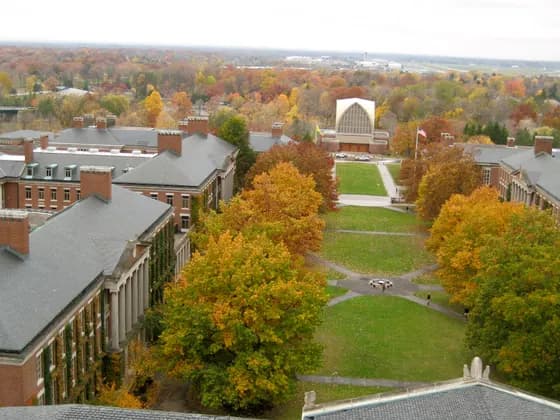

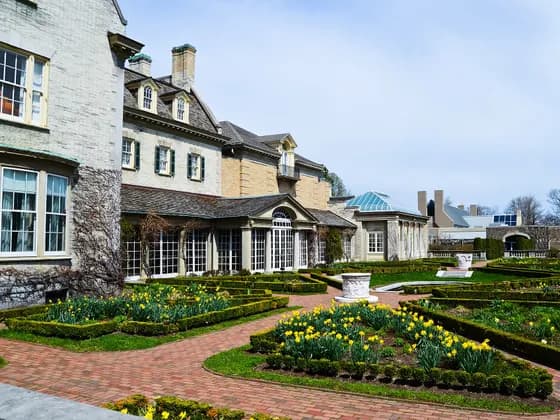
Photo: DanielPenfield · CC BY-SA 4.0 · cropped
Photo: Douglas.flowe ( talk ) · Public domain · Photo: Evilarry · Public domain · Photo: Ryan Hyde from Ann Arbor, United States · CC BY-SA 2.0
The University of Rochester School of Medicine and Dentistry MD program at a glance (2027 entry)
The University of Rochester School of Medicine and Dentistry teaches its four-year MD at the University of Rochester Medical Center (URMC) in Rochester, New York. URMC was founded in 1921, and the school's first dean, George Hoyt Whipple, set out to build a school and a hospital under one roof, joining basic science to patient care. The school opened in 1925 and graduated its first class in 1929.
The curriculum is the Double Helix Curriculum, Translations and Transitions. Like the two strands of a double helix, basic science and clinical medicine run together through four phases, one per year. Phases 1 and 2, the pre-clinical or pre-clerkship stage, run about 21 months, from August of year 1 to May of year 2. They are mostly classroom learning with early patient contact, including the part-time Primary Care Clerkship. Phases 3 and 4 are clinical: clerkships, the core rotations such as medicine and surgery, and electives you choose.
The thread through all of it is the biopsychosocial model: the idea that illness has to be understood through a patient's biology, psychology and social circumstances together. The school's psychiatry department says the approach was developed at Rochester by George Engel and John Romano. It is the program's first educational objective, and you start applying it in your first interviews with standardized patients, people trained to play patients.
Teaching mixes lectures with problem-based learning (PBL), in which small groups work through patient cases, and team-based learning (TBL), in which teams apply material prepared beforehand. Labs and simulation add hands-on practice.
Phase 3 starts in June after year 2, at Strong Memorial, Highland, Golisano Children's and Rochester General hospitals and FF Thompson Hospital in Canandaigua. Before it begins you must sit Step 1 of the United States Medical Licensing Examination (USMLE), the national exam series for medical licensure. Phase 4 adds an acting internship, formerly called a sub-internship, in which you take on the work of an intern, a doctor in the first year of residency training.
| Degree | MD |
|---|---|
| Program length | 4 years in four phases; core clerkships start in June after year 2 |
| Class size | 104 students in the Class of 2030 profile |
| Main campus | University of Rochester Medical Center, Rochester, New York, with Strong Memorial Hospital |
| Teaching style | Integrated; lectures with problem-based and team-based learning in Phases 1 and 2 |
| Anatomy | Dissection of donated bodies in Phase 1; brain dissections in Phase 2 |
| First patient contact | Year 1: standardized patients, then real patients in primary care and hospitals |
| Clinical sites | Strong Memorial, Golisano Children's, Highland, Rochester General and FF Thompson hospitals |
| Step 1 timing | Before Phase 3 starts in June after year 2, with no extensions |
| Grading | Pass/fail courses; clerkships graded Honors, High Pass or Pass |
What makes the University of Rochester School of Medicine and Dentistry MD program different
A 31-week primary care clerkship in year 2
For most of Phase 2, about three afternoons a week go to this clerkship: time with physicians in internal medicine, family medicine or pediatric outpatient practices, plus large- and small-group clinical skills sessions. It is graded as a clerkship and counts toward your group in the Medical Student Performance Evaluation (MSPE), the school's summary letter for residency applications.
Formative phase assessments that end in a development plan
At the end of Phases 1, 2 and 3 you sit a multi-day assessment of standardized-patient encounters, physical exam sessions, mock board exams, written work, self-reflection and feedback from several sources. It counts toward no grade or MSPE group, and it ends with an Individual Development Plan for your personal, professional and career goals.
Eight elective pathways, from Deaf health to medical education
Pathways are optional, mentored programs that run alongside the curriculum. Deaf Health draws on Rochester's large Deaf community and teaches American Sign Language in the first two years. Others include global health, incarceration, health policy, LatinX health and medical education.
Clerkships in paired blocks, each with a science week
Phase 3 groups the core clerkships into three blocks: medicine with surgery, neurology with psychiatry, and obstetrics and gynecology with pediatrics. Each block has a linked one-week science course, so advanced science returns alongside the specialties you are seeing on the wards.
A school iPad and a loaned ultrasound probe
Every incoming student has received an iPad since 2012, used for course materials, readiness quizzes, live polling and filming practice patient encounters for faculty review. The school also lends students Butterfly handheld ultrasound probes to support learning and clinical practice.
How University of Rochester School of Medicine and Dentistry teaches medicine
Science and clinical skills are timed to line up. In Phase 1, Human Structure and Function and Introduction to Clinical Medicine are aligned, so you learn to examine each body system while studying its anatomy and physiology. In Phase 2, Primary Care Clerkship classes take common complaints, such as chest pain, in step with the organ system being taught in Disease Processes and Therapeutics.
Most courses combine lectures with PBL and TBL, which the school says run several days a week through the first two years. In PBL your small group works through a case and presents its findings at the next session. TBL opens with an individual and then a team readiness quiz, taken on your iPad, on material you prepared.
Meliora in Medicine, named for the university motto, meaning ever better, is a course in Phases 1 and 2 and a thread through all four years. It covers health systems science, including patient safety, quality and the social determinants of health. It also covers technology in medicine, such as the electronic medical record, ultrasound and telehealth, and professional identity, from bioethics to wellness and advocacy.
The ways you will learn
| Lectures | Core content, sometimes broken up with live polling. Lectures in the four large Phase 1 and 2 classrooms are recorded, but recordings stay up only for 72 hours after class and 72 hours before the exam. |
|---|---|
| Small groups | PBL and TBL groups, plus physiology problem-set groups. To pass a course you must pass both the exams and your small-group work, judged on the quality of your participation. |
| Labs | Gross anatomy, histology and physiology labs in Phase 1, then brain dissection, pathology and congenital heart disease labs in Phase 2. |
| Standardized patients and simulation | You practice interviews and examinations with standardized patients. Simulations include a human simulator exercise in Pharmacology and a labor and delivery scenario in Women's Health. |
A typical week on the University of Rochester School of Medicine and Dentistry program
The handbook caps scheduled time in Phases 1 and 2. Lectures, labs, PBL, TBL, small groups and clinical sessions should average no more than 25 hours a week, with no single week over 36 hours. On average two half-days a week stay free of scheduled activities, and optional review sessions and exams do not count toward the cap.
Attendance is required at PBL, TBL, skills sessions and anything involving patients, while whole-class lectures are strongly encouraged. In Phase 2 the Primary Care Clerkship takes up about three afternoons a week on average.
In the clinical phases, duty hours are capped at 80 a week averaged over four weeks, with one day in seven free. Continuous duty is limited to 24 hours, plus time to hand over patients. On the surgery clerkship at Strong Memorial, students take overnight trauma call about once a week.
How anatomy is taught at University of Rochester School of Medicine and Dentistry
Human Structure and Function, the 14-week course that opens Phase 1 in August, teaches gross anatomy, histology, embryology and physiology together. Alongside lectures, interactive large-group sessions, PBL and physiology problem sets, it runs labs in gross anatomy, physiology and histology. You are assessed by multiple-choice and practical exams and on your PBL performance.
Gross anatomy relies on whole-body donations to the school's Anatomical Gift Program, which calls these gifts essential to teaching medical students human anatomy. Donor bodies are usually embalmed on arrival and cremated after use, most commonly two years later, at the university's expense.
First-year students dissect. A spring 2026 exhibit at the Edward G. Miner Library says they enter the anatomy lab with a dissection manual, The Dissector. The 2025-26 Clinical Course Catalog bears this out. On its two-week elective, Teaching Tutorial and Review in Human Structure, third- and fourth-years help with each day's dissection and prepare prosections, specimens dissected in advance for teaching.
The library lists required anatomy e-texts, such as Moore's Essential Clinical Anatomy, and provides Visible Body 3D models and Acland's video atlas of real specimens. A technology plan written for 2022-23 set out an iPad with anatomy apps for each of the 31 lab tables.
Anatomy returns in Phase 2, when Mind/Brain/Behavior runs 14 lab and TBL sessions on neuroanatomy, neuroradiology and neuropathology, using gross brain dissections, brain images and pathology specimens. For fourth-years, the 2025-26 catalog lists Medical Procedures in Anatomy Lab, a one-week elective. In it you practice procedures such as intubation, chest tubes, central lines and lumbar puncture on lightly embalmed cadavers.
When you first meet patients at University of Rochester School of Medicine and Dentistry
Introduction to Clinical Medicine runs through the first 18 weeks of Phase 1, teaching the patient interview and physical exam through lectures, live demonstrations and small groups. You work with standardized patients throughout, and the course is assessed through multiple-choice exams, faculty observation in small groups and graded encounters with standardized patients.
Foundations of Biopsychosocial Practice, a 19-week course, then has you take complete histories and exams on real patients, from infants to older adults, in outpatient primary care, hospital wards and rehabilitation units. Its second half turns to wellness, prevention and health behavior counseling, with both real and simulated patients.
In Phase 2 the Primary Care Clerkship is longitudinal: it runs part-time across 31 weeks rather than as a full-time block. You work with physicians in internal medicine, family medicine or pediatric outpatient practices, and early physical diagnosis sessions focus on finding and interpreting abnormal signs. Assessment includes evaluations from your preceptor, the physician who supervises you, plus quizzes, standardized-patient encounters, graded clinical notes and a customized exam from the National Board of Medical Examiners (NBME).
Full-time clinical work begins with Phase 3. Throughout, you never care for patients unsupervised, every procedure is directly supervised, and intimate exams, such as breast, rectal and genitourinary exams, must be directly observed.
Year by year at University of Rochester School of Medicine and Dentistry
- Phase 1 (year 1)
Structure, function and first clinical skills
Phase 1 opens with Transition to Medical School week and the White Coat Ceremony. On the current calendar, 2027 entrants start classes on August 16, 2027 and finish Phase 1 on May 26, 2028. The summer that follows is free, and you can apply for funding to spend it on research.
- Human Structure and Function (14 weeks, from August): gross anatomy, histology, embryology and physiology, timed to match Introduction to Clinical Medicine in the first 18 weeks.
- Medical Evidence and Inquiry (3 weeks): biostatistics, epidemiology, research ethics, clinical testing and population health.
- Molecules to Cells (9 weeks, second semester): biochemistry, genetics and cell biology in seven theme blocks, from metabolism to cancer, aging and nutrition.
- Foundations of Biopsychosocial Practice (19 weeks): complete histories and exams on real patients across the lifespan.
- Pharmacology (2 weeks), with a human simulator exercise, and Host Defense (8 weeks): microbiology, immunology, inflammation and pathology.
- A Health Humanities Selective on topics such as bioethics and law, medical history, literature, disability or Deaf health, then the multi-day Phase 1 Assessment.
- Phase 2 (year 2)
Disease, primary care and Step 1
Phase 2 moves from how the body works to disease and treatment. On the current calendar it runs from August 7, 2028 to May 11, 2029 for 2027 entrants. It closes with the Phase 2 Assessment and Step 1 study.
- Mind/Brain/Behavior (9 weeks): neuroscience, neuropathology, neuropharmacology, psychopathology and psychopharmacology, linked to neurology and psychiatry through nine PBL cases.
- Disease Processes and Therapeutics (17 weeks, two courses): heart, lung and kidney disease and how they interact, then infectious diseases, gastroenterology and hepatology, rheumatology, hematology and endocrinology.
- Women's Health (2 weeks), taught with a reproductive justice lens, and Disorders of Childhood (2 weeks), on how growth and development shape illness.
- Primary Care Clerkship (31 weeks): time in an outpatient practice, plus clinical skills and classroom sessions.
- Your second Health Humanities Selective, in the first semester.
- Transitions to Licensure (6 weeks): unscheduled time to prepare for Step 1, with a defined study plan and close monitoring of your progress.
- Phase 3 (year 3)
Core clerkships in three blocks
Phase 3 starts in June, on about June 11, 2029 for 2027 entrants, and runs to the end of May. The six core clerkships come in three paired blocks, each linked to a one-week Scientific and Social Foundations of Medicine course of case conferences, lectures, labs and self-study.
- Adult inpatient: medicine (8 weeks) and surgery (6 weeks on the curriculum and clerkship pages; the department's Student Programs page says 5), with Principles of ICU Science and Ethics, built around critical care.
- Medicine opens with an education week of workshops and case conferences; then, for three weeks, groups of three or four students meet a faculty preceptor twice a week to present cases.
- Mind, brain and behavior: psychiatry and neurology (4 weeks each), with a seminar series across the eight weeks and an advanced neuroscience course on development, degeneration and dysfunction.
- Women and children's health: obstetrics and gynecology and pediatrics (5 weeks each), with Genes, Ecology, and Culture, which applies evolutionary biology to topics such as climate change and health.
- On obstetrics and gynecology you do supervised breast and pelvic exams, assist in the operating room and attend vaginal and cesarean births.
- Emergency medicine and family medicine (4 weeks each) and a 2-week surgical subspecialty selective, here or in Phase 4, then the multi-day Phase 3 Assessment, held in late May in the 2025-26 calendar.
- Phase 4 (year 4)
Acting internship, electives and residency
Phase 4 begins in June, on about June 10, 2030 for 2027 entrants, with graduation set for May 16 to 17, 2031. Required clerkships and acting internships must be finished by April. Residency applications go in during August and September, and the national residency Match, which places graduates in training programs, follows in March.
- An acting internship of four consecutive weeks in family medicine, medicine, surgery, pediatrics, obstetrics and gynecology, emergency medicine, neurology or an intensive care unit (ICU). An ICU choice adds two weeks of hospital medicine or pediatrics.
- On the Department of Medicine's acting internship you are the first person called about your patients and practice writing orders. It opens with a Clinical Decision-Making Exam, and an Honors track at Strong adds night call and cross-cover of other doctors' patients.
- The Critical Care Selective (2 weeks) in a medical, surgical or neurology ICU, or in anesthesia, where you refine airway and hemodynamic (blood pressure and circulation) management.
- Improving Health Systems (3 weeks): groups organized by planned specialty design and present a quality improvement or implementation science plan for a clinical problem.
- Successful Interning (2 weeks), the capstone: sessions on starting internship, case-based small groups you choose and a one-day boot camp in a specialty such as surgery or pediatrics.
- Electives toward the 23-week minimum, plus any of emergency medicine, family medicine and the surgical selective left from Phase 3.
How you are assessed at University of Rochester School of Medicine and Dentistry
Phase 1 and 2 courses are graded Pass, Pass Marginal or Fail. Exams are mainly multiple choice, with practical exams in lab courses and short-answer questions in Disease Processes and Therapeutics. A failed or marginal exam may be retaken once, at the course director's discretion. A course grade of Fail means repeating the course, and you may repeat a course, clerkship or year only once.
Clinical skills are tested in encounters with standardized patients, both in courses and in the ungraded Phase 1, 2 and 3 Assessments. The handbook's recording policy names an OSCE (objective structured clinical examination), an observed exam with standardized patients, as one formal assessment that may be recorded.
Clerkships and acting internships are graded Honors, High Pass or Pass, with Pass Marginal and Fail below. A committee of at least five faculty sets each clerkship grade from evaluations with names removed, aiming for about a third of students at each passing grade. The NBME subject exam, a national end-of-clerkship test often called a shelf exam, counts for 20%, and administrative professionalism for 5%.
The program is accredited by the Liaison Committee on Medical Education (LCME), which accredits MD programs in the United States. The LCME directory lists Rochester's status as Full, with the next survey in 2031-32. For MD students, LCME accreditation establishes eligibility to sit the USMLE. Step 1, on the science behind medicine, has been pass/fail only since January 26, 2022. You must sit it before Phase 3, with no extensions, and pass it to graduate.
In August 2026 the USMLE program announced a move to designated testing dates from January 2029, with Step exams offered less often each year. Its first announcement, in June 2026, had named 2028.
On the current schedule, a 2027 entrant finishes Phase 2 on about May 11, 2029 and must sit Step 1 before Phase 3 starts on about June 11, 2029. Step 2 CK, on clinical knowledge, needs a passing score at the school by February 1 of the final year, which is February 1, 2031. Both fall after the switch to designated testing dates, and the school's calendar says its dates may change.
- The USMLE has urged schools to review rules on when students must test, so these timing rules may change.
- If you have not sat Step 1 by the first day of Phase 3, you enter a semester of Independent Preparation for Licensure. You study at least 40 hours a week and cannot start clerkships until the next semester.
- You need at least the 4th national percentile to pass a clerkship's subject exam. Failing it with otherwise good clerkship work brings a temporary To Be Determined grade and one retake.
- Your MSPE is written by your Advisory Dean, the faculty advisor assigned to you for all four years. It places you in one of four groups: Outstanding (about 20%), Excellent (20%), Very Good (55%) or Good (5%), based on seven core clerkship grades, including the Primary Care Clerkship, weighted by length.
- The top 10% of the class in each course earn a Letter of Achievement, kept off the transcript but shared with the selection committee of Alpha Omega Alpha, the national medical honor society. The June 2026 handbook says it is noted in your MSPE for classes entering from August 2022; the 2025-26 catalog says it is not.
Where you will actually train at University of Rochester School of Medicine and Dentistry
Clinical training is centered on Rochester. Strong Memorial Hospital, at 601 Elmwood Avenue, shares the main medical center campus with the school, and Golisano Children's Hospital shares its address. All of Strong's medical clinicians hold faculty appointments at the school and take part in teaching residents and students.
Every medicine student spends part of the eight weeks on a hospital medicine team at Strong. You may also rotate to Highland Hospital or FF Thompson Hospital, join the Medicine in Psychiatry team, or work with subspecialty teams in the Heart Center and Wilmot Cancer Center. Surgery runs at Strong, Highland and Rochester General Hospital, and about 12 students at a time take pediatrics at Golisano Children's or Rochester General.
Neurology splits its four weeks into two two-week rotations on adult and child services at Strong and Highland. Psychiatry follows your preceptor's service, from adult, child, forensic or geriatric inpatient units to emergency psychiatry or consultation work on medical wards. Emergency medicine runs in a high-volume Level I trauma emergency department, one equipped for the most serious injuries.
Every required clerkship must let you state a site preference, but the clerkship director decides. Travel is your responsibility. The handbook requires reliable transportation by January of Phase 1 and says the school cannot guarantee sites near the medical school. It calls carpooling not viable and regional public transit inefficient for clinical travel.
Golisano Children's describes itself as the area's only children's hospital, taking referrals from the 17-county Finger Lakes region.
- Strong Memorial Hospital
- Golisano Children's Hospital
Community hospital at 1000 South Avenue, where family medicine inpatient electives rotate with the Family Medicine team.
- Highland Hospital
Tertiary care hospital on Rochester's northeast side; pediatric acting interns can work on its B7 Children's Unit.
- Rochester General Hospital
Community hospital, part of Thompson Health, used for part of the medicine clerkship and for medicine acting internships.
- FF Thompson Hospital
Family medicine residency clinics used for outpatient electives, the student-run UR Well clinics for uninsured adults, and other elective locations in the 2025-26 catalog. Family medicine can also arrange urban, suburban and rural electives.
- Highland Family Medicine
- Brown Square Health Center
- UR Well clinics
- Unity Health System
- Monroe Community Hospital
Electives, selectives and away rotations at University of Rochester School of Medicine and Dentistry
You need at least 23 weeks of electives across Phases 3 and 4. No more than 12 can be in one specialty, and if you reach 12 you must spend six more in a different clinical setting. Non-clinical electives are capped at eight weeks, research electives at six and reading electives at two.
The posted 2025-26 Clinical Course Catalog describes about 150 courses, mostly one to four weeks long, including palliative care, clinical ethics, emergency ultrasound and a psychiatric mobile crisis unit. You can also design an elective with a faculty member and your Advisory Dean, and Rochester students get first choice of places over visiting students.
Away rotations, called extramural electives, open once you have passed the first two years in good standing. You can spend up to 12 weeks at other institutions, in the US or abroad, with approval from your Advisory Dean and a Rochester faculty member in the same field. The handbook advises starting inquiries in January of Phase 3.
International electives need at least 12 weeks' notice. The June 2026 handbook lists reciprocal exchanges with schools in Poland, Taiwan, South Korea, Spain, Peru and Ireland. The Outreach page instead names affiliation agreements in China, Ireland, Peru, Poland and Spain, and programs in more than 40 countries. Family medicine runs an elective in rural Honduras on its residency program's trips each October and May.
The optional Elective Pathways, which their own page calls certificate programs, run alongside the curriculum. The curriculum page introduces seven pathways but lists eight, the same eight the pathways page describes:
- Deaf Health: Deaf health disparities seminars and American Sign Language in years 1 and 2; no prior signing needed.
- Global Health: lectures, required clinical experiences and an independent project, for selected students.
- Health and Incarceration: caring for patients with a history of incarceration.
- Health, Equity, and Law Policy: work with a community agency and draft a policy response by the end of Phase 4.
- Health Humanities and Bioethics: a mentored Pathway Project; competitive entry, up to 20 students a year.
- Healthcare Innovation and Economics: courses with the Center for Health + Technology and the Simon Business School's Innovation Center.
- LatinX Health: for intermediate or advanced Spanish speakers, up to 12 students a year.
- Medical Education: tutor a PBL group, lead small groups, give a lecture and write exam questions.
Dual degrees and research years at University of Rochester School of Medicine and Dentistry
Research is optional, with support at each stage. The school's enrichment office awards competitive grants for local, national or international projects: up to $3,500 for eight weeks in summer, and typically $23,100 for a 12-month year out. Funded students then submit an abstract and present a poster.
A year out is a Student Fellowship, generally two terms and up to 12 months, which your Advisory Dean can approve. You keep full-time student status and can take an advanced certificate without tuition, in analytic epidemiology, health services research, clinical research methods, experimental therapeutics, public health or health professions education. Departments add their own, such as the pediatrics department's David Hamilton Smith year-out fellowship.
The Academic Research Track supports students aiming at academic medicine, with lunchtime seminar modules on mentoring, research questions, measurement, data, funding and writing for publication. Two distinctions are earned by application: the MD with Distinction in Research, judged on a five-page synopsis and a mentor's letter, and the MD with Distinction in Community Health. That one asks for 140 hours of service, the four-week Community Health Improvement Course and a community project presented to a faculty committee.
The MD/PhD is the Medical Scientist Training Program (MSTP), funded by the National Institutes of Health since 1973. You take Phases 1 and 2 with the MD class, plus the Scientific Reasoning in Medicine journal club and a 6 to 8 week lab rotation after year 1. After Step 1 you join one of 18 PhD programs, and most students defend in three to five years. Two to four longitudinal clerkships, weekly half-days with a physician-scientist, keep your clinical skills going.
The About page, whose quick facts date from about 2019, says eight MD/PhD students start each year; the Class of 2030 profile puts them at 3%. The MD/MBA with the Simon Business School takes five years: a year of MBA core courses, then four years of medical school with electives from both. An MD/MS in Medical Humanities, now titled Health Humanities and Bioethics, is also offered.
Some students arrive through Rochester Early Medical Scholars (REMS), an eight-year BA/BS plus MD program for University of Rochester undergraduates, begun in 1991.
Facilities and support at University of Rochester School of Medicine and Dentistry
Where you will learn
The Center for Experiential Learning, part of the Institute for Innovative Education, has about 70,000 square feet of teaching space. It includes a simulation center, six large auditoriums and thirteen PBL rooms reserved for medical students. Each PBL room has a mock doctor's office for practicing interviews and exams with standardized patients, and a camera system records sessions for debriefing and self-critique.
The Standardized Patient Program, running since 1999, trains a pool of about 150 people aged 16 to 80, recruited to reflect the Rochester community. The simulation team also works with task trainers, high-fidelity mannequins, procedural trainers and virtual reality.
The Edward G. Miner Library offers about 30,000 square feet of quiet study space, classrooms, group study rooms and a recording room for making videos. Third- and fourth-year students have on-call rooms, and students share a lounge with a kitchen and a music room.
Support while you study
Advising runs through the Advisory Dean program. You are assigned an Advisory Dean for all four years: school pages say one of four, while the June 2026 handbook's staff list names five. You meet in small groups, including required Advisory Dean lunches, and one to one for personal advising, curriculum planning and career counseling.
Your Advisory Dean approves schedule changes, electives and fellowship leave, but plays no part in grading you and does not provide formal personal counseling. For that, students use the confidential University Counseling Center and University Health Service, alongside the school's Wellness and Resilience program.
Career counseling follows a calendar, from specialty interest group fairs each August and summer planning in Phase 1 to a Phase 2 session on studying for Step 1. Phase 3 brings residency application sessions, and Phase 4 a mock interview with a faculty member, alongside the Association of American Medical Colleges' Careers in Medicine resources.
The Center for Excellence in Teaching and Learning offers study-skills coaching and workshops, alongside tutoring, accommodations and an early identification process. A learning specialist works with anyone who fails a clerkship subject exam.
Is the University of Rochester School of Medicine and Dentistry program right for you?
This program may suit you if
- You want real patients in year 1 and a regular outpatient practice through the 31-week Primary Care Clerkship in year 2.
- You learn well in groups: PBL and TBL run several days a week in Phases 1 and 2, and attendance is required.
- You are drawn to the social side of medicine, from the biopsychosocial model to pathways in Deaf health, incarceration, health policy and LatinX health.
- You want electives to shape your final two years: at least 23 weeks, with up to 12 weeks away or abroad.
- You may want research, with funded summers, a year-out fellowship with a tuition-free certificate and a long-running MD/PhD program.
Things to think about
- You need reliable transportation by January of Phase 1, and the school does not arrange travel to clinical sites.
- Lecture recordings are available only for 72 hours after class and 72 hours before the exam, so plan to attend.
- Step 1 must be sat before Phase 3 with no extensions, and for 2027 entrants it falls after the USMLE's switch to designated testing dates.
- The hospitals the school names for core clerkships are in Rochester, plus FF Thompson in Canandaigua for medicine, but the handbook does not promise sites close to the medical school.
University of Rochester School of Medicine and Dentistry MD program — frequently asked questions
Applying to University of Rochester School of Medicine and Dentistry?
How to get into University of Rochester School of Medicine and Dentistry
Prerequisites, MCAT, AMCAS personal statement, secondaries and interview, step by step.
Open the guide →University of Rochester School of Medicine and Dentistry admissions profile
MCAT and GPA profile, acceptance rate, interview format and key dates.
See the profile →Compare University of Rochester School of Medicine and Dentistry with other schools
Put the teaching style, anatomy teaching and clinical sites next to another school.
Open the comparison →Prepare for the University of Rochester School of Medicine and Dentistry interview
Format breakdown, school-specific sample questions and prep tips from tutors who interviewed here.
Read the guide →Where this University of Rochester School of Medicine and Dentistry program guide came from
This guide was written from 56 official sources — University of Rochester School of Medicine and Dentistry's own program pages and curriculum documents, plus the accreditor and the hospitals and health systems the school trains students in where they publish detail — read on 2026-10-14, then checked claim by claim against those sources.
- URMC MD Program: Curriculum, the Double Helix Curriculum, Translations and Transitions
- URMC Medical Education: MD Program home page
- MD Admissions: Why Choose Rochester?
- MD Admissions: Elective Pathways
- MD Admissions: Combined and Dual Degrees
- MD Program: Research and Innovation, including year-out certificates
- MD Program: Student Mentorship and the Advisory Dean Program
- MD Program: Career Counseling by phase
- MD Program: Outreach, global health and community service
- MD Admissions: Our People, Class of 2030 profile
- MD Admissions: Accepted Students, Class of 2031 dates
- Medical School Registrar: SMD MD Program Academic Calendars 2025-2030
- MD Program Student Handbook and Policies, updated June 1, 2026
- Clinical Courses catalog, 2025-2026 edition
- Medical Education Technology Integration: the iPad program
- Technology Integration: Teaching and Learning
- Technology Integration: Learning Spaces
- Technology Integration: Vision, plans for 2022-23
- Center for Experiential Learning: Simulation
- Center for Experiential Learning: Standardized Patient Program
- Anatomical Gift Program
- Anatomical Gift Program brochure
- Edward G. Miner Library exhibit, Spring 2026: Visualizing the Body
- Edward G. Miner Library guide: Human Structure and Function
- Department of Medicine: Third-Year Medicine Clerkship
- Department of Medicine: Fourth-Year Medicine Acting Internships
- Department of Surgery: Third Year Surgery Clerkship
- Department of Surgery: Student Programs
- Department of Pediatrics: Third Year Clerkship in Pediatrics
- Department of Pediatrics: Fourth Year Acting Internship
- Department of Pediatrics: Medical Student Educational Programs
- Department of Family Medicine: Third and Fourth Year Teaching
- UR Medicine: Locations and hospitals
- Strong Memorial Hospital
- Golisano Children's Hospital
- School of Medicine and Dentistry: History
- History of URMC
- School of Medicine and Dentistry: About the School, quick facts from about 2019
- Department of Psychiatry: The Biopsychosocial Approach
- Medical Scientist Training Program (MD/PhD) home page
- MSTP: MD/PhD Curriculum
- MSTP: Clinical Experiences and Longitudinal Clerkships
- MSTP: Research and participating graduate programs
- Simon Business School: MD/MBA Program
- Master of Science in Health Humanities and Bioethics
- University of Rochester: Rochester Early Medical Scholars (REMS)
- LCME: Accredited Programs directory
- LCME: About the LCME
- USMLE: Designated Testing Dates transition will take place in January 2029 (announced August 6, 2026)
- USMLE: Designated Testing Dates Information Hub
- USMLE: Designated Testing Dates FAQs, updated August 6, 2026
- USMLE: June 23, 2026 announcement that named 2028, since updated
- USMLE: Step 1 transition to pass/fail only score reporting
- USMLE: Step 1
- USMLE: Step 2 CK
- NBME: Subject Examinations
Curricula are restructured between cycles. Anything here that decides your application — how anatomy is taught, a clinical campus assignment, a required research year — should be confirmed against the official page for your entry year.
Applying to University of Rochester School of Medicine and Dentistry?
We help US applicants with MCAT strategy, the AMCAS personal statement, secondary essays and interview prep — everything you need for a competitive University of Rochester School of Medicine and Dentistry application.