
TouroCOM Montana Interview
Format, Questions & Prep Tips
TouroCOM Montana medicine interviews for 2027 entry are a traditional interview, held October 2026 through March 2027. Published figures: Annual DO class size ~126; Campus opened 2020.
- Institution
- Touro College of Osteopathic Medicine — Great Falls
- Interview (2027 entry)
- October through March
- Decisions (2027 entry)
- Rolling decisions after interview

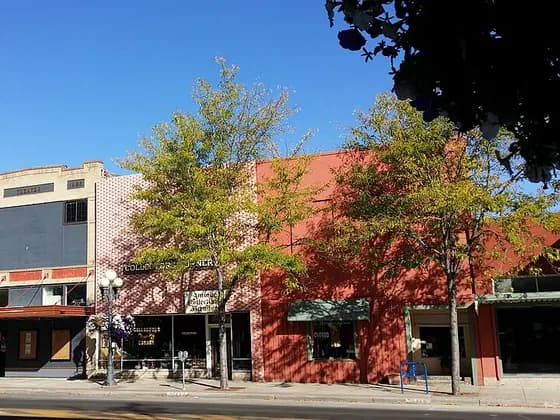
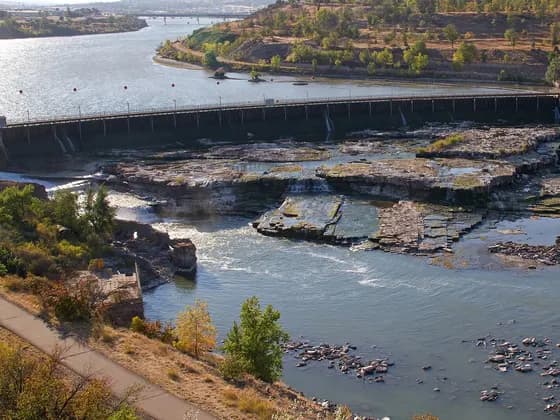
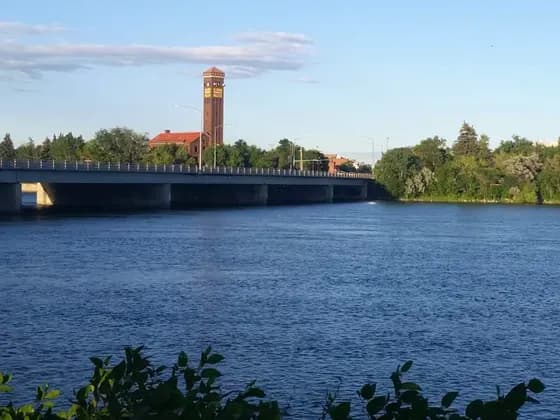
Photo: Robstutz · CC BY-SA 3.0 · cropped
Photo: Eric Friedebach · CC BY 3.0 · Photo: Tony Hisgett from Birmingham, UK · CC BY 2.0 · Photo: Ryan Villines · CC BY-SA 4.0
How to get into TouroCOM Montana (DO) medicine
Step-by-step: entry requirements, admission tests, personal statement, interview format and the key deadlines.
Open the guide →TouroCOM Montana (DO) entry requirements
Admission profile, interview format, decision dates and what makes TouroCOM Montana (DO) different.
See the profile →The TouroCOM Montana (DO) medicine interview
TouroCOM Montana uses a traditional interview format — one-on-one or panel sessions with faculty at its Great Falls campus. Opened in 2020, TouroCOM Montana is one of the newest DO programs in the United States and carries a focused mission: training osteopathic physicians for rural, frontier, and tribal communities across Montana and the surrounding region.
The interview process explicitly screens for rural-medicine commitment. Applicants who cannot articulate a concrete connection to underserved or frontier healthcare are unlikely to succeed here. The campus partners with Indian Health Service sites and critical access hospitals across Big Sky country.
Casper is required at TouroCOM Montana — confirm current-cycle deadlines on the admissions site.
TouroCOM Montana (DO) interview at a glance (2027 entry)
| Annual DO class size | ~126 |
|---|---|
| Interview format | Traditional — faculty / panel |
| CASPer required | Yes — Casper + Duet (verify current cycle) |
| Application system | AACOMAS primary + secondary |
| Campus opened | 2020 |
| Interview window | October–March |
Interview format
- Traditional one-on-one or panel interview; approximately 30–45 minutes.
- Campus tour and student meet-and-greet on interview day.
- Interviewers focus on rural/frontier medicine motivation and resilience.
Working towards the MCAT score TouroCOM Montana (DO) expects? Build a week-by-week plan from your test date — free for the first two weeks.
Sample interview questions
Why do you want to practice medicine in rural or frontier settings, and why osteopathic medicine specifically?
Link personal experience to the rural mission. Be specific about Montana, Big Sky country, or analogous environments — not a generic rural answer. Tie osteopathic principles to whole-person primary care in resource-limited settings.
Montana has one of the highest physician-to-population shortages in the country, especially in rural and tribal areas. How do you see yourself contributing to solving that shortage over a 20-year career?
Show long-term commitment, not just a rotation stint. Mention primary care, rural practice, or IHS/tribal partnership. Avoid vague altruism — be concrete about specialty interest and geography.
A patient from a Northern Plains tribal community is refusing a recommended surgical procedure, citing traditional healing practices. How do you navigate this clinically and ethically?
What they are listening for:
- Cultural humility
- tribal sovereignty
- patient autonomy
Show respect for Indigenous healing traditions alongside your clinical obligation. Avoid paternalism.
Describe a time you had to function effectively in an environment that lacked the resources you were used to. What did you do?
Resourcefulness and adaptability are core traits for frontier medicine. Give a concrete example with outcome.
Montana has significant health disparities between urban centers like Billings and frontier counties. What do you think are the two or three biggest structural causes of those disparities?
Show health-systems literacy:
- transportation
- health insurance gaps
- social determinants
- limited specialty care
Awareness of Indian Health Service funding issues is a plus.
What service or volunteer experience has shaped your understanding of what it means to be a physician in an underserved community?
Specificity matters. Name the community, describe the patients, and explain what changed your perspective.
How does an osteopathic approach to medicine specifically serve patients in frontier or rural settings where specialist referral is not always possible?
Highlight OMM as a primary-care tool, the whole-person view, and DO physicians' historical role in rural America.
TouroCOM Montana is a newer program. What attracted you to a newer school over more established DO programs?
Honesty about mission alignment over prestige. Show you researched the program, its partners, and its founding vision.
You are a sole-provider physician in a frontier clinic. A patient presents with symptoms suggesting a possible cardiac event; the nearest hospital with a cardiac catheterization lab is 200 miles away. Walk me through your thinking.
What they are listening for:
- Emergency stabilization
- telemedicine consultation
- transport decisions
Shows clinical reasoning and frontier-medicine mindset.
What concerns do you have about training and potentially practicing in rural Montana, and how do you plan to address them?
Self-awareness is valued. Acknowledge real challenges (isolation, limited resources) and describe concrete coping strategies.
Montana frontier counties show both higher injury-related mortality and longer EMS response times than urban Montana. Shown that data, how would you reason about how the two are connected, and what you'd want to confirm?
Link distance, terrain, weather, EMS staffing and critical-access-hospital capacity to worse trauma outcomes (the 'golden hour' problem). Verify whether mortality reflects injury severity, response time, or transfer delays. Frontier-systems reasoning, not memorized numbers.
You must explain to a frontier family that their relative needs to be flown to a distant tertiary center and that local care cannot safely manage the condition. The family is reluctant to send them so far. How do you communicate this?
Clear honest explanation of the clinical need, empathy for the burden of distance, logistics and what to expect, and reassurance about coordination. Communication under pressure with frontier families separated from loved ones by hundreds of miles.
TouroCOM Montana is a small, newer program where you will be expected to learn independently for frontier practice. How do you learn best, and how would you keep yourself accountable in a small cohort far from a major academic center?
Self-directed learning, use of point-of-care and tele-mentoring resources, peer accountability in a small class, and COMLEX preparation. Frame the small newer program as an asset for mentorship while showing genuine independence.
Role-play: a ranching patient is downplaying worsening shortness of breath because slowing down would mean missing critical work during calving season. Talk with him as you would in a frontier clinic.
What they are listening for:
- Build rapport on his terms
- take the symptom seriously
- reframe care-seeking as protecting his livelihood and family
- negotiate a feasible plan
Cultural competency with stoic agricultural patients who prioritize work over health.
Suppose reservation-serving IHS clinics in Montana report far higher diabetes prevalence but far lower per-capita specialist referrals than off-reservation clinics. How would you interpret that pairing without drawing unfair conclusions about the communities?
What they are listening for:
- Reason about IHS underfunding
- specialist scarcity
- distance
- historical distrust rather than attributing it to the patients
Recognize structural and funding causes and tribal sovereignty. Avoid deficit framing of Indigenous communities.
Practise the TouroCOM Montana (DO) interview
Rehearse the real format before the day — on demand with our AI interviewers, or live with a tutor.
Sit a mock with photoreal AI interviewers — any time
A timed MMI or panel interview on video — American & international voices — with interviewers who listen, react and press with follow-ups. Rubric-scored feedback and a replay the moment you finish.



Live mocks with a tutor who’s been in the room
A full TouroCOM Montana (DO)-style mock with a medic or dentist tutor — honest scoring against real marking criteria, a station-by-station debrief and a written action plan.
Book a mock interviewHow to prepare for the TouroCOM Montana (DO) interview
Common pitfalls to avoid
TouroCOM Montana (DO) interview — frequently asked questions
Sources & official admissions information
Ready to nail your TouroCOM Montana (DO) interview?
Book a mock interview with a tutor who knows the US interview formats, orpractice unlimited stations from our interview question bank.