
RVU Montana Medicine Interview
Format, Questions & Prep Tips
RVU Montana medicine interviews for 2027 entry are a panel interview, held September 2026 through March 2027. RVU Montana describes the format as: Virtual interview of about 30 minutes with a two-person panel from the RVU-MCOM team. Published figures: Annual DO class size 171 (2025–26); Tuition (2025–26) ~USD 58,000/year (estimate).
- Institution
- Rocky Vista University Montana College of Osteopathic Medicine
- Interview (2027 entry)
- September through March
- Decisions (2027 entry)
- Rolling decisions after interview
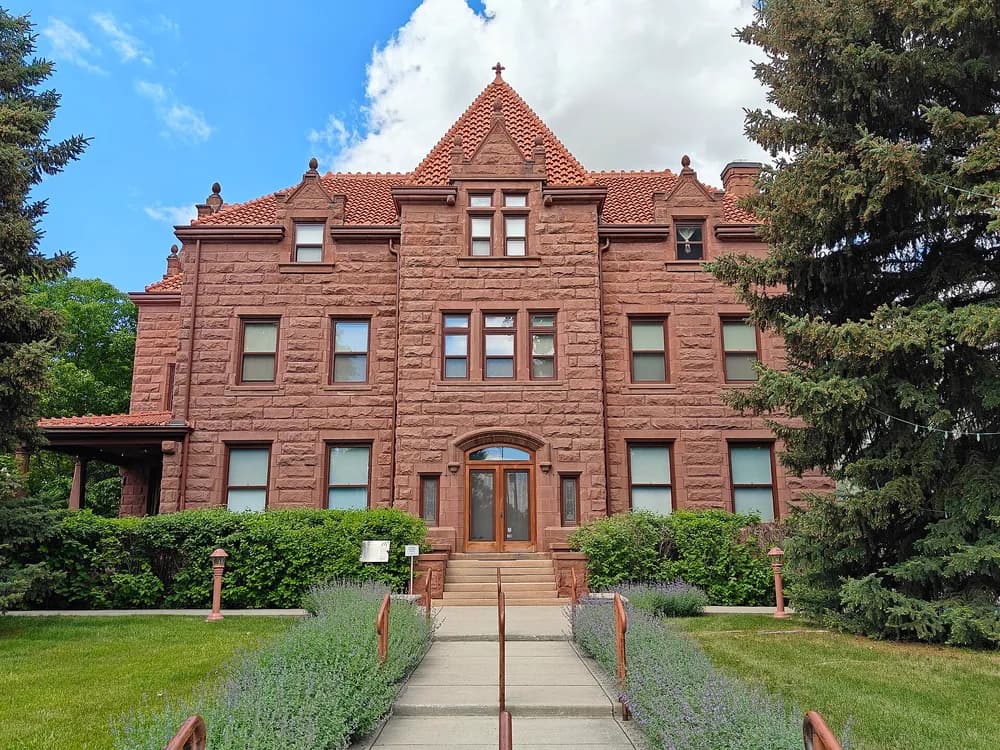
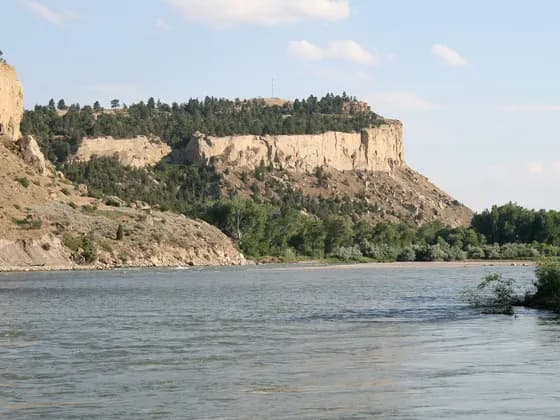
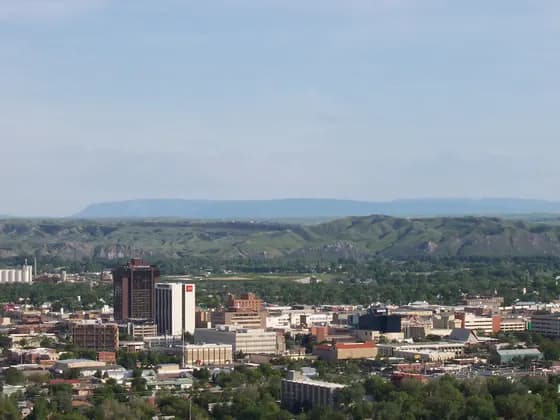
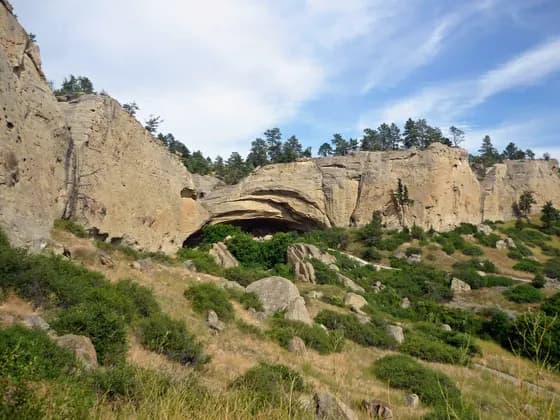
Photo: Chevsapher · CC0 · cropped
Photo: Sara goth · CC BY-SA 3.0 · Photo: Agricolamontanae · CC BY 3.0 · Photo: Tbennert · CC BY-SA 3.0
How to get into RVU Montana (DO) medicine
Step-by-step: entry requirements, admission tests, personal statement, interview format and the key deadlines.
Open the guide →RVU Montana (DO) entry requirements
Admission profile, interview format, decision dates and what makes RVU Montana (DO) different.
See the profile →The RVU Montana (DO) medicine interview
Rocky Vista University Montana College of Osteopathic Medicine (RVU Montana) is the most distinctly frontier-focused campus of the RVU system, located in Billings — Montana's largest city but still a small city by national standards. The school opened in 2020 and uses a traditional interview format with faculty and student sessions that probe genuine frontier medicine commitment above all else.
Montana has one of the most critical rural physician shortage situations of any US state, and RVU Montana was established specifically to address it. Every admissions question at this campus filters for whether applicants understand and are willing to embrace what frontier medicine actually involves: extreme isolation, critical access hospitals, limited specialist backup, and patient populations spread across hundreds of thousands of square miles.
RVU Montana does not currently require CASPer.
RVU Montana (DO) interview at a glance (2027 entry)
| Annual DO class size | 171 (2025–26) |
|---|---|
| Interview format | Traditional — faculty and student sessions |
| CASPer required | No |
| Application system | AACOMAS primary + RVU secondary |
| Tuition (2025–26) | ~USD 58,000/year (estimate) |
| Interview window | September–March |
Interview format
- Two sessions: faculty and student; approximately 30 minutes each.
- Interview day includes campus tour, program overview, and financial aid presentation.
- Frontier medicine commitment is the dominant screening theme throughout the day.
- No MMI format.
Working towards the MCAT score RVU Montana (DO) expects? Build a week-by-week plan from your test date — free for the first two weeks.
Sample interview questions
Montana is the fourth-largest state in the US by land area but one of the least populated. What does practicing frontier medicine in that context actually mean to you, and why does that appeal to you?
Frontier medicine is not the same as rural medicine. Billings is Montana's largest city at ~115,000 people. Montana's frontier areas have populations of fewer than 6 people per square mile. Be specific about what isolation, limited backup, and vast travel distances mean for clinical decision-making.
Why do you want to be a DO, and how does OMT fit into practicing in settings where specialist referrals may take weeks or months to arrange?
What they are listening for:
- OMT as a standalone diagnostic and treatment tool in resource-limited settings
- musculoskeletal medicine in agricultural and ranching communities
- the value of non-pharmacological management options in isolated rural practice
Montana has several federally recognized Native American tribes, including Blackfeet, Crow, Northern Cheyenne, and others, many of whom are served by Indian Health Service facilities. What do you know about healthcare on Montana's reservations, and how does that inform your practice vision?
Indian Health Service funding and access limitations, health disparities in Indigenous Montana communities (diabetes, substance use, maternal mortality), and the complexity of providing culturally appropriate care to sovereign nations.
You are the only physician in a frontier community during a harsh Montana winter. A patient needs care that exceeds your training, but transport is impossible for 48 hours due to a blizzard. How do you manage this?
What they are listening for:
- Telemedicine consultation
- STAT phone consults with academic centers
- scope of practice in emergency conditions
- documentation
- the frontier physician's ethical obligation to stay and manage even when undertrained
Critical access hospitals (CAHs) are the backbone of frontier healthcare. What are they, how are they funded, and what challenges do they face?
What they are listening for:
- CAH designation
- Medicare cost-based reimbursement
- the 25-bed limit
- rural hospital closure trends
- the CAH's role in sustaining communities that cannot support full service hospitals
Ranching and farming communities can have a strong cultural aversion to seeking medical care — toughness is culturally valued. How do you approach a patient who has delayed seeking care for a serious problem because he did not want to be seen as weak?
What they are listening for:
- Cultural competency in agricultural communities
- motivational interviewing with stoic patients
- reframing care-seeking as consistent with frontier values of self-sufficiency
- building trust over time
Billings is Montana's largest city. What do you know about it, and why is it a good base for frontier medicine training?
What they are listening for:
- Billings as a regional hub for Eastern Montana and Wyoming
- Billings Clinic and RiverStone Health as major clinical partners
- the surrounding Yellowstone Valley's rural and agricultural communities
Frontier physicians must function with significant professional autonomy. How have you demonstrated self-directed learning and independent decision-making in your academic and clinical experiences?
RVU Montana wants physicians who can operate independently. Demonstrate academic independence, research experience, leadership in healthcare contexts, and comfort with ambiguity.
Montana has one of the highest suicide rates in the US, concentrated in frontier counties and among certain occupational groups. Shown county-level data confirming this, how would you reason about contributing factors, and what would you be careful not to over-conclude?
Reason about access to mental health care, isolation, firearm prevalence, occupational stress in ranching/agriculture, substance use, and stigma. Caution against single-cause thinking and against stigmatizing affected groups. Frontier-medicine awareness, not memorized statistics.
Role-play: a stoic rancher has finally come in after months of ignoring chest pain because 'real men don't fuss'. He is minimizing symptoms. Talk with him as you would in a frontier clinic.
What they are listening for:
- Build rapport on his terms
- reframe care-seeking as strength and responsibility to family/operation
- take the symptoms seriously without lecturing
- move toward urgent evaluation
Cultural competency with stoic agricultural patients is core to this campus.
Frontier practice demands physicians who keep learning independently when no specialist is down the hall. Give an example of teaching yourself something difficult with little support. How would you sustain self-directed learning in an isolated rotation?
Evidence of genuine self-direction, use of point-of-care resources and tele-mentoring, and comfort with ambiguity. Connect explicitly to the frontier reality of limited backup that RVU Montana screens for.
You must arrange an emergency transfer of a critically ill patient 200 miles to Billings, and you need to explain to the anxious family why their loved one has to leave the community for care. How do you communicate this?
Honest, calm explanation of why transfer is necessary, what to expect, logistics, and reassurance about continuity. Acknowledge the burden of distance on frontier families. Demonstrate clear, compassionate communication under pressure.
Caring for patients on a Montana reservation through an under-funded Indian Health Service site, you regularly cannot offer the standard of care available off-reservation. How do you practice ethically within those constraints without becoming numb to them?
Acknowledge structural injustice and IHS underfunding, deliver the best possible care within constraints, respect tribal sovereignty and traditional practices, and engage in advocacy. Avoid both paternalism and resigned cynicism.
Frontier and rural are not the same thing. In your own words, what does 'frontier medicine' specifically demand of a physician that ordinary rural practice does not, and why are you drawn to that harder version?
Distinguish frontier (extreme isolation, <6 people/sq mile, days from specialists, weather-dependent transport) from rural. Articulate genuine attraction to autonomy, breadth, and community embeddedness rather than treating Montana as a back-up plan.
As the sole provider, you are exhausted and at risk of burnout, but taking time off means the nearest care is hours away for your whole community. How do you weigh your own wellbeing against your community's access?
Recognize that physician burnout harms patients too, discuss locum coverage, telehealth, realistic limits, and that sustainability is an ethical obligation, not selfishness. Show maturity about the unique self-care tension of frontier practice.
Practise the RVU Montana (DO) interview
Rehearse the real format before the day — on demand with our AI interviewers, or live with a tutor.
Sit a mock with photoreal AI interviewers — any time
A timed MMI or panel interview on video — American & international voices — with interviewers who listen, react and press with follow-ups. Rubric-scored feedback and a replay the moment you finish.





Live mocks with a tutor who’s been in the room
A full RVU Montana (DO)-style mock with a medic or dentist tutor — honest scoring against real marking criteria, a station-by-station debrief and a written action plan.
Book a mock interviewHow to prepare for the RVU Montana (DO) interview
Common pitfalls to avoid
RVU Montana (DO) interview — frequently asked questions
Sources & official admissions information
Ready to nail your RVU Montana (DO) interview?
Book a mock interview with a tutor who knows the US interview formats, orpractice unlimited stations from our interview question bank.