
Touro NV COM Interview
Format, Questions & Prep Tips
Touro NV COM medicine interviews for 2027 entry are multiple mini interviews (MMI), held September 2026 through February 2027. Published figures: Annual DO class size ~200.
- Institution
- Touro University Nevada College of Osteopathic Medicine
- Interview (2027 entry)
- September through February
- Decisions (2027 entry)
- Rolling decisions after interview
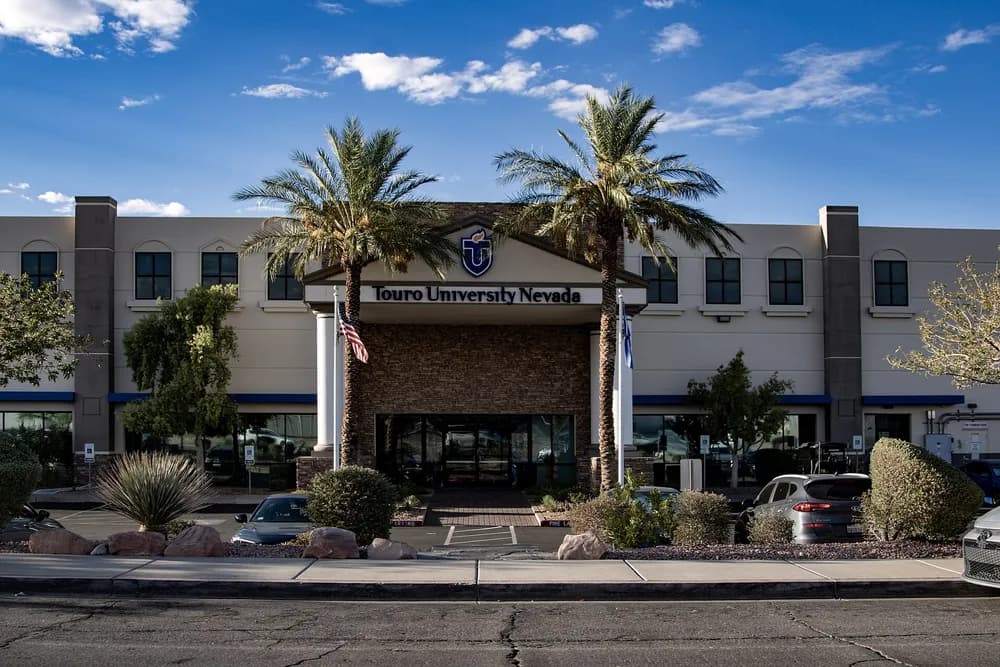
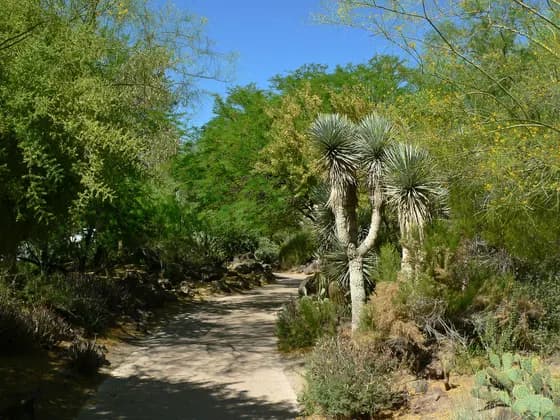

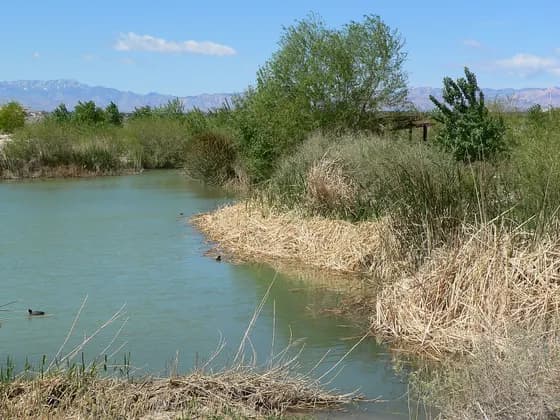
Photo: TheYearbookTeacher · CC BY-SA 4.0 · cropped
Photo: Stan Shebs · CC BY-SA 3.0 · Photo: Coolcaesar · CC BY-SA 4.0 · Photo: Stan Shebs · CC BY-SA 3.0
How to get into Touro NV COM (DO) medicine
Step-by-step: entry requirements, admission tests, personal statement, interview format and the key deadlines.
Open the guide →Touro NV COM (DO) entry requirements
Admission profile, interview format, decision dates and what makes Touro NV COM (DO) different.
See the profile →The Touro NV COM (DO) medicine interview
Touro University Nevada COM uses a traditional panel interview at its Henderson campus in the Las Vegas metro area. Founded in 2004, TUN is the only osteopathic medical school in Nevada and was established expressly to address the state’s persistent physician shortage.
Casper is not currently required at Touro NV COM — verify on the official admissions page each cycle, as requirements change. Interview questions typically probe Nevada-specific healthcare context and your readiness to work in an interprofessional environment.
The Las Vegas metro provides a clinically rich training environment with diverse patient populations, trauma centers, and large hospital systems — a fact interviewers reference when exploring how applicants plan to use their clinical years.
Touro NV COM (DO) interview at a glance (2027 entry)
| Annual DO class size | ~200 |
|---|---|
| Interview format | Traditional panel — faculty + student |
| CASPer required | No |
| Application system | AACOMAS primary + TUN secondary |
| Only DO school in | Nevada |
| Interview window | September–February |
Interview format
- Traditional panel: faculty and student ambassador; ~30–45 minutes.
- Campus tour and student interaction on interview day.
- Interprofessional campus — you may meet students from other health professions programs.
Working towards the MCAT score Touro NV COM (DO) expects? Build a week-by-week plan from your test date — free for the first two weeks.
Sample interview questions
TUN was founded specifically to address Nevada's physician shortage. Do you see yourself contributing to healthcare in Nevada or the Southwest after graduation, and why?
Be honest and specific. If you plan to stay, explain why. If not, show awareness of the mission and articulate how your training will serve underserved populations elsewhere.
Why osteopathic medicine, and why Touro Nevada specifically?
Connect osteopathic philosophy to your practice vision. Mention Nevada specifically — the shortage, the population, the desert Southwest context.
Describe a time you collaborated with a healthcare professional outside your own field — a nurse, pharmacist, physical therapist, or social worker. What was the outcome?
Interprofessional education is central to TUN. Give a specific, team-based story with a concrete outcome.
A patient presents at your clinic without insurance and cannot afford the prescribed medication. What do you do?
Resource navigation:
- formulary alternatives
- patient assistance programs
- FQHCs
- 340B pharmacies
Show systems awareness alongside clinical empathy.
Nevada has one of the lowest physician-to-population ratios in the US. What structural factors cause physician shortages in states like Nevada, and what solutions do you find most promising?
What they are listening for:
- Geography
- loan burden
- scope of practice laws
- graduate medical education funding
- rural pipeline programs
- loan forgiveness
Show health-policy literacy.
How would you use osteopathic principles to approach a patient with chronic lower-back pain who works in a Las Vegas casino and is on his feet 12 hours a day?
OMM + occupational context + whole-person care. Practical application of osteopathic principles in a realistic Las Vegas patient scenario.
What experience do you have serving populations that face barriers to healthcare access?
What they are listening for:
- Specific community
- specific barrier
- specific contribution
Avoid vague volunteering statements.
What do you expect will be the most difficult aspect of medical school, and how are you preparing for it?
Self-awareness and concrete preparation strategy. Academically, professionally, and personally.
You discover a fellow student has been falsifying clinical hours in their AACOMAS application. What do you do?
Professional integrity and institutional obligation. Act, do not ignore — but describe a thoughtful approach.
TUN emphasizes interprofessional education. How do you think working alongside PA, nursing, and PT students will shape the kind of physician you become?
What they are listening for:
- Team-based care
- mutual respect across disciplines
- shared patient goals
Connect to osteopathic whole-person philosophy.
Nevada ranks near the bottom nationally for active physicians per capita, and the gap is worse for psychiatry and several specialties. Shown that workforce data, how would you reason about why Nevada struggles to recruit and retain physicians, and what you'd want to verify?
What they are listening for:
- Reason about limited in-state residency (GME) slots
- since physicians tend to practice where they train
- rapid population growth
- geography and reimbursement
Verify GME capacity figures. Show health-workforce literacy tied to TUN's founding rationale.
TUN sits within a multi-profession campus and runs a board-focused DO curriculum. How do you learn best, and how would you make the most of an interprofessional learning environment while staying on track for COMLEX?
Concrete study habits plus genuine engagement with interprofessional learning (nursing, PA, PT). Show you see team-based education as enhancing, not distracting from, your development. Connect to COMLEX preparation and self-directed study.
A patient asks you for a 'work note' excusing two weeks of absence from his casino job when, clinically, he is fit to return in a few days. He says he badly needs the rest and the money is irrelevant to you. How do you respond?
Honesty and integrity in documentation, empathy for genuine need, refusing to falsify, and exploring legitimate options (occupational health, accommodations). Hold the ethical line while preserving the relationship. A realistic Las Vegas occupational scenario.
On the interprofessional team, a pharmacist flags a prescribing concern that contradicts the attending's plan, and tension is rising. As the student, how do you help the team communicate effectively for the patient's safety?
Value the pharmacist's expertise, support open and respectful communication, keep the focus on patient safety, and model humility. Interprofessional teamwork is central to TUN — show you treat other professions as equals, not subordinates.
Role-play: a shift worker from a Las Vegas casino presents with severe insomnia and rising blood pressure tied to rotating night shifts he can't change without losing income. Counsel him.
Whole-person osteopathic approach: sleep hygiene adapted to shift work, realistic options given his constraints, blood-pressure management, and OMM where appropriate. Acknowledge the occupational reality rather than telling him to 'just change shifts'.
Practise the Touro NV COM (DO) interview
Rehearse the real format before the day — on demand with our AI interviewers, or live with a tutor.
Sit a mock with photoreal AI interviewers — any time
A timed MMI or panel interview on video — American & international voices — with interviewers who listen, react and press with follow-ups. Rubric-scored feedback and a replay the moment you finish.



Live mocks with a tutor who’s been in the room
A full Touro NV COM (DO)-style mock with a medic or dentist tutor — honest scoring against real marking criteria, a station-by-station debrief and a written action plan.
Book a mock interviewHow to prepare for the Touro NV COM (DO) interview
Common pitfalls to avoid
Touro NV COM (DO) interview — frequently asked questions
Sources & official admissions information
Ready to nail your Touro NV COM (DO) interview?
Book a mock interview with a tutor who knows the US interview formats, orpractice unlimited stations from our interview question bank.