
University of Nevada, Reno School of Medicine Interview
Format, Questions & Prep Tips
University of Nevada, Reno School of Medicine medicine interviews for 2027 entry are a panel interview. Published figures: Annual MD class size ~60–70; Interview format Traditional panel — 1–2 interviewers, ~30–45 min; MCAT median ~512.
- Institution
- University of Nevada, Reno School of Medicine
- Interview (2027 entry)
- September through February; rolling invitations
- Decisions (2027 entry)
- Rolling decisions; most offers by March 30; waitlist movement continues through summer

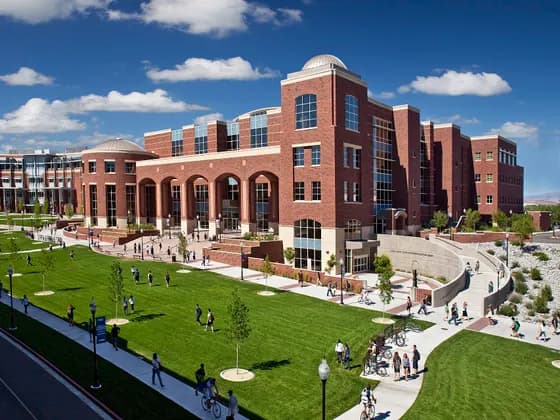
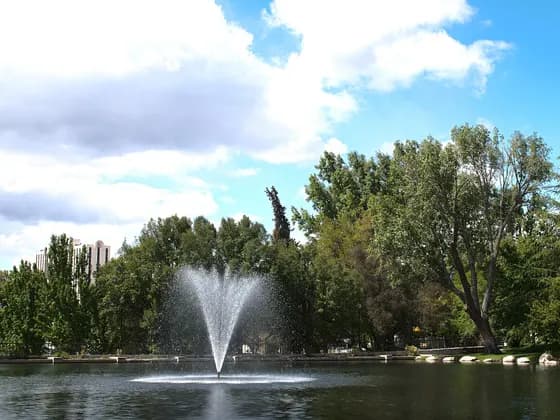
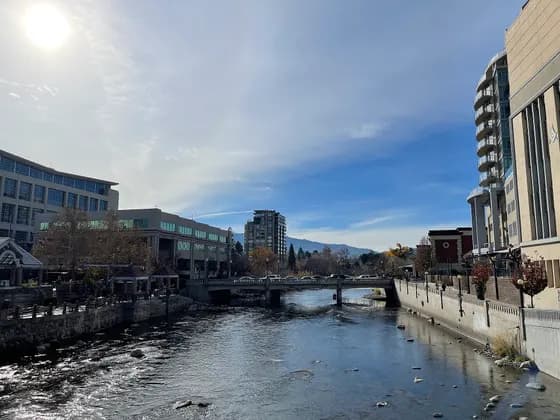
Photo: Wheeler Cowperthwaite · CC BY 2.0 · cropped
Photo: NevadaMarCom · CC BY-SA 4.0 · Photo: Wheeler Cowperthwaite · CC BY 2.0 · Photo: Missvain · CC BY 4.0
How to get into University of Nevada, Reno School of Medicine (MD) medicine
Step-by-step: entry requirements, admission tests, personal statement, interview format and the key deadlines.
Open the guide →University of Nevada, Reno School of Medicine (MD) entry requirements
Admission profile, interview format, decision dates and what makes University of Nevada, Reno School of Medicine (MD) different.
See the profile →The University of Nevada, Reno School of Medicine (MD) medicine interview
The University of Nevada, Reno School of Medicine uses a traditional panel interview format. Applicants typically complete one or two sessions of 30–45 minutes with faculty, physicians, or student interviewers who have read the application in advance.
UNR Med’s culture is community-centered and rural-oriented. Interviewers probe Nevada ties, rural health commitment, and primary care values — applicants who understand the challenges of frontier medicine and can speak concretely to UNR Med’s role in solving them stand out strongly.
The Rural Longitudinal Integrated Clerkship (RLIC) is a signature program — interviewers will probe whether RLIC-interested applicants genuinely understand what living and learning in a rural Nevada community for a year entails.
University of Nevada, Reno School of Medicine (MD) interview at a glance (2027 entry)
| Annual MD class size | ~60–70 |
|---|---|
| Interview format | Traditional panel — 1–2 interviewers, ~30–45 min |
| MCAT median | ~512 |
| GPA median | ~3.77 |
| Application system | AMCAS |
| Interview window | September–February |
| In-state preference | Strong (~85–90% NV residents) |
Interview format
- One or two traditional one-on-one sessions with faculty or medical students.
- Sessions run ~30–45 minutes; full interview day spans ~4–6 hours.
- Interviewers read your application; expect follow-up questions on specific activities, essays, and Nevada connection.
- Ethical scenarios and rural medicine questions are standard.
- Student-led tour and informal interaction with current students are part of the day.
Working towards the MCAT score University of Nevada, Reno School of Medicine (MD) expects? Build a week-by-week plan from your test date — free for the first two weeks.
Sample interview questions
Why Northern Nevada specifically? What draws you to train at UNR Med versus another Nevada or Western school?
Reference Reno's healthcare ecosystem: Renown Regional, VA Sierra Nevada, and the rural belt extending into remote counties. Show genuine regional knowledge beyond "beautiful mountains."
Tell me about your interest in rural or frontier medicine. What specific experiences have shaped that interest?
Be concrete. Rural rotations, personal rural background, or documented exposure all count. Connect the experience to physician workforce shortages in Nevada's frontier counties.
You are the only physician within 50 miles. A patient presents with a condition beyond your expertise. What is your ethical and clinical obligation?
This is a rural medicine scenario. Discuss stabilize-and-transfer principles, telehealth consultation, the limits of competence, and the emotional weight of being a sole provider.
Your rural patient refuses to travel to Reno for a specialist consultation because of the cost and distance. How do you manage this?
Respect patient autonomy while advocating for health. Discuss telehealth options, financial assistance programs, case management support, and shared decision-making.
A rural patient who has not seen a physician in 10 years presents with advanced hypertension and diabetes. They are defensive and say they "hate doctors." How do you open the conversation?
Motivational interviewing principles: meet the patient where they are, explore barriers to care, avoid judgment, establish trust before clinical agenda. Show patient-centered communication skills.
What is the Rural Longitudinal Integrated Clerkship, and would you consider it? What do you think the experience demands of a student personally and professionally?
Show you have researched the RLIC. Address: living in a small community, professional isolation, relationship-based care, and the personal resilience required. Authentic interest or authentic self-awareness are both fine.
What does a career in primary care look like to you 10 years from now, and how does UNR Med help you get there?
Connect UNR Med's training infrastructure (rural clerkships, VA, community health) to your specific career vision. Show long-term thinking, not just admission cycle thinking.
Nevada has significant American Indian and tribal communities with distinct healthcare needs and historical mistrust of mainstream medicine. How would you approach care for these patients?
Demonstrate cultural humility, awareness of historical trauma, sovereignty-based healthcare structures (IHS, tribal clinics), and the distinction between cultural sensitivity and cultural assumptions.
Describe a situation where you had to advocate for someone who could not advocate for themselves. What did you do, and what was the outcome?
STAR structure. Emphasize the process of identifying the need, choosing a course of action, and reflecting on what you learned. Advocacy is a core physician skill especially in rural contexts.
Nevada has high rates of mental health conditions and a shortage of psychiatric providers, especially in rural counties. What role should the generalist physician play in addressing this gap?
Discuss integrated behavioral health, collaborative care models, telemental health, and the GP's role in prescribing psychiatric medications. Show awareness of Nevada's specific challenges.
Several of Nevada's frontier counties have no resident physician at all, and obstetric and emergency services have contracted across the rural north. What are the human consequences of a 'maternity desert' or an emergency-care gap, and what realistically narrows it?
Make the numbers concrete: longer drive times, delayed care, worse maternal and trauma outcomes, and economic strain. Discuss telehealth, regionalized transfer, rural training pipelines like UNR Med's RLIC, and licensure/scope levers — while acknowledging trade-offs.
Role play: you are a student on a rural rotation. A patient who drove 90 minutes to the clinic refuses a referral to Reno for a worrying finding because of the cost, the distance, and 'they'll just run a bunch of tests.' Talk to them.
Respect autonomy while advocating for health: explore the specific barriers, offer telehealth and financial-assistance options, use shared decision-making, and ensure clear safety-netting so the patient knows when they must seek care.
Tell me about a time you adapted to working with very limited resources or support. What did you do, and what did it teach you?
STAR. Rural and frontier medicine is resource-constrained by nature. Emphasize resourcefulness, prioritization, and asking for help appropriately rather than heroics.
As the only clinician for many miles, you are exhausted and aware that your fatigue could affect patient safety, but there is no one to relieve you. How do you think about your obligations in that moment?
Engage the tension between duty to the community and the patient-safety risk of impaired practice. Discuss mitigation (triage, telehealth backup, transfer thresholds, planning ahead) and that recognizing limits is itself professional, not a failure.
The RLIC asks students to live in a small Nevada community for a year and build longitudinal relationships rather than rotating through hospital departments. Honestly, what excites you and what worries you about that, and how would you prepare?
Authentic interest or authentic self-awareness are both acceptable. Name the real demands — isolation, fishbowl visibility, relationship-based care — and a concrete plan, rather than performing unqualified enthusiasm.
Practise the University of Nevada, Reno School of Medicine (MD) interview
Rehearse the real format before the day — on demand with our AI interviewers, or live with a tutor.
Sit a mock with photoreal AI interviewers — any time
A timed MMI or panel interview on video — American & international voices — with interviewers who listen, react and press with follow-ups. Rubric-scored feedback and a replay the moment you finish.






Live mocks with a tutor who’s been in the room
A full University of Nevada, Reno School of Medicine (MD)-style mock with a medic or dentist tutor — honest scoring against real marking criteria, a station-by-station debrief and a written action plan.
Book a mock interviewHow to prepare for the University of Nevada, Reno School of Medicine (MD) interview
Common pitfalls to avoid
University of Nevada, Reno School of Medicine (MD) interview — frequently asked questions
Sources & official admissions information
Ready to nail your University of Nevada, Reno School of Medicine (MD) interview?
Book a mock interview with a tutor who knows the US interview formats, orpractice unlimited stations from our interview question bank.