
Midwestern University AZCOM Interview
Format, Questions & Prep Tips
Midwestern University AZCOM medicine interviews for 2027 entry are a panel interview, held September 2026 through March 2027. Published figures: Annual DO class size ~225; Tuition (2025–26) ~USD 59,000/year.
- Institution
- Midwestern University Arizona College of Osteopathic Medicine
- Interview (2027 entry)
- September through March
- Decisions (2027 entry)
- Rolling decisions


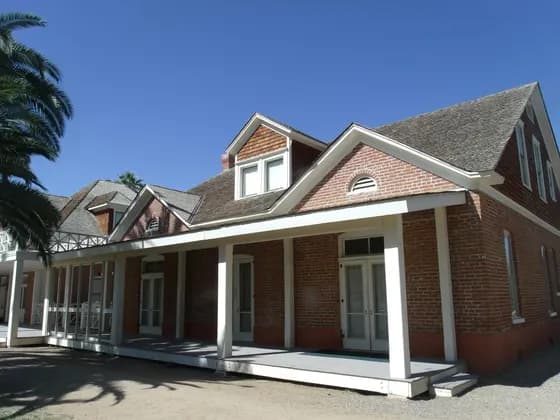

Photo: Mbatmwu · CC BY-SA 4.0 · cropped
Photo: Mbatmwu · CC BY-SA 4.0 · Photo: Tony the Marine ( talk ) · CC BY-SA 3.0 · Photo: Tony the Marine ( talk ) · CC BY-SA 3.0
How to get into Midwestern University AZCOM (DO) medicine
Step-by-step: entry requirements, admission tests, personal statement, interview format and the key deadlines.
Open the guide →Midwestern University AZCOM (DO) entry requirements
Admission profile, interview format, decision dates and what makes Midwestern University AZCOM (DO) different.
See the profile →The Midwestern University AZCOM (DO) medicine interview
Midwestern University Arizona College of Osteopathic Medicine (AZCOM) uses a traditional interview format — two sessions (faculty and student) at its Glendale, AZ campus. AZCOM is part of the Midwestern University health sciences system and trains physicians for practice in Arizona and the Southwest.
Arizona has significant rural primary care shortages, large Native American and Latinx communities with distinct health challenges, and border health issues that shape clinical training. Interviewers probe awareness of Southwest-specific health contexts.
AZCOM has a strong interprofessional education program — students share campus and some coursework with pharmacy, physician assistant, and dental students at Midwestern University.
Midwestern University AZCOM (DO) interview at a glance (2027 entry)
| Annual DO class size | ~225 |
|---|---|
| Interview format | Traditional — faculty + student sessions |
| CASPer required | No |
| Application system | AACOMAS primary + AZCOM secondary |
| Tuition (2025–26) | ~USD 59,000/year |
| Interview window | September–March |
Interview format
- Two sessions: faculty and student; ~30 minutes each.
- IPE with pharmacy, PA, and dental students.
- No MMI.
Working towards the MCAT score Midwestern University AZCOM (DO) expects? Build a week-by-week plan from your test date — free for the first two weeks.
Sample interview questions
Why osteopathic medicine, and what about the DO approach fits the kind of physician you want to be?
Ground it in the osteopathic tenets, whole-person care, and OMT as a clinical tool. Frame DO as a positive choice. At AZCOM, you can connect whole-person care to managing the chronic disease burden of Arizona's communities.
Arizona has large Native American and Latinx communities with distinct health challenges. How does your background prepare you to serve them?
Be specific:
- the Indian Health Service and tribal sovereignty
- high diabetes prevalence on reservations
- ACA coverage gaps for Latinx families
- agricultural and border health
Use evidenced experience and cultural humility, not stereotypes.
Much of Arizona faces rural and primary-care shortages outside the Phoenix metro. How do you see yourself contributing to the state's healthcare needs?
Show awareness of provider deserts in rural Arizona and the value of primary care. Even if drawn to another specialty, demonstrate genuine engagement with the access problem the school's mission addresses.
AZCOM students share campus and some coursework with pharmacy, PA, and dental students. Why does interprofessional training appeal to you?
Show you understand team-based care and how these disciplines complement osteopathic medicine. Use a concrete collaborative experience rather than abstract praise of teamwork.
A patient from a tribal community prefers to involve a traditional healer alongside conventional treatment. How do you respond?
What they are listening for:
- Respect cultural and spiritual practices
- integrate rather than dismiss them where safe
- maintain trust
Discuss the IHS context and the harm of paternalism. Show cultural humility.
A patient near the border is undocumented and afraid to seek follow-up care for a serious condition. What is your responsibility?
What they are listening for:
- EMTALA
- confidentiality
- trust-building
- FQHC/migrant-health resources; the ethical duty of care regardless of immigration status
Connect to Arizona's border-region communities.
You suspect a colleague is impaired at work. What do you do?
Patient safety is paramount and outweighs collegial loyalty. Describe reporting through appropriate channels (and physician health programs), the difficulty of doing so, and acting compassionately but decisively.
AZCOM students train alongside pharmacy, PA, and dental students. Describe a time an interprofessional team approach changed how you thought about patient care.
What they are listening for:
- Real story with a pharmacist
- PA
- dentist
- other professional whose expertise improved a patient's outcome
Show humility and respect for distributed expertise.
Tell me about a time you had to communicate across a language or cultural barrier. What did you learn?
Professional interpreter use, patience, and cultural humility. Highly relevant to Arizona's Latinx and Native American populations. Avoid implying you 'solved' culture; show ongoing learning.
How do you learn, and how would you keep pace with AZCOM's basic-science load and COMLEX-USA preparation?
Evidence-based study methods and honest self-knowledge. Name COMLEX accurately, mention USMLE only if you plan to sit both, and describe how you respond to a setback.
Is there anything in your academic record you would want the committee to understand in context?
Own any dip or non-traditional path, explain growth, and point to sustained improvement. Avoid excuses.
You are a student and a diabetic patient on a reservation has not been able to maintain their diet because of limited food access. Talk to them.
Acknowledge food deserts and structural constraints without judgment, problem-solve realistically (community resources, IHS programs), and respect autonomy. Demonstrate whole-person care.
A classmate keeps making jokes you find culturally insensitive about patients during a small-group session. Address it.
What they are listening for:
- Speak up professionally
- model respect
- address behavior rather than attacking the person
Show moral courage and the professionalism expected in a diverse clinical setting.
You are shown data: diabetes prevalence in certain Arizona tribal and rural counties is several times the national average. How do you interpret and respond?
What they are listening for:
- Historical
- structural
- food-environment drivers; IHS funding constraints; and community-led prevention
Propose interventions beyond individual lifestyle advice; avoid blaming patients.
What experience first showed you the realities of medicine rather than the ideal, and how did it shape you?
Reflective and specific. Show you have seen difficulty as well as reward and that it strengthened your commitment.
An uninsured patient needs a costly workup. How do you balance thoroughness against cost?
What they are listening for:
- High-value care
- shared decision-making
- sliding-scale and community resources
- honesty about trade-offs
Stewardship without compromising safety.
Practise the Midwestern University AZCOM (DO) interview
Rehearse the real format before the day — on demand with our AI interviewers, or live with a tutor.
Sit a mock with photoreal AI interviewers — any time
A timed MMI or panel interview on video — American & international voices — with interviewers who listen, react and press with follow-ups. Rubric-scored feedback and a replay the moment you finish.






Live mocks with a tutor who’s been in the room
A full Midwestern University AZCOM (DO)-style mock with a medic or dentist tutor — honest scoring against real marking criteria, a station-by-station debrief and a written action plan.
Book a mock interviewHow to prepare for the Midwestern University AZCOM (DO) interview
Common pitfalls to avoid
Midwestern University AZCOM (DO) interview — frequently asked questions
Sources & official admissions information
Ready to nail your Midwestern University AZCOM (DO) interview?
Book a mock interview with a tutor who knows the US interview formats, orpractice unlimited stations from our interview question bank.